


In the year 2023, when the purchase season began, the public again launched an in-house purchasing exercise on an unprecedented scale, which resulted in over-value concessions for employees in the form of multiple main sales. The event coveredPublic viewMultiple models such as x, lphev, leon, and the new money are impressively broad。
According to the internal purchase form, the guide price for the flagship x 2023 330 tsi and the zhuong flagship editions was $250,800 and $2260,800 respectively, respectively, and the internal purchase price was $217510 and $226010 respectively, with a subsidy of $55,000 after the top of the card. The final price was $162510 and $171010, respectively, representing a discount of $88290 and $89790, respectively, compared with the guide price。
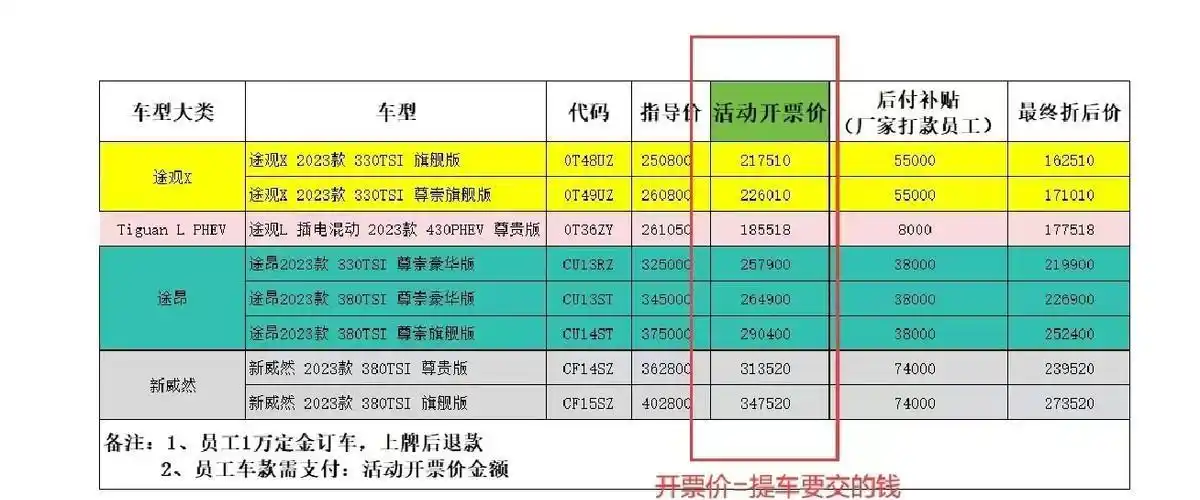
The flagship version of section 2023, 380tsi, is more impressive in terms of preferential margins, with a guide price of $402,800 and an internal purchase price of $34,7520, with a final price of $27,3520, up to $12,9280, or close to $130,000. In addition, various types of vehicles, such as lphev and leon, have different advantages ranging from 90,000 to 130,000 yuan。

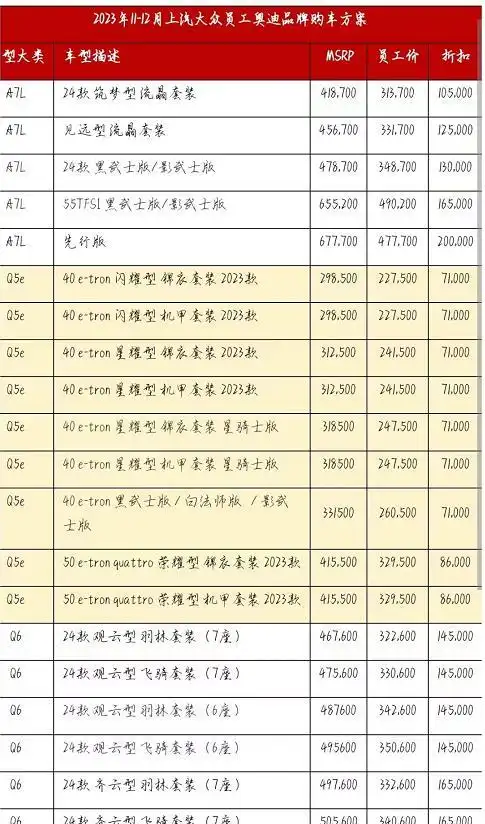
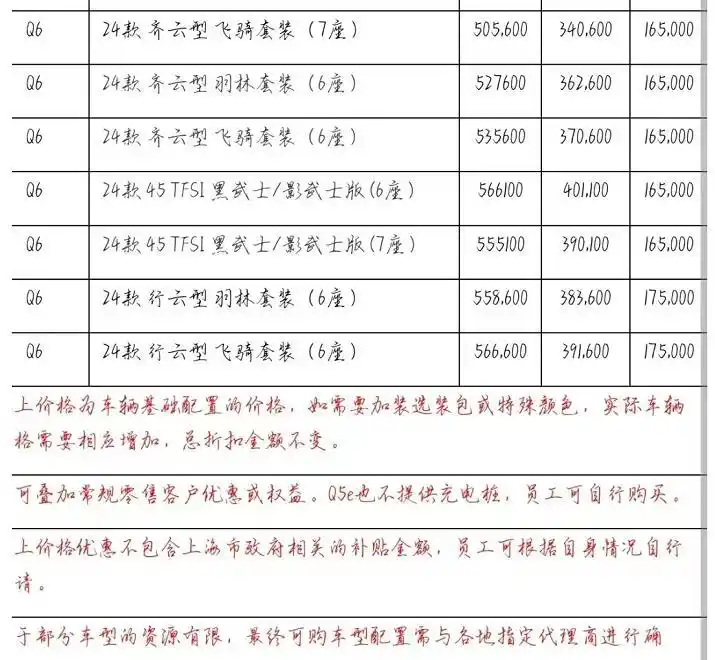
It is worth noting that the in-house purchase was limited to only about 2,000 vehicles and that most of the vehicles sold were non-rde vehicles, which were presumably stored for more than six months. At the same time, audi's car-purchase discounts are available to the public, ranging from $71,000 to $175,000 for audi's car-types of 7l, q5e and q6。

As a rule, internal purchasing qualifications of public employees are limited to company contract workers, labour-sending workers and their families。
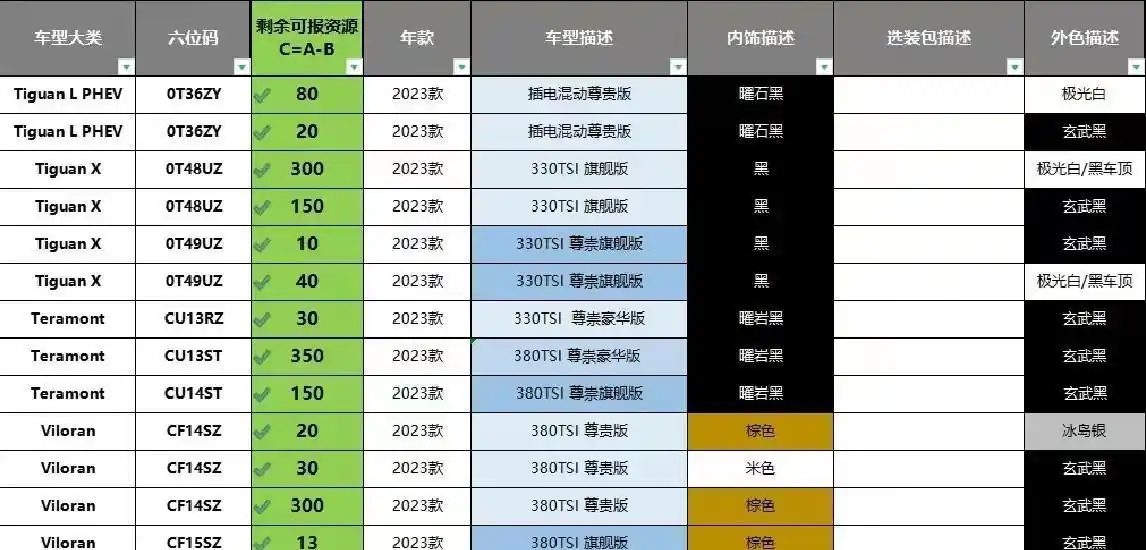
However, according to information published on social platforms by 4s sellers, non-corporate employees who wish to purchase cars are required to pay additional transfer fees and enter into transfer contracts with employees for which the purchase is down to $10,000, only to support the purchase of full-cost vehicles and local licence plates, and must use the name of the employee for the purchase of the car, which is to be transferred after a year。
It is no surprise that the public is using the in-house purchase of workers for the disposal of stock vehicles. In recent years, the company's fuel vehicle sales have been declining, with 11,487,000 fuel vehicles sold in 2022, representing a decrease of 18. 74 per cent over the same period, and 1,861,000 electric-plugged vehicles, representing a decrease of 22. 15 per cent over the same period. This initiative will undoubtedly bring new impetus and growth to corporate sales. Fuel car sales have declined and excess capacity has become a major problem。
The building was permanently shut down and converted to joint production. Large price reductions, however, can undermine brand image, and companies choose to absorb stocks through in-house purchases by employees. Staff have started reselling targets, but there are risks. Can in-house purchases eliminate overcapacity? As global awareness of environmental issues increases, fuel vehicle sales decline, which inevitably leads to overcapacity。

Against this background, the first factory, located in antin, shanghai, has been declared permanently shut down, while the antin ii plant plans to start joint production and combine two production shifts. However, it is known that the three plants are likely to start joint work later this year. These initiatives undoubtedly highlight once again the plight of the fuel truck market。
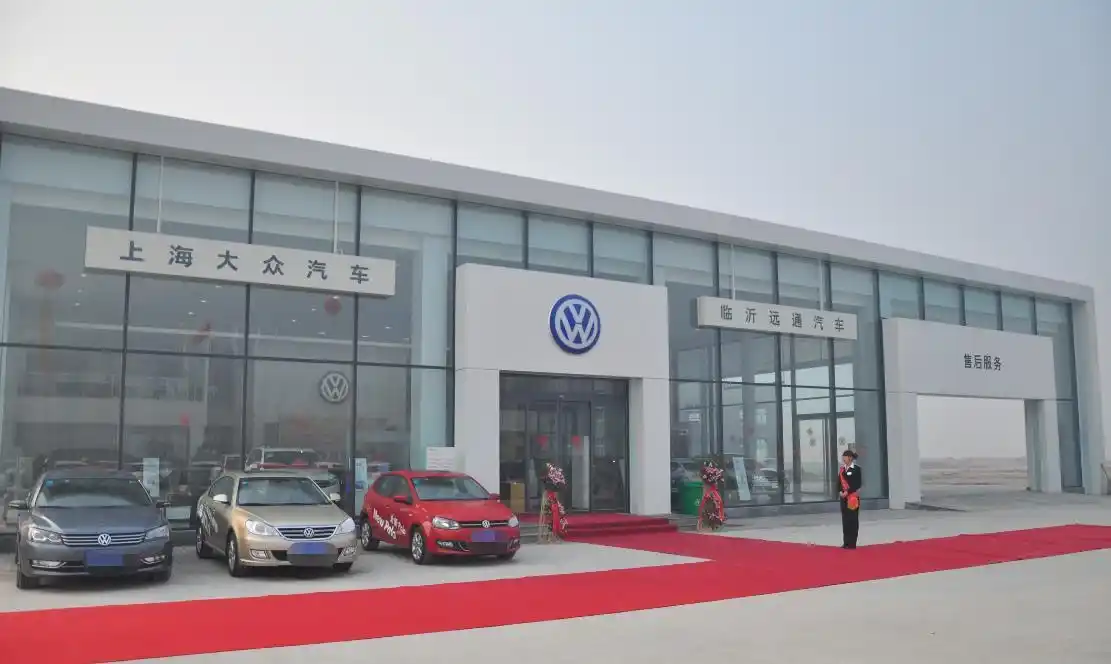
However, in the face of pressure from the backlog, a direct and substantial reduction in prices is not a strategy that volkswagen is willing to pursue, as it could seriously damage its brand image. As a result, volkswagen appears to have found another “method” — digesting stocks through in-house purchases by employees. According to the information received, there is now an indicator of the resale of public employees, some of whom have resold their internal vehicles。
It should be noted, however, that considering internal vehicle buyers should be more cautious, given the extremely high risks involved in such operations, since the resale of vehicles required a household account and only staff members ' accounts. Although this in-house procurement of employees can help to some extent to digest stocks in volkswagen vehicles, there are doubts as to how much of them can be absorbed。
After all, the purchasing power of staff is, after all, limited, and the rate of inventory digestion may not keep pace with overcapacity. It also raises the question of whether internal purchases by employees can really be an effective way to absorb excess capacity in volkswagen cars
In sum, the plight of the fuel car market is already on the table, and while domestic purchases by the public at large can help in some way to digest stocks, the risks and uncertainties involved are equally not negligible. Against this backdrop, the problem of overcapacity remains largely unaddressed, and the prospects for fuel car markets remain challenging。









