Hello, i'm zoe。
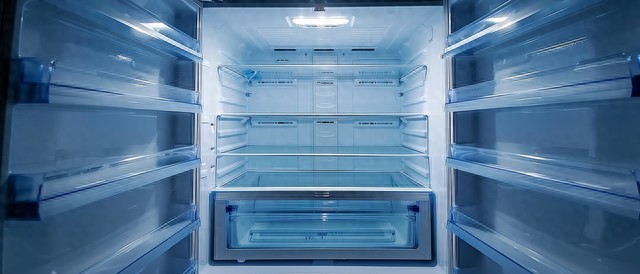
In all household appliances, refrigerators are the only appliances that work 24 hours a day throughout the year. Televisions, washing machines and air conditioners are open at all times, without which they can be shut off, but the refrigerator will not be powered off since the day it is bought。
It is precisely because of this that most households have a common fault zone: refrigerators can be used as long as they can cool and do not strike. Many of the refrigerators in their homes have been used for more than a decade, with increasing noise, high electricity consumption and poor cooling effects, which still cannot be replaced. It's a waste of money to change。
I've been consulting for over a decadeMaintenance of household electricityMaster, the real business truth is that the refrigerator has no permanent life and the country has a clear visionSafe useStandards. For ordinary domestic refrigerators, the best useful life is 8 to 10 years and the maximum useful life is not more than 12 years。
Once this period has passed, even if the refrigerator appears to be working properly, the internal core parts have become fully aging. The continued use of electricity is not only expensive, it is not cool, it is also a food safety hazard and an electrical safety risk, and the maintenance masters have suggested that, at the end of the life span, it should be possible to change as much as possible and not be hard。
Today, in plain and plain language, let us be clear as to why refrigerators are used in such a way as not to be hard, not to use them over time, and not to replace them directly。
First of all, the standard answer that matters most is the common reference standard for the household electricity industry. According to our national regulation of safe use of electrical appliances, the safe use of refrigerators is clearly indicated as 10 years。
This period is not set at the discretion of the manufacturer and is measured on the basis of the ageing cycle of all core parts such as refrigerator compressors, pipes, seals, electrical circuits, etc。
A lot of people would argue that many of the refrigerators around them were still working for 15 or 6 years and had no problems. Here there are two different concepts: the ability to work and the security of work are two different things。
An old refrigerator that has served longer, which appears to be cooler, is in a state of “pathic operation”, although the failure did not break out. According to the maintenance master, the refrigerators, which have been running for over 10 years, seem to be saving money, are losing money every day and concealing the risks。
The first and most intuitive problem is the doubling of electricity consumption and the constant waste of electricity。
The core parts of the refrigerator are compressors, which are equivalent to the heart of the refrigerator. The fully new refrigerator compressor is operating efficiently, with steady power, with rapid cooling and rational start-up, and the primary energy-efficient refrigerators consume about 0. 5 degrees a day and are very power-efficient。
However, with refrigerators over eight years old, the internal parts of compressors are worn out, ageing and the compression efficiency is significantly reduced. In the same refrigeration effect, old refrigerators need to operate at a constant high load and the time off is significantly reduced。
Many people have not paid attention to electricity consumption in their old refrigerators, and the maintenance master has measured that the use of refrigerators for more than 10 years is 40 to 60 per cent higher than that of new machines. An old refrigerator would have cost 300 or 400, more than 10 years of wasted electricity, fully offset by the cost of a new refrigerator。
And the more it's used, the higher the power consumption. Many families pay a high annual electricity bill for which no reason can be found. The problem is that the old refrigerators are overused。
The second invisible hazard is also the most easily neglected: the unevenness of refrigeration, the growth of bacteria, the destruction of food products and the impact on dietary health。
The role of the refrigerator is not fungi, it's hypothermia. Refrigerators within the normal age range, with an even temperature-controlled accuracy, an even cooling cycle, cold-conserving, frozen locks having minimal effect, can effectively slow the deterioration of food products。
There are very typical problems of ageing in refrigerators that are used over time: temperature control failure, air cycle congestion, ageing of the inner cholesterol layer, leaks in seals。
The most common phenomena are the severe freezing of refrigerators and the lack of sufficient temperature; the cold room is not able to freeze its meat; and the freezer is prone to water accumulation, molding and desolation。
Many find that the vegetables in the old refrigerator are rotting in one day, that the meat is frozen and tasted with wood, that the leftovers are sour overnight, that the food is not fresh at all, and that the refrigerator has lost its standard protection capacity。
The temperature differentials within the aging refrigerators are unstable and the temperature of some regions is below the antibacteria standard. Long-term storage of food products can be contaminated with bacteria, long-term consumption by families and prone to stomach disorders and diarrhoea。
Many families are chronically intestine and incompetent, and when food problems are eliminated, the probability is that the food safety risks associated with an extended refrigerator are reduced。
The third core hazard: leaks of aging pipes, with a risk of flammable and explosive。
This is one of the security concerns of the maintenance masters and one of the most unknown to ordinary people. There's cooling pipes and refrigerants inside the fridge, that's what we call refrigerants。
The new refrigerators are closed and corrosive, with no leakage problems. However, using refrigerators for more than 10 years, internal plastic pipes, sealed interfaces are ageing, oxidizing, flaring and there are tiny cracks invisible to the naked eye。
In time, the refrigerant leaks slowly. Many of the refrigerants used in domestic refrigerators are now flammable media, which, after leaking, gather in closed kitchen space and encounter electrical sparks, high temperatures and fire and explosive safety hazards。
In addition to this, the circuits, capacitors and electric generators of the old refrigerators are all ageing, the insulation layer is falling, and the probability of shorter circuits for the ageing of the circuits has increased significantly. Maintenance data show that more than 90 per cent of road fires caused by domestic refrigerators are over 10 years old。
Such hazards are hidden, and there are no signs of normality。
The fourth desperate problem was the loss of spare parts, which could not be repaired。
A lot of people insist on old refrigerators, and the core idea is that the machine is fine, it works, it's broken and it's fixed. But the maintenance master, frankly, for more than 10 years, did not have to fix it。
In the domestic electricity industry, which upgrades at a fast pace, the core parts and exclusive parts of refrigerators are generally kept by the manufacturer for a period of 8 to 10 years. The old machine type, which is beyond this age, has largely been completely out of production。
When compressors are damaged, pipes are broken and thermostats fail, only second-hand refurbished fittings can be found on the market, not only for lack of quality, but also for particularly high maintenance costs。
The cost of materials, door-to-door fees and maintenance costs is added up to the sum of several hundred dollars, and the cost of maintenance is half the cost of the new machine, with a slight breakdown。
The most critical is that ageing is holistic and not a single part. This time, the compressor will be repaired, and the next time the circuits and the pipelines will be in trouble, with repeated repairs, repeated spending and, ultimately, a bottomless hole, it will be no better than a new one。
In addition to the number of years, the maintenance master summarized a number of non-career periods and changed them directly, which was particularly useful。
First, refrigerator seals are severely ageing, deformed and frequently frosted. Sealed seals are the first barrier to the refrigerator, which, after aging leaks, cools out, heats in and not only costs electricity, but also continues to freeze. If the seal is replaced and cannot be improved, this means that the temperature layer of the box has expired and is replaced directly。
Second, the running noise is unusually high and the body is constantly shaking. The normal refrigerator runs soft and smooth. When the refrigerators are activated, run, shut down with noise and severe vibrations, this means that the compressor is severely worn, the core parts are ageing and the maintenance value is extremely low。
Third, frequent shutdown, cooling and heat. Frequent outages, automatic outages, temperature failures, presumably due to the dual aging of circuit systems and compressors, are core failures and are extremely costly to maintain。
Fourth, the freezer has the guts to crack and the mold cannot be cleaned. When the internal ablaze is broken, the vapour enters the incisor layer, breeds deep fungus, cannot be completely cleaned up, continues to contaminate the food and affects the health of the family, and recommends direct replacement。
Of course, not all refrigerators have to be stuck for 10 years. The maintenance master gave a precise distinction:
High-end variant refrigerators, large brands of high-quality machines, properly maintained and used in a dry environment, with maximum use up to 12 years
General fixed-frequency entrance refrigerators, old rental machines, materials and processes are general, with a maximum useful life of only eight years and replacement recommended for more than eight years
Refrigerators ' useful lives are appropriately extended if they focus on cleaning maintenance, regular frost removal, non-overloading of food products, and refrigerators that are always filled with groceries and never clean and run at high levels over a long period of time are ageing much faster。
In conclusion, one of the most tangible recommendations for the home is:
Refrigerators for up to eight years are ready for normal maintenance and can be repaired in case of minor failure
8-10 years of refrigerators with signs of ageing, close observation of power consumption, refrigeration, noise, and replacement as appropriate
For more than 10 years, the refrigerator, for good or bad, is changed. Don't worry about the hundreds of thousands of machine purchases, which are the most expensive and safe choice for a new refrigerator than waste of electricity, food, family health and home safety。
The essence of household electricity is to serve life, not just to put it together. Refrigerators that have served longer terms appear to have saved money, while the triple threat of electricity consumption, health and safety is hidden in vain。
Topical discussion
How many years did your refrigerator take? Has there been any increase in electricity consumption and cooling? You think it's the most cost-effective year to replace the fridge? Welcome to the comment area, share your home experience, enjoy practical living goods that can be of interest, and keep up to date with home-based shelter knowledge。