


First of all, there's something less business
Every year we recruit, we discourage some classmates。
Not because the scores are insufficient, nor because they cannot afford school fees — but because, starting with the first sentence of the dialogue, we know that this is not going to happen。
Some might find it strange: where are the agencies pushing students?
But in the years of education, one thing is increasingly certain:
We can't afford to lose any of our students。
With thousands of people in large institutions a year, the score is a statistical figure, with a few unintentioned, and the average value is still good。
We can't。
Every year we bring students to count, and everyone who walks out is our sign。
A student doesn't score. It's not "the denominator gets bigger" for us. It's a scratch on the sign。
So there's something we have to say before we go to school。

Number one: make us promise to score
Such consultations usually begin as follows:
"teacher, can you guarantee i got 6. 5?"
"what if you don't?"
"can you write in the contract?"
Our answer will always be: no
Not without faith, on the contrary — because we know too well how this works。
You'll see:
168 hours a week。
You attend 6 hours a week in mu cheol。
The remaining 162 hours — no backs, no brushes, how it was on the test day — were not in our hands。
We can be responsible for these six hours: what, how, how, how, how, how, how, how。
But we can't handle the 162 hours。
So, what's the word "securing" essentially?
It's one person for another, and it's a variable he can't control。
This is not logical。
The more you know how it works, the less dare you say the three words。
We don't want to use a pretty word for an unrealistic expectation。
What we can promise is these five things:
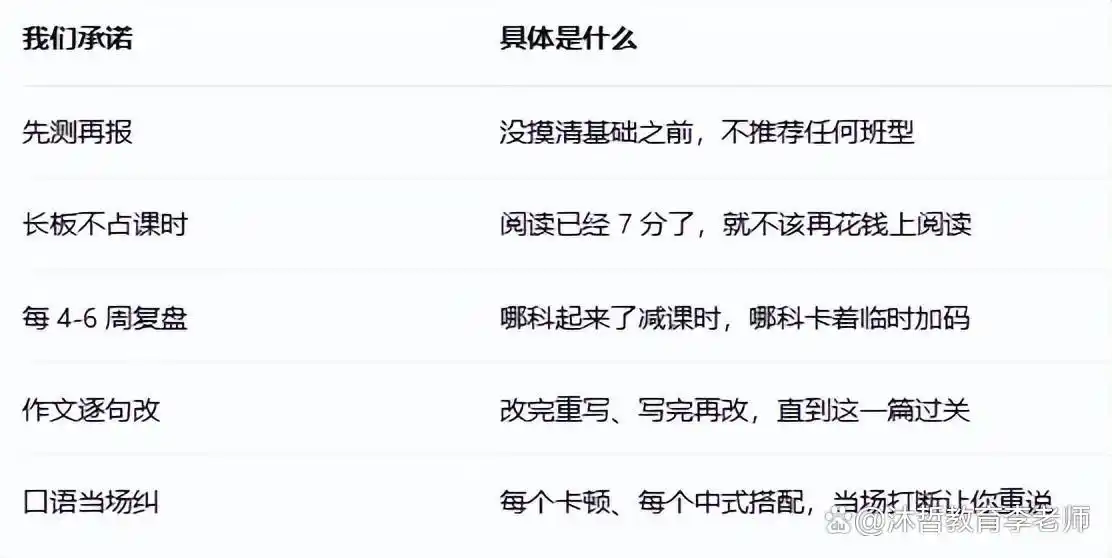
These are things that we can control and be tested for。
As for the score -- we'll make it together, but i won't make it for you。
If that's all you want, we're not your choice。

Number two: active, blank
There's a typical portrait of these students:
I listened very carefully in class, noded, took notes, interacted very positively
- "i get it."
Then next week, class, no homework, no back of words, the last way to say it。
The teacher asked, "the answer is always the three words:
"too busy lately."
"i'll go back and finish."
"at least next week."
We have to say something that may not be very nice
There's a common experience in jasty:
The total score of 1 point requires approximately 200 to 300 hours of effective learning time。
On the basis of six hours of instruction per week, the class is down for a term of several dozen hours。
The rest of those hours, you're sitting at the desk。
The role of the classroom is:
Tell you where to go, how to go, who to correct you。
But lou, you have to go one step at a time。
We've seen too many of these students..
The best classes, the best classes, the best books, and the last scores。
It's not bad. It's just indigestion。
It's like having a gym card and not practicing. You can't blame the gym。
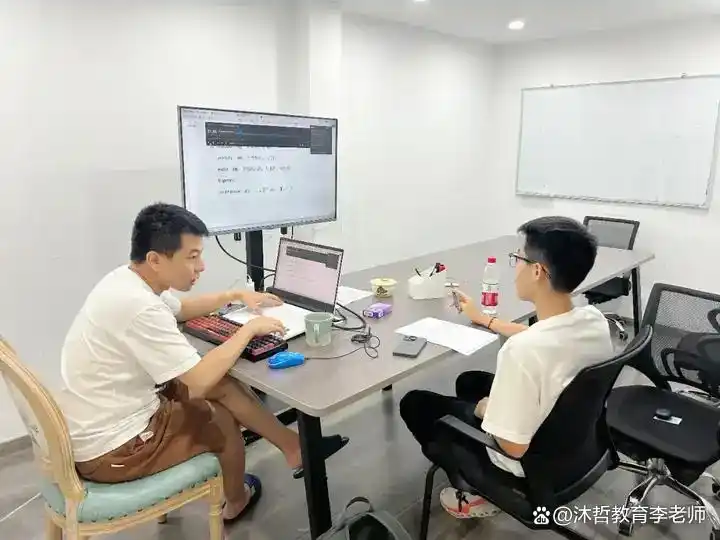
- morejoy--
So what would we do?
We're not letting it go. We'll be watching:
You don't have your homework? Ask, chase
No back of words
Twice in a row? We'll suspend the schedule and make up for what we owe
But if it's empty after three or four times — we'll talk to you on our own initiative, and even suggest you leave class。
Why
Because we don't want to take a "look hard."。
You pay tuition, you sit in class, you don't move the final scores — it's a waste, it's a sign。
Win-win is what we want; lose-win, let's not do it。
04 third: we're small, we press prices
This type of dialogue usually takes place at the last step:
"you're just a little bit too big to be cheap."
"this is the price for the big agencies next door."
"i'll report it if it's cheaper."
Let's get this straight: how did we get the price
Mu cheol-chul's size is small, so we don't have anything big:
Sales teams that don't feed hundreds of people
No commercials
No rent for the city's most expensive writing building
The money we saved was spent in class:
2-5 shifts, not 25
It's not an assistant
One-on-one, not a set of lessons for everyone
These costs are hard。
That's all you want us to drop。
And down to that point, we're going to be an agency that's going to be a little class and a little change。
I'd rather say one: the mindset behind the price
We understand in particular the desire to save money. Nobody's money comes from the wind。
But one thing we observe:
Families that consider "cheap" the only standard are often the easiest to give up。
Because from the start, the motivation for a shift was "which one's cheap and which one's gonna help me."。
If there's trouble — the word is stuck, the score is stuck — the first thought is not "how" but:
"this money is worthless."
And then the class ended。
We don't want a one-off deal。
What we think is: the student goes out here, scores, goes to a school that he wants to go to, and any person who wants to report for years still wants to think of mu cheol, will be recommended to him。
This is more important than charging an additional student for school fees。
Our attitude:
Prices are open and uniform and no bargaining is accepted
But we promised not to sell, not to add classes, not to sell a class you shouldn't buy
Is the budget really tight? We'll tell you the truth: which part is self-learning, which part has to be filled, where the money should be spent
It's two different things to save you money and to press your prices。
We do the first one on our own initiative (no longer than saving money for school hours), and we don't take it。
So what kind of student does mu chul want
Say what you don't want, say what we expect。
In fact, it's very simple
One knows it's his thing
Not "my parents let me take the exam" or "all my classmates" or "you want to go to that school."。
This is the premise for self-expulsion to last 162 hours。
Two, do as you say
You don't need to be smart, you don't need to be smart。
But i need you to follow mr. Mu cheol's line of work, write the homework, write the words back, and do the test。
The way we give, the way we go。
3 believes in professional judgment and is willing to communicate
We said, "you don't have to read." don't think we're lazy。
We say "speak to one" and you don't think we're making extra money。
All the suggestions are based on one judgment: is this class really helping you improve
We can't promise 100 percent of the results, we don't have the services to pay for it, we don't sell at low prices. But if you're willing to sink down and try to score points -- welcome to mu cheol, talk to us:
What's your score?
Tell me about your situation, let's take a look at it









