

I. Content of marxist fundamentals
(marxist classics combined, capitalism, communist manifesto)

The rationale of marxism is the fundamental, universal and stable scientific theory of the marxist system of theory, which has been tested over and over again and reveals the general pattern of natural, social and human thinking. Many learners tend to equate marxism simply with fragmented views or slogans. Indeed, marxism is an organic, well-structured and logically coherent whole, composed mainly of the three core components of marxist philosophy, marxist political economics and scientific socialism, which are mutually supportive and indivisible。
Marxist philosophies, i. E. Dialectical materialism and historical materialism, are the world view and methodology of the whole theoretical system that provides fundamental adherence to the understanding of the world and its transformation; marxist politico-economics, which researches the productive relationship of capitalism, analyzes the logic of capital operations and reveals the inherent contradictions of capitalism; and scientific socialism, which points the way for the development of human society and articulates the path and goals of the liberation of the proletariat and the achievement of communism。
From its origins, marxism was born in the middle of the nineteenth century, with german classical philosophy, british classical political economics, and british-french imaginary socialism as the three main sources of theory, rooted in the actual practice of the workers’ movement at the time. It distinguishes it from all previous mind-based, materialistic theories, the core characteristics of which are practical, scientific, popular and developmental. Marxism is not an immutable dogma, but rather a guide to action. It is based on reality, and is constantly enriched and developed from time to time. It is also the underlying reason that marxism's fundamentals can transcend times and remain powerful. Learning from marxist rationales is not simply rereading theoretical texts, but rather mastering scientific thinking, and learning to observe social phenomena and analyse real-life issues from a materialist perspective。
Ii. Counteracting materialism: understanding the world's scientific world view and methodology
(trust materialist thinking, marking material, consciousness, contradiction, connection, development)
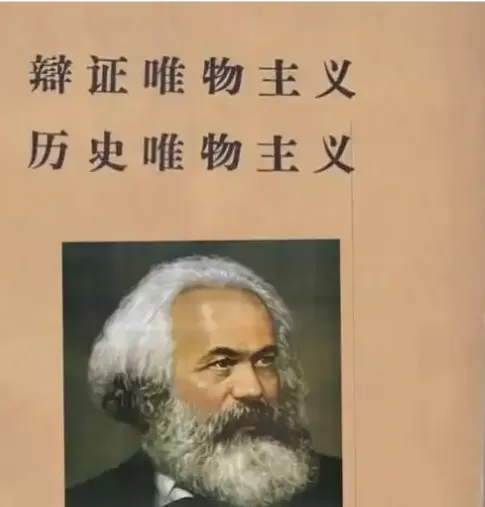
Artificial materialism is the first component of marxist philosophy, focusing on the fundamental questions of what the world is, how the world works, where human awareness comes from, and the three pillars of materialism, dialectics and understanding。
The central view of materialism is that the world is united in matter, that material decision-making consciousness, and that awareness is dynamically counterproductive to matter. This rationale requires us to insist on everything being realistic and realistic and to reject assumptions that are unrealistic. On this basis, forensics alone reveal that the general characteristic of the world is association and development: everything is in common, and there are no isolated things; and things are in constant motion, change and development, the essence of which is the creation of new things and the demise of old ones。
The paradox theory is the essence and core of material evidence. Paradoxically, it is unity, and it is universal and specific. Paradoxically universal means that there are contradictions, that there are sometimes contradictions that cannot be avoided; the paradox of speciality requires us to insist on a specific analysis of specific issues, which is the living soul of marxism. The rationale for the main contradiction and the main contradiction guide us in our adherence to the two points and the unity of emphasis, both in terms of the comprehensiveness of the issues and in terms of capturing the main contradictions and priorities。
The theory of awareness reveals the pattern of awareness: practice is the source, motivation, test and ultimate purpose of awareness. People's awareness has evolved from a sense to a sense of reason in practice, and then back to practice to guide practice, to be tested and to develop in a circular and unlimited manner. “practice-know-how-to-do-know” is the basic norm of human awareness activities. The doctrine breaks the limits of the old philosophy from the rhetoric of practice and lays the foundation for scientific understanding。
Historical materialism: revealing the bottom patterns of human social development
(indications of basic social contradictions, productivity, productive relations, economic fundamentals, superstructures)
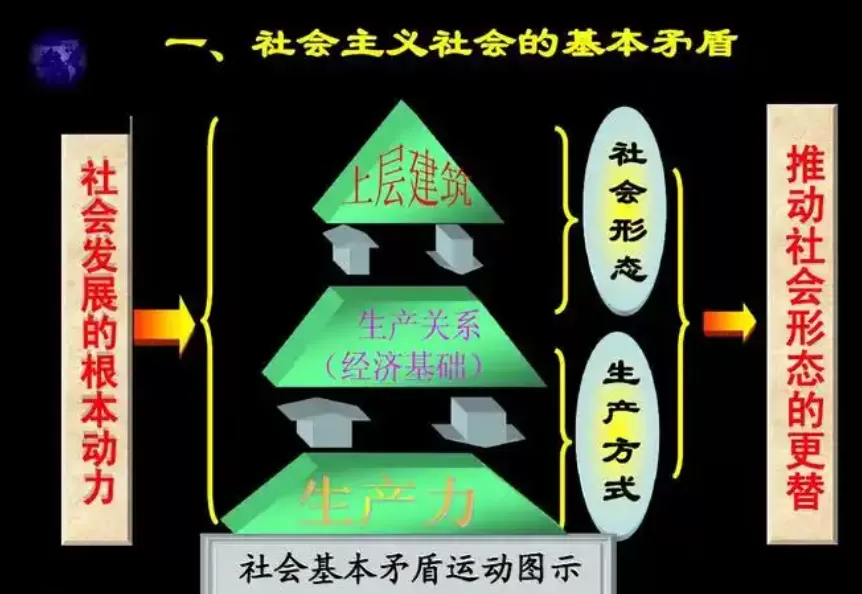
If the dialectic of materialism explains the laws of nature and thought, history-based materialism (materialism) extends materialism to the historical realm of human society, deconstructing the historical misperceptions of long-standing “heroes determine history” and is a major theoretical innovation of marxism。
The core logic of historical materialism revolves around fundamental social contradictions: a contradiction between productivity and production, a contradiction between the economic base and the architecture of the upper echelons, a fundamental contradiction of human society and a fundamental driver of social development. Productivity represents the ability of humans to transform nature, including workers, labour information and target groups; productive relationships are the social relationships that people form in the production process. The level of development of productivity determines the productive relationship, which is counterproductive to productivity: it promotes development when it adapts to productivity and hinders productivity progress when it does not. The economic base is the sum of the dominant production relationships, with the upper layers comprising the political legal system, the state, ideology, etc. The economic base determines the upper layers, which in turn serve the economic base。
With the movement of fundamental contradictions in society, human society has in turn experienced primitive societies, slave societies, feudal societies, capitalist societies, socialist societies and eventually communist societies. At the same time, it is clear from the view that the people are the creators of history. The people are the creators of material and spiritual wealth and the decisive force for social change. Distinguished personalities can influence the course of history, but cannot create it independently from the people. This principle establishes a people-centred position of values and is the source of our theory that upholds the views and paths of the masses。
Iv. Marxist political economics: analyzing capital performance and economic patterns
(commodity, labour value, residual value theory simple)

Marxist political economics, which is studied in the form of capitalist production, core theories include the theory of labour values, the theory of residual value, the theory of capital accumulation, and profoundly expose the inherent mechanisms and inherent contradictions of capitalist production。
According to the labour value theory, goods are characterized by a dual value for use and value, the value of goods is determined by abstract labour condensed into the commodity, the amount of value is measured by the time required by society to work, and the exchange of goods follows the rules of value. The residuary value theory that was born on that basis is at the heart of political economics. Under the capitalist employment model, workers ' labour is divided into essential and surplus work: the value created by the necessary labour is used to earn wages and sustain themselves; the residual value created by the remaining labour is taken free of charge by the capitalist, which is the source of capital profits。
The continuing pursuit of residual value drives the continued accumulation of capital. The accumulation of capital would lead to a growing division between rich and poor, creating a fundamental contradiction between the socialization of production and the private occupation of capitalist means of production. This contradiction cannot be fundamentally resolved within the capitalist system, leading to a cyclical economic crisis. It is important to note that marxist political economics is not just used to criticize capitalism, but also as a reference for understanding the functioning of a market economy and guiding the construction of a socialist market economy. Learning about political economics can help us to see the underlying economic logic behind market phenomena and to look rationally at real issues such as capital, wealth and distribution。
V. Contemporary practice application of scientific society and the basic basic of marxism
(marxist chinese development pulse time line)
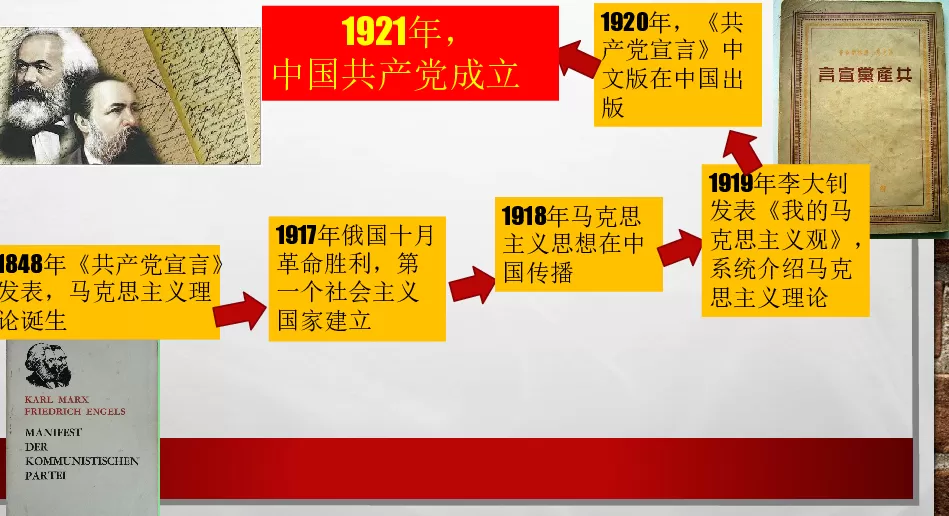
Scientific socialism was the foothold of marxism and answered questions about how the proletarians could be liberated and how human beings could move towards an ideal society. It is based on two cornerstones of objectisticism and residual values, freeing itself from the limitations of imaginary socialism in transforming society through moral illusions, and justifying socialism as the inevitable trend in historical development. Scientific socialism has defined the core themes of the proletarian revolution, proletarian dictatorship, socialist construction and the free and comprehensive development of the human being, with the ultimate goal of achieving communism, a society in which the material wealth and spiritual well-being of the people have been greatly enhanced and where free and comprehensive development can be achieved for everyone。
The rationale of marxism is not the abstract theory in the book, but the strength of life lies in a combination of concrete practical realization. After the introduction of marxism into china, a series of theoretical results emerged from the advancement of the marxist chinese era. These are the product of china's national context and the flexible application of marxist positions, perspectives and approaches to various stages of china's development problems。
The principles of marxism are also relevant in the current day-to-day study, work and social life: the use of contradictory analytical methods to analyse difficult issues, focus and prioritize; the persistence of all practical approaches to reject formalism; the emergence of a popular position that takes into account the interests of the people; and the rational view of problems arising from economic development and social change, in accordance with objective rules. Of course, we also need to grasp the principle of adherence to the principles, rejection of dogmaticism, adherence to the theoretical link and evolution of the theory with the times, which is the correct approach to marxist science。
Vi. Common errors in learning marxist fundamentals and scientific learning methods
(learning methodology diagrams, theoretical reading, realistic observation, reflection notes)

Many beginners learn the principles of marxism, and they can easily enter several typical faults. The first misdirection, using doctrine as a dead-end consideration, is a recitation of definitional conclusions without understanding the underlying logic, without connecting to reality, and will not be applied after learning it; the second misdirection, one-sided theory of understanding, taken out of context, singles out individual statements from the context of the times; and the third mischaracterism, which is considered to apply only to old theories of the past and to modern societies, ignores the general patterns that they reveal。
A step-by-step learning approach is needed to learn the rationale of marxism. First of all, the whole framework must be defined, the logic of philosophy, political economics and scientific socialism must be distinguished, and the reasoning of the various principles must be understood; secondly, the classic texts must be read in the original language, rather than relying solely on a simplified version; thirdly, the theory must be linked to reality, and the theory must be used to analyse social hotspots, economic phenomena, problems around them, and the theory must be digested in the thinking; fourthly, it must be argued that both the universal guiding value of the theory and the different stages of development must be understood that the path of practice must differ。
In short, marxism is fundamentalRationaleIt is a theoretical system of science and value. Learning it is essentially about learning a set of scientific thinking tools that build the right historical vision, world view, values, maintain rational judgement in a complex and fluid environment and grasp the objective patterns of the development of things。