


On the eve of midday, the national pig market as a whole showed a steady moderate bias, with market data showing that, on 18 june, the spot price of raw pig (within three dollars) was $9. 45/kg, an increase of 0. 11 per cent. In the last week, the increase was 0. 43 per cent, a long-standing increase。
Moreover, while the price of raw pigs hovered at a low of less than $10, in may the average price of pigs on the a stock market showed a positive signal of an increase in the average price of pigs on the market, which also gave the market a warm spot. So, did the "piggy cycle" turn up
The so-called "pig cycle" is the pattern of a cyclical rise and fall in the price of pork, which is influenced by demand and supply: the price of pigs is higher and the price of pigs is lower; the price of pigs is lower, the price of pigs is lower, the price of pigs is higher and changes again。
You know, as a special commodity, pigs cannot be said to be able to expand production capacity when market conditions are good. In general, there are multiple links between the discovery of price increases and the increase in supplies, the time taken to grow a large number of pigs and the time taken for young pigs to come out, usually with a one- or two-year time lag. So a complete pig cycle is usually four years, very regular。
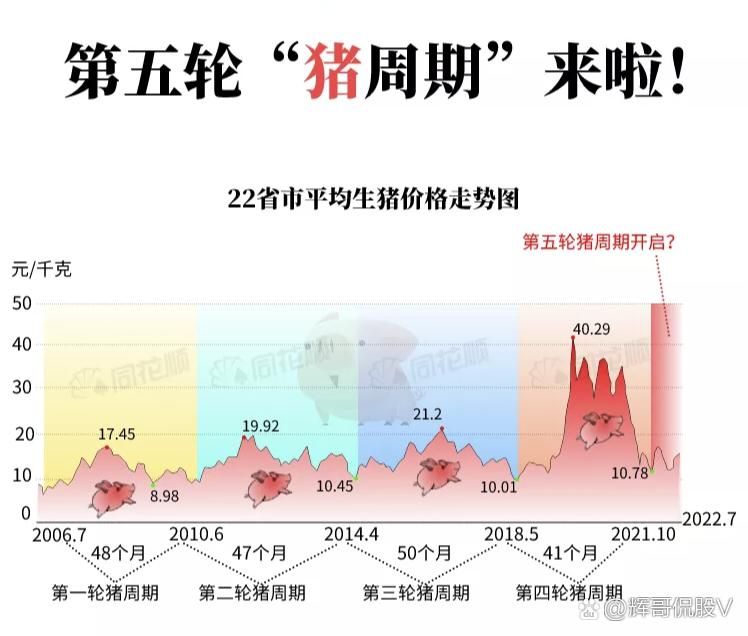
This downward spiral began in 2022 and has been going on for more than 40 months, close to the time of the previous full “pig cycle”. Occasionally, the price of pigs is at the bottom. It lasted more than 20 months, breaking the longest record。
It's a remarkable chronology in history
Is it "failed"
In fact, the cycle did not fail, but the underlying logic of the current cycle changed。
After the african swine plague in 2021, domestic pig farming was scaled up and market concentration increased rapidly. When the price of pigs fell in previous cycles, small and medium-sized farmers may panic and phase out the mother. Market concentration is now high, small and medium-sized farming is low, large farming enterprises are more resilient to risks, and may choose to maintain a stable production capacity, with previously irrational declines or increases in production significantly reduced。
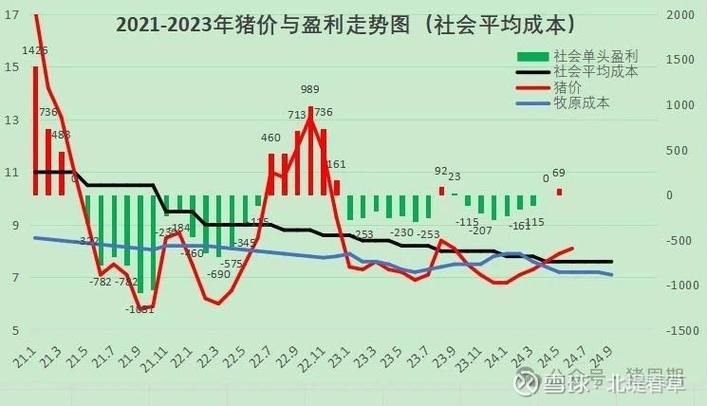
In addition, large-scale enterprise-led industries have meant higher production efficiency and significantly lower farm costs, creating conditions for lower pig prices. Under these factors, the cyclical characteristics of pigs are less pronounced than they were before, more volatile and, to some extent, longer。
The cycle of pigs is affected by supply and demand, while our demand for pork has been relatively stable, and price fluctuations have mainly resulted from changes in the supply side. Thus, the main reason for the current low price of pork is the relative excess capacity of the previous period。
There's an uplink
Did the longest pig cycle come
At the heart of the increase in prices on the eve of noon was the concentration of pre-mortar slaughterhouses, the short-term rise in market acquisition demand, the direct heating of the pig industry and, more importantly, the increase in demand for holidays。
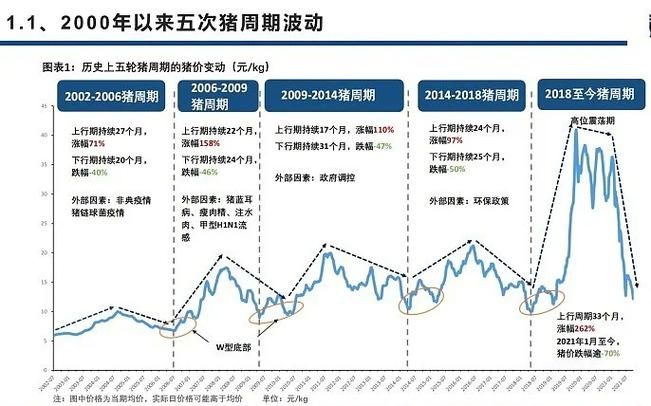
It is also important to see whether the evaporation of production capacity ends. Market judgements decompose expectations, the most important indicator of which is the availability of sows, which determines the availability of pigs in the coming months。
With policy guidance, starting in the last four quarters of the year, the capacity of the able-bodied pigs has been steadily declining and production capacity is being cleared. By the end of the first quarter of 2026, the country had a capacity of approximately 3. 904 million sows, which has been declining over a period of many months, but is still above the normal holdings of 375. 5 million, with approximately 1. 5 million space. As the industry deepens, the price of pork is expected to rise in the future。
More importantly, industry-wide competitiveness is improving and management is being optimized, and these initiatives will keep the fluctuations in raw pig production within a reasonable range. In the future, there will be a marked increase in the stability of the supply of raw pigs, and it may be difficult to see any further major increases and drops. This is good for consumers and farmers。
(in russian)









