


On 27 august, the thirty-sixth meeting of the 15th municipal people's congress considered the report of the special working group on medical security in kunming city (hereinafter referred to as the report). According to the report, the current restrictions on the residence registration of residents of kunming have been completely eliminated, and all residents of kunming have access to health insurance. The city-wide pilot of the reform of the national health insurance agency (nss) has been instrumental in breaking down bottlenecks, difficulties and improving quality, promoting health care, medical care, medical coordination and quality development。
According to the report, as of the end of july 2026, 6,1239,000 people were covered by basic urban and rural health insurance throughout the city, and special groups such as special hardship, low coverage and monitoring target groups had been included in the government's funding list to achieve “full coverage and zero dynamics”. In parallel, 42 targeted hospitals have been set up, with 17480 newborns attending. An average of 85. 45 per cent and 70. 53 per cent are reimbursed for hospitalizations within the framework of the policy of employees and residents. A total of 2. 95 million out-patients have been reimbursed for the reform of outpatient clinics. The standard for the dry settlement of general out-patient cases for urban and rural residents has been raised from $30 per person to $36 per person per year. The “one-stop” settlement is fully covered, with over 90 per cent reimbursement within the post-rescue policy。
As a pilot city for the second series of long-term care insurance throughout the country, kunming, in june 2025, included provincial employees in the security system, with a view to bringing them together in the same way as the rest of the city, vigorously boosting the city's care industry, attracting social capital into the old-age sector, releasing and adding more than 10,000 new jobs, and achieving the “mass, industry and government” win-win situation, creating a replicable kunming experience. As of 10 july 2026, the maternity check-ups for workers and residents who have met the conditions for contributions are included in the general out-patient reimbursement, and flexible workers who have met the conditions for contributions are entitled to maternity benefits. By the end of july 2026, 1587,000 people were covered by maternity insurance and 692,000 were covered by maternity insurance. Inclusive business insurance provides a useful complement to achieving universal coverage for infants and young people up to the age of 100。
As the first drg-paying pilot city in the country, kunming has continuously promoted reforms towards precision and inclusion. Since 2026, the payment rate for complex cases in medical institutions has exceeded the drg rate, applying for a “special case list” has been raised from 3 per cent to 4. 5 per cent every quarter from the previous year. The medical community has been able to pay for the development of primary health-care institutions. At present, seven districts (municipalities) such as psychiatry, jinning, huahua, chao-tian, luangming, rich and yi liang have implemented a package-pay reform, and the expenditure of the consolidated fund has fallen each year to almost 2 per cent each year, subject to a small increase in the number of hospital admissions in the pilot districts. By the end of july 2026, kunming had successfully completed four batches of medicines, four batches of medical consumables, a total of 225 drug varieties and 12 major groups of medical consumables. The average reduction in the price of pharmaceutical consumables was 39 per cent and 69. 2 per cent, respectively. The cumulative savings were 2,054 million yuan for the purchase of medical supplies in health institutions throughout the province and 1,335 million yuan for the medical insurance fund。
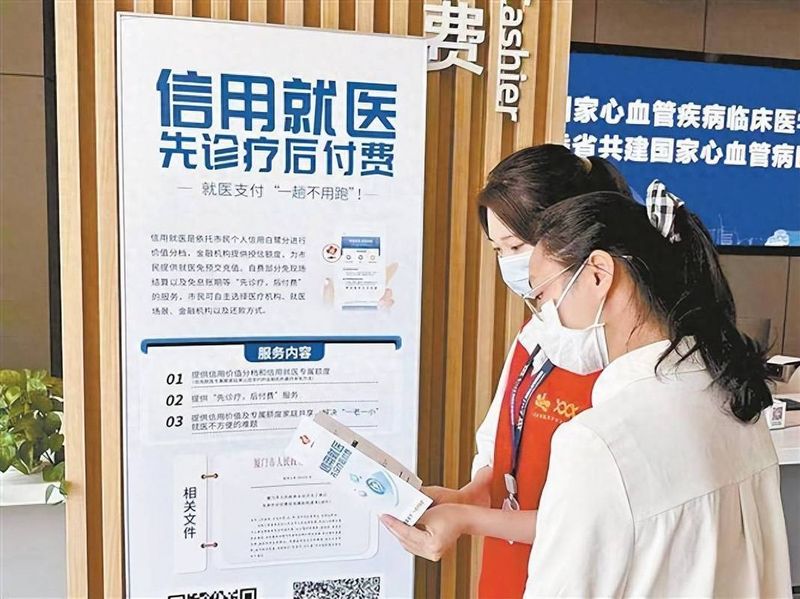
Kunming streamlines the “whole-of-the-art” process and speeds up payments. As a pilot area for “four payments”, the national health insurance board has established the integration of easy payment methods such as mobile payments, brush payments, and eight level-point health-care establishments are on-line “bed settlement, handbag discharge”, with a cumulative settlement of 1,489 million cases; the project “pays after visits” has been promoted as a priority livelihood project。
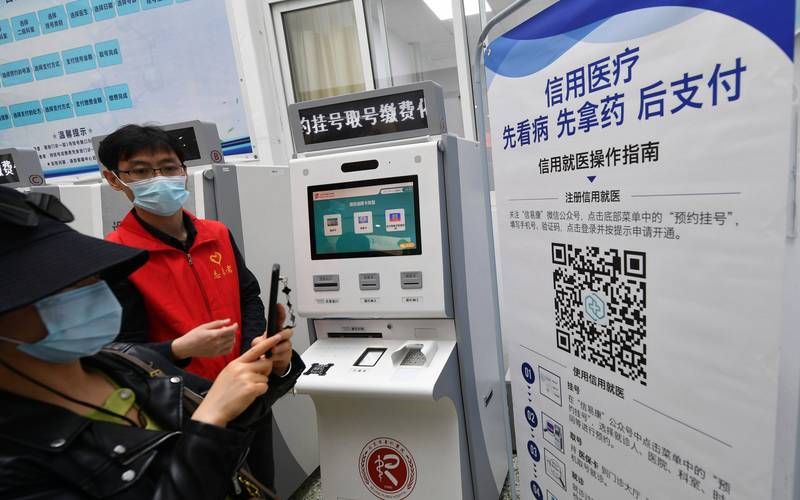
To achieve the goal of a maximum of one-time fee for admission to medical care by reshaping the medical treatment chain and the medical fee process, the overall accessibility, experience and satisfaction of insured persons are improved. As of july 2026, 142 health-care facilities throughout the city had opened communications, over 995 million insured persons had activated credit payments and financial institutions had cumulatively awarded nearly 600 million yuan. Kunming has taken the lead throughout the province in making the maternity allowance available directly to individuals. At present, the health services of kunming city have processed and disbursed 41,097 applications, amounting to $976 million。
As a next step, kunming will focus on the piloting of the reform of the national health and safety service, on the development of a dedicated response to the crisis, on the implementation of an expanded programme of participation, on the “webling + big data” mobilization, on focusing on key groups such as flexible employment and workers in new forms of employment, children and adolescents, and on special groups, focusing on “discretionary zeroing” of participation, both on the growth of the total volume and on the quality of the structure, on the consolidation of the “school children's school season” insurance mechanism, and on the integration of the tax sector to optimize the online contribution process and reduce the break rate. The development of a long-term care system and a three-year plan of action for the long-term care insurance system in kunming city will take about three years to gradually align itself with the country's clear reform directions and policy prescriptions. To promote the integration of workers ' and residents'sickness insurance, to explore the establishment of a pool of workers ' and residents'sickness insurance funds, to consolidate the management of accounts, to harmonize their use, to increase the impact of the fund's size, and to improve the overall risk-proofness of the city-wide insurance scheme. (c) to secure the smooth progress of the reform by capturing the pilot policy of paying for the most vulnerable chinese patients, by keeping track of the year-round pilot operation data, and by keeping a close eye on core indicators such as admission, settlement of costs and moderate rates. (c) continue to promote pilot standardization of disease-based payment packages, explore linking data reporting results to point agency agreement management, health insurance fund budget, payment policy adjustments, etc., and direct medical institutions to provide high value for money medical services. To enrich the personal health-care landscape by exploring new ideas, increasing information-building, increasing the number of medical institutions on the line, expanding the coverage of “four-payment” settlement services, promoting the multi-species matching of payment patterns and making them accessible to the public. To explore the easy access to maternity benefits, which are “free of charge”, to automatically complete the information check, account for and distribute the benefits through the health insurance system, to effectively reduce the burden on families in childbirth, and to provide medical support for the construction of a productive society. (reporter toya)









