


¥ is the symbol of the renminbi。
Article 15 of chapter iii of the law of the people's bank of china provides that “the legal currency of the people's republic of china shall be the rmb”. When the people's bank of china was founded on 1 december 1948, the first rmb was issued; the second rmb was issued on 1 march 1955; the third rmb was issued on 15 april 1962; the fourth rmb was issued on 27 april 1987; and the fifth rmb was issued on 1 october 1999. A fifth set of renminbis was in circulation in 2014. On 12 november 2015, 100 yuan of the fifth set of yuan was replaced by a luxurious form of gold。
The rmb is in the form of a dollar (round) (rmb ren min bi, short of rmb, codenamed rmb). The rmb is divided in an angular unit. The renminbi does not prescribe a statutory amount of gold, and it performs such functions as value scales, means of circulation, means of payment, etc。
It's a story
“¥” is the symbol of both the rmb and the currency representing the rmb and the unit “dollar” of the rmb. When an arabic numeral is used in economic transactions and accounting, a symbol “single” is inserted before the first amount, which prevents the addition of a number to the amount and indicates the amount of the renminbi. Since “thing” per se represents the unit of the renminbi, it is not necessary to add the word “dollar” to the amount for which the symbol “thing” has been added。
So, how did the synonym of the yuan “sniff” come about? It dates back to the period of the republic。
In 1935, the pnp government reformed the currency system by imposing, in the form of the rule of law, the currency in circulation, the “french currency”. The french currency was initially compared to the pound sterling, and it was then tied to the dollar as its role in the international market grew. Thus, the french currency symbol is written as “$” by borrowing a dollar symbol。
On 1 december 1948, the people's bank of china was founded and the first chinese renminbi was issued, but in the early days of liberation, the arabic numeral amounts were written with the habit of using “$” as a header。
It was not until 1 march 1955 that the people's bank of china issued a second set of renminbi symbols that formally identified the renminbi。
Since the yuan unit is a "dollar" and the chinese spelling of the "dollar" is a "yuan", the symbol of the renminbi is the first letter of the "y" in the chinese spelling letter. In order to distinguish between misperceptions and misperceptions between “y” and arabic numerals, the word “sing” has been added to the word “y”, and the pronunciation remains “dollar”. Since then, the rmb has been used as a symbol of the rmb, which is used as a header when writing the amount of the number, such as the rmb 100 for “long rmb 100” or “rmb 100”。
Symbolic release of suspicion
The half of song is a two-barrel, and the whole of song, italic, and bold is a one-barrel; `the whole and the half-angle are a two-barrel'; some english fonts (e. G. Arial, couriernew) do not have a full-angle “twirl”。
In different fonts
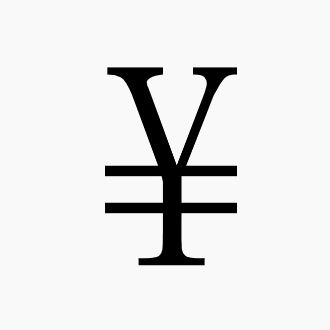
Song
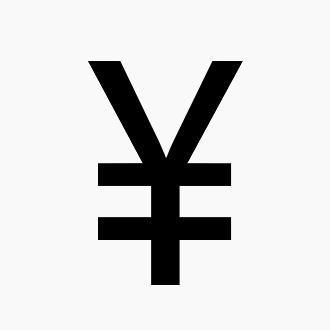
.
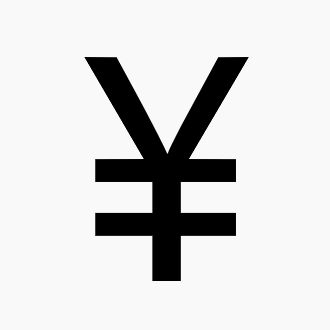
Ariel
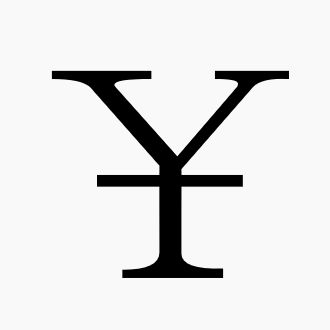
Song
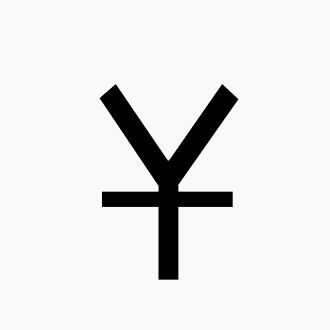
Italics
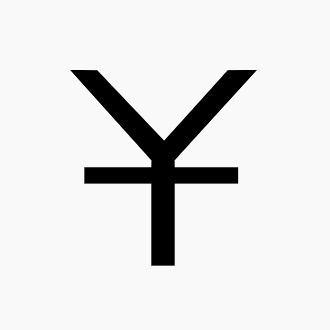
Bold
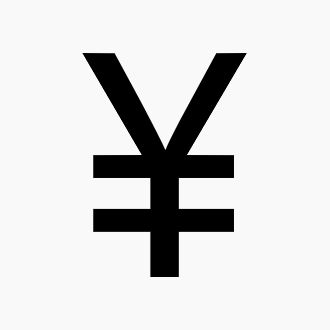
.
On 1 march 1955, the people's bank of china issued a second set of renminbi, which was officially identified. Since then, the rmb has been used as a symbol of the rmb, which is used as a header when writing the amount of the number, such as the rmb 100 for “long rmb 100” or “rmb 100”. The rmb is read as a circle (yuan), with the opening letter y, and a symbol of the rmb shall be inserted in the middle。
The japanese yen is read as y and begins with y. There are many arguments as to why a two-brand marking of japanese yen should also be added to y. While it is generally accepted that the two vertical formulations are similar to the united states dollar, some japanese patriots believe that the japanese reading of “twice” has a “two” and that “twice” has the meaning of “two” in japanese, so add two lines to the letter y to form the japanese currency symbol。
With regard to the distinction between the two monetary units, the general practice is to distinguish between the two currencies by adding the cny before our currency symbol or by adding the jpy before the yen. But in japan generally, of course, the currency symbols are rarely marked, so they are generally seen, except in some chinese shops, etc。









