


Both GDP and gni are essentially artificially designed metrics that reflect only one side of the economy。
In the sna, the three aggregate indicators of GDP, gnp and gni are interrelated and focused on the two dimensions of “subdivision production” and “personal income”, respectively, and provide a complete picture of the scale of a country's economic development and the level of income generated by people, constituting a fundamental measurement tool for macroeconomic governance and international comparisons。
Territorial accounting for the scale of production and the measurement of returns to the population
Gross domestic product (GDP), measured as the final result of the production activity of all permanent units in a country or area over a period of time, equal to the sum of the added value of all permanent units. The core logic is “subsidiary production”: the output generated by production within our territory, whether domestic or foreign, is included in GDP. As a typical production concept, it reflects intuitively the region's total economic expansion and industrial growth dynamics and, in general terms, answers “how much cake is done”。
The gnp (gross national product) measures the end result of the initial distribution of income by all permanent residents of a country or region over a period of time, equal to the sum of the initial distribution of income by all permanent units. It is based on the principle of “personality”, which covers the income of property and labour acquired by residents of the country, both within and outside the country, excluding material gains obtained in the country by residents outside the country, which is essentially an income concept, and the answer is “how to split the cake”。
The gni (gross national income), often commonly understood as the gross income of the population, was the unified renaming of gnp by five major international organizations, including the united nations, following the revision of the 1993 sna in 1993. Since the core of gnp is to measure income, the name “GDP” is ambiguous and therefore changed to gni. Its accounting formula is clear and clear: gni = GDP + net external factor income (residence earnings from abroad less remittances from foreign nationals)。
Thus, the difference is clear: GDP measures “the total amount of economy created on chinese territory” and gni measures “the real income that all chinese earn globally”. If GDP is depicted as the production scale of the “china economy”, gni shows the real income level of the “china economy”。
To evaluate economic growth, industrial capacity and regional development as a whole, giving priority to GDP; to assess the income of the population, the well-being of the population and the distribution of the benefits of globalization, giving priority to gni. They are complementary and do not become obsolete. It is important to note, however, that over-reliance on GDP indicators may induce some areas to rely too heavily on the expansion of infrastructure and short-term financial inputs to pull aggregates, which objectively weakens the nurturing of long-term core competitiveness, such as industrial blood production capacity and sustainable revenue generation mechanisms。
Good use of global standards and rational understanding of the value of GDP indicators

In the current system of global economic governance, gni has become a central measure of the effectiveness of internationally common rules. The world bank, the united nations, the international monetary fund, oecd and others have all used it as an accounting benchmark and have accumulated a well-established and unified basis for international practice。
First, the world bank's income cluster system has been using atlas atlas since 1993 to rank income levels in the global economy at per capita gni, directly determining the level of lending and financing preferences of countries, and updating the criteria in july of each year. According to the world bank, the high income threshold, effective july 2025, is $13935 for gni per capita (the latest 2027 fiscal year criterion has been revised upward to $14375) and the classification criteria have globally accepted policy validity。
Second, the assessment of the united nations was strictly based on the principle of capacity to pay, based on member states' global share of approved contributions for three to six consecutive years. The results of a country's gni accounting directly affect its international financial responsibility and its voice in global governance。
Third, developed economies, such as the united states, germany, the united kingdom, france and japan, regularly publish data sets on GDP and gni simultaneously, giving priority to gni in relation to income, well-being and cross-border earnings, creating a mature statistical paradigm of “GDP for aggregates, gni for livelihoods”。
At the same time, we need to understand rationally the value of GDP indicators over the years. Until the beginning of the reform and opening up to a new era, my country was in a long-term stage of development, with a weak economic base, a weak industrial system, low per capita output, large economic aggregates, complementary short-term development and high growth being the first priority. GDP is intuitive, quantifiable and horizontal, and highly compatible with the need for a “catch-up development” phase, which is the best statistical option to adapt to national circumstances under certain historical conditions and is deeply marked by the era of industrialization and urbanization in our country, whose historical contribution cannot be denied。
Responding to high-quality development requirements and contributing to a deep leap in accounting logic
As we enter a new era, the stage of our economic development has undergone a historic transformation, with the theme of development shifting from high-growth to high-quality development. Economic development must be measured not only in terms of the size of output in the territory, but also in terms of the real benefits that the entire population has derived from economic development. The traditional single GDP accounting system is becoming more and more visible in reflecting in its entirety the global sense of wealth creation and real access to the population; and the application of gni indicators has a solid foundation of realism and sufficient policy necessity。
First, GDP does not fully cover the value creation of our globalized business. The high level of openness to the outside world has been advanced, with outward investment by our enterprises, a growing transnational industrial chain, and a large number of operators deeply involved in the global division of labour. By the end of 2025, our ofdi stock stood at $35,78. 7 billion, the third largest in nine years; offshore enterprises established by domestic investors covered 190 countries and territories worldwide. Earnings derived from the operation of entities abroad, such as profits, dividends and remuneration for labour, are excluded from the domestic GDP by the rules of territorial accounting, but are attributable entirely to our residents and businesses and represent a core increase in the wealth of the people. A single GDP system that only accounts for domestic production gains and ignores the benefits generated by large amounts of overseas assets for the population will inevitably lead to structural deviations in the assessment of the country's combined economic power and wealth base。
Second, the “revenue-scissors gap” between GDP and gni in 2025 reflected structural issues of concern in the distribution area. According to preliminary calculations, our gross domestic product (GDP) totalled rmb 140. 19 trillion in 2025 and gross national income (gni) totalled rmb 139. 37 trillion throughout the year. Intuitively, the difference between the two shows that current foreign residents and foreign-owned enterprises derive more factor gains from our territory than our residents and the net earnings of enterprises abroad. Objectively, the cross-cutting growth of GDP over the past few decades, based on the introduction of foreign investment and cooperation in global industrial chains, has provided the key support for industrial upgrading and employment expansion; but the long-standing balance of gains also means that a portion of the huge output generated within the country is made up of profits, assets and foreign exchange earnings, which are not fully translated into disposable income for the population. While GDP has increased overall economic cakes, there is room for a further increase in the real share of income to be distributed among the population, which is also a better way to leverage the important role of the gni indicators in identifying structural gaps in income distribution。
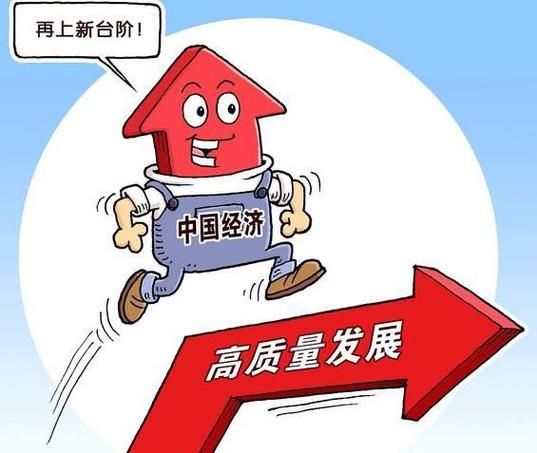
Third, high-quality development inherently requires a shift in the accounting logic from “subdivision output” to “generic people”. The integrated refinement of the system of GDP and gni indicators is essentially a paradigm upgrading of the concept of development: the shift from a single focus on the size of production within the country to a simultaneous focus on the real income of its inhabitants worldwide is highly compatible with the people-centred approach to development. Quality development is ultimately about improving the well-being of the population, and the direct allocation of gross income by the gni is a more accurate and objective reflection of the real income level of the population and the improvement of life, effectively filling the inherent gap of GDP in measuring only production without measuring returns。
Fourthly, the voice of global governance must be raised and internationally accepted statistical standards must be met proactively. The world bank income group, united nations membership approval and multilateral trade and economic rule negotiations are all based on gni as the core measure. Within the framework of these international rules, it is difficult to fully demonstrate the practical results of economic development and the international contribution to the realization of legitimate development interests if our national accounting system differs from international standards。
At the top design level of the country, a unified strategic consensus has emerged: the refinement of gni accounting and the integrated application of the two main indicators have gone from academic exploration to deployment to national governance. The central deployment of economic and social development during the “155” period has a clear orientation towards the integrated use of the two indicators of GDP and gni to measure development effectiveness, providing fundamental adherence to the optimization of statistical systems. The full integration of gni into the “fifty-five” system of national economic normalization accounting is a key initiative for improving modern statistical systems and improving the science of macroeconomic governance。
To argue for the usefulness of indicators and move forward in a steady way
Statistical tools are only tools to help us understand economic realities, not development itself. Both GDP and gni are by nature artificially designed metrics that reflect only one side of the economy, and there is no single indicator that can exhaust the full range of economic, livelihood, equity, and green development。
It is important to clarify the relationship between the two main indicators: large GDP aggregates are the material basis for increasing gni and developing cakes, which are progressive and complementary, and are not a substitute for rival relationships. Without the size of the domestic industry and the continued expansion of the real economy, the accumulation of employment, wage income and capital for investment abroad will not be possible; but the goal of high-quality development and mutual enrichment will be difficult to achieve if only the expansion of GDP size is pursued, neglecting the retention of the civilian population and the return of foreign assets. Thus, neither the historical value of GDP can be denied because of its limitations, nor can it be turned into a unique test because gni is more responsive to current needs。
At the heart of the adaptation of statistical tools lies the development of innovative thinking, rather than simply replacing digital appraisal indicators. From focusing on GDP growth to integrating GDP and gni, the essence is a profound shift in development orientation: moving away from “growth-only” and setting evaluation criteria with people’s well-being at their core; and moving from territorial size to income orientation. In the absence of simultaneous innovation in the concept of development and in the logic of evaluation, even the introduction of gni accounting, one-sided pursuit of gni figures tends to ignore the underlying structural contradictions of income distribution, cross-border gains and industrial competitiveness and to depart from the original intent of indicator optimization。
The implementation of the reform of the statistical system must be based on the principle of realism, balancing the need for reform with the viability of the land. A solid data base is feasible. Customs, commerce, taxation, foreign exchange management and statistics have developed a chain-wide data collection system covering cross-border investment, offshore factor receipts, and foreign profit remittances, backed by solid data for normalised and accurate accounting of gni. Second, it is important to draw on international and mature experience and to keep pace with national circumstances. The standard united nations sna accounting standards, the world bank statistical framework, while building on the unique development phase of the country's large-scale foreign investment and the rapid growth of foreign investment, build local accounting rules appropriate to china's modernization. Thirdly, it should be carried out in a steady and prudent manner. Gradually refine the application of the gni normalization index release and appraisal. It is recommended that historical data backtracking for 10 consecutive years prior to official landing be completed ahead of schedule, using standardized, scientifically rigorous statistical accounting methods, in a holistic manner to guarantee longitudinal comparability of data over the years and horizontal compatibility of international calibres, and to circumvent the data faults and distortions resulting from frequent and large-scale adjustments of statistical calibres。
It is necessary to build on our stage of development and to grasp the basic national context. Our combined national capacity, economic aggregates and industrial competitiveness have made a historic leap, but it is still the largest developing country in the world and has yet to meet the standards of developed countries. With the successive upgrading of development conditions, the optimization of economic metrics and the strengthening of the application of the gni indicators are realistic and objective; a combination of GDP and gni indicators will make it possible to reflect the real gains of the population more comprehensively, to promote more equitable and sustainable development outcomes for the entire population and to ensure that the benefits of modernity are effectively shared。

Focus on the three essences of the instrument so that it doesn't reverse
There is a fundamental consensus throughout society that statistical tools should serve our understanding of the real state of economic development and that their core value lies in the objective presentation of developments, the identification of structural gaps and the underpinning of scientific decision-making. The soul of statistics is real and objective. The scientific, rigorous and continuous nature of accounting methods should be maintained at all times, so as to avoid artificial calibration of statistics as a result of review-oriented changes so that data can truly be a reliable yardstick reflecting the true state of economic performance。
The starting point and starting point for economic work must always focus on three core elements: the continued expansion of the wealth of the population, the steady improvement in the quality of life of the entire population and the steady increase in the strength of the integrated state. To that end, it is important to focus on three areas of practice。
The first is to make the real economy of the country and the global benefits of being strong people. There is a need for sustained improvement in domestic productive capacity and economic size, as well as in the domestic employment and industry base; and for sustained support for high levels of enterprise “go-out”, optimizing the distribution of overseas industries, increasing the profitability of offshore assets and the efficiency of their return, and enabling overseas earnings to feed strongly domestic development and livelihood improvements。
The second is that sti drives both GDP and gni growth. The upgrading of gni is highly dependent on high-end factor outputs such as technology, brand names and intellectual property rights. Only through sustained development of new quality productivity, higher value added for export products, knowledge-intensive trade in services and greater voice for our enterprises in global value chains will we be able to increase the domestic GDP while increasing the net external factor earnings of our residents, continuously reducing the earnings gap between GDP and gni and allowing the public to fully share the benefits of globalization。
Thirdly, the gni indicators enable shared wealth and higher well-being. Analysis of income, quality of life monitoring of the natural eligible population of gni. Localization should be carried out using gni disaggregated data to track income disparities between urban and rural residents in their initial distribution, cross-border distribution patterns, precise revenue-generation and allocation-regulating policies, solidly promoting mutual enrichment and providing greater and more equitable coverage of the entire rural and urban population in modern construction。
In the final analysis, the statistical indicator system has been optimized, and GDP and gni combined. The fundamental objective is to have a more accurate understanding of economic performance patterns, more scientific macro-governance, and more effective protection of the fundamental interests of the population. We must both have the courage to move forward with the reform of the statistical system and remain committed to the work of being realistic and steady; to reject the “GDP-only” theory and to the other extreme of the “gni-only” doctrine, and to always be the ultimate judge of all economic work by whether it promotes high-quality development and the well-being of all people。
(special expert of the shanghai federation of financial industries, director of the offshore financial research institute, and senior staff of the shanghai federation of financial industries, wang peng department)









