


Cnc processing has been one of the most commonly used and reliable manufacturing methods in product development, engineering certification and small batch production. Whether the aluminium alloy structures, stainless steel functions, or engineering plastic parts such as pom, abs, pc etc., cnc processes achieve a better balance between precision, strength, surface mass and delivery efficiency。
This paper will provide a systematic presentation of the underlying principles, main process types, common materials, precision ranges, surface treatment, application scenarios, cost impact factors and design optimization recommendations for the cnc process, to help you understand the cnc process in its entirety and to advance the development and manufacture of components more efficiently。
I. What's a cnc processing
The cnc process produces parts and components that meet the design requirements by cutting metal or plastic materials through computer numerical control systems to control the engine bed track, main axle velocity, flow velocity and blade path。
Cnc processes have a higher degree of automation, more stable precision control and better batch consistency than conventional machine processing, and are widely used in aerospace, robotics, car manufacturing, medical equipment, automation equipment and consumer electronics。
Ii. Rationale for the cnc process
The cnc process is a process of material abatement, i. E., the removal of excess materials from the plate, rod or piece of material through a knife and the eventual acquisition of target parts. Following the 3d model provided by the engineer, the process engineer performed the programming, development of a knife path, selection of the loading programme and processing parameters, which were then processed by the machine bed。
Receipt of 3d models and drawings for dfm and process assessment cam programming to generate blade preparation kits, materials and knives for rough processing, semi-precision, precision testing, deciphering and surface treatment
The main process type of the cnc process
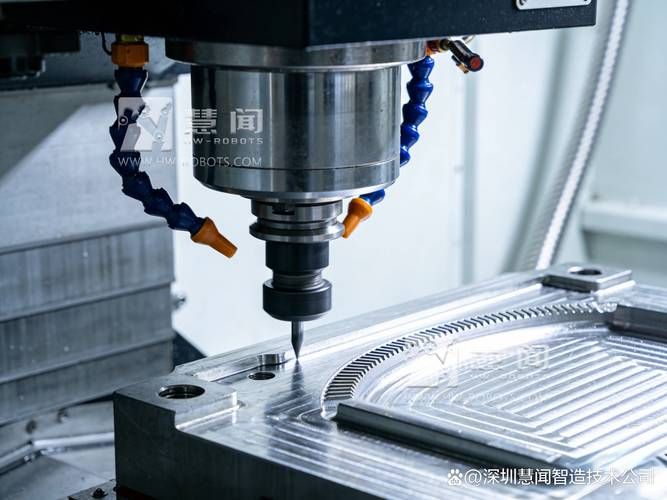
Cnc cutting is the most common method of processing, suitable for flats, steps, slots, cavities, contours, curves and multi-faceted parts。
2. Cnc carjacking
This applies mainly to cylindrical, axial and rotor-type parts, which complete the processing of outer circles, inner holes, end and screws。
3. Drilling, laceration and poaching
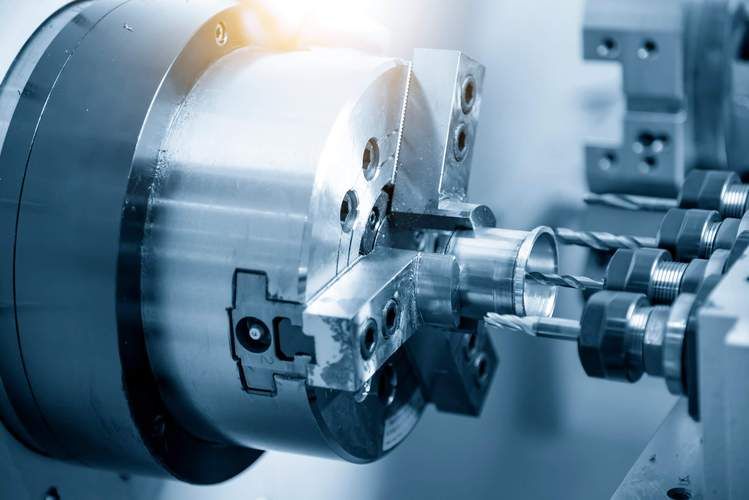
Often used for assembly structures and precision connectors, with high requirements for holes, apertures, screw mass and coaxis。
4. Three-axis, four-axis and five-axis processing
The three axes are suitable for most conventional components, and the four axes and five axes are more suitable for complex multi-faceted structures, heterogeneity and high precision complex parts。
Iv. Common plastic materials for the analysis of common metal materials in cnc processing
V. How much precision can cnc process achieve
The cnc processing precision is influenced more by machine-bed capacity, material properties, the state of the knife, the method of assembly and the complexity of the structure. In general, conventional processing precision can be contained in the range of 0. 1 mm, higher requirements in the range of 0. 05 mm, and partial precision structures in the range of 0. 02 mm or higher。
For assembly sizes, axle-coated sizes, seal surfaces and functional critical dimensions, it is recommended that emphasis be placed on public deviation requirements; for non-critical dimensions, no uniform use of tight public deviations is recommended to avoid a significant increase in manufacturing costs。
Vi. Further worth and positions
Once the cnc parts are completed with the basic cutting, surface treatment is usually based on appearance, corrosivity, grindability and functional needs。
Vii. Applications for cnc projects
When projects require real materials, higher intensity, higher precision and better assembly consistency, cnc processing is usually the preferred option。
Cnc processes differentiated from 3d prints, apostilles
3d printing is suitable for rapid formation, complex internal structures and partial appearance validation; cnc processes are more suitable for real materials, high-strength functional components and sophisticated assembly structures。
Cnc processing vs
Note plastics are suitable for mass production, but they require the input of moulds; cnc is suitable for pre-speculation and small batch testing, without need for modelling and with more flexibility in design。
Ix. Core factors influencing the cnc processing quotations
The price of spare parts does not depend solely on size, but more on process complexity, precision requirements and reprocessing requirements。
X. How to reduce cnc processing costs through dfm
What do you need to do before you put it down
Xii. How to select a reliable cnc processing supply business
Capacity to build cnc processing services
On demand, industrial-grade components of cucumber focus are manufactured to support the synergy of processes such as cnc processing, 3d printing, gold processing, retrofitting and vacuum modelling. For cnc processing projects, materials selection, dfm assessment, structural optimization recommendations, sample samples and small batch trial support can be provided。
Need a cnc processing sample or small batch trial production
Upload 3d drawings to obtain engineer dfm assessments, material proposals and quotations。

Upload the drawings immediately to the engineer
Common problems faq
How many parts are suitable for cnc processing
Cnc processing is usually suitable for single sample, functional sample and small batch testing. For 10, 50 and 100 to hundreds of projects, the cnc process usually remains relatively flexible. If the quantity continues to rise and the structure is stable, it may be re-evaluated whether or not to switch to a plating or other process。
What document formats are commonly used in cnc processing
Common 3d file formats include step, stp, iges, igs, x t, etc. It is recommended that 2d drawings be made available at the same time when critical dimensions, commons, threads or surface roughness are required。
What is the precision of the cnc process
The conventional processing precision is usually around 0. 1 mm, with a higher requirement of 0. 05 mm and a partial precision structure of 0. 02 mm or higher depending on materials, structures and process options。
What are the options for cnc processing and 3d printing
If the focus is on appearance validation, rapid formation or complex internal structure, preference may be given to 3d printing; if the focus is on real material, strength, precision and assembly functions, the cnc processing is usually more appropriate。
No complete drawings. Can we start with an offer
Yes. Where 3d models and basic use statements already exist, initial assessments and forecast prices can normally be made. A subsequent addition of 2d drawings would be more accurate where key public transport, screw or assembly relationships are involved。









