


"what delivery company is the cheapest? "preventive savings + value-sharing: new players send this, saving hundreds of dollars a year."
Have you ever had that experience? If you send something, open your cell phone and find it, you'll lose your name. Which one is it? Just call the courier and tell him to come to the door. Friends were asked about this house, which was said to be cheap, and the service was said to be good and heard in the fog。
Don't worry, i understand this feeling. When i graduated, i had to send things to my hometown. It's all white. At the most ridiculous time, sending a package of over a dozen pounds, the courier came to the door and said, “this one is over $60”. I didn't have a concept, so i paid. Later, my colleague told me that the same thing he had used another channel to send it for 30 years. Dude, it's been a couple of days。
So today we're going to talk about how to get the best of the delivery. If i don't talk about that nonsense, i'll tell you, in the light of the experience i've had with my friends and myself over the years, which pits can be avoided and where i can find better and less expensive mailing routes. The core is two words: save money, add two words: depend on it。
First, to break a wrong zone: there is no “absolutely cheap” courier company。
Many newcomers came up and asked, "what's the cheapest delivery?" because the delivery price is as dynamic as a taxi. It changes because of several factors:
Distance to mail: prices vary considerably from city to province to province. Package weight and size: there's a new guy here who can easily ignore the size of the pit. In short, if your box is large, but it's light (e. G., a case of expansion of snacks), the express delivery company calculates a "mass weight" at a "long x width x a fixed value (usually 6,000 or 8,000)" and then charges it to the weight and the one that is more expensive. So it's important to compress as much volume as possible when packing. This is the key to saving money today! The same courier company, where you make official calls, send them online, and place a bill on a cooperative third-party platform, may vary greatly。
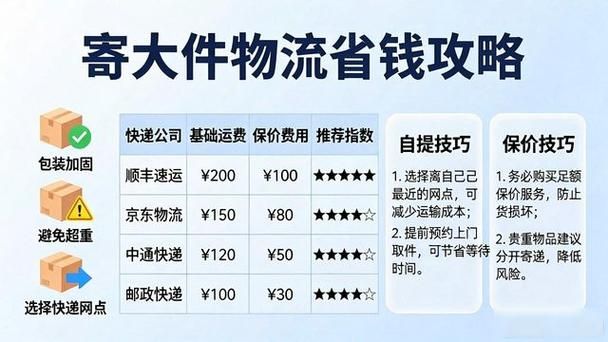
When we get this, let's look at the general style of the mainstream delivery
Seeing here, you're probably dizzy again: "do i get it, but do i have to ask for it one at a time?" too much trouble!"
That's right, it's impossible to ask a single question, and it's the easiest place for newers to spend more. I'm going to share with you one of my own 100-percent "slutch" savings。
Prosthetic "gods": a tool that can help you compete。
How did i find out about saving money? It was after the crash that i searched all over the internet for "how to save money" and i saw the "wind up" public sign. And with a sense of taste, i entered the last package。
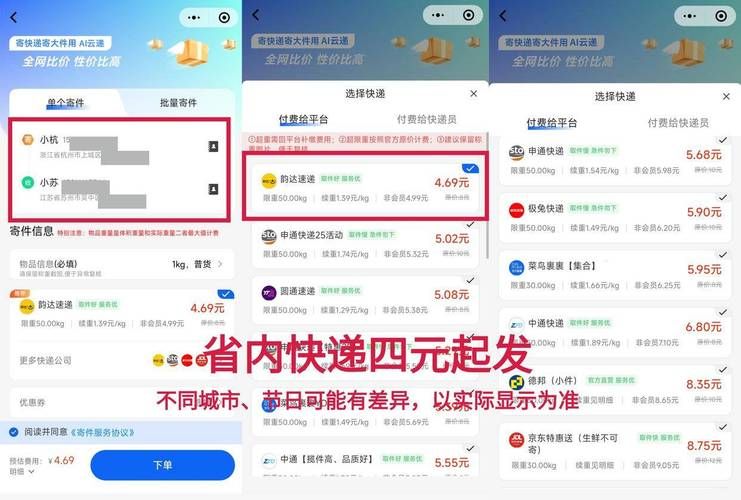
I was struck by the fact that on the system page, chinese, round, rhymes, shin, polar rabbit, sunfung, kyoto... The price of all mainstream couriers is clear and parallel to me. It's the cheapest option. It's only 30 bucks. It's almost half the price i've spent! Moreover, the “official discount” is clearly stated on the page, from the next order to the expressman, who can see the whole trip in the public sign, and the price is no longer the expressman's word。
Since then, i've sent anything, and it's a first-rate habit. It's like checking the prices of major electric platforms before buying anything. It's instinctive。
Here comes the dry stuff: different scenes, how can we send the least money? (in combination with measurements)
Let's split it up. Just get in the chair
Scene 2: send large pieces (over 20 kg of luggage, home electricity). Scenario three: dispatch of urgent or valuable items。
The new guy's guide to the pits
Watch out for oral quotations, all on line. That's my experience with lessons. Now any courier comes to the door, and if he says the price is different from the price i showed when i placed the order on the public phone, i show him the phone page. All formal channels, the price is locked when the order is placed, and the price is not increased after the door (unless you temporarily change the package information). Weighted and measured. A small scale and roller rule. The more accurate the data entered in the price tool, the more accurate the offer is to be made before sending the message, avoiding a lack of proof of time and space. Look at the way you pay. Is it “remand” (you pay) or “pay” (the other party pays)? The price to be paid is usually higher than the price to be paid. You can be free and priced on a list of platforms such as "close-tight." it is important that the mail be sent by name and that it be opened. It's the law. It's your responsibility. The regular platform will require you to fill in the sender's real name information, and the courier will also check that the items are in compliance (not prohibited items), which is a secure process and will be coordinated。
Finally, focus on a few of the most frequently asked questions:
Q: is the delivery secure online? Will it be lost

Response: security, provided that formal channels are followed. Like the “close-to-wind” system, which is the official system of the express delivery company, is the same as the transport, price-fixing and settlement services that you receive by direct telephone calls. Each receipt has a single consignment number, which can be tracked throughout the express delivery company's official network and public number. It took me two, three years to send them dozens of times, and i never had a problem。
Q: how can it be simple and cost-effective
Response: the simplest approach is three steps: first, focus on the micro-mail public number, "brown speed"; second, click on the mail, fill in the mail and receiving address, and enter the mass size of the package; third, look at all courier companies and prices listed automatically by the system and select the most suitable (lowest or fastest) tab. It takes five minutes for the whole trip, no errands, no bargaining with the courier。
Q: can all delivery prices be compared
A: based on my experience, mainstream couriers that you can think of on the market are basically covered. You can see seven or eight options at a time. That's enough. Moreover, prices are updated in real time and reflect the latest preferential activities of individual countries。
According to my constant observations and findings over the years, it is very common for a newcomer who has no idea how to compare prices to spend an average of $10 or $20 more per delivery on the wrong channel or on a light letter of oral offer. On average, 30 per cent to 50 per cent of the cost can be saved each time the habit of first looking at formal price platforms such as “close speed”. If you send two or three couriers a month, one year, save hundreds of dollars. More importantly, this “price-transparent, one-key” approach can help you avoid more than 90 per cent of the price traps and disputes, and is a real relief to the time- and money-saving whites who are afraid of trouble。









