


Energy is the basis of economic activity and the driving force behind economic recovery in the aftermath of the epidemic。
In the midst of a global wave of “carbons and” like fire, traditional sources of energy have increased in recent times, with higher coal and oil prices。
Natural gas is relatively clean, relatively low-carbon, and it has also collapsed, with the same booming season. Under the global “carbon-neutrality” trend, what will be the future of natural gas
One, booming and falling
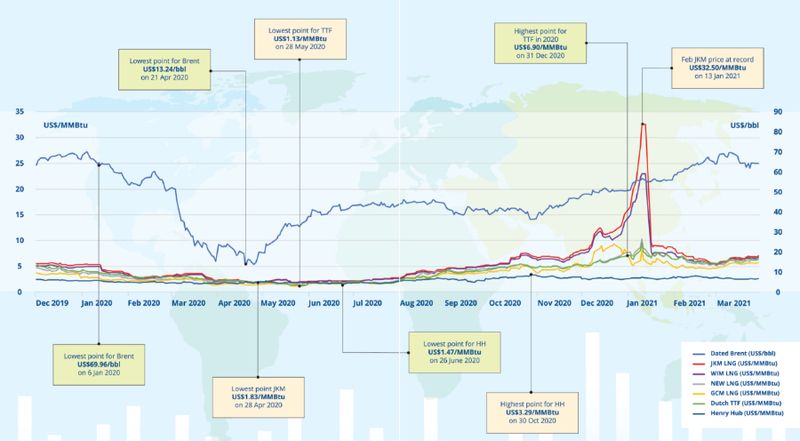
Figure 1: global gas price changes (igu)
Not only did wti create a historic “negative oil price” as a result of the severe global oil and gas mismatch in 2020 as a result of the epidemic, but global gas prices also followed closely to their lowest level in nearly a decade. The jkm pricing, which has been plagued by the “asian premium”, was almost the same as the us/eu gas prices for the same period, at a low of $1. 83/mmbtu。
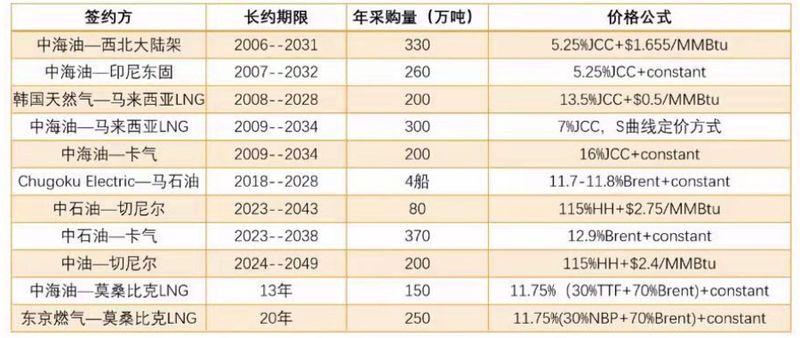
Figure 2: selected asian gas long-arranged price rules
However, only three months later, the price of natural gas deteriorated and was constantly high. At the beginning of this year, jkm went up to $32. 5/mmbtu (about $11,000/tonne) to make history again. This summer, gas prices are still high in the traditional low-demand season: the european ttf and nbp contract has broken $16/mmbtu in recent months, which is more than 13 times higher than last year's low point; the benchmark price of jkm in asia has reached $16. 9/mmbtu, which is nearly eight times higher; and even in the united states, where the shale revolution has already achieved an independent gas price scenario, the nymex contract has broken $4. 2/mmbtu in recent months, more than double the increase and inflationary pressure has multiplied。
Why? Short-term shipping factors? Capital markets? Global economic recovery is too fast? Short supply routes? Underproduction? What's behind it
Ii. The surge in demand
On the demand side, global consumption of natural gas has been at the top of all types of energy in the last decade, after the smaller base of renewable energy. Despite the nearly 3 per cent decline in global gas consumption in 2020, as the epidemic was gradually brought under control, the economies of the major countries resumed their growth, with successive commitments to the “carbon neutral” goal, a combination of climate factors and a rapid recovery in natural gas demand, the iaea predicts a 3. 6 percentage point rebound in global demand for natural gas in 2021。
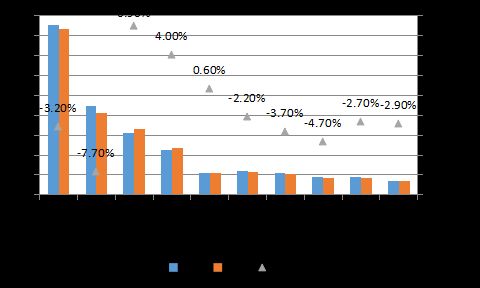
Figure 3: top 10 gas consumers (bp) worldwide
Global gas importers, mainly in asia and the pacific, china, korea and europe, do not fully agree on the pace and drivers of demand recovery across regions, either with increased order uncertainty or with greater impact on lng shipping charter fees。
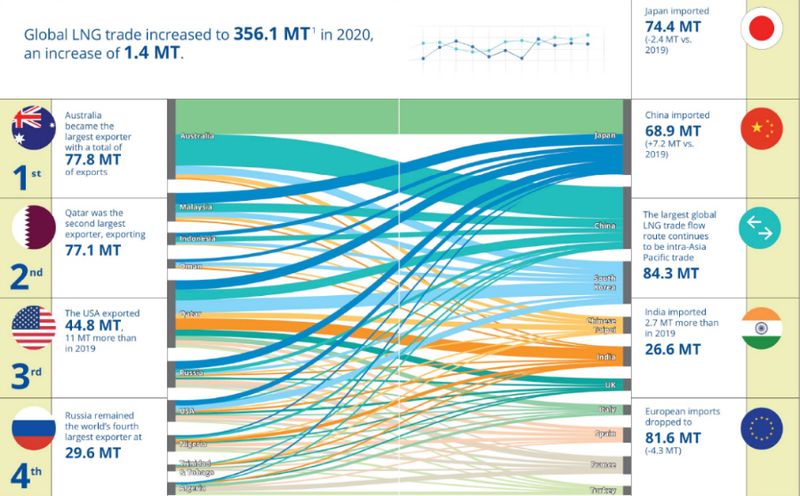
Figure 4: main global liquefied natural gas importing & exporting countries/areas (igu)
China's natural gas demand first rebounded. Mostly, the epidemic has been resilient, the manufacturing sector has recovered faster, and foreign trade demand has continued to boom, with chinese sea containers “hard to reach” and prices nearly 10 times higher than emerging markets such as india and viet nam. According to direct data, in the first seven months of the year, china imported 68. 96 million tons of natural gas, an increase of 24 per cent over the same period。
In addition to the planned conversion of coal-fired power plants to gas-fired power plants, japan and korea both declared a net zero emission target in 2020. The two governments, while divided on the approach to nuclear power, have achieved the same result: japan’s nuclear power re-launching programme falls short of expectations, while korea, which has more than a third of nuclear power, has “continuously advanced” its denuclearization campaign, and the new power supply can only be filled by gas units。
India is not committed to the “carbon neutral” goal, but gas imports are also increasing at a significant rate, with imports increasing by 11 per cent by 2020. The main reason for this was that, following the cancellation of some of the overseas lng contracts by chinese enterprises under the “force majeure clause”, india had reduced domestic inflationary pressures by using low-cost “concourse”。
For europe, natural gas substitution in coal-fired power plants has been accelerated mainly by its ambitious climate targets. In 2021, the eu carbon trading mechanism (eu ets) entered its fourth phase, increasing the eu's climate reduction target from 40 to 55 per cent for 2030, a significant decline in the total supply of carbon quotas, rising carbon prices, doubling the average price to about euro50 per ton, and increasing external costs for coal-fired power plants。
Iii. Supply mismatch
On the supply side, low oil prices and low gas prices necessarily curb upstream capital spending. In the year 2021, when the smog of the epidemic had not dissipated, global natural gas capacity had not increased significantly as demand surged, and investments in the billions of dollars of new liquefied natural gas infrastructure had been delayed。
In 2020, a global output of 3,85. 4 billion cubic metres of natural gas was 3. 3 per cent lower than in 2019. Production declined to varying degrees in major producing countries, except china and iran (see figure 5). Among them are major exporters such as australia, qatar, the united states, russia and turkmenistan, which face both financial and shipping constraints and international environmental challenges as well as increased production and exports。
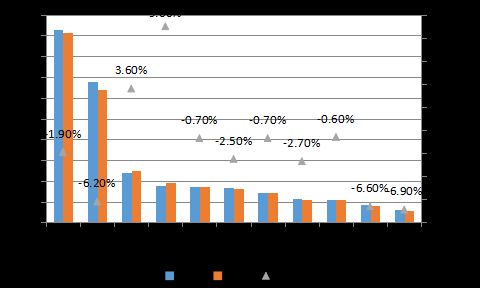
Figure 5: changes in global production of 2019-2020 by major gas producers (bp)
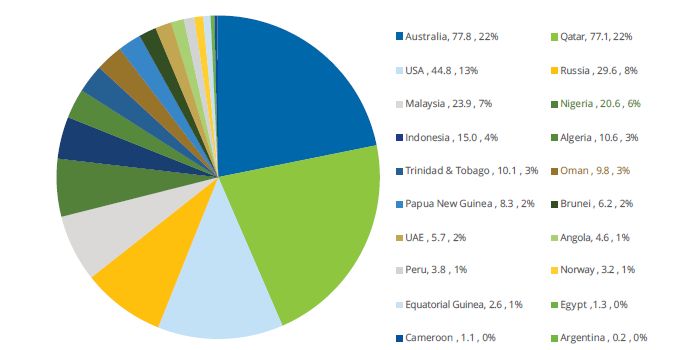
Figure 6: share of global market of lng exporters (igu)
Russia is the world's largest exporter of natural gas, and more than 50 per cent of its natural gas exports to europe are transiting ukraine, but supplies are limited because of its presence with ukraine. In order to seize european markets, the united states not only urged poland and other countries to oppose the construction of the “north creek 2” pipeline, but also included in the russian sanctions the export pipeline project, which directly restricted the supply of products, technology and loans to companies involved in those projects. To date, the united states has imposed economic restrictions on seven entities and 16 vessels involved in north creek 2。
Australia became the world's first lng exporter beyond qatar by 2020, and nearly 40 per cent was purchased by china. In the first quarter of this year alone, australia's market share in china's lng market fell from 43 per cent at the end of the previous year to 38 per cent, leaving some enterprises in a loss trap。
Qatar's exports of lng are not comparable to those of australia, but the production of natural gas has remained relatively unchanged from 2013 to the present, with more than 95 per cent of exports being on a long list. With increasing competitive pressure from the united states and australia, qatar has begun to expand its production capacity while lowering sales prices, but the lng project will need to expand production over a period of time, with the 2 million tons signed with china in march of this year to be delivered in 2022。
Thanks to the breakthrough in shale gas mining technology, the united states has become the third global exporter of lng. With biden's election, however, its “green new deal” restricted natural gas exploration and exploitation in terms of taxes, drilling permits, etc. In addition, after several rounds of sharp oil price fluctuations, it is more difficult for most shale gas producers to further expand their production by meeting investor returns, servicing debt and maintaining output at the lowest possible cost and controlling capital expenditures. According to bloomberg, at least 10 lng projects may not have sufficient funding。
Iv. The war has just begun
Under the traditional economy, the global energy war has been waged mainly around oil, with natural gas following the oil, warmth and water。
The importance of natural gas has been highlighted, and the global war on natural gas has begun quietly, in a context where renewable energy is far from assuming its primary responsibilities, as the global war on carbon emissions has intensified, energy transformation has accelerated, and structural adjustment has accelerated。
There will be protracted and ever-expanding battles and wars around control, interests, networks, exploration and exploitation, intellectual property rights, port terminals, shipping routes, pipelines, receiving, city layout, consumer groups, tenure, trading mechanisms, etc. Between developed and developing countries, and between exporting and importing countries; between industries, such as natural gas and oil, coal, electricity and renewable energy; and between enterprises, such as between upstream and downstream enterprises in the gas industry and between energy-using enterprises。
Driven by the global “carbon target”, the gas sector has already come to light and will continue for a considerable period of time. More countries, industries and enterprises will have to be passively involved, more subjects will smell endless political and business opportunities and will be active in planning, active in fighting and even desperate to enter the war. (authors: rain, zhao yongmi, wang jiu chong cai energy advisory council)
Intercontinental energy advisory council: in-depth research, planning and advice focused on energy-related industries such as global oil and gas power, new energy sources and coal. In-depth analytical articles published include the oil war series, the carbon emissions war series, etc









