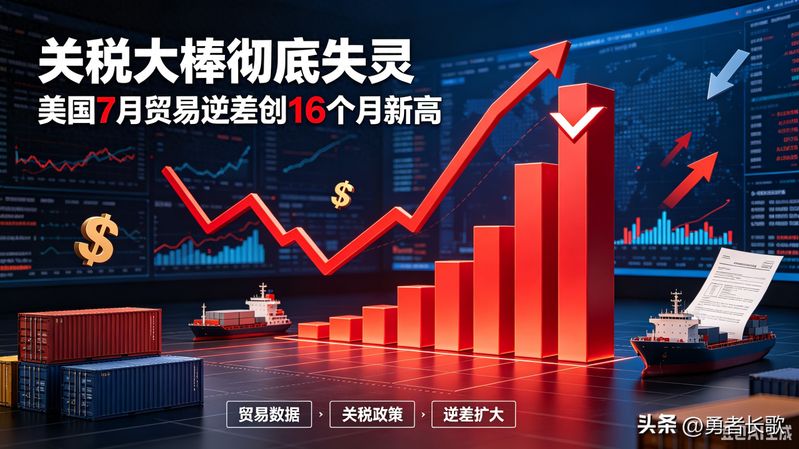
The recent release of united states trade data in july triggered discussions in the global financial community. The tariff rod was completely out of order, and the united states trade deficit rose again to a 16-month high. Realistic data are used to water cold water into the vision of changing trade patterns through tariffs。
The united states has long hoped to rely on tariff escalation to reduce import volumes, reduce trade gaps and protect indigenous industries. Logically, higher costs for foreign commodities should reduce domestic imports. But the reality is in the opposite direction, and the trade deficit is not reversed。
At its root, the united states has strong domestic consumption demand, and there is still a rigid demand for all types of overseas goods. Increased tariffs, which in many cases did not hit exporting enterprises, were borne by local importers and consumers in the united states, which in turn raised domestic prices. At the same time, global supply chains have become deeply intertwined, and simple tariff barriers are difficult to quickly restructure industrial chains, and it is not realistic to move large volumes of production capacity back home in a short period of time。
Tariff policies also have ripple effects. Some trading partners have responded by restricting united states exports of agricultural and industrial products, and the united states export end has been similarly suppressed. It is not surprising that the trade deficit has widened as a result of high imports and limited export growth。
This data set also shows that trade issues are not solved by simple sanctions and tax increases. The trade balance between countries is the result of a combination of consumption habits, industrial structures and global division of labour. The swinging of the rods of trade protection tends to be harmful and difficult to achieve。
In the context of economic globalization, it is cooperation that wins. Barriers are used to isolate markets and run counter to objective market patterns. In order to improve the trade situation, it was more important to confront its own internal problems and to seek mutually beneficial solutions through dialogue and consultation rather than simply using unilateral means of pressure。