


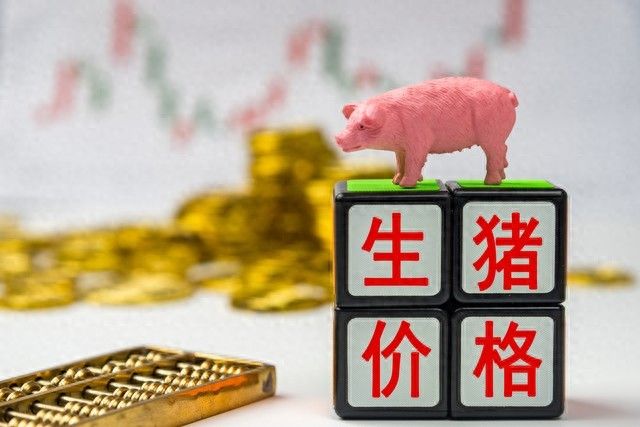
In september, the raw pig market finally broke away from the continuing decline in the bottom grinding in august and the price of the country's many raw pigs began to rebound. According to the latest monitoring by the industry, on 5 september 2026 the domestic pig market rose considerably, prices rose in several provinces in the north and the south, the culture of farming rose, and the acquisition of slaughtering enterprises became more difficult。
A number of farmers have seen their way back and hope for it. But there are also a lot of people who are saying that this round is going up, is it a short rebound or is it a new round going up? How long will the rise last? Which regions are growing fast and which are still weak? How do farmers get out? Do ordinary people hoard meat
Much of the online news is simply reporting the numbers, with little clarity about the logic behind them. Today, together with the ministry of agriculture and rural development's publicly available production capacity data, industry monitoring, a full-blown review of the pig industry on september 5th, and the dismantling of the drivers of the ship's rise, with a clear indication of the risk points for curbing it, providing farmers and ordinary consumers with practical references, not exaggerating, creating anxiety and objectively looking at changes in the price of pigs。
I. Overview of the national pig industry on 5 september 2026: large-scale rise but marked regional fragmentation
The overall pattern of the price of pigs on 5 september can be summarized as large-scale increases throughout the country, marked increases in low-cost areas, moderate and small increases in high-priced areas, uneven increases and no full-line surge。
In regional terms:
In the eastern part of china, the prices of most farm farms in shandong, henan, jiangsu and anhui have been raised, and the group pig farms have grown in step with the small and medium-sized family prices, and the market has become more dynamic. Since the beginning of school, as the main distribution area for pigs, the procurement of group meals has continued to drive white strips, and slaughtering enterprises have become more active in buying them, leading to local pig prices。
In north china, the prices of hebei, shanxi, shaanxi pigs followed the upward trend, with some of the size fields being reduced and the mood rising. However, the base figure for locally produced pigs remains small, with relatively moderate increases and no significant jumps。
In the central china region, where hubei, hunan and jiangxi have risen as a whole, the backlog of large-weight pigs in the previous period has been largely cleared, the market has been strained and local consumption has gradually recovered, leading to the recovery of pig prices。
Market performance is fragmented in south china and the two regions. Prices in guangdong and fujian are high in the country and have risen slightly; the increase in guangxi and hainan has been limited, and local pig production continues to be over-supplyed and less dynamic。
In the south-west, sichuan, chongqing and yunnan are generally stable, with small increases in some areas. The south-west is part of the production and distribution balance of raw pigs, with a large local outlet, which, although supported by consumption recovery, has not increased as much as the east and north china regions。
In the north-east, heilong river, jilin and liaoning remain low-priced nationwide. Although there has also been a small increase, there is still a limited upward pressure on local pig production, which makes it difficult to fast-track high-priced areas in the south, and the subsequent need to rely on cross-regional transport to digest local pig sources。
Overall, the increase on 5 september was more of a seasonal recovery rebound than a unilateral surge. Most of the increase is between 0. 1 and 0. 3 centimetres per kilogram, while a few are slightly higher, most remain close to the cost line and the industry has not yet fully entered the profit zone。
Many farmers are vulnerable to “large-scale rises” in the news that they want to push their way up. It is important to understand that an increase is not equal to an immediate gain, but also depends on the cost of feed, the weight of the bar, and whether prices can be stabilized thereafter。
Ii. Why was the price of pigs increased extensively on 5 september? Four core pushers
This round of pork prices rebounded, not from empty fire, but as a result of a combination of supply, demand, market sentiment, and policy, each of which has a real impact on the current situation。
1. Demand side: the kim 9wan season is officially open, multi-consumption pulls
September was a key month for the recovery of traditional pork consumption, and the release of multiple consumption scenarios was the most important driver of the current round。
First, primary, secondary and tertiary schools throughout the country have started their studies, and there has been a marked increase in the procurement of school canteens. School canteens are stable and bulk purchases are made, white orders from slaughtering enterprises are being pulled directly, and there is an increase in the number of slaughterhouses operating, and the demand for pigs is increasing。
Second, the preparations for the mid-autumn and national day bi-fests are gradually being launched. Close to mid-autumn, food processing plants, meat manufacturers and merchants began to prepare for holiday consumption in advance. The pre-suppliers were able to scale up the procurement requirements for raw pigs, leading to higher prices。
Thirdly, the temperature has declined, and the consumption of private “autumn” has started. In august, high-temperature weather weakened the population's willingness to consume pork. In september, temperatures fell in most parts of the country, household cooking and catering stores were warmed up, and the market for fresh meat was moving at a significantly faster pace and end demand improved。
Reheating consumption is the basis for rising mobility, but it is also important to recognize that the opening of school supplies and the provision of holiday goods are of a phased nature and that consumption will not continue to grow in an explosive manner. Once the goods are ready, demand returns to normal。
2. Supply end: pre-fertilizers are largely clear and market-source structure is improved
In august, the biggest pressure on the pig production market was the concentration of large numbers of big fat pigs. The price of pigs in the preceding period has continued to decline, with a number of farmers increasing their pressure, with a large number of fat pigs over 300 pounds entering the market to suppress their prices。
After a full month of digestion in august, by early september, the market backlog of big fat pigs was largely cleared, and the market was dominated by standard fat pigs. The reduction in the number of big fat pigs has led to a marked reduction in supply pressure in the market, which has created conditions for a rebound in pig prices。
At the same time, a number of small and medium-sized farm families began to contract at a pace of loss. When prices are low, many farmers are reluctant to sell their pigs at low prices, opt for sale, reduce the number of outbounds, reduce the market pool of pigs and further boost prices。
However, it should be seen objectively: the fact that the pig is clear does not mean that the overall supply of the pig is significantly reduced. There is a time lag in the denuclearization of the national capacity for the production of hogs, the effect of which will be to reduce the production of hogs in accordance with the gestation cycle, and it will take several months to be fully reflected in the production of hogs. At this stage, overall pig production is still relatively adequate and there is no serious shortage of pigs。
3 - continuous evaporation of capacity. Markets are expected to improve in the back market
According to the latest data from the ministry of agriculture and rural development, by the end of the second quarter of 2026 there were 37. 8 million female pigs in the country, close to the target of 37. 5 million in normal holdings. In long-term losses, large numbers of low-yielding pigs have been phased out, industrial capacity has continued to optimize, and expectations have been created for the contraction of the supply of long-lived pigs。
The availability of the sow is the “general gate” for the pig-producing market, and the decline in the number of sows is a sign of a gradual decline in the number of commercial pigs coming months. Farmers are reluctant to go out in low places and sell their emotions to drive up spot prices, as they see the continued evaporation of production capacity and look forward to the second half of the year。
4. National policy on storage to hold the bottom of the market
This year, the state has continued to implement a programme to regulate the production of pigs and, in due course, the production of frozen pork. It directly absorbs some of the market's sources of pigs, while sending signals to the market to prevent the price of pigs from continuing to decline in depth and to secure its base。
The policy base has largely dispelled the fear of farmers that prices continue to fall sharply and has stabilized market confidence. Farmers are no longer afraid of selling, and the market has returned to rationality by providing support for the repair of the situation。
Together, these four factors contributed to the massive increase in the country on 5 september. But beyond the good, the market is also constrained by a number of constraints and cannot be blindly optimistic。
Iii. Not negligible! The three real risks of suppressing the price rise of pigs
This rise cannot be accompanied by the perception of good interests, but the three real pressures below limit the height of this round, which is also a key point that many breeders can easily ignore。
First, there's a high stock of freezers at the slaughterhouse
After a low-priced phase in august, a number of slaughtering enterprises accumulated large amounts of frozen pork. Freezing stocks are the hidden supply of markets. Once the spot price of raw pigs rises rapidly, slaughtering enterprises will give priority to freezing meat, replacing fresh meat, and directly to the drive to increase the number of raw pigs。
If the price of pigs rises too fast, the downstream consumer does not accept the high price, and the white strips are blocked, the slaughtering enterprise will reduce the acquisition of raw pigs, and it will be easy to rush back and forth, which is the main reason for the increase and reversal in some areas in early september。
Second, the scale of the pig field is still high
Monitoring by various industry bodies shows that there was still an increase in september in the overall planned rollout of priority scale farming enterprises. The group pig farms have a fixed outing task, which will not be significantly pressed because of short-term price increases. Once prices continue to rise, the field of scale increases, increases market supply and suppresses rising space。
When some small and medium-sized farmers see higher prices, they also concentrate the raw pigs on the front-line, and large numbers of the pigs pour into the market, quickly offsetting the upward momentum。
Third, consumption is a phased pulse with limited continuity
School start-up procurement and double-section preparation are all of a phased nature. By the end of the holiday, consumption will return to normal. If the consumption of end-of-pipe pork does not continue to grow, short-term availability alone will make it difficult to sustain a sustained surge in pig prices。
To put it simply: the rise is now more seasonal, not cyclical. It's probably a shock, not a one-sided surge。
Iv. Empirical reference for farmers: in the event of 5 september, how should this be arranged
There are two kinds of extreme ideas that many growers have: one is to get out of the fence, and the other is to bet on the back market and press the fence, waiting for prices to rise again. Both options are risky and offer practical suggestions, taking into account current market conditions。
1. Small and medium-sized households
If the pig has reached the standard bar weight, it is not recommended that the price be higher in the blind bar. The current situation is one of shock repair, and there will be a backlash in the course of the increase, so that the price does not go up. You can split it up, sell it in one piece, watch it in another, and do not put all pigs in your hands。
Don't be blind and fat. Second fertility means taking the risk of feed costs and price reversals. Market conditions are not yet fully out of the gap, there is a high degree of uncertainty about secondary fertility, and ordinary farmers do not operate blindly。
2. Scale farms
In accordance with its own established listing plan, it is important not to interrupt the pace of the column because of rising short-term performance. The size field needs to balance cash flows with production plans and avoid price shocks caused by concentration. At the same time, close attention is being paid to the willingness of the regional slaughtering enterprises to purchase and to observe the departures。
Three, focus on two winds. Indicators
The first is the price of pig food. The price of food for pigs is a core indicator of the earnings and losses of farming. Only if the food price of pigs continues to rise above the profit/loss line will the industry truly emerge from the loss。
The second is the white-faced cases of slaughtering enterprises. If white bars are not good enough to indicate that end consumption cannot keep pace, the continuing increase in pig prices requires a question mark。
Farmers should remember that when the situation rises, it is more important than short-term price increases not to be overwhelmed by the news of a large, single-day rise。
V. The general consumer perspective: the price of pigs is rising, should we hoard meat
For ordinary people, there is no need to panic and hoard meat because of the price of pigs。
This round is a seasonal rehabilitation, not a surge. The price of pork will rise before the double festival, but there will be no sharp price hikes。
Household consumption advice is purchased on demand and does not require large stocks of frozen pork. The storage of pork is limited in time, and too many stocks are susceptible to deterioration and have no cost. If there is to be a high-cost purchase, it can be purchased at an appropriate level near the holiday, without the need for large stock-taking in advance。
It is also clear that the increase in the price of raw pigs does not mean that the retail price of pork in the market for vegetables will rise simultaneously. There are also slaughter, wholesale and retail chains, and the price of end meat increases are often lagging behind the price of raw pigs。
Vi. Clarifying several common fault areas in the circulation of networks
At a time of passion, there are many one-sided statements on the internet that provide objective clarification and avoid being misled。
Zone one: the large increase in pig prices in september indicates that the cycle has been reversed completely and that it will continue to increase dramatically。
The truth: this round is a seasonal rebound. The effects of the fertilization of the production capacity of the hogs have not yet been fully released, and the overall supply of raw pigs remains adequate. It is difficult to get out of the unilateral boom, with the probability of a relapse after the festival。
Zone two: as long as the price of pigs rises, all farmers can make money。
Truth: price increases are not equal to profit. It also depends on the cost of feed and the weight of the pig. If the price of feed increases, even if the price of pigs increases slightly, it will remain in deficit。
Zone three: the price of pigs drops directly after the double section。
Truth: when the double-leave is over, demand will fall, and there will be pressure to reverse the situation, but no cliff drop. It will be followed by the pace of the production of pigs, the evaporation of the production capacity and the continuation of the shock。
The error zone is four: there will be a shortage of pigs as soon as there is a drop in the femininity fence。
The truth: it takes about 10 months to produce pigs with a cycle and a reduction in the number of pigs before they can be transported out of the field. Democratization is a slow process and does not immediately result in a shortage of pigs in the market。
Vii. Follow-up to september: the shock is the main tone, the guard is coming back
Combining supply and demand, policy and consumption factors, the overall performance in september will be dominated by a sharp upward spiral of shocks。
In the early part of the year, the price of pigs continued to rise in many cases, depending on the profitability of the school and the pre-fester goods
In mid-term, as the goods are ready to land, the upswing will slow down and will be prone to shock echoes
Late in the year, near the mid-autumn national day, the holiday effect led again to procurement, and the situation was again sustained。
Throughout september, there was no continued unilateral surge, and it was normal for the process to be accompanied by a reversal. The real contraction in supply will be reflected in the four quarters。
For the farming industry, september is an important restoration window period. But the market is still full of uncertainty, and both farmers and consumers have to look at volatility rationally。
Viii. Comprehensive summary
On 5 september 2026, there was a massive increase in the national pig market, a marked increase in low-priced areas and a polarization between north and south. This round rise is a seasonal rehabilitation process that is driven by a combination of food for school groups, double-saving supplies, the accumulation of fat pigs, the continuous evaporation of production capacity, and a combination of good policies。
But let us also be sober about the fact that the high level of stocks of frozen goods, the high size of the field, and consumption are periodic pulses, all of which limit the height of the increase, do not increase unilaterally, and the shock is normal。
Farmers are not expected to be sold at high prices by single-day activities, with priority given to guaranteeing cash flow, and are phased out; ordinary consumers purchase meat on demand without panic。
Volatile markets are a normal phenomenon in the industry. Only a rational view of the rise and fall and a proper planning of its own can better cope with market changes。
Discussion: did the prices of pigs increase in your region on september 5th? Do you think the price of pigs in september will continue to rise? How do farmers manage the rhythm of the bars? A rational exchange of comments is welcome. Acclaimed and shared on an ongoing basis。









