


"without batteries, how exactly does the meter walk?" we present the hairlines that provide power in the table of machines, the gears that slow down the hairbox, the gearing apparatus that controls the speed, and the wheeling group that provides the exact frequency of the walk. " how does the schedule go when there is no battery? We present the plywood used for the fixed parts, the thorn claws that prevent the reversal of the hair, the gears that transfer the second hand to the timewise and the counting function. But there is still a big question — how do you post and set a date without opening the shell? In the current period, we have to start with the switch。
Transfer control
First, let's take a look at the crown, which is the main interface for operating the meter。
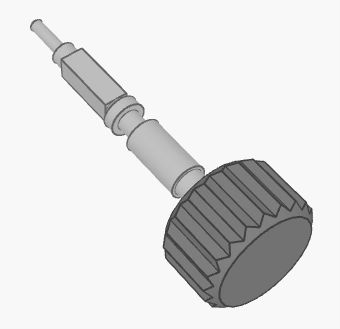
The watch is installed outside the shell and is in direct contact with the user. The handle has a square transect, with two parts on it — a stereo and a joint wheel:
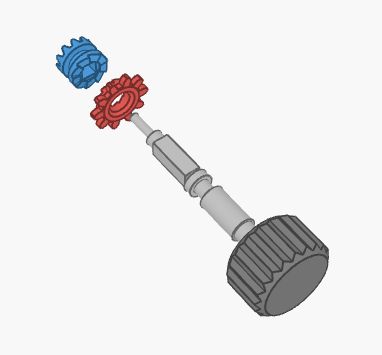
The wheel has a circular hole so it can easily turn on the handle. And the square hole of the condensed wheel is aligning it with the rectangular structure of the handle, which allows it to move only with the crown:
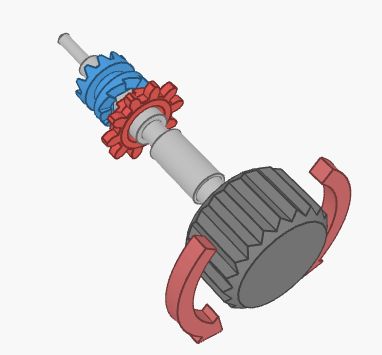
Let's load these parts up. I have temporarily hidden the date ring to prevent it from blocking our sights:
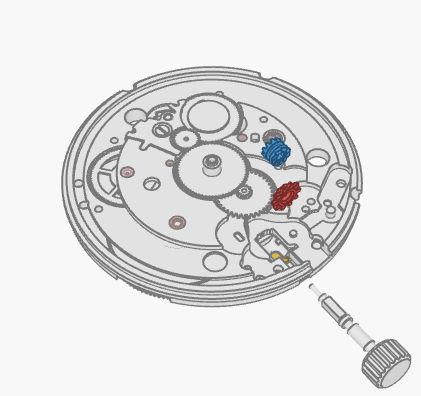
Watch the back of the watch, and the wheel is bound to the crown gear. In order to be able to turn the wheel, we'll have to let the wheel push it — i'll mark it with a blue arrow. The shapes of the wheel and the adjacent side of the wheel are fit, and if we turn the crown now, they lock each other. In the end, we can turn the crown gears through the clockwise and drive the rest of the parts of the emitter。
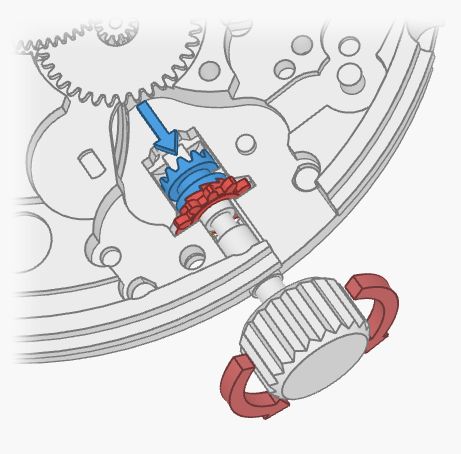
And if we reverse the clockwise, the wheel and the coronary gear will be stuck by thorn claws and the joint will be pushed along the adjacent shape. This security mechanism ensures that even if the crown is twisted in the wrong direction, the core is not damaged。
It seems that we have achieved the goal of the top-down by turning the crown. But there is a small problem to be resolved — we need an external force that can push the joint wheel towards the wheel。
And, at some point, we want to do something else by turning the crown. We need to be able to adjust dates and times independently, in addition to the issuances. We will switch these three functions by pushing the crown to different positions. Let's build such a switch. First, calibration poles and set-up poles:
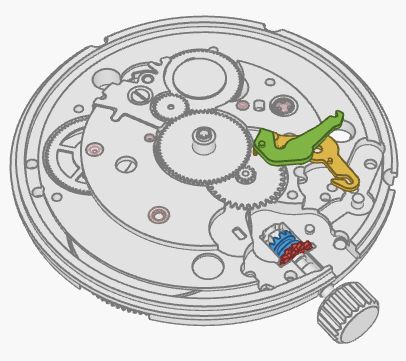
Now, if we pull the crown out or push it, the two poles will turn around their feeder and will drive each other in an extremely complex way:
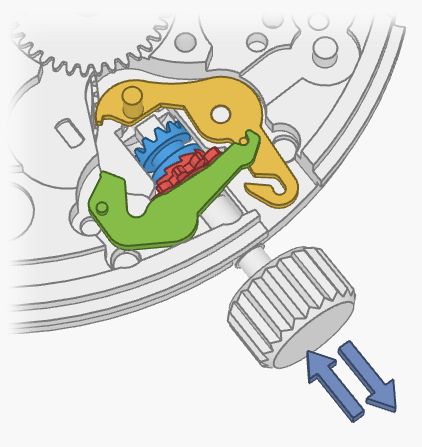
A positive look at the crown
It's hard to see how they work if they're shown together with other parts, so let's hide the irrelevant parts. Watch how the two poles are locked when pushing the crown:
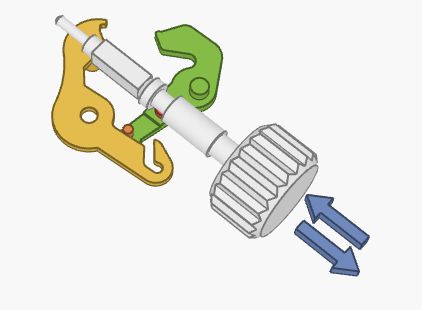
Watch the back and pull the crown
One of the grooves in the handles locks the pole on the setup, so that the pull cap can drive the setup. The other pole above it will push and hook to the calibration pole, so that the crown will also drive the calibration pole together。
For the moment, this institution has not worked, and we have to add the setup to the little pole above the calibration pole:
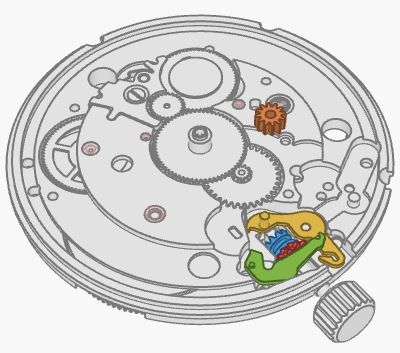
Set the wheel to move freely on the pole. If we pull out the crown now, we can see that we set the wheel to join the pins:
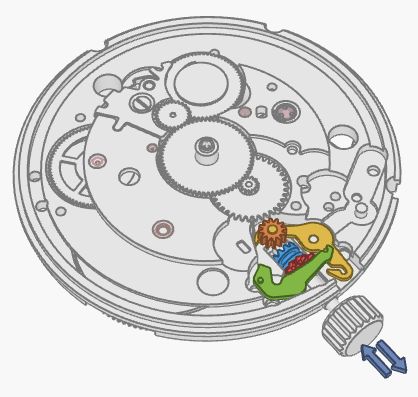
We can set the time of the schedule by turning the wheel, but in order to turn the wheel, we have to slide the clutch to push the wheel, so that the turn on the crown can move to the wheel by moving through the joint wheel:
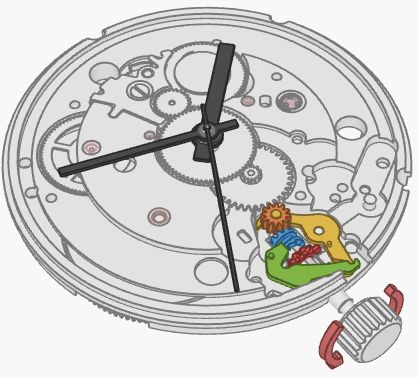
This poses a challenge — we need to change the position of the joint wheel in accordance with different working patterns, so that it can line up at the time of arming, and set the wheel at the time of setting. That's what i'm talking about:
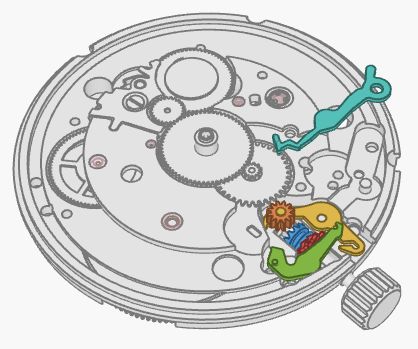
In the graph below, you can see that the collage will fit right into the groove of the condensed wheel, so when the collage turns around its branch, it will give it a push, both internally and externally, to slide it up. As for how the pole was driven, that's because when we pull the crown, the pole pushes it。
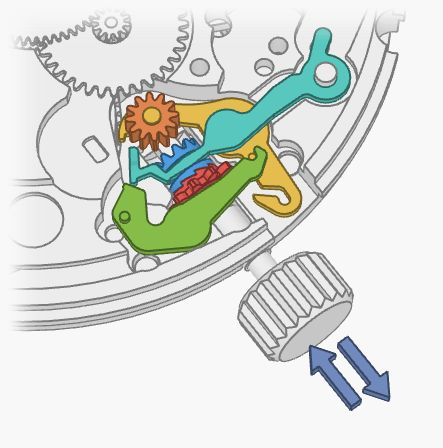
We're almost done with this little thing, just three little details. First, we have to fix these parts — there is nothing to prevent them from falling out of their well-arranged positions. Secondly, when you pull out the crown, you don't have a single card button to fix it — when you turn the crown, we might unwittingly push it to change the working pattern. Finally, when we completely push the crown to switch back to the upper hairline mode, we want to securely return to its initial position. This will require the set-up locator, which will achieve these three objectives:
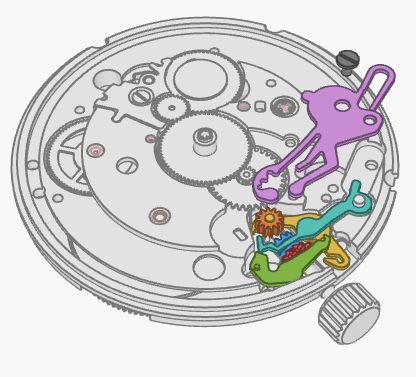
The locator was locked on the main plate, thus preventing other parts from falling off. Its various “arms” and “legs” also contain parts. Let's see how we can fix the other two problems by setting a locator
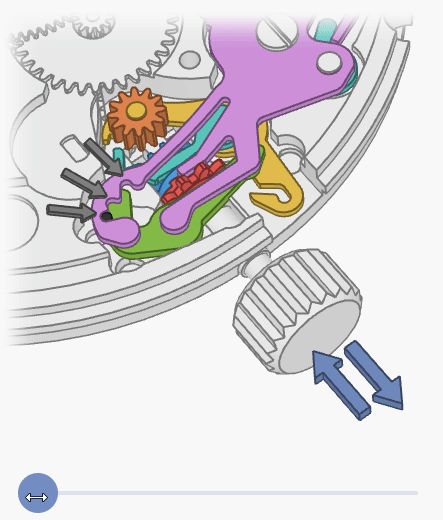
When we pull the crown, the pole on the pole will be pulled into one of these three grooves. In order to jump to different dents, the pole has to bend the long arm of the locator, which creates the tension of pushing the pole into the recent dent. In the end, we have three positions that can balance all parts and components — once locked, we don't have to accidentally switch the work pattern when we turn the crown。
As for the setting of the locator, let me conclude by saying that on the other side of it, there is a small amount of tension on the pole, and i pointed it out with a grey arrow:
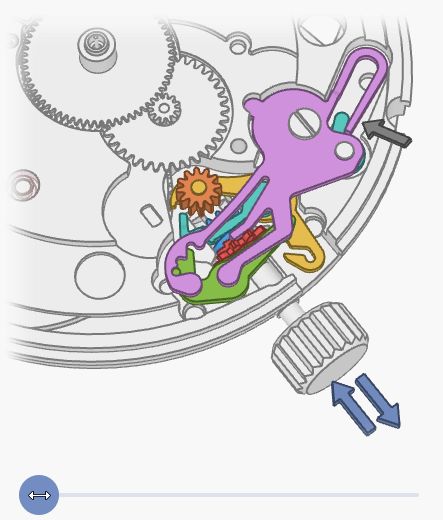
When the trigger turns, the shrapnel of the metal is easily returned. When the crown is in a set date or time mode, setting poles will prevent the dropback, but once we return to the upper hairing mode, the shrapnel of this locator will turn back the drop and thus slide back。
In fact, there's an amazing design here, but it's hidden in a plane view. If you have good memory, no batteries in the medium term, how exactly does the meter walk? At the beginning of the section on thorn claws, we added a small lever to the main plyboard before installing the peg in the hairbox, and then continued to talk about how to prevent the twisting of hair paws with thorn claws。
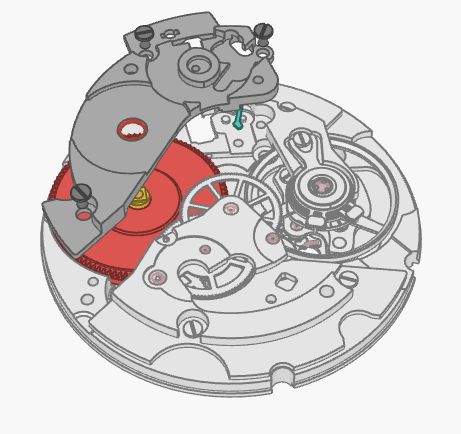
A nice editor knows you've forgotten most, so play it again
When we pull out the crown and drive it, the little lever turns:
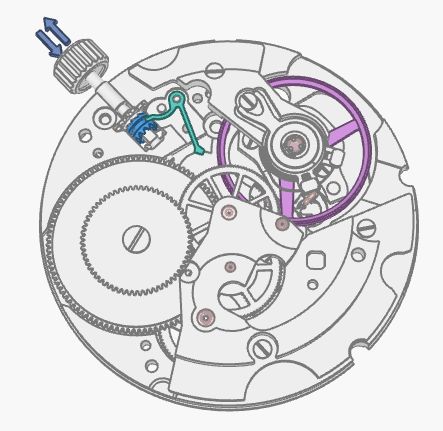
When the lever turns to the end, it frictions with the wheel so it can't move -- it makes the watch stop. As a result, when we pull the crown to the end and enter the time-set mode, this pole will block the wheel and make the watch stop, and there's a word in english, “hacking”, that specifically describes this move. So, when we set the time, the second needle doesn't rotate at the same time, which helps to improve the accuracy of the calibration time。
Let's get all the parts together and see how the whole thing works. When the crown is completely pushed away, its rotation will drive off the wheel, then the wheel, then the crown gear, and then the wheel, and then the wheel, and then the wheel, and the wheel, and it'll be fine:
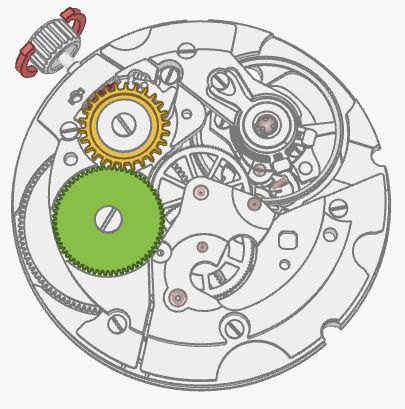
When the crown is pulled out completely, its rotation drives off the wheel, sets the wheel, splits the needle, clock wheels, and the tube hidden inside the time needle wheel. Let's learn, the wheelpipes will allow us to set the time, not to be stuck by the thorns that prevent a reversal
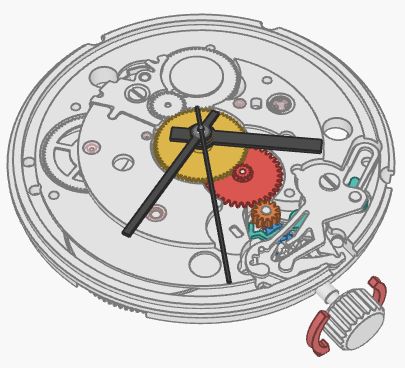
And finally, when the crown is pushed to the middle, we go into date setting mode. But in order to achieve this goal, we still need to add an extra day-changing wheel, so that we can put it in the small dent of the main plate:
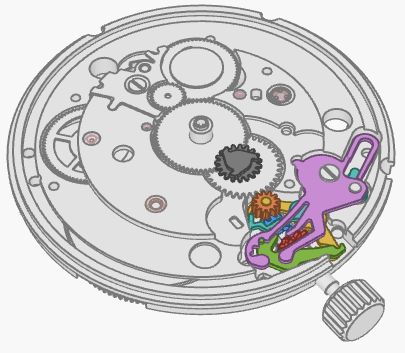
Note that the alternate wheel can slide on the dent. If we pull the crown in the middle and turn it, we can switch the wheel, and it can hook the teeth inside the date ring. The date locator spring ensures that we lock the date ring in a valid position:
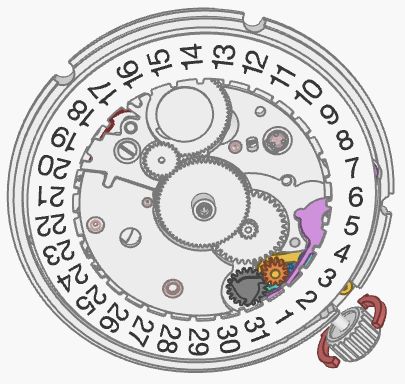
Personally, i think this whole thing is a mechanical miracle. These complex and collaborative components are well organized and each of them has multiple roles. The old watch is issued with a single button, and its crown is used only to set the time, but it now represents a break from the top button, so the whole institution is called the keyless works. We can control the different configurations of the table by simply having some shapes and well-designed parts and a crown. Before proceeding with the next chapter, let's put a pin on the pin to protect the remaining parts:
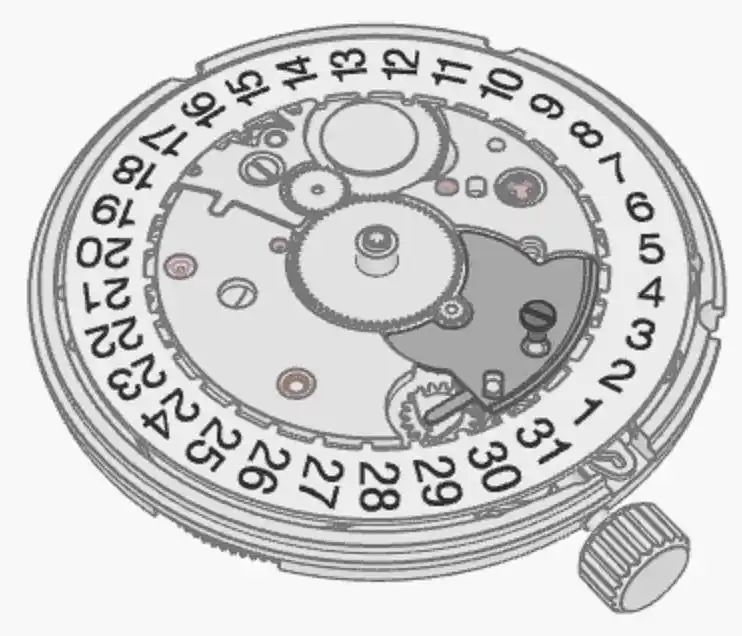
We're almost done with the watch core. The last part to be loaded will make the watch snap automatically when we walk。









