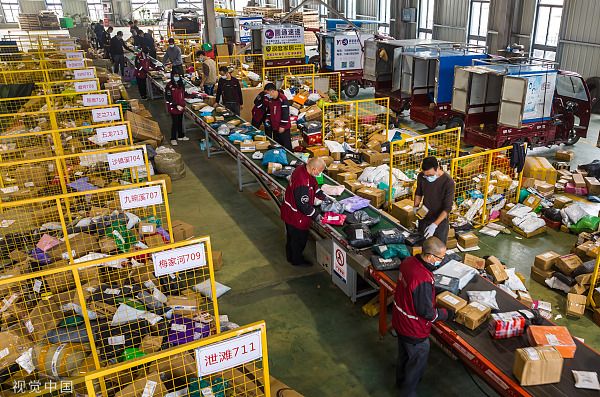
Is that what happened to you? Especially when you have to send your stuff home, or change your job, move your friends, and look at that pile of stuff, the saddest thing is, which one of these couriers is cheap and safe
I've been through this. Remember the last time the city was changed, three large boxes were packed, each of them full of stuff. Several couriers were called, offering a higher price than one, and the courier was vague on the phone, and i was misled by what was “larger than extra” “a surcharge in a remote area. Finally, he had a hard-headed choice of family, sent an account, and his heart was bleeding and he felt like he had been killed。
Then i learned to be smart and started to study. I found that there are two things at the core: first, to know how different courier companies calculate their money; and second, to "take a shortcut" and use tools and methods. This article, which i shared with you, was the experience i was able to figure out later, as well as an instrument that i had never been buried again。
First of all, there are no “absolutely cheap” couriers, but only the “best fit for your current package”。
Cheap is out. And then we'll break it。
I. How the hell did the delivery fee come up? You're halfway there

Don't be fooled by the couriers who actually have a calculator in their hearts. Three things
Place of mail and place of receipt: this is the basis. The same city is the cheapest, followed by the provinces, which are more expensive across provinces (especially from south to north and east to west). That's a good understanding. It's a long way to go. The weight and size of the package: this is the most likely place to produce a “price trap”. The delivery fee is based on the actual weight and volume weight, whichever size counts. Actual weight: your package weighs the pounds. Volume weight: that's the point! Even if your case is light, like covered in covers and feathers, the box is big enough for the delivery company to convert it into a “weight of size”. Algorithms are usually long (cm) x width (cm) x high (cm) ÷ a fixed value (usually 6,000 or 8,000). For example, a 60 * 50 * 40 cm box, divided by 6,000, weighs 20 kg! Even if it actually weighs only 10 kilos, the delivery will charge you 20 kilos. Many newcomers are trapped here because they don't know the concept of “heavy”. The price-fixing rules of the express delivery company: the “first-and-renewal” price varies from company to company. The first load is typically a price of 1 kg, and more than 1 kg, with a “renewal” fee for each additional kilogram. Large packages are heavy, and the accumulation of renewal is critical。
With this, you can understand that the question is, "what's the cheapest delivery package?" it's essentially a question of which company's "first + second" calculation of the lowest total price, given my specific size, weight, from where to where。
Results-based comparison: who is more cost-effective to send large copies of eight mainstream logistics
The theory alone is useless, and i'll give you a simulation of a few common scenes in the light of recent mail experiences (in particular, the data that i saw after using the “cloud-speed ` straight-through' public price). (the following prices are within the range of roughly official market prices and are used for comparison purposes, whichever is real-time)
Scenario 1: 20 kg of clothing, bedding (larger size), from shanghai to guangzhou (cross province)
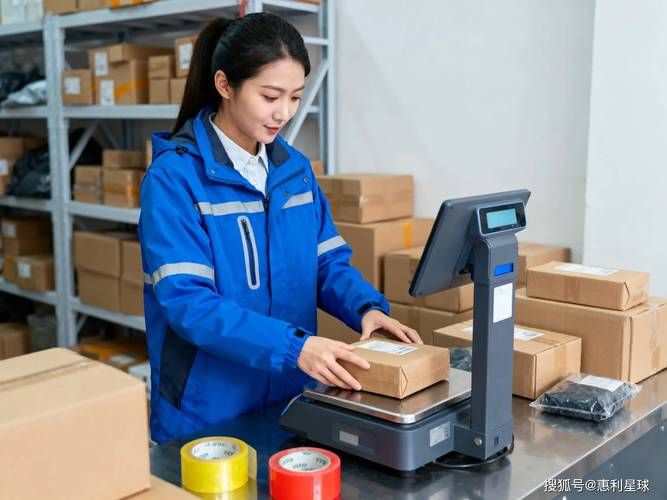
Scene 2: send a 10-kilogram book, groceries, provincial mobility (e. G. Guangzhou to shenzhen)
You're probably even dizzy to see this: is it so complicated that i have to make seven or eight calls every time i send them? Of course not! This is the most annoying place i've ever had。
Until my friend anne gave me the micro-publicity `down to the cloud speed'. It's the biggest effect of a key price. You don't have to ask yourself all around. Just fill out the mail address, the receipt address, and estimate the weight and volume, it can list all the prices of the mainstream couriers, rounding, channeling, rhonda, polar rabbits, sunfung, kyodong, tetum, etc., and after a discount, it is clear who's cheap。
I tried the same package from hangzhou to beijing, estimated at 15 kilograms, on the “wind-the-wind-wind”, where the prices were clear, the cheapest and the most expensive were nearly $40. And the price above is much cheaper than the price i found in my own personal search for an official courier service or a small program. The big box that i sent later was chosen from it, and indeed saved。
Iii. Super-utilistic money-saving techniques for new hands and whites
Prices are the first step, and the following hands-on skills can save you another sum on a competitive basis。
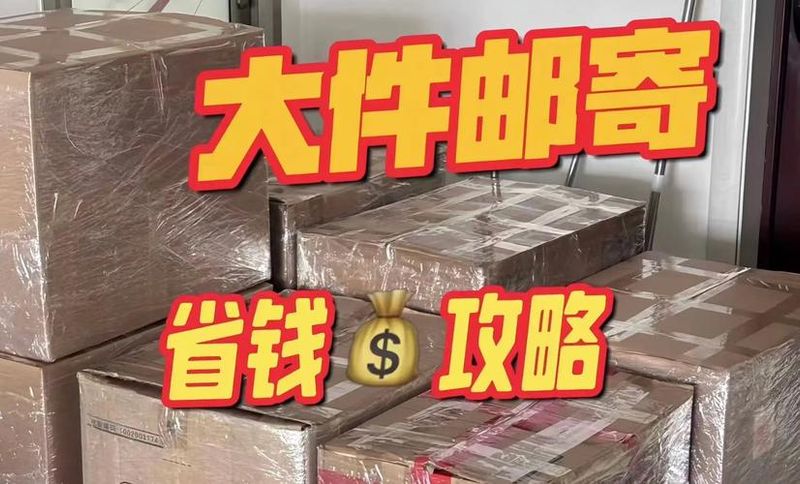
Packing is the first step in saving money: don't use too much boxes and try to hold things down. For example, loose clothing, blankets, a vacuum-condensed bag to pump air, a small half size, may have helped you avoid the “heavy” pit. The boxes also try to select the rectangular form of the rule, which is not cost-effective if it is based on the maximum margin. Pre-assessed weights and sizes need to be “knock-down”: when entering information on price tools such as “close-speed ` straight-up'”, weights and sizes can be slightly tighter. Of course, it's not that you're deliberately under-reporting, but it's that you measure it. Because if you're overestimating, there's a big gap in the on-site measurements made by the expressman at the door, which may be recosted on the basis of field data. Such embarrassment can be avoided if you know it. Time is money (and sometimes vice versa): if there is no hurry in that day or two, ask whether there is a “low line” or “economic piece” outside the “fast”. For example, sunfung has “fast-fast” and “cayro” and tebon has “precision” transport, which is slow for one or two days, but can be cheaper. The choice on “close-speed ` straight-up'” can also be viewed with regard to different product options. Do not lose sight of the door-to-door pick-up of “package mail”: on a “close-to-touch” order, the courier's pick-up is free of charge and no extra payment is required. Some friends contact the courier themselves, especially in large pieces, and may be charged “door fees” ranging from a few to a dozen dollars, which could be saved entirely。
Iv. A guide to post-site shelter for newcomers
Avoiding the “oral quotation” trap: the price of randomly asked on the telephone or on micro-letters is very poor and is most easily increased. Everything is based on offers from official systems or regular platforms. The price is locked in the “close-to-the-wind” list, the price is as much as it is when it is placed, and the couriers are not allowed to increase the price at will, which is particularly guaranteed for new entrants. Pack your own bags and make it clear that, except in exceptional circumstances, you better pack your own bags. It is filled with solid boxes, internal bubble film and old newspapers to prevent damage during transport. The box is written in bold pens, "do not break it" and several more. Price-fixing services may be considered if they are particularly valuable. The information is checked three times: the sender, the addressee's telephone number, address, one word and one word. The address should preferably be precise to the gate number. Make sure the phone works. This is the cornerstone of the smooth delivery of the package. Recognition of formal sub-sources: that's what i want to stress most. Personal numbers sent by roadside shops and searched on the internet are the most risky, potentially expensive and possibly missing items. The most conservative is the public tabulation that brings together many official channels, either through the official channels of the express delivery company, or by such means as “close speeds of clouds”. Your order is direct to the express delivery company system, and the logistics tracks are available, exactly the same as the official mail, but at a better price。
Finally, to answer a few of the most frequently asked questions:
According to my measurements and observations for most of these six months, it is normal for a newcomer to find a courier or choose between them. Like before, it's common for a package to cost 30 or 40 more. Instead, it is customary to use the tool "cloud speed ` straight-up' before sending a message at a quick price, saving an average of 30 to 50 per cent per trip. If you send five or six large pieces a year, you can save enough money to eat a few big meals. More importantly, the process was transparent, there was no hidden consumption and there was no need to bargain with couriers, which was really time- and money-saving for newcomers. There's really no need to spend money on couriers or be so anxious。