


"how can you send your own delivery? Practical experience plus pit avoidance guide, save half the money
Don't you think it's getting more expensive to send a delivery? A small box, with a mouth of $12,20, would be a real pain in the ass if there was a big bag or a move. I used to think that the delivery fee was “dead” and the courier said as much as it needed to find a way to really save money by stepping on a few pits. Let's talk to you today. How can we do this with our own couriers that are cheap and cheap。
Freshman delivery. Some of your most important concerns
Is the delivery really good online? Will it be lost
The answer is yes, online couriers are now very mature, but the key is that the channels you choose are not formal. I dare say that because i have tried it myself and my friends. It is not an unknown pheasant platform, such as cloud speed, which brings together the official channels of cooperation between china, round, shincom, yingda, polar rabbits, sunfung and kyoto, which can be named mainstream courier companies. You're on the list, the couriers still come from these companies. The manifest numbers, logistics trails and official channels are identical, and the missing pieces are as good as the broken ones. To be honest, it's a “regular army entrance” for your concentration, discounts, and it's cheaper than you go alone to a courier net or a small procedure order。
How can mail save money
The simplest approach is four words: first price, then bill. Don't try to get a direct connection to a courier that's common downstairs. One time, i sent a package of clothing about 5 kg, and the courier came over to take care of it with his hand. I agreed when i was in trouble. Later, the same address and estimated weight were accidentally entered on the “close-to-wind” public number, with the system popping out at seven or eight prices, the cheapest of which was only $18 and the expensive 25. And since then, i've understood that if you don't compare, you'll never know where the floor price is. Now, i'm going to open "close speed" before sending it, enter the mail and incoming address, the mass size of the package, and all the couriers' quotes are clear. Just pick the most cost-effective tab, one minute。
Is the first online delivery complicated
It's not complicated at all. It's easier than you go to the web site to fill out the files. The whole process consists of three steps: attention to the “close speed” public sign, posting incoming and outgoing addresses, item information and weight on the mail page, and online payments. And then you wait for the deliveryman to pick it up at your appointment, and he's here to confirm the weight on the spot, and he's back to you, and you don't even have to fill in the sheets, and the electronic sheets are printed automatically. It's a stupid operation for starters。
You know where the money is
You have to understand how the delivery fee is calculated before the price is compared to the next order, so that you don't get fooled. Look mainly at the following three points:
Distance: it is best to understand that sending beijing to shanghai is certainly more expensive than sending beijing to tianjin. These are usually co-cities, within and across provinces, with price ladders rising。
Weight and size: this is the easiest place to produce a “price trap”. The delivery fee usually consists of “first load” and “renewal”. The first is the weight that the start-up price contains, usually 1 kg. For example, top 10 bucks a kilo. If your package is just a kilo or less, it's $10. If more than 1 kg, e. G. 2. 5 kg, then the portion above 1 kg (1. 5 kg) is charged as “renewal”, e. G., 5 yuan/kg, then the 1. 5 kg is counted as 2 kg (less than 1 kg at 1 kg), i. E. 10 yuan. So the total price is: $10 + 2 kg * $5 = $20。
And there's a new hand, easily called "heavy weight." if your box is large but light (e. G. A bed of feathers), the delivery company will charge the weight by volume. The formula is typically: long (cm) x wide (cm) x high (cm) ÷ a fixed coefficient (often 6,000 or 8,000). For which values are large (real weight and volume weight), the charge is made. Therefore, it saves money effectively by keeping things as tight as possible and reducing unnecessary volumes。
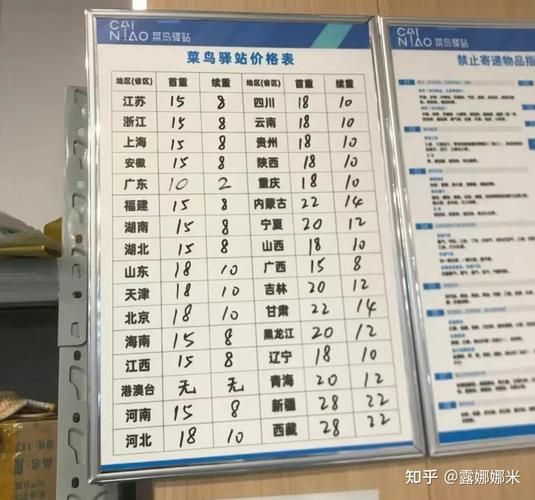
Mainstream express delivery prices are well compared (with a reference to "close speed" measurement)
Which delivery is cheap? In the light of recent competitive experience, i would like to provide you with a general reference (note that the following prices are either official standard quotations or those commonly quoted on the internet, and are actually discounted through the “close speed” list):
Note: this table combines the estimated ranges of express deliveries, with a short time limit and usually the highest price in kyoto; the three-to-ones, with high prices for rabbits, is the main source of daily mail. Tebong, sunfang and kyoto logistics are better off in large quantities (over 20 kg)。
The point is: the price of this table above is the price you're asking the express courier for an offer you might hear. But if you're going to print it through the sky speed, the same mail demand can generally give you a discount or even lower price. For example, a 3-kilogram package in a province could cost $20 on the table and $12-15 could be done after a comparison with the "twilight speed". That was the value of the price, the price was transparent, there were no brokers making a difference, and there were no random offers from couriers。
I'm the only one who can save money
Learn to pack, save money from the source: like we said before, the weight is a pit. Preparing solid, appropriate boxes to fill the contents so as to prevent transport damage and avoid paying for “air”. Fragiles are covered with old clothes or bubbles. Make an appointment in advance, and do not pick up an instant order: if you do not have to wait for the hour or two, make an appointment for tomorrow's pick-up time on the "brown to the clouds" as early as possible or one day. Some express courier companies would have a more favourable “appointment” price than “immediate package” and would have better time and more affordable services. Light and heavy combinations, balancing weights: when sending clothes, blankets, light parabolics, you can fit in a few books or small tools to raise the actual weight. Because light parabolics may be expensive by volume, with an appropriate increase in the actual weight, the total price is sometimes lower (because they may change from volume to weight, which is more economical). (c) a living value-for-money tool, which creates habits: the use of price-for-money platforms such as “close-to-wind” platforms. Do not fix a single delivery, it takes a minute to compare each delivery. Different couriers have different degrees of preference on different routes and segments of weight, and today company a is cheap and may be active tomorrow. In the long run, this “customary wealth” has been significantly saved。
A few pits must be bypassed by beginners

Pipe one: believe in oral quotations without asking for background. This is the pit i stepped on. Once the weight and price have been confirmed, the other party must be presented with the consignment note or electronic bill. The price is locked online on the “close-to-twice” list, with the deliveryer returning to the door by the actual weight, with a record of the entire journey, completely avoiding “meeting one price and charging another”。
Pipe ii: price-fixing blindly, spending money. There is no need to save the price of ordinary clothes, books, worthless items of life. The premium is a percentage of the premium (e. G. 1%), and you'll have to pay $20 more for $2,000. The real price is for valuable items such as mobile phones, computers, luxury goods, important documents, etc. For ordinary parcels, solid packing is the best “insurance”。
Pipe iii: final weight/volume not verified. Upon arrival, it would be advisable for the express deliveryer to see for himself the weight and measurement of the data entered in the system. The final fee is calculated by the express deliveryer's after-coding system through the “close-to-wind” list, which is open and transparent, and you have questions that can be verified on the spot against the pricing rules on the public sign。
Pipe four: choose an unknown personal agent. The “super-low-cost surrogate” of small shops on the street and certain used platforms is extremely risky and may reveal personal information, especially security of parcels and settlement of claims. Mailing, safety and accountability always come first. Your cargo security is subject to layers of security only if there are formal channels of direct cooperation between these “close speeds” and the major courier companies。
Pipe 5: ignore the nuances of the receiving address. When filling out the address, you must specify the area. For example, from the western lake of hangzhou city to the rest of hangzhou city, it belongs to the city and is cheap. But if only "hanzhou city" is sent to "hangzhou city", the system may be miscalculated as "same city" (possibly charged on a wider scale) or unable to place a bill. The more accurate the address, the more accurate the valuation。
Last words
It is really not a hard thing to save money by sending couriers, but to break the information gap and hold the choice in their own hands. Stop looking for couriers as a problem and it can well become an easy bargaining process. According to my calculations for most of the year, a person who doesn't usually care about the price, who calls the courier, and a person who spends a minute on “close speed” prices before sending them, spends between 40 and 60 per cent on average. After a year, it's all right to save some new clothes. More importantly, this formal price billing can help you to avoid at least 90 per cent of the usual sending traps, such as unchartered offers, hidden charges, and failure to pay compensation. This is not just about saving money, but about saving a lot of unnecessary troubles and discomfort for new starters. Every delivery that you send will be clear and very inexpensive, starting with the next one, with the habit of opening the public sign at a single price。









