


In recent years, the shenzhen institute of advanced technology of the chinese academy of sciences (hereinafter referred to as the shenzhen advanced institute) has focused on health and medical care, robotics, new energy and materials, big data and smart cities. Major scientific and technological achievements have emerged in the areas of high-end medical imagery, low-cost health, medical robotics and functional rehabilitation, large urban data computing, brain science, advanced electronic containment materials, oncology precision therapy, synthetic biological devices, etc. In order to showcase the major scientific and technological achievements of shenzhen advanced institute, shenzhen business has launched a series of “results coming”, covering the achievements of shenzhen advanced institute in science, technology and innovation。
In shenzhen news news news, 24 october 2023 (the chief journalist for shenzhen business, chen xiaohui), five doctors were reduced to one-in-a-million-threshold surgery by injection into scientists in order to save a scientist whose cerebrovascular vessels had been destroyed in the science fiction film, the wonder travel。
This precise “navigation” to the cookstove is now achieved in the field of pharmaceuticals, using nanodrug carriers。
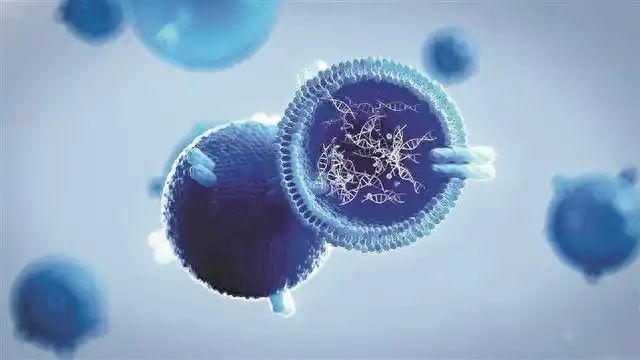
The biological structure of the excreta。
“as the biomedical industry develops, innovative drugs are rapidly evolving, but there is a persistent problem of inadequate drug content in the human body. Nanomatic technology helps drug molecules to enter the body at precise times, to be transported in an accurate manner to an accurate treatment site and to increase the efficiency of drug use in the human body. For drugs to be carried on a drug carrier, a range of emerging nanotechnology systems are needed.” yang hui, director of the institute of advanced technology and biomedicine and health engineering of the shenzhen institute of advanced technology of the chinese academy of sciences (hereinafter referred to as shenzhen advanced institute), said that she was currently leading a team in the development of new nanoengineering and micronutrient-flow-control technologies, and that it was expected that over a period of one or two years drugs would be loaded into clinical trials and that new nanopharmaceuticals would be developed and produced on a large scale。
The technology of drug carriers determines whether the drug molecules can be drugged
Currently, therapeutic drug molecules are mostly present in the form of biological molecules such as antibodies or nucleic acids, such as nucleic acids, which are widely recognized as “solvers” to counter tumours, dementia, etc. On the basis of a wide range of applications and more sophisticated technological systems, a number of drugs have sprung into the nucleic acid development tracks. However, research and development of nucleic acids still face a number of problems, most notably in drug delivery technology。
It is understood that nucleic acids usually face three main challenges in order to enter the body: first, the molecular volume of nucleic acid and the negative charge, which prevents them from freely passing through the biofilm; secondly, the vulnerability of nucleotide (rna) to enzymes in plasma and tissues, rapid liver and kidney removal and recognition by the immune system; and thirdly, the inability to function in small cytological “cards” after entry. To break through, drug delivery technologies are needed。
“in the absence of the use of drug delivery techniques, normal drug molecules enter the body and undergo liver and kidney metabolism, with little ultimate therapeutic effect, and may cause damage to digestive organs if used in excessive quantities.” yang hui stated that “the drug delivery system is a technical system for the comprehensive and integrated regulation of the distribution of drugs in the human body in space, at time and at dose, and that it is equivalent to `dressing' the drug molecules into the body, delivering the appropriate quantity of the drug molecules to the right place at the right time and completing the intended release, thereby increasing the efficiency of the drug molecules, improving their efficacy and reducing their toxic side effects”
Moreover, drug delivery will significantly shorten the development cycle of drugs. “we all know that drug research and development is long and expensive, that it takes a certain period of certification from drug discovery to final patient application, and that the use of drug delivery technology can lead to a direct `pharmacological response' that greatly reduces the verification cycle and reduces the cost of financial investment, thereby increasing the efficiency of drug research and development.” yang hui said。
Innovative drug delivery and production methods
So, how did the drug get exactly delivered? What are the modes of delivery
“liquity nanoparticles are one of the most widely used delivery systems in current nucleic acid research and applications.” yang hui told reporters that lipid nanoparticles are what is commonly known in the industry as lnp techniques, which are equivalent to nucleic acid molecules' “skines” that contain nucleic acid tightly. These lipid nanoparticles, which carry the drug molecules, then enter the human body to protect against the enzyme digestion and absorption of the carrying drug molecules。
At the same time, these lipid nanoparticles are in themselves a major component of the cellular membrane, so that they are naturally related to the membrane, so that they can be integrated with the membrane, so that the nucleic nucleic acid (mrna) molecules that are carried can be released to the cell for pharmaceutical use。
In addition to the lipid nanoparticles, the excretion delivery system is one of the main modes of delivery and one of the techniques studied by the yang hui team. According to yang hui, the excretion is a membrane cytology that is released into the extracellular matrix of the cell as a result of the integration of the intracellular bubble with the membrane. The market research company grandview research predicts that by 2030 the market for excretion treatment will reach $2. 28 billion as a drug delivery system alone。
How, then, were these delivery “clothes” manufactured? This depends on the means of production of drug delivery technologies。
“we have introduced new methods of production of drug-borne technologies and developed nanoengineering techniques for the excreta, which achieve an accurate and reliable micronutrient-scale biological/biochemical response that allows the high flux and efficient loading of exterior substances (therapeutic drugs) into the excreta for the detection and development of breakthrough drug delivery vehicles, treatments and diagnostic products.” yang hye, the team pioneered the exonp platform, which, without destroying the excreta and the substances on board, meets the needs of various types of drug molecules (nucleic acids, proteins, peptide and small molecules, etc.) for efficient excreta and high flux load delivery, which can be applied in the areas of tumors, autoimmune diseases, neurotic diseases and infectious diseases。
Yang hui indicated that the team had also created innovatively a platform for the extraction of key membrane protein data and a large-scale production solution for the production of surgical pharmaceutical preparations, and that in the future it would continue to provide subversive technologies ranging from chip laboratories to drug gmp-scaled production, assist in the development and production of nanopharmaceuticals, provide new precision targets for new drugs such as chemicals, nucleic acids and protein drugs, achieve complete amplifiable process processes and accelerate drug-scale production。
In a year or two, the drugs will be loaded into clinical trials
“for the time being, we have worked with a number of pharmacists, whether in the fields of nucleic acids or proteins, chemicals and chemicals, and it is expected that in one or two years we will have in clinical trials drugs carried by nanocarrier technology.” turning to the progress made in transforming the results of team research, yang hui said so. In terms of instrument development as a drug development tool, she revealed that some of the “tools” would also be registered for medical devices next year。
It is known that, in order to accelerate the transformation of research results, yang hui led the team to set up a company in 2022. In february of this year, china entered the ibt biointelligence port of lake celie, which is in the pipeline, and in may, the ibt biointelligence innovation port of celie officially landed in the south mountain park. In this innovative platform, which combines the development of smart medical devices, biomedical research, talent development and investment finance services, china has built on the development of the pharmaceutical loading platform exoload, and has automated the processing and loading of nanodrug carriers on the exoload platform through the application of the original nanoengineering technology and the self-study of microflux precision control systems, successfully breaking down the technological bottlenecks ranging from micro to macro, allowing for the completion of large-scale and efficient drug loading in minutes to meet the requirements of large-scale clinical trials。
Yang hye stated that china had not only provided drug delivery programmes and technology, but also had the capacity to produce “dresss”, which would provide solutions ranging from carrying programmes, development of drug delivery technologies, clinical trials to full production processes on a large scale, with the aim of becoming a global partner in pharmaceuticals and biotechnology. Source: shenzhen business journal









