


In the first half of this year, for every four chinese brands sold worldwide, one is from shandong, and one is from shandong heavy industries china heavy gas group。
Total sales amounted to 189,000 units, with a market share of 28. 5 per cent and industry number one. Of that total, 25,000 new energy weight cards were sold, an increase of 141 per cent over the same period, with the city accounting for 18. 7 per cent and also peaking. The four first-ever enterprises involved in global sales, domestic sales, exports and new energy sales。
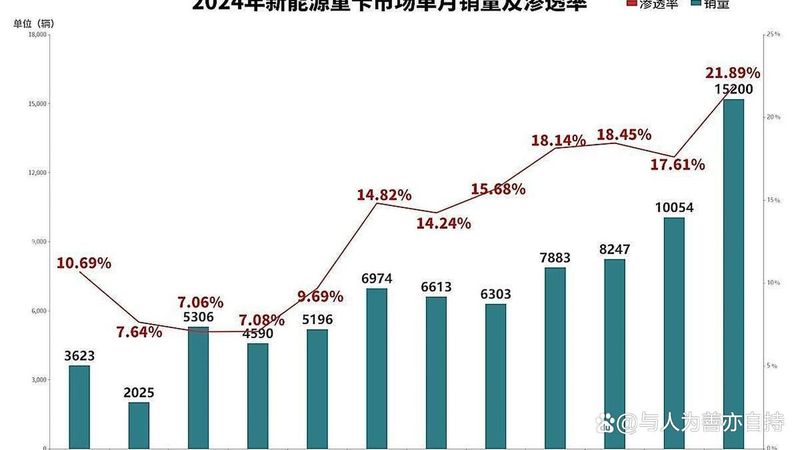
This is not just a breakthrough for an enterprise, but a signal of a shift in industry. Heavy cards are an important means of production, and the acquisition and operation of a heavy card is linked to the cost of logistics, the pace of infrastructure, the allocation of energy resources and the lifeline of the national economy. Five years ago, the new energy heavy-carded industry in the country had a penetration rate of less than 1 per cent, only sporadically at limited sites such as ports and mines. In 2025, this figure was close to 30 per cent. In the first half of 2026, the penetration rate of new energy from heavy-calories reached 34 per cent; in june alone, it rose to 374,000 units, an increase of 107. 7 per cent over the previous year。
The new energyization of the weight card is not just a power form, but a set of operating logic behind it — a change in energy costs, a change in market drivers and a change in industry competition rules。
It's not an accident
The sales of new energy weight cards have produced a steep climb curve over the past five years。
Until 2021, new energy weights were not felt in the market. Gao jing, director-general of smart equipment, china heavy gas group, was introduced in 2006 and has been dealing with diesel fuel weight cards for more than a decade. “it was felt that the weight of the new energy is the amount of the port, the mine, and that it will not be able to reverse.”
In 2022, the wind began to change and logistics giants such as kyoto and sunfung began to buy new energy trucks in bulk. The real transition took place between 2024 and 2025. In 2025, the penetration rate of new energy loads was close to 30 per cent. In 2026, the use of new energy products expanded rapidly in the first half of the year, with a rapid increase in the structure, with a 34 per cent penetration rate of new energy in hard-calorized domestic commercial vehicles; cumulative sales of 140,000, an increase of 76. 6 per cent over the same period. The incremental engine of the heavy-card market has been switched to the new energy track。
The first “c”-placed and non-traditional car companies in the market are new forces and cross-border players. The engineering mechanics then followed up. There has even been a popular diagnosis in the industry that old-licensed cars and ships have fallen into trouble and that the leaders of the new energy age should come from outside。
Reality gives different answers. The most gold-bearing terminal indicator for the heavy-card industry is the data on the number of real vehicles that have completed the cards and are about to become operational. China's heavy gas will be the number one in the first half of this year, and the old car will be rescheduled on the new energy track。
Zhou, associate professor of vehicle engineering, school of automotive engineering, shandong institute of transportation, observed that new energy sources are stuck in closed and short-duration fixed-line scenarios such as ports, steel plants, mines, etc., and have become the preferred option for users to purchase. “each of the major card mainframe plants is heavily deployed in the new energy grid, and it is not too long before the field has arrived.”
It was no accident that the turning points were formed。
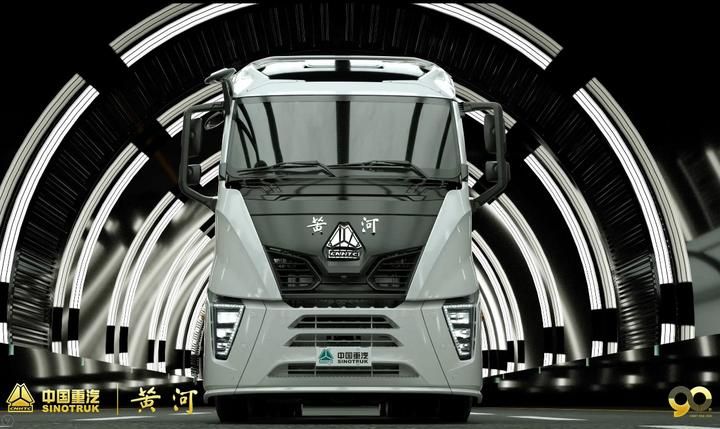
The new energy weight card is a user's production tool, and the core indicator for purchasing decisions is clearer: whether it is cost-effective. Behind the order is a finely calculated economic bill。
The assistant minister of industry and market management of china, wang wan peng, has made a check for journalists: a weight card operating 120,000 kilometres of mileage per year consumes about 33 litres of 100 kilometres of oil, at a price of 7 yuan/litre for diesel fuel, at an annual cost of about 275,000 yuan; if a new energy weight card is replaced by a 100 km of electricity consumption of about 130 degrees, the charging price is at 0. 8 yuan/degree, at an annual electricity cost of about 125,000 yuan, and energy alone saves more than 150,000 yuan per year. The five-year life cycle saved about $750,000。
Even taking into account the differences in acquisition costs, the acquisition cost of new energy weight cards is only slightly higher than that of diesel trucks under the old and operational truck end-of-life renewal policy. However, the price differentials for oil and electricity continue to widen, adding to the national multi-area heavy-calculation policy for new energy sources, such as high-speed tariff exemptions, restricted areas and time-limit exemptions, a combination of multiple factors, with more and more drivers choosing new energy weights。
But there's a real problem that can't be avoided: buy a diesel car and run. How long can the batteries go, how far can they go to charge
The solution to china's heavy gas is a combination of “technology plus model”。
Technology to solve the problem of “electricity”. Warm wind consumes electricity by self-studying integrated global heat management, first heating batteries, then heating driving rooms, 40 per cent improvement in low-temperature pre-heat efficiency in cold areas, and recovery of energy by drilling energy when electricity is insufficient, with low wind resistance coupled with high-efficiency electrically driven bridges to increase energy utilization, combined with multi-story energy recovery, to achieve a low-speed vehicle downside brakes and high-efficiency back-to-backs ... Dismantling “renewal anxiety” from the source to a solution。
The issue of “risk” is addressed in a model. Batteries represent a high proportion of the total cost of the vehicle, and who bears the risk of batteries being inverted? The solution is the separation of vehicles and power, which translates the original one-time heavy asset input into the mobility cost of following day-to-day operations. With the inclusion of battery bonds, a reduction of almost half of the total vehicle purchase is achieved in the next period of the electrical separation model, and the risk of battery decay and iterative shifts to the relevant operator。
Thus, the two thresholds of “failed to buy” were successfully removed。
The car has to pass, the ecology has to pass
On the new energy heavy cardway, traditional car companies have been able to move from quartering to leading players not only through a car with a hard-quality mechanical skeleton, but also through structured services。
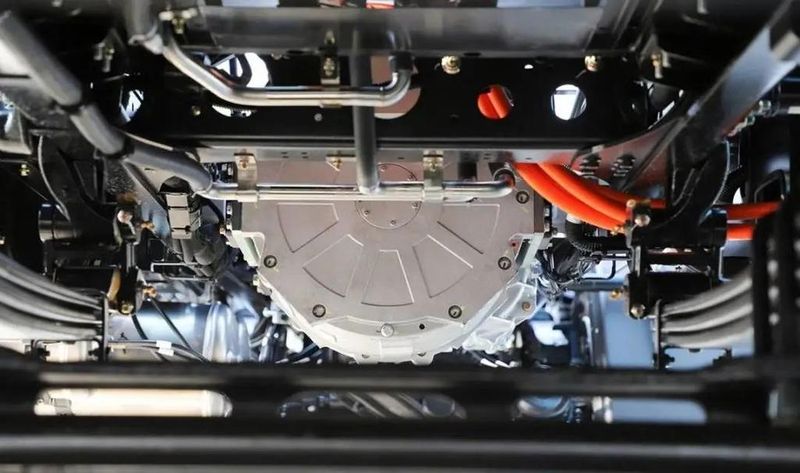
In other words, the car has to pass and the ecology has to pass。
Initially, the focus of the user's attention was “can the electro-gravity card run” and “are there policy support or not”. However, as the new energy weight card enters a scalding operating period, the user's concerns begin to return to the vehicle itself — with low reliability, economy and service security. At that time, the institutional and ecological advantages of traditional motor companies began to be highlighted。
Over the years, heavy gas in china has built a whole-industry chain layout from engines, transmission vans, bridges to the entire vehicle. From the layout of the parent company, shandong heavy works, the enterprise has used new energy sources as the “fifty five” project for the strategic transformation of the “fifty five” strategy, promoting a global shift in resources and capabilities towards new energy sources and a deep industry-wide chain layout. A number of priority projects in china, such as heavy gas high-end commercial vehicles, electrically driven bridge smart manufacturing lines and new energy pilot testing and testing centres, have accelerated land landing, providing a production capacity and technological base for the scaling up of new energy sources。
More intuitive moats are service networks. In the fuel-car age, heavy gas in china was known for its full life-cycle maintenance services. This ecosystem is also evolving in the face of new energy products。
In the zunchou district of the city of jenan, a “model room” for customers, a variety of technical routes, such as overcharges, forklifts and power exchanges, have been built in the light storage for integrated demonstration stations. “these stations are not primarily for profit, but rather for the purpose of solving the problem of valuing pain points for customers as a complement to car sales.” in a business model, complementary energy networks are tied to the depths of car sales, and gao jing is referring to its logic of “membership” by way of subsidies for electricity and preferential fees for services, which bind customers to long-term consumption。
China has more than 1,200 dealers and more than 2,000 service points nationwide, covering many remote mining areas. For the owner of the motorcade, this means that the repair station can be quickly located after changing the electric weight card for heavy chinese gas。
The intelligent upgrading of services is also advancing simultaneously. Li wei, director of the institute of automotive engineering, shandong school of transport, is working with chinese heavy gas to develop a “new energy commercial vehicle failure detection diagnosis based on large models” project that will position typical failures precisely through model reasoning and predict the remaining life of key components. “the platform, like an experienced teacher, can quickly and precisely identify the source of the failure and address the shortage of new energy commercial car maintenance staff.” li wei said。
Moving from demonstration pilot to landscape scale
New energy weights move from “pilot” to “sizing”, and the construction of complementary energy networks is a crucial link。
At present, complementary energy routes are mainly in the form of switch and recharge. Zhou gave journalists a set of data: “the power cell capacity associated with the new energy weight card is 280-600kwh, which can be replaced in three to five minutes if the power is replaced; if the charge is charged, the 800v high voltage charge platform can be replenished by approximately 300km for 15 to 25 minutes. Either way, the speed of time has been greatly increased.”
In china's experience with heavy steam, the scene is screening the supplementary energy routes. Ports, mines, steel plants, etc., have closed fixed short-distance scenes, with heavy vehicle shifts and fixed lines. China's heavy gas mains switch electricity in three to five minutes, and urban slag and scattered city-owned and scattered vehicles have been shut down but dispersed, with the mains pushing high-power direct-flow, night-time valley power charge, supplemented by a mobile power exchange programme。
As of june this year, china's self-rehabilitated and joint third-party power sites had reached 60 sites, covering 24 provinces of the country and extending to 21 countries overseas。
The application scene continues to expand. Since last year, the application of the new energy weight card has begun to spill significantly, extending from mining to railway terminals, from steel plants to downstream processing plantations, and expanding urban debris from the centre of the city to a larger radius of the suburbs。
Wang man-pon described the fact that short-distance transport trucks such as coal, which account for more than 50 per cent of china's heavy gas and new energy loads, remain the largest base plate, but the market for long-distance majors is breaking ice. Recently, a sichuan customer purchased 100 hover tx tractors on a one-time basis, which will be used on a 400-kilometre and longer transport route in the kawasu region。
Greater market space stems from the synergy of policies and trends. The transport sector is the largest emitter of carbon, and the weight card is the “hard bone” where energy conservation and carbon reduction in the transport sector are difficult to eat. This year, a series of measures have been put in place to promote the use of electrolytic weight cards in all their aspects. In june of this year, 11 departments, including the ministry of transport and communications, jointly issued the programme for the implementation of the new energy heavy cards, which for the first time identified quantitative sectoral development goals at the national level: by 2030, the penetration rate of new energy loads had reached 40 per cent, with holdings exceeding 1. 6 million, or about 20 per cent. Planning is under way for the construction of about 3,000 recharging power stations and 30,000 km of zero carbon road transport routes to move the new energy load from demonstration pilot to the scale-up of the whole scene。
At the same time, policies such as the halving of acquisition taxes, the exchange of old and new subsidies, multiple high-speed tariffs and the liberalization of road access together constitute the driving force behind the scaling-up of new energy weights。
The acceptance of new energy weight cards in overseas markets is also growing as a result of the combined effects of the global carbon reduction and traditional energy supply crises. Wei yun peng, deputy general manager of china's heavy gas group international corporation, explained that china's new energy products have covered more than 40 countries and territories, and that the region of south-east asia, thanks to strong market demand and rapid policy, has become china's first market for exports of heavy gas new energy trucks, accounting for 41 per cent of the total and maintaining high growth。
Research by china king shows that emerging markets such as africa, south-east asia, latin america and central asia are still high and that the global mining and capital investment cycle is upwards and is expected to continue to push china's heavy cards and engineering machinery to the sea。
Unlike in the home country, the weak power infrastructure in many regions abroad means that china’s new energy weight card expands markets by requiring “industry-wide access to the sea” – from photovoltaics, wind machines to storage, charging and power exchange – to be packaged into an overall “microgrid” programme。
“in terms of global markets, the demand for new energy sources is even more acute in areas where new energy commercial vehicles and engineering machinery are about to open up new opportunities for explosive growth, particularly in regions with high dependence on oil imports for finished products such as south-east asia, africa, latin america and europe. The shandong heavy industries have been promoting new energy products in some overseas countries, with new energy solutions validated by the global market to meet the energy structure and transformation needs of different countries.” wang zhichen, chairman of the shandong heavy industries group。
Thus, the future of new energy weight cards is not a car-making enterprise, but an ecological constructor. The transition from manufacturing to service is on its way. Chen xiao wan, zhao yanan









