


Air-conditioning is one of the most common appliances in our daily lives, and it is inevitable to take down and move depending on the demand for use. The following three steps will save you around $300 in fluorine。
This paper is based on a zero map detailing operational steps and methods. Also share the principles of air conditioners and common care, with a view to providing you with reference and help in their dismantling operations
Introduction to the working principles of air conditioning structures
What are the main components of the air conditioners? How does air conditioning cool and heat? These two questions are answered below: 1 and the composition of the air conditioner structure, which consists mainly of compressors, condensers, condensers, fans, etc. Indoor machines consist mainly of control valves, evaporaters, fans, electric accelerators, master panels, etc。
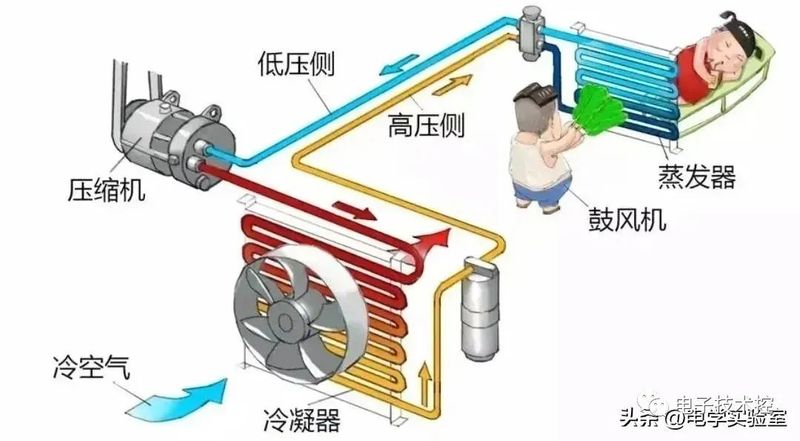
The air conditioner structure is made up of 2 working principles, which are applied by compressors to high-temperature, high-pressure compression of the medium (frelion), which enters the condenser tube and exchanges outdoor air in the condenser to produce medium-temperature high-pressure gases. It then enters the interior control valve by connecting the copper pipe inside and outside. Entering an interior engine booster with a regulating valve, driven by an booster fan and acting with indoor air, produces a cold, heat-controlled temperature。
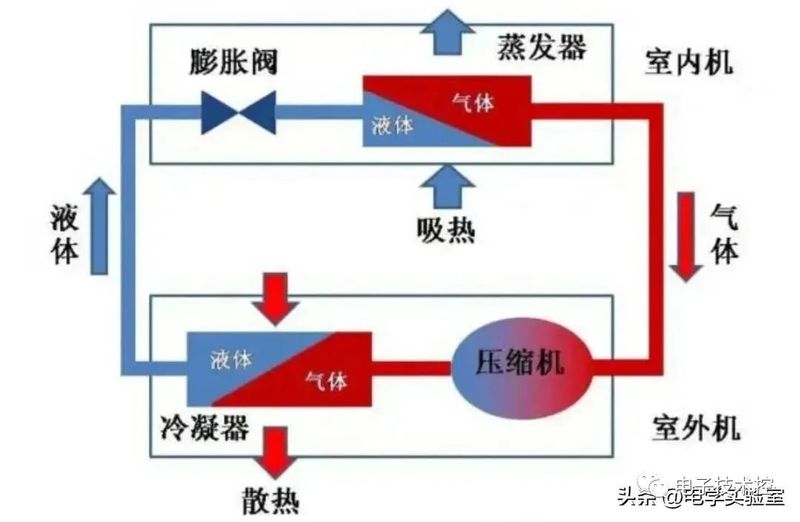
The above-mentioned process involves the conversion of energy through the transmission medium (freon). The compressor is like the heart of a human being, and the medium is the blood in circulation. The evaporation and condensers regulate the process of balancing the internal temperature like the perceived temperature of the skin and the sweat glands。
Ii. Operational course
When in normal condition, the air conditioner is removed, installed, usually consisting of the recovery of the medium (freon) and the removal, installation, etc. Of the interior and exterior. The installation and dismantling are general operations and are not repeated here。
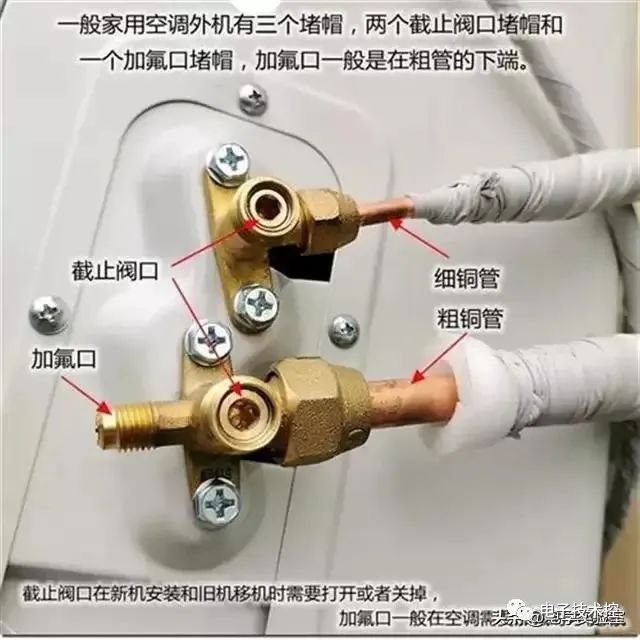
High and low outdoor switches will focus on the operational steps for the recovery of the medium (freon): the first step: before the medium (freon) is recovered, the air conditioner modem is activated, the outdoor compressor is activated and it operates for about five minutes. At this point, the tube protection cap is wrinkled and the high-pressure tube is closed by a clockwise of the inner six-point wrench, at which point it is fluorinated. Step 2: media (freon) recovery times vary depending on machine power. In about 20 seconds, all media (freon) can be recovered. First, the coarse tube protection cap is removed, the compressor is carefully listened to, and when the sound changes slightly, the internal six-angle wrench is used to close the low pressure tube and the fluorine is collected. Step 3: discontinuation of air conditioners and removal of indoor and indoor copper tubes. Rehabilitate high-pressure tube protection caps and eventually perform mechanical dismantling of equipment。
When installed, external valves are installed in the same order as disassembly, provided that they are vented through the intermediate pipe. The low-pressure tube and the high-pressure tube are connected to the interior and outdoor machines, each with a pin to the lower-pressure (bold) vent and a six-angle loose (high-pressure) tube valve. The exhaust sound is over in about 20 seconds and the high-pressure tube screws are secured while the coarse tube (low-pressure) valves are opened. Complete release of medium (freon)。
Iii. Notes
1. The intermediate pipe is a copper tube, which is not easy to bend, and the damage results in leakage. 2. When an indoor machine is dismantled, it is not easy to pull hard, and the interface should be opened at the copper tube interface. 3. Media (freon) recovery, release should be carefully observed for compressors and pipe changes, both of which typically take about 20 seconds. 4. The re-installation shall examine the leakproof pads of the tube and lock the screws to avoid leakage. 5. Fluorine capture cannot be performed in heat。









