


It's summertime. Air conditioning is rebirth. But do you know how air conditioning works? Why does it spray cold air? The ac is not really cool, it is a heat porter, and according to the principle of entropy, energy does not disappear, it only shifts。
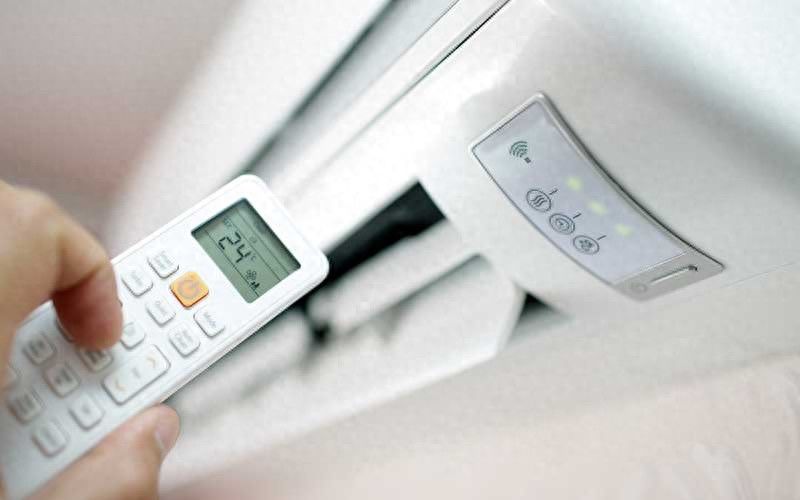
How did the air conditioning move indoor energy outside
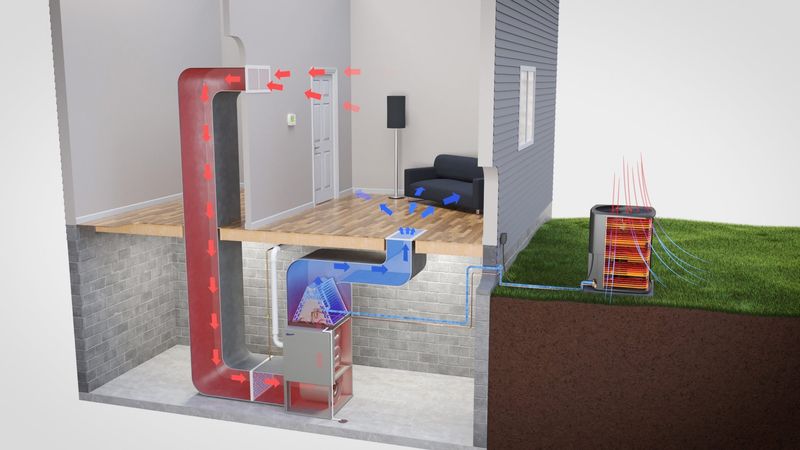
The core of air conditioning is refrigerants, also known as refrigerants, which are often fluorinated and, of course, more environmentally friendly refrigerants such as isobutane and tetrafluoroethane. And then we're going to take a chiller look, and we're going to take a lap in the air conditioning, and you're going to figure out how the energy moved out。
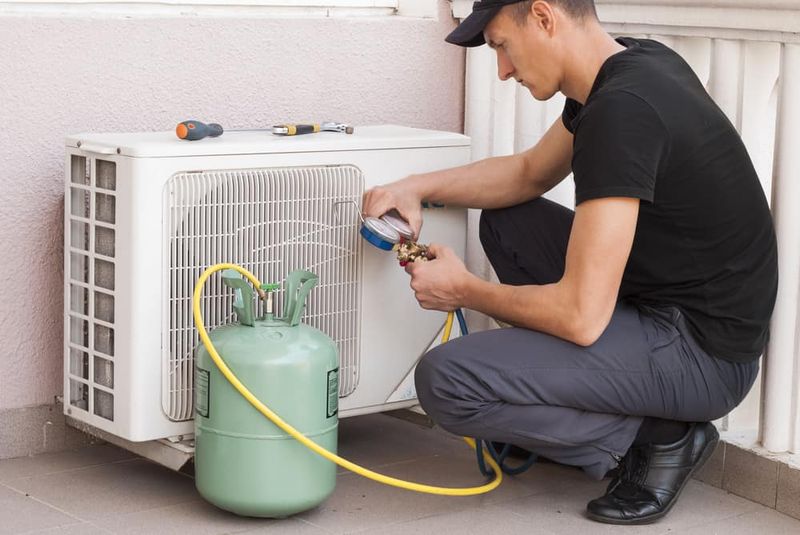
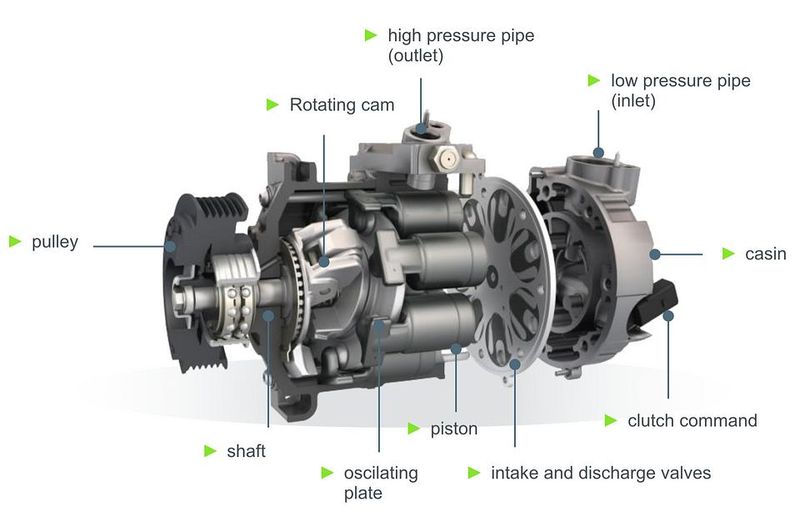
Initially, the refrigerant was a low-temperature, low-pressure gas with temperatures ranging from a few degrees to a dozen degrees celsius, and it was packed in a tank. The chiller was then released, air-conditioning compressors, where it was compressed into high-pressure gases, pressured, and its temperature began to rise。
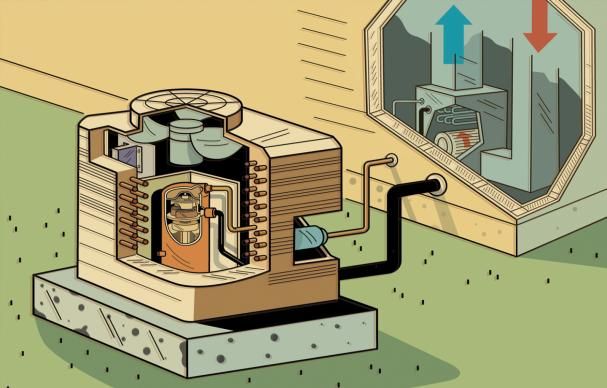
Old air conditioner compressors are pistons that need to be lubricated, and compressed gases are inevitably mixed into lubricating oil, while the sound is very high and life is short, and the user experience is poor. Most of the air conditioners now use vortex compressors, which are very much like two plates of mosquito collide, one of which is not moving and the other of which is moving. The gas enters through the cracks of the two screwdrivers and is then gradually driven to central position. The closer it is to the centre of the vortex compressor, the greater its pressure, which is then channelled into the condenser through a catheter。
The condensers are outdoors, a row of small pipes, all of which are metal with a high heat coefficient, usually copper or aluminium. Here, high-temperature, high-pressure gases exchange heat with air, as refrigerant temperatures are around 80°c. The heat is always passed from high to low, so the temperature of the refrigerant is slowly decreasing. With the help of fans, fresh air continues to come to take the heat from the condenser, and it is only when the heat is released that the refrigerant begins to liquidate into too cold。
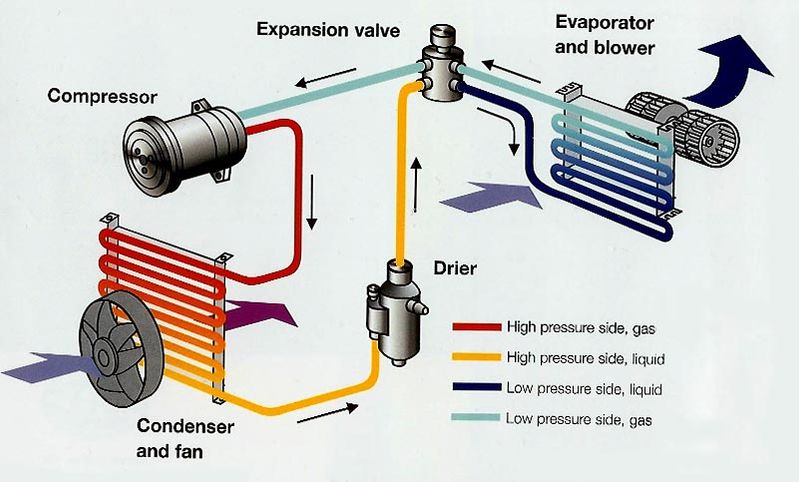
Then the liquids were pumped into the room, and the whole process seemed to be a little entangled, and you just know that the refrigerant had changed from a low-temperature low-pressure gas to a liquid. All those who have studied middle school physics know that the gas is liquid when it heats externally, and this heat is not indoors but absorbed by the air outside。
The liquid refrigerant enters a valve, also known as the swelling valve, which acts as a decompression of high-pressure cold refrigerants by lowering their boiling point to about 4°c. The expansion valve also controls the flow rate of refrigerants and regulates the temperature of air conditioning cooling。
Refrigerant flows through the swelling valve and enters the evaporation unit, where it is a misty state that coexists with the liquid and gaseous state. The evaporation and exterior condensers function in the opposite way, with low-pressure, low-temperature refrigerants starting full vapourization in the evaporation unit, heating during the process, and high-temperature indoor air outside the evaporation tube absorbing its energy. Thus, the indoor air passed through the evaporation unit and the heat was sent to the refrigerant in the tube。
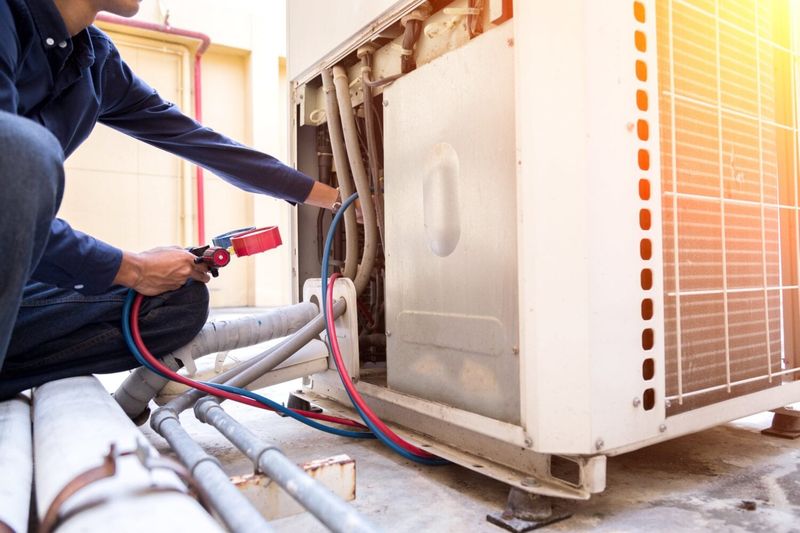
Refrigerants revert to their initial state, repeat the processes above, continuously suck out indoor heat and carry them to the air outside. During the inhalation process, the evaporation unit is cold and the water vapour in the indoor air is liquidized into small beads, so that air conditioning is naturally capable of drying indoor air. Of course, the interior air can be kept wet by design。
Do you have a question about the air conditioner that's always on? It's supposed to be getting colder. How does it keep the room warm
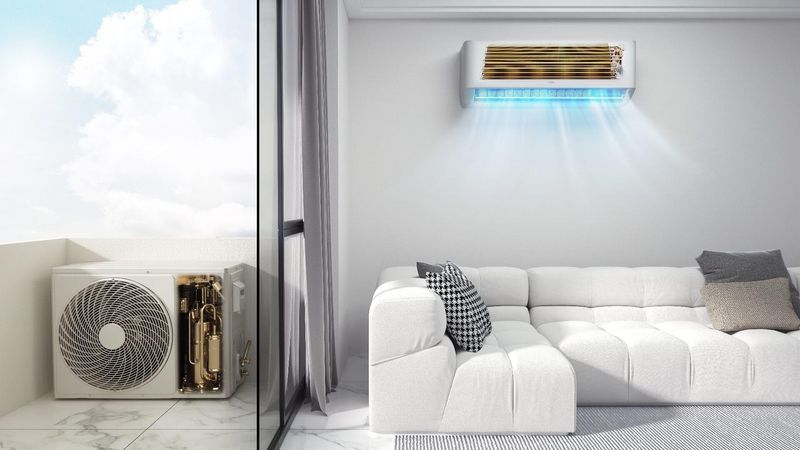
The principle is simple, in fact, to add a temperature sensor to the air conditioner and to pass the temperature to the microprocessor of the air conditioner, which is calibrated according to the user's specifications. If indoor temperatures are higher than those set by the user, the processor gives a directive to expand the swelling valve and release more refrigerants into the evaporation unit. If the temperature is below the given room temperature, then the expansion valve is reduced and the refrigerant enters the evaporation unit. As such, air conditioners can independently modify cooling strength。
Refrigeration of air conditioners, usually at a minimum temperature of 16°c, which does not normally exceed this lower temperature limit, is specifically calculated and is the most mandatory cold effect that can be accomplished when the expansion valve is fully activated and the refrigerant enters the evaporation unit as quickly as possible。
Refrigerators and ice machines are cooled like air conditioners, and refrigerators bring the heat out of the case, so you don't feel cooler, but you feel warmer. If the refrigerator doors were open, the temperature in the room would not actually decrease。









