


A silver grey cabinet is still standing beneath the tube of the constant pressure-reducing device at the refinery, with the upper respiratory valve moving slightly with the air current; an explosion-proof small room on the outskirts of the deep cold zone below 162°c at the lng receiving station, which is providing a stable 24vdc power supply to the distributed temperature transformer cluster; and a touch screen interface in the acetal solvent recovery area at the pharmaceutical cleaners, which shows real-time internal pressure, spot and blowdown times
It's not a traditional distribution box, it's not an ordinary blast control cabinet. It is a new industrial device that combines positive pressure protection, smart power distribution, the essential security of supply and edge control: an explosive-proof positive pressure cabinet distribution box (explosion proofpressurized distributioncabinet)。
When “power distribution” meets “positive pressure”, a security paradigm from passive protection to active empowerment is being upgraded and is occurring on high-risk industrial sites。
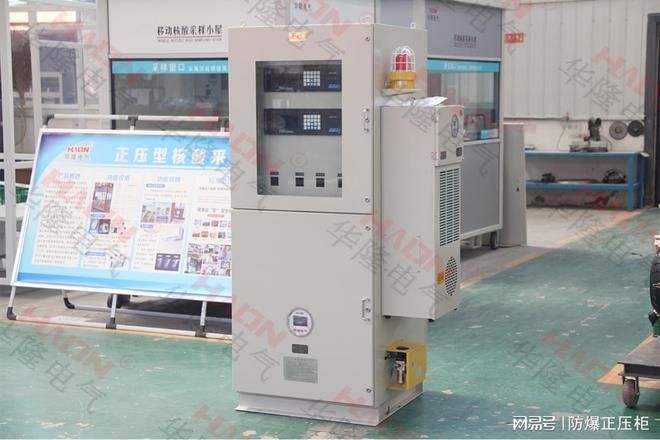
Demolition-proof pressure cabinet
Redefining “treasers”: more than power distribution, more than “control”
The core function of a conventional blastproof tank (e. G., exd-separation) is “physical isolation + circuit distribution”, the safety logic of which is based on the mechanical reliability of a “well-heavy shell, a small gap, and a fire that does not pass”. In the case of blast-proof pressure cabinets, the distribution system as a whole is integrated into a positive pressure protection system, resulting in a triple leap:
Security dimensions leap: from "defunct" to "defunct"
All circuit breakers, contacts, wave protections (spds), dc/dc power modules, signal barriers, even small plcs or edge gateways in the cabinets are working in a micro environment of continuous positive pressure (100-300 pa), clean drying (show-20°c), inert control. External explosive gases are completely isolated and the risk of generating sparks, arcs or high-temperature surface combustion in the cabinet is fundamentally eliminated — not “in case they blow up or get out”, but “never form a combustible mixture”。
Functional dimensions leap: from "break" to "thinky"
It's no longer a simple knife gate plus empty combination:
Independent monitoring of built-in multiple circuits: each route output is equipped with electronic leaks/overflows/overpressures/temperatures combined to support thresholds, event records, remote alerts
Support for ac/dc blended power distribution: main circuit input 380vac, built-in high-efficiency isolation transformer + flow filter, output multiple-storey straight currents (24v/48v/110vdc), dedicated to internal instrumentation, electromagnetic valves, wireless sensors, etc.
Integrated blast-proof power management module (pmu): a two-way redundant input automatic switching, battery smart charge management (support for 90-minute emergency power supply) and voltage drop-through (200200ms) capability to ensure uninterrupted critical load operation。
System dimensions leap: from "on-island" to "node"
Design rs485 ethernet interface pre-filled modbustcp/rtu or mqtt protocol stacks with direct access to the dcs/scada system:
(b) real-time upload of internal pressure, temperature, humidity, circuit current/voltage/switch status
(b) receiving control direction, long-range separation of assigned secondary routes
When a shock triggers an abnormal pressure, a high-risk load circuit (e. G. Heater, high power electric drive) is automatically shut down by a connection。
— it has evolved into a “microenergy and data hub” on the edge of a hazardous area。
Structure design: "all-factor shield" tailored to high-risk scenarios
Distinguished from complication, a professional-grade blast-proof positive-pressure cabinet distribution box is designed with a combination of six core subsystems:
>practical application case: a coastal ethylene decomposition unit area
>the original use of three blast-proof distribution tanks resulted in frequent end-end oxidation, leaking electric jumper gates as a result of salt fog corrosion; replaced by a positive-pressure cabinet distribution tank:
> 92 per cent reduction in annual failure rate
>the maintenance cycle is extended from quarterly to annual
>the new dc24v circuit provides direct power to 12 wireless vibration sensors and saves 40 per cent of space from a separate fence and power tank。
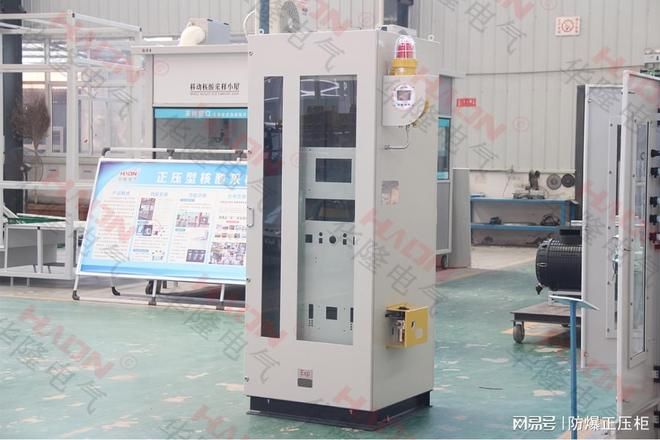
Demolition-proof pressure cabinet
Iii. Selection and application: matching is the hard part
Not all scenes need to be “step-by-step”. Scientific selection is based on three main principles:
Level of protection by hazard medium
The iic-grade hydrogen/acetylene environment must be selected for expbiict4gb and above, and the positive pressure system should support nitrogen inertification
Level iia propane/gas environment expbiiat3gb to meet and clean compressed air is sufficient
All seals, sensor film containing hydrogen sulfide (h2s) shall be marked "h2srestant"。
Power distribution structure by load characteristics
Pure instrument load (engine drive/heater (>5kw)→ (b) the need for an independent cold-dispersion heat channel + mandatory vent design to avoid temperature escalation in the cabinet
The high frequency switch load (e. G., frequency transformer) must be equipped with a dv/dt filter attached to a dedicated shield to inhibit high frequency interference into a positive pressure system。
Intelligent level based on operational needs
Base type: pressure/temperature local display + sound light alert
Enhanced: support for 4g/nbiot remote surveillance, micro-mail alerts, energy consumption analysis
Flagship type: integrated edge calculator (armcortexa72), which can operate the python script to achieve local logical control (e. G. "auto-reduce frequency when pressure <80pa")。
Beyond compliance: creating sustainable engineering value
The value of blast-proof pressure cabinets has already spilled out the safety floor, extending to the enterprise's operational efficiency and digital transformation:
Efficiency gains:
(b) reduction of over 30 per cent of the equipment in the conventional programme, such as this fence, separators, and dedicated power tanks
(b) smart diagnostics reduce the time to locate faults by 70 per cent and single maintenance costs by about 45 per cent
Modularized design supports "put-in" amplification, with a 50 per cent reduction in production-line technology cycles。
Green low carbon:
Efficient switch-off power conversion efficiency > 94 per cent, 35 per cent more energy-efficient than conventional linear power
(a) extra-heat recovery design: some models use internal heat-dispersing wind preheating gas to reduce heating energy consumption
The carbon footprint of the full life cycle is 28 per cent lower than that of the specific container (lca assessment data)。
Numeric base:
As the first credible data collection and implementation node in a hazardous area, it is a natural “safe entry” for industrial internet platforms:
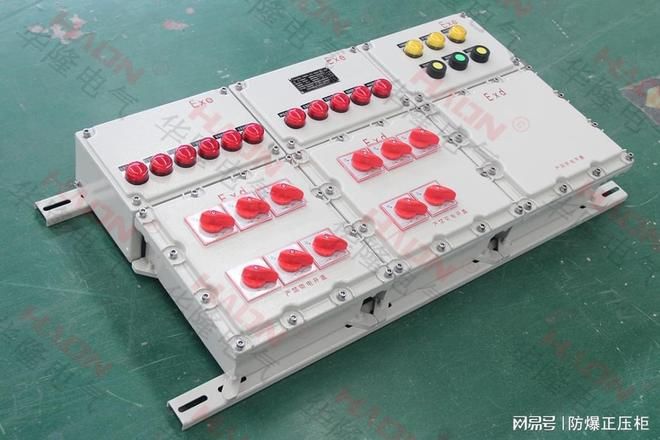
Demolition-proof pressure cabinet
Predictive maintenance of equipment health
Optimizing the movement of electricity load ai in the area
Automatic blast compliance inspection and electronic bill generation。
Concluding remarks: the ultimate form of the distribution box is to make the hazard invisible
A hundred years ago, humans confronted the explosion with heavy iron
Fifty years ago, we extinguished the flames with a delicate gap
Today, we have chosen to draw a dynamic, intelligent and verifiable intangible boundary between danger and security with a clean air stream。
The bursting pressure cabinet distribution box is no longer merely a “box with a switch”. It is the most silent night watchman in a dangerous site, maintaining order under mpa-grade pressure; it is the front-line energy controller, guarded by a millisecond-scale response; and it is the first “digital courier” in a wave of industrial intelligence to reach the core of the explosion。
When security no longer requires compromise, electricity distribution becomes a faith
When the power begins to breathe, the danger naturally disperses。









