


"don't you want to make a picture, do you have a painless, radiation-free way to check the tubal?"
Many sisters are afraid of the fallopian tubes, and today they speak out about the methods other than the screening: ultrasonic imaging is the preferred alternative, a cavity lens is the ultimate gold standard, and tubal duct fluids have been phased out long ago。
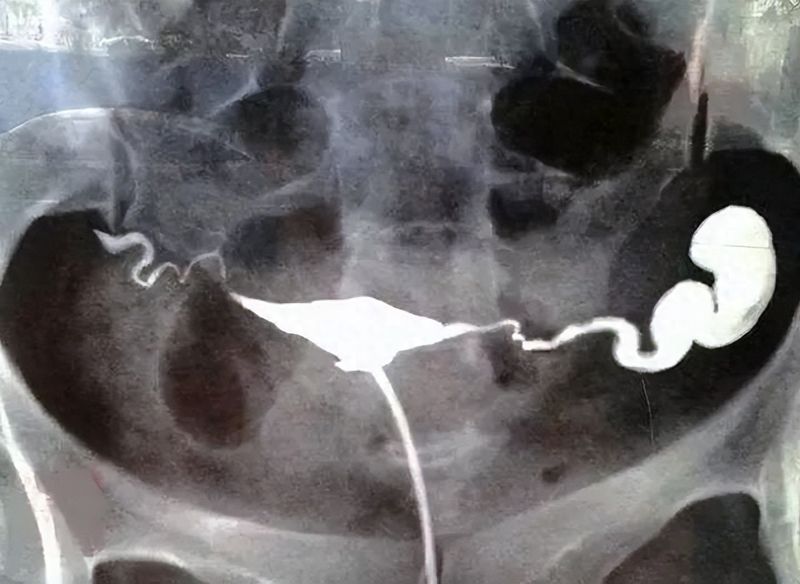
I. Ultrasonic reflection of the uterus ovarian tube: a radiation-free preferred alternative
This is currently the most recommended photolithography and a high-quality radiation-free option。
Operating in a similar manner to x-rays, but replacing iodine agents with ultrasonic micro-foaming agents, and observing in real time the agent over b through the entire process of the fallow tube to determine whether it is smooth or not。
Advantages: irradiation-free, ready to try in the month of pregnancy, without fear of being affected by rico; ability to assess uterus morphology, membrane thickness, ovarian state and pelvic cavity at the same time; accuracy rate of 80-90 per cent, little difference from x-ray。
Shortcomings: high technical requirements for doctors, not all hospitals; slightly higher costs than x-rays; less clarity than x-rays in the determination of the remote viscosity of the fallow tube。
(c) applicable population: sisters who fear radiation, are allergic to iodine and wish to be pregnant as soon as possible can be screened as a first line。
Ii. Prefectional blues: diagnostic gold standard, combination of treatment
This is the most accurate way to determine the fluidity of the fallow tube, with an accuracy rate of close to 100 per cent but within the scope of the operation。
Three small holes in the abdomen after full abdomen are required to reach the abdominal lens, and then inject a mercuric blue liquid through the cervix to observe directly through the lens whether or not the fluid is flowing out of the ovarian umbrella。
Advantages: to look directly at the diagnosis, the results are most promising; to address the pelvic problem simultaneously, such as the separation of ovarian viscosity, the extraction of water, the removal of ovarian cysts, the treatment of endometriosis, etc., and the availability of diagnostic treatments。
Shortcomings: start-up operation, hospitalization, abdomination, higher cost; one-two weeks rest after surgery, long recovery time。
(c) applicable population: not a routine screening programme, but only for patients who are highly suspected of pelvic pathologies, such as severe viscosity, internal ailments, suspicious results, or who plan to perform pelvic surgery simultaneously. In short, it is a “end weapon”, not an entry check。
Iii. Pyrotechnics: out! The pit
This was the old method of the past, and now formal reproductive centres have been abandoned, but some small hospitals are still operating。
The operation was simple: doctors used syringes to inject physico-saline or antibiotics into the cervix, and they used their hands to determine resistance sizes and the return of liquids in order to speculate whether the tubing was smooth。
Advantages: low price, simple operation, radiation-free。
Shortcomings: the accuracy rate is only about 60 per cent, based on a subjective sense of hand, and is extremely rigid; it is not possible to determine which side of the fallopy tube is missing and where it is blocked; it is impossible to identify issues such as viscosity of the end of the tubal umbrella, accumulation of water; and blindly suggesting that liquids may also exacerbate pelvic infections, or even contribute to the accumulation of tubal water。
Conclusion: don't ever do it! It's possible that the water lines are being squeezed out of the umbrella line. It doesn't make any sense that they are fake positives from uterus spasms and have no reference value。
Iv. These methods can't check the tubing
The core of three sentences, fearing radiation, the influence of shadows on pregnancy, the selection of an ovarian ovary tube is ultrasound, non-radiogenic and with high accuracy; there is a high level of suspicion that the pelvic disease or the results are abnormal, and that direct choice of the abdominal lens can be diagnosed and treated; the convulsive fluid has been phased out, and ordinary b has not been able to check the ovarian tube for any crime。
The core of the fallopian tubes is “precision, safety”, priority being given to x-ray or ultrasound, so that the problem can be addressed in a targeted manner and less pregnancy-ready









