


A wooden pole and a scales, which seem simple, behind them are the hands of the scalesman for decades. In the community on the outskirts of the twin river streets of yunyang county, chen shigeki is still holding up on the scale-making skills inherited from his ancestors。
He was born in 1960 and is the seventh generation heir to the intangible cultural heritage of the county “chang jiu-jin’s traditional production skills”. This work has been carried over for nearly 400 years since the beginning of the year。
Today, the scales have gone into thousands of households, and the scales have faded out of daily life. For chen, however, the legacy of hundreds of years of old art is still worth repeating。
The most important thing is that it's an accurate word
The scale looks simple, but it's quite sophisticated. A wood shall undergo multiple processes, such as selection, making, polishing, wiring, eye-searching, drilling, assembly, etc., and, in turn, adjust the balance between the scales and the scales at the school scale to determine the position of the scales. Each process cycle is rounded up, and any detail deviations may affect the final term accuracy。
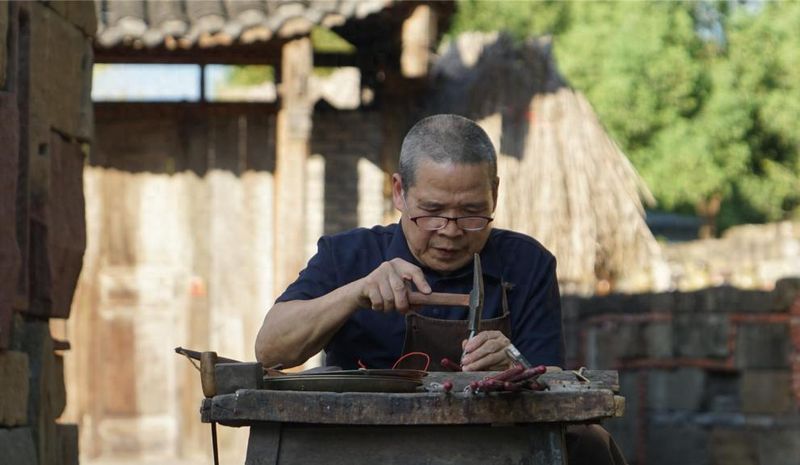
"it will take a lot of effort to really make a scale precise." according to chen, the scale of wood poles is hand-held and cannot be moved at any step. And the best of them is the calibration. When the scales are completed, they shall be rebugged to optimize the match between the scales, the scales and the scales. “the hardest thing to do is to get the scales right. You need to calm down, step by step, make every detail available."
After decades of scale, chen's happiest moment was when a piece of scale, adjusted repeatedly, finally reached its standard. “when you see it well-known and steady, your heart is the strongest.” in his view, this precision is based on accumulated experience, and more on hard work。
The scale is like a man
Chen's ancestors opened scales near the pier to make and repair wooden scales. In the past, wooden scale was a common measurement tool in market transactions, with a single scale linked to the interests of both buyers and sellers. It is the rule of chen's family that weighs like a man。
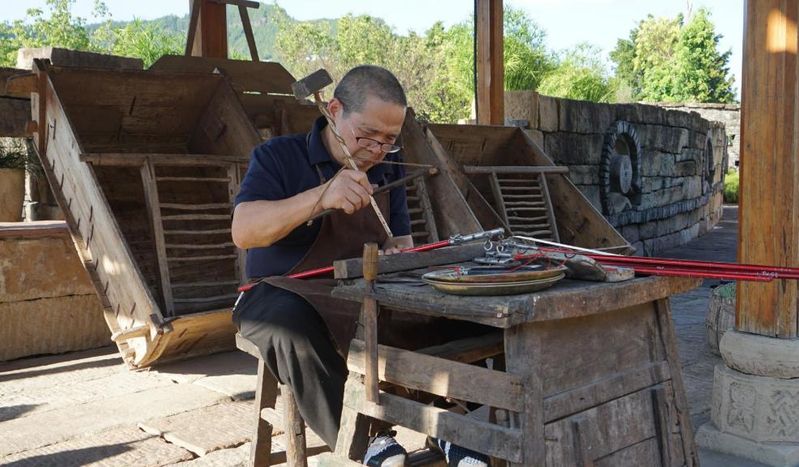
The scales of conventional wood poles are also very well conceived, incorporating elements such as the beidou seven, the nandu six and the fukuo three stars, both in weight and with a desire for fair trade and good faith.” the scale of wood is a culture of thousands of years, and it must not be lost to the people, but must be fair and just.” chen qi. To him, the scales on the scales should be precise, and in the hearts of the weighers a measure. “every step has to be done with a heart, and it has to be refined
From doing it to knowing why
Chen hong has watched grandfather and father weigh since he was a child, and the competition is not new. It was only after learning from his father that he discovered that there was much to talk about behind a seemingly ordinary wooden scale. “when i was a kid, my grandfather and their father weighed them, and they were no stranger to them. After learning to do it, it turns out that there is a lot of talk. It's not just a trade, it's a legacy."
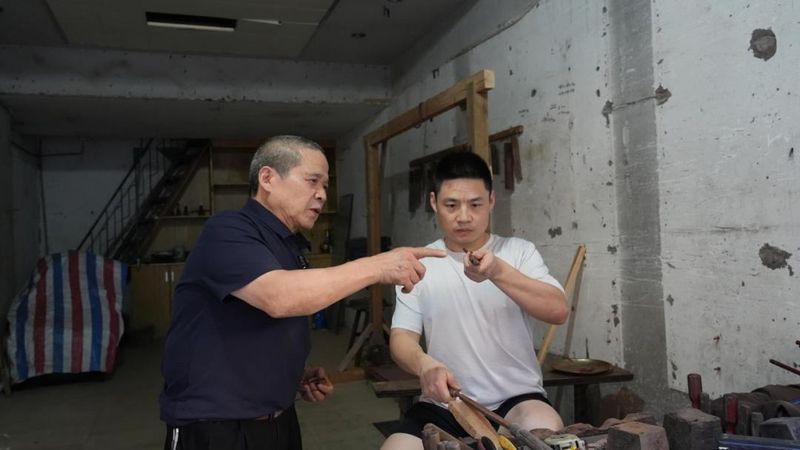
Learning to weigh also allowed chen hong to understand the reasons why his parents insisted on it. “we only weigh fair and just, and good faith is not just a trade, but a measure of the conscience of the heavens and the earth.” in his view, what was really needed was not just the method of making the scales of wood, but the principle of doing things that had always been upheld by the parents。
While the scales have gradually faded out of daily life, the skills and integrity inherent in them still deserve to be understood and continued by the younger generation。
It's a trade, and then there's a future
When the scale of wood is gradually withdrawn from everyday life, few people are willing to spend their time studying this trade. What really binds him, for chen, is that there will be anyone who will sit down and calm down and take over the business。
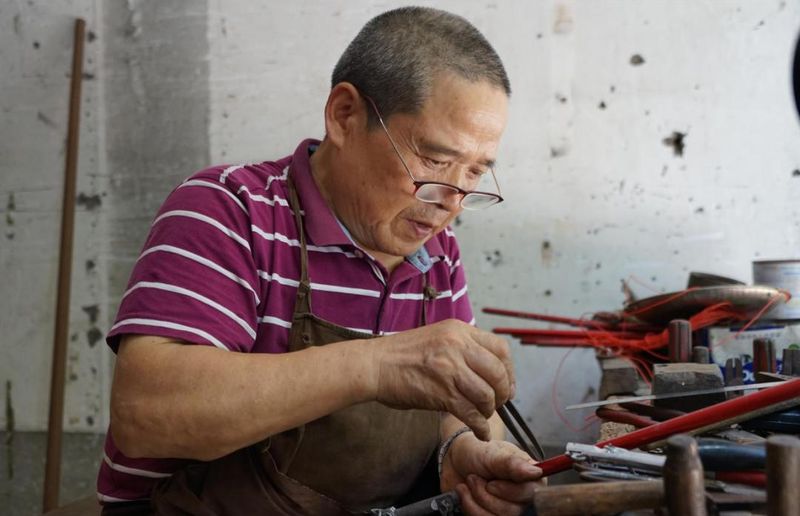
The legacy of traditional crafts requires time and practice. “if you want to really do a trade, it's not a day's work, it's a hammer. Do it all the time, step by step." he was therefore still willing to teach those who wanted to learn about his years of experience and hoped that it would lead to new successors。
“if future generations or other young people want to learn, we will also find a way to continue this work.” for nearly 400 years, a trade has been left behind today, not only a piece of wood, but also a generation of scale-makers' adherence to the technique and awe of fairness. For chen's sake, it is the simplest continuation of the old craft to keep the rules in hand and to teach later。









