There's a recent interesting theory in pony song that business is about creating advantages, maintaining them and taking advantage; it's actually about a long-board theory, and we can just sort it out。
But talking to a couple of entrepreneurs, it was interesting: now many entrepreneurs don't believe in long-span theory, and some say, "no system, no long-span can last." and others say, "no board can be short now."。
It all sounds right, but we fight together。
I've been watching this for a long time — it's not a theory, but we always want to measure all stages with a ruler. The barrel theory has its applicable scene and the long sheet theory. They do not relate to who is right or wrong, but to different positions in the life cycle and industry cycle of the enterprise。
Talk about this today。
The barrel theory is not wrong. It's the wrong stage
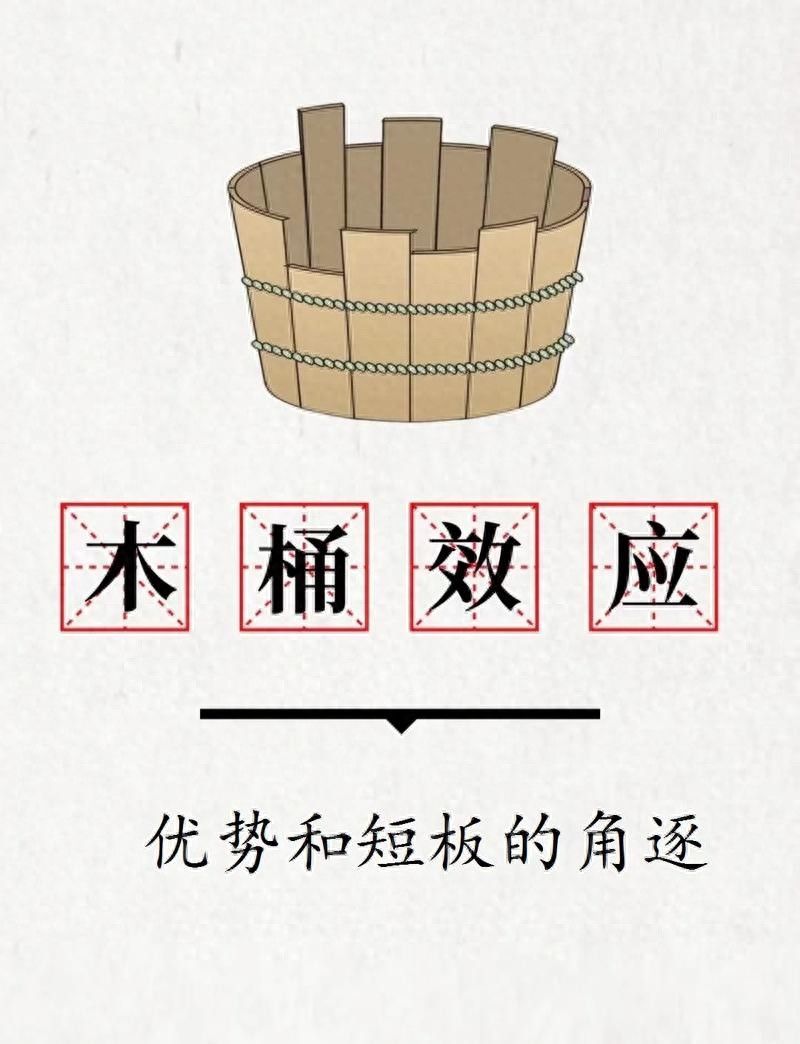
The barrel theory is familiar: how much water a barrel can carry depends on the shortest plate. This metaphor, passed from management to business circles, almost became the word "slipboard."。
But did you find one problem — the barrel theory has an implicit premise: the barrel already exists。
The buckets are tight, the floors are solid, and all the plates are set there for varying lengths. It's time for you to fix the shortest tablet. The water level can actually rise. What kind of business is this premise? It is a mature business that has survived, has run its business model, has organized its shelf. Enterprises at the mature stage, with large users, efficient organizations, good product quality and strong market capacity, have various plates, although at a low or high level, and the panels do work quickly。
What about start-ups
The start-up company did not have a full barrel. You may have only one board — one technology, one channel, one idea of a product, even one of the founders. The other plates either did not exist or were so short that they could be ignored. This is when you go to the patch? When will it be a head? The money's burned and the bucket's still on。
In "five minutes business school," liu said that the core task of entrepreneurship was to find a way, and the core task of maturity was to run. You don't need a full barrel when you find a way. You need a long enough pole to find out where the road is。
This is the true meaning of the long-board theory — not to say that the short-board is not important, but rather that, at the stage of entrepreneurship, the long-board is a ticket and the short-board is a pass line. You need to get in there before you can talk。
Industry cycle and enterprise phase, two maps
But it is not enough to look at the stage of the enterprise itself. And you'll have to see where you're going in your own life。
The import period for an industry is full of opportunities, consumers have not yet developed a fixed perception and channels have not been established. It's when you put a long plate in it, it's easy to rip it open -- because no one's got the bucket ready, and everybody's looking for their own plate。
But when the industry matures, the situation is completely different. Consumers' minds are occupied, the pattern of channels is solidified and the supply chain is more efficient than it is. You only have a long board at this time? I'm sorry, the consumer would ask, "where's your brand? Where's your channel? Each was rejected by one vote。
So the real matrix of judgment is:
Industry import period + enterprise start-up period: long-board theory, single-point breakthrough, long-term survival of the industry + enterprise long-term: running while filling the growth window while filling in the critical short-board industry maturity period + enterprise maturity period: barrel theory, system capacity versus puzzle, short-board determination of upper-ceiling industry decline period + enterprise maturity period: second curve, cash flow for new business with mature business
The matrix appears to be simple, but most people make mistakes by taking drugs from the mature stage of the industry and treating the disease during the start-up — or vice versa。
For example, when many entrepreneurs came up to learn how to do ipds and alis, the organization didn't grow up and the process got itself tied to death. "why does our company lack a systematic thinking?" because it came from a little guerrilla war, the promotions were pragmatic and did not recognize the retreaters. "look, he's talking about "from childhood guerrilla warfare" -- china won first and began to fill the board of systemic thinking. The order cannot be reversed。
That's your strategy
Okay, here's the problem. When you move from the start-up period to the long term, the long board is set up
Many people answer "all important" — brands, channels, supply chains, organizations, talent, technology — each of them has a number of reasons. But "all important" is no strategy. The essence of the strategy is not to choose what to do, but to choose what to do first, what to do later, and clearly to do nothing。
So what's the order? I have a simple argument: which shortboards are constraining your core growth engine at this stage, and which ones to fill。
What do you mean? Take an example。
If you're a consumer brand that depends on the power of the product, you hit it with a blast in the start-up phase -- this is your long board. In the long run, you find growth to be weak because the channels are not moving. At this point, your first panel is not brand, not organization, but channel capacity. You've got to patch up the board and get the growth engine back on。
When the channels are filled, the sales scale goes up, you may find the supply chain unable to keep up — unstable deadlines, volatile quality. The supply chain then became the new first short sheet, which should be filled。
In the future, the size of the team was enormous, and the efficiency was reduced — the organizational capacity became short-set。
You see, the patches are not a one-time stretch of all the plates, but follow the growth engine bottlenecks. Each stage has and has only one of the most critical slabs that can be added to it, so that growth can take another step. When this bottleneck is lifted, the next one will come out。
That's why it says, "the order of the panels is your strategy." the strategy is not an ambitious vision on ppt, but a priority for resource allocation. You put money, people, the attention of the founders on what board, which is your current strategy。
The second curve is a new long plate with an old bucket
Finally, the second curve。
Charles handy's second curve theory has been heard: before the first curve reaches its peak, find the second growth curve. It's all right, but how? The way many businesses do it — mature business earns money and invests in a new business, which is called the “second curve”. The new business doesn't grow, it doesn't last。
What's the problem? It's out of them doing the second curve with a "bunk mind."。
You think the first curve is a full-fledged barrel — brand, channel, supply chain, organization. You take the barrel standard and ask for new business, which of course is short. And then you start filling it with brands, then channels, then supply chains... Halfway through, money spent, new business not set up。
But what is the second curve? It was a new start-up. If it is an enterprise, it has to follow the logic of the start-up period — first with a long enough pole, then onto the road, then slowly with a barrel。
So the correct way to open the second curve is not "new water with old buckets," but "a new long sheet with old barrel resources."。
Where did this new board come from? Usually it doesn't come out of your head, it comes out of your first curve. For example, you've been doing this for years, and you have a very deep understanding of the fabric and the supply chain -- this is an off-the-shelf long plate. Will you use this long board to get into a new class? Like pets? Like functional bedding
In the growth thinking class, liangin spoke of the view that the ability to grow is the ability to make the right decisions on an ongoing basis. The second curve does not wait for the first curve to come to an end before thinking about it, but rather, while the first curve is still rising, take your sharpest long plate and look in the next track。
When we get there, we fill it with a new barrel. It doesn't matter, it's just the cost of a pole, not the whole barrel。
Finally。
This barrel of business is never a one-off fix. It starts with a long board, and then it goes up and up, and for every piece, the water rises. When this bucket is full, you take one of the longest plates, and you'll put a bucket under it。
The long sheet theory teaches you how to go in, the barrel theory teaches you how to stand, the second curve teaches you how to last. They are not mutually exclusive, they are progressive. The real strategic capacity is not to stick to a particular theory, but to know where it stands and where it should be going next。
And if you're wondering if i should be on the shortboard or on the longboard, next time try another question -- what is my growth engine now? Which one is it
You find that board, you find the current strategy。