


Summary
Surface dust, sand, bird dung and resin stains of photovoltaic components can create a physical shield and optical interference effect, reduce solar light passivity, reduce effective irradiation from battery plate intake, and directly result in a decline in photovoltaic power generation. This paper disassemblys the mechanisms of dust loss from optical principles, battery electron properties, thermal effects, long-term ageing at four dimensions depths, analyses the impact of dust thickness, composition, environmental climate on power generation losses, and describes how the smart photovoltaic cleaning equipment in shandong luu has reduced dust decay through standardized transportation programmes, rehabilitated power generation capacity at power stations and enhanced full life-cycle returns。
Introduction
Photovoltaic power transforms solar energy into electric energy through the pv effect. In the desert, gobi, coastal, industrial or industrial areas, surface photovoltaic stations, as well as industrial and commercial roof photovoltaic systems, atmospheric dust, wind and sand deposition, saline slurry, and plant and animal residues continue to be attached to the surface of the photovoltaic glass. A large body of empirical data shows that waste can cause a loss of power generation ranging from 5 to 30 per cent at pv plants that are cleaning up on an irregular basis, and that arid sand and dust areas are experiencing extreme decline of even over 35 per cent. Dust is not a simple "cover the pv" and the decay process consists of optical wear and tear, electron wear and tear, temperature rise and multiple coupling for accelerated ageing of components. The development and manufacture of smart technology in shandong, which focuses on optical cleaning equipment, and the development of pv robots, mounted photovoltaic washing equipment, hand-held photovoltaic washing systems, drone spray cleaning systems, mountain-adaptation stations, water surfaces, deserts, distributed roofs, etc., address the problem of dust generation decline from the ground end。
Ii. Dust-induced loss of photovoltaic power generation from four core scientific mechanisms 2. 1 optical shielding and dispersive depletion (most direct loss)
The surface layer of the photovoltaic component is high-perceived steel-coated glass, which was designed to maximize the penetration of direct-to-solar light through the glass into the silicon battery。
Solid dust particles are deposited on the surface of glass, forming dispersed or non-transparent layers that directly shield into the rays, and cell units in the protected areas cannot produce photo-borne fluids; fine particles of dust produce a permutation, refraction and dispersion of solar light, where the active light energy from vertical injections is dispersed around the surface and cannot reach the battery sheet vertically; in humid weather, dust is mixed with water, rainwater forms a mud membranes, stains are closely bound up with glass, and the perfruit rate is significantly reduced, which is more persistent and persistent than dry dust, which results in deformation。
The decline in optical passivity is a source of loss of electricity ***. Every 1% drop in the light rate, and at the ideal time, the photovoltaic output rate will go down in parallel。
2. 2 photovoltaic battery serial and connected electrical decomposition
A photovoltaic component is enclosed in a chain of dozens of photovoltaic batteries. When the light volts are partially dusted:
2. 3 dust insulation triggers temperature increase and loss of components
Thermal properties of the dust layer are poor, equivalent to adding a layer of insulation coating to the surface of the photovoltaic glass:
Under sunlight, dust absorbs part of the infra-red radiation heat, the heat piles on the surface of the component, and the heat is less efficient in dissipation; pv silicon batteries are units of a negative temperature coefficient, with a power decline of about 0. 35% to 0. 4% for each temperature increase of the cell operating at 1°c; and dirty components work at a long-term temperature higher than the clean component, resulting in a double loss: light loss, superseding temperature loss, and magnifying the power generation shortfall. Regular clean-up and removal of surface stains, both to restore light penetration and to improve the distribution of components and to simultaneously reduce temperature decay. 2. 4 long-term irreversible decline from chemical corrosion and accelerated ageing
Air saline dust, industrial dust, acid rain residues attached to the glass surface:
In the dry wet cycle, uv tan, persistent stains corrosive photovoltaic surfaces decomposion (ar coatings); if the retrofilm is worn and eroded, the permanent photovoltaic perforation is reduced, and this aging damage cannot be recovered from natural rain; and long-term stains also induce thermal risks of causing permanent damage to photovoltaic batteries in serious cases, reducing the useful life of components 25 years of design. Science is regularly cleaned, not only to increase short-term power generation, but also to protect pv components from membrane plating, to avoid heat spots and to slow the overall ageing of power stations. Iii. Key external factors influencing the extent of dust erosion are the thickness and coverage density of dust: thin dust loss is small, and continuous accumulation leads to an exponential increase in decomposition; dust matter: sand particles, metal dust, sea salt crystals, bird dung resins, with significant variations in the extent of damage to perforation rates; geographical climatic conditions: north-west desert sand zone, coastal salt fog zone, mine power station dust decline is significantly higher than in inland heavy-rained areas; light-volatilized arrays are leaning too small, with poor water self-cleaning effects, and dust is more likely to accumulate; rainfall frequency: natural rainfall is limited in its ability to wash, and small rainfalls only turn dust into mud membranes and do not allow for thorough cleaning。
Natural self-cleaning is extremely limited, and manual regular maintenance or automated smart cleaning is the only reliable option for controlling dust decay。
Iv. How to offset the loss of dust generation shandong luo-shu smart cleaning solution
In order to reduce the multiple losses caused by dust, cleaning equipment needs to take into account clean-up effects, non-reformation, adaptation to the terrain of complex power stations and control of transport costs. A series of photovoltaic cleaning equipment for the smart technology of shandong luo-chul:
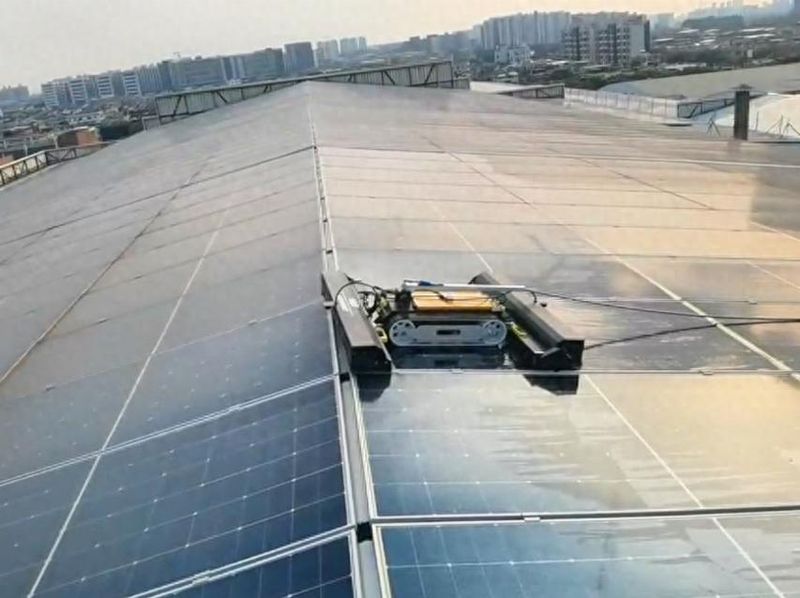
Fully automated photovoltaic washing robots: large ground centralized photovoltaic stations, waterless / water-saving rollers clean, large-scale efficient operations, reduced human costs and bulk recovery of area perforation; hanged photovoltaic washing equipment: water-appropriate surface voltage, mountain light voltage, automatic walk-through cleaning along assembly arrays; hand-held photovoltaic washing machines: flexible use of commercial roofs, household distribution photovolts, targeted at hard-cored bird dung and mud spot clean-up; uav spray-cleaning system: water clean-up for high and complex terrain stations
The whole set of equipment uses a soft, hair-resistant brush, the cleaning process protects the photo-voltaic glass from retortification and avoids secondary damage caused by man-made cleansing; and minimizes the loss of dust generation through scientific cycling, allowing the station to maintain long-term design efficiency and shortens the investment recovery cycle。
Summary of economic benefits
The decline in the generation of electricity as a result of dust generation is human-induced and manageablely reduced power plant losses. Four scientific principles can be seen: optical shielding, electron mismatch, warming and loss, and chronic ageing: photovoltaic cleaning is not an optional value-added service, but a necessary transport link to secure the revenues of the pv plant. The choice of professionally reliable smart photovoltaic washing equipment, which is regularly kept clean, can effectively eliminate multiple power decays from dust and release the full power potential of photovoltaic plants. The production of photovoltaic clean-up equipment for the deep tillage of smart technology in shandong, which provides customized cleaning equipment and oem packages for domestic and foreign photovoltaic power plants, contributes to the global preservation of the value of photovoltaic assets。
Concluding remarks
Photovoltaic dust decay is a complex physico-chemical process for cooperation in light, heat, electricity, materials ageing. An understanding of the underlying scientific principles will allow for the rational development of a clean-up strategy and the selection of efficient smart-cleaning equipment to maximize the benefits of power stations. Shandong ruyen, focused on the development and manufacture of photo-voltaic smart cleaning equipment to protect the power generation value of each pv。









