


Since late september, the rice fields of the green hampshire paddy research base in the city of qingchong county, zhao jingyi, china, on september 29th, china-nine lenang state, have been swayed by the wind, and the luminous crabs under water have been spitting out bubbles from time to time, and an ecological picture of “crabs, crabs.” this is the local exploration of the saline improvement plus paddy crab symbiotic model, which rejuvenates old idle saline。
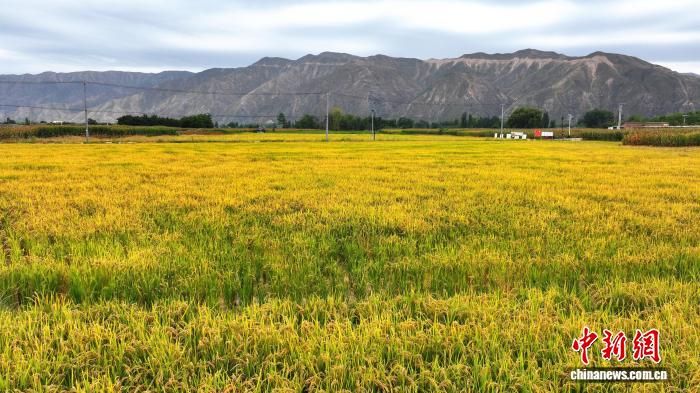
In late september, the town of qingcheng, lanzhou, had paddy fields. Lee fei-yang
The plant had been affected by soil salinization, and large areas of land were hard to cultivate because of high salinity and insufficient fertility. To overcome this challenge, several research units, such as zhang zhang zhang zhang zhen university of agroforestry, gansu university of agriculture, gansu provincial agricultural college, lanzhou city centre for agricultural research and technological extension centre for agriculture, niang chu county, and others, set up pilot sites for the efficient use of salin in the yellow river basin in the city, focusing on two core operations: the screening of salin-resistant, high-yielding and high-quality rice varieties in the yellow river basin, and the development of non-hazardous green farming techniques。
After seven years of research and exploration, a local “salin improvement + rice crab symbiotic” technique was introduced to reduce soil salinity by digging canals and increasing organic fertilizers, and to create a suitable environment for rice growth and crab farming by inducing yellow river irrigation and salinity。
On this basis, elm has also been able to create a virtuous cycle of rice plus crab culture. • rice provides a shelter and shelter for crabs, while crab excreta becomes natural fertilizers that feed rice fields and form an ecological cycle system of “one water, one field, two crops, one water, one water, one water, one water, one water, one water, one water, one water, one water, one water, and another water.” this model not only improves the ecological environment of rice fields, improves the quality of rice, but also promotes the gradual improvement of saline soils in the mutually beneficial symbiotic coexistence of rice crabs。
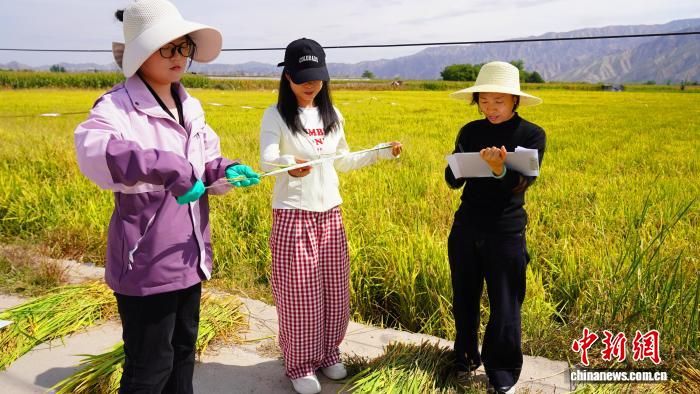
The figure shows the agricultural technicians of the tung-jung county measuring the dynamics of rice growth and production potential. Qui gui jin
“salinizes the cultivation of paddy crabs, and the key is to pass the `water salt regulation' and `species fit' levels.” in the words of the senior agronomist wei lian of the centre for agricultural technology promotion of the technological district of tsikumi, the technical core was shown. On the base field, agrotechnologies are busy measuring the seed mass, the height of the plant and the ear long of rice, both to provide data support for understanding the growth dynamics and yield potential of rice and to establish a firm basis for validating the stability of the co-symbiotic rice ecosystem。
Compared to ordinary agricultural land, the saltlands of the yellow river basin place higher demands on rice crab symbiotic techniques due to high salinity and poor water retention. “technology is consistent from the `initial 1 km' of rice field conversion.” the head of the base, zhang zhang zhang xian, stated that the “hand-to-hand” of agricultural technicians was key to ensuring the success of breeding and the achievement of harvests。
At the moment, the paddy research base in the fragrance of the paddy plateau is immersed in an atmosphere of harvest, and the paddy is about to grow sick and its crabs are synchronous and productive. And the field shall be covered in green and green, and covered in gold and yellow. The tanned paddy crabs sway from time to time with thick strangling feet between the root of rice。
According to zhang zhang, more than 300 acres of rice-crab co-cropping have been planted at the base, with significant results. Through the introduction of high-quality domestic and international saline-resistant rice varieties, accompanied by full-scale mechanization plug-in techniques, the success rate in breeding rose from 70 per cent to 85 per cent, with an increase of 47. 8 kg in acre production, while saving 80 per cent of costs. Of even greater concern is the fact that thanks to the ecological model of co-cropping of rice crabs, the elimination of fertilizer pesticide use in the fields and the achievement of ecological breeding, with an estimated economic benefit of $15,000 per acre of co-production of crabs and 1,300 kg of organic rice。
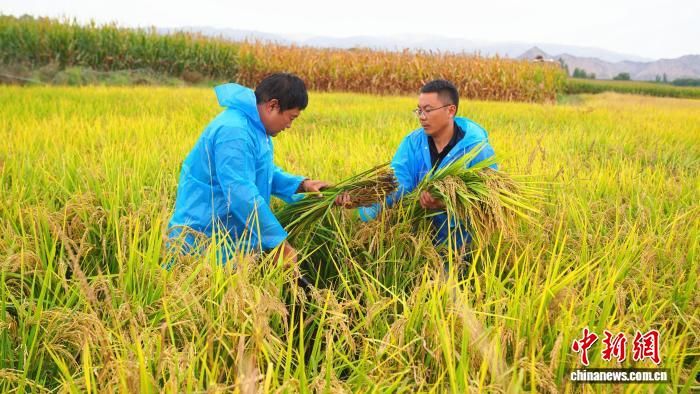
The figure is for on-site mentoring of agricultural technicians in the county of nitaka. Qui gui jin
Standing by the paddy fields that are about to harvest, zhang zhang looks forward to the future: “when he returned to green city with his love for his homeland, i saw not the infertile nature of the land, but the hidden potential.” as a next step, the base will play a full role as a model driver of the model, involving neighbouring farmers in planting, processing and processing, providing technical training and security of orders, and helping farmers to increase their incomes. On the other hand, it will integrate industrial resources, lift up information barriers upstream and downstream, and promote a 2,000-acre core area from a single planting base to a model agricultural estate that combines “breeding-standard farming-preparative processing-brand marketing” and expands the ecological wealth path of the yellow river basin. (concluded)









