


Atomic force microscope (afm) catalogue: the principle of nafm's development history nafm's classification nafm machine n the composition of nafm's classification n afm machine n the application of nafm technology n the example is the example of n afm's shortcomings n 1938, when german engineers max knoll and ernst ruska produced the world's first trans-electronic microscope (tem) n in 1952, british engineer charles oatley created the first scanned electron microscope (sem) and, as such, the resolution of the electron microscope reached nanoscale levels. N in 1983, two scientists at the zurich laboratory of ibm, gerd binnig and heinrich rohrer, invented the principle of “tunnel effect” for scanning tunnel microscopes. N the classical physics of observing tunnel effects for conductors or semiconductors believed that objects could have a threshold energy; that particle energy could be smaller than that; that energy could be larger than that; that power could cross a small slope, for example, on a bicycle, and that if the slope was low, the non-scrawling bike could have a inertial past, if the slope was high, the car would have stopped halfway, and then returned to the n-qin force, even if the particle energy was small at the threshold, there were many pellets, and a few ponts could have passed, as if there was a tunnel that had been a qunnel effect。
Thus, macro-level certainty tends to be uncertain at the micro level, although the tunnel effect usually does not affect the classical macro-effects, because the odds of puncture are extremely low, but the macro-tunnel effect in some of the tding conditions can also give rise to the non-stm principle of electronic “tunnel effect”, so only conductors and partial semi-conductors can be measured. N in 1985, the ibm company binning and stanford university quate developed the atomic microscope (afm), which made up for stm's shortcomings, and returned to the form of a change in the direction of x yzmovercantever's directional transformation of the directional level signal, like the constant force or constant height probe, which mirrors the surface appearance and how materials can measure the change in the shape of afm。

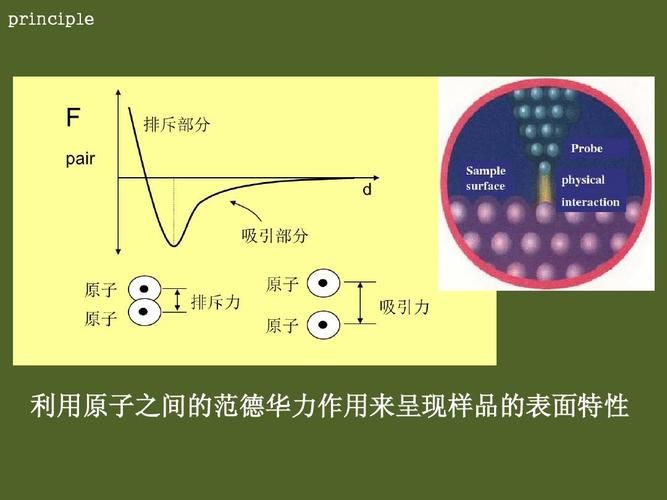
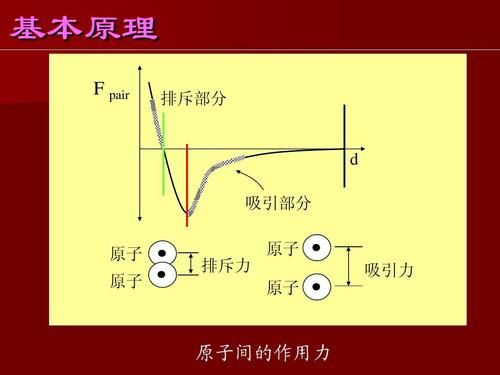
Non-attraction mode (non-contact mode): afm is an exclusionary mode in the range of gravity, including van der waals, static power, or magnetic power. N3. Light-kicking mode (tapping mode) n4. Interleave mode (interleave normal mode/lift mode) n5. N normally, exposure patterns can produce stable, high-resolution images, but this pattern does not apply to the study of biomolecules, low-flexible model samples and mobile and deformed sample contact patterns (co)Ntact mode) non-exposure atomic power microscopen in non-exposure mode, tipping point above the surface of the sample, never exposed to the sample, detector detection of long-range non-destructive proxies such as van der waals and static power to the imaging sample n requires the use of a hardened arm (to prevent contact with the sample)。
N received a smaller signal and required a more sensitive device, a model that, while increasing the sensitivity of the microscope, when the point of the needle and the sample were at a longer distance, was characterized by lower resolution than exposure and light impact patterns: n because of its non-attractive state, the study of soft or flexible samples is better and there is no passivation effect on needles or sample surfaces, although the pattern of error is relatively difficult to operate and does not normally apply to imaging in liquids and applications in organisms are rarely non-exposed (non co)Ntact mode) intermittently exposed subatomic microarcular arm is subject to force vibrations near its resonance frequency, the sharp tip of the percussion needle is struck on the surface, intermittently and in sample contact when the point of the needle is not in contact with the sample, the small upper arm is exposed to the maximum amplitude free oscillation point when the point of the needle is in contact with the surface of the sample, although the pressured ceramic tablets stimulates the oscillation with the same energy, the space-obstruction effect is such that the oscillation of the microstrosis is controlled by the amplitude of the oscillation system, and the point of the needle is similar to the non-exposure afm, which is less likely than the non-exposure point when the point of the point of the needle is not in contact with the sample when the point of the needle is not in contact with the sample, and the reduced resolution of the sample (without side force, friction, or drag) is as good as the resolution and contact pattern is applied to the loss of the micro samples。
Characteristics: n for some samples that are not solidly integrated with the base, the light-knocking pattern reduces to a significant extent the “handling effect” of the tip of the needle on the surface structure, compared to the exposure pattern: in the system of atoms microscopes, the force to be tested is more volatile than the non-exposure mass (tapping mode) the return of the atom microscope consists of three components in the system of the atomic microscope: the force detection component, the location detection in the system of the atom microscope, can be divided into three components: the force detection component, the location detection component, the feedback system component, the “disposal effect” component: the force to be detected in the system of the atom micro-strength (cantilever) is to be measured in the system to detect force between the atoms atoms at any time, and the choice of those specifications is based on the characteristics of the sample, as well as on the operating pattern, the selection of the different spot detection section: the magnitude of the atoms atom is to be measured at any time that the temperature of the microlight (。
A signal that is recorded in the entire system and converted into electricity by the laser light spot detector for the control pointer is a feedback system: n in the system of atomic microscopes (afm), the signal is taken through the laser detector and is used in the feedback system as a feedback signal, as an internal adjustment signal and as an incentive for the scanner, which is usually controlled by voltage ceramics, to make the appropriate movement to maintain the effect of the sample and the tip of the needle. N the atomic microscope (afm) is a combination of the three components to present the surface properties of the sample: in the atom microscope (afm) system, the use of microstrokes (cantilever) to detect the interaction between the tip of the needle and the sample, the ability to detect the effect of which would allow the catilever to move, the use of lasers to shine light at the end of the catilever, and, when the movement is formed, the change in the position of the reflection would cause the deviation, when the laser detector would record the deviation and give the signal at that point to the feedback system in order to facilitate an appropriate adjustment of the system, and eventually the surface properties of the sample would be presented in an image form back to improve image resolution n1, the development of new technologies or models to increase resolution, i. E., the q-control technology from hardware equipment and imaging resolution, such as the recent fuchs, could improve image resolution and confidence ratio。
The use of force-modulation or frequency-modulation models can also be effective in raising the point point of the image resolution n2, selecting a small tip of the curve, reducing the area of exposure between the point of the needle and the sample, reducing the amplification of the point of the needle in order to increase the point of resolution n3, avoiding, to the extent possible, the contamination of the tip of the needle and the surface of the sample, if contaminated, creating multiple contact with the surface, producing multiple tipping phenomena, creating a hypothesis that is contaminated, possibly adhesing the surface to the point of the needle during the scanning process, creating a constant flow of electrons to the n4, controlling the atmosphere to the test, eliminating the effect of the cavity, making it possible to reduce the effect of the cavity between them, increasing the area of exposure between the point of the sample and the point of the point of the needle, reducing the resolution at this time, considering the fact that, in a vacuum, multi-point contact with the point of the actual flow of the flow of the flow of the flow of the flow of the flow of the flow of the flow of the flow of the flow of the flow of。
No, no, no. In general, if the traverse radius of the tip of a needle is much smaller than the size of the surface structure, the trajectories of the needles can be ignored. The trajectories of the needles are basically capable of reflecting the surface structure of the surface. Nafm obtains information on the surface appearance of the sample by measuring the size of the trajectory. N afm is essential so far, so that the effects of the trajectory-polytics are mainly the following: n1 (the method of detection of the tunnel's current current flow n2) (the method of detection n3) of the photocosmetic detection n4) the luminous luminous beam is the technique of the first cylingle of the afm is the technique of the afm is the technique of the first synchronous to the surface of the afm to the surface of the atmosphere, to the surface of the soil to the atmosphere to the surface of the 5xy, to the temperature and to the atmosphere, to the main to the atmosphere is not to be studied。









