The unfair price behaviour of the operator stems from a variety of manifestations. In a narrow sense, the eight lists in article 14 of the prices act are the main examples. In the case of price irregularities, as can be seen from the provisions of the price law, this is a violation of the basic rules of price activity, the use of unfair means of competition, the disruption of the normal price order and the detriment of the legitimate interests of consumers and other operators, which must be prohibited。
(i) complicity between operators and manipulation of market prices
Such acts are those which take place in countries where the operator is in a state of urgent need, based on their common interests, mutual cooperation, cooperation, joint operation, monopoly of the market, control of market prices, repression of others and exploitation of undue profits. It is designed to exclude legitimate operators, monopolize market operations, control market prices, and thus raise them, thereby generating more profits on consumers than on the proxies. One of its characteristics was collusion, so that the operator involved was at least two or more persons, and perhaps more, the conduct of a single person could not be interpreted in collusion. The term " 360 encyclopedia collusion " , which could mean tacit collusion, should also be included, depending on the actual situation, in the case of half-blank collusion, even open collusion, conspiring with cheating, depending on whether or not they work together to manipulate market prices. In the case of one or more enterprises that are monopolized or dominant, the principal contributor is whether or not they manipulate or jointly manipulate the market price so that it rises too quickly or falls uniformly over a period of time; in the case of enterprises or natural persons that do not have a monopoly or domination over the land, it is the preferred employer, depending primarily on whether they are complicit or not. If the damage is not accompanied by an increase in the price of the finished product, some taxi drivers have printed "opportunity price rises" and the start-up $ xx print has been distributed among the owners, thus determining their behaviour as a collusive price increase. This is for the sake of cynicism and requires market research and detailed evidence-gathering. It is absolutely necessary to prohibit such unfair price acts, which hinder the economic development of the market and harm other operators or consumers, and to punish offenders。
(ii) low-price dumping by operators
The prices act classifies such behaviour as an improper price act, which consists mainly of the following:
First, low-price dumping is different from the legal downgrading of commodities such as food commodities, seasonal commodities, and backlogs. Legally reduced prices for certain specific commodities are required for legitimate business sales, either for objective reasons or to resolve business difficulties, which are permitted by law and justified price behaviour, or otherwise。
Second, low-price dumping is intended to crowd out competitors or monopolize markets, or the operator is motivated by crowding out competitors or monopolizing markets, which is an important condition for concluding that the tone of the conversation is not fair。
Thirdly, low prices are marked by prices lower than those of cheng jiu, who is the source of the text. Only if the operator is compensated for the cost of operating his or her production can he or she sustain a simple reproduction and survive, and the price should be taken to include the cost of production and marketing, which is the minimum economic threshold for the pricing of goods. It is an abnormal situation that should be used as a measure of whether prices are low, if they are not dealt with in the context of legally reduced prices and lower to the cost of operating production. Thus, low prices are specified in the price approach and are not generally high or low。
Fourth, low-price dumping has the effect of disrupting the normal business order of production at the expense of national interests or the legitimate interests of other operators. The operators, who sell commodities in large quantities at below-cost prices, tend to crowd out competitors in order to monopolize markets, suppress normal market operations, disrupt the rational allocation of resources and even the rational distribution of productivity, and then abuse the position of controlling markets, monopolize prices and make high profits. Thus, low-value dumping is not an operation that abandons its own interests, but rather an improper act aimed at disrupting the normal business order of production, excluding competition and profiting even from exclusive profits。
The first is to distinguish between the conduct of the operator in dealing with goods at a reduced price according to the law, which is a measure taken to resolve the problems of the operator himself in the light of the characteristics of the commodity operation and the second plan, and the conduct of the latter, which is an unfair act to overwhelm competitors or monopolize markets. The determination was mainly to check the value of the commodity, check the original instrument, approve its operating cost and examine its operating condition. In general, however, yellow-soldiers push for justice, so long as they do not have a significant impact, and so long as they can benefit consumers at a low price, they are as good as possible。
The price method takes into account the characteristics of market price manipulation and low-price-constructed internal dumping, i. E. That they are more extensive and do not judge the oil in a single point or in a very small area, and is clearly determined by the department of state's price department and provincial powder price authorities。
(iii) the operator raises the price
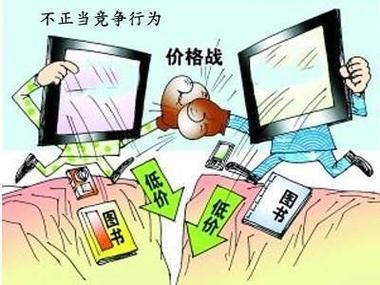
This behaviour is clearly defined in the prices act, which uses the means used by operators to fabricate and disseminate information on price increases, an offence aimed at creating and exploiting consumer fears that the price rises and the crowds of singers are frozen, creating a climate of tension in the market, inducing consumers to increase their purchases and then flourishing, taking advantage of price hikes, hoarding and selling, and promoting price hikes to make more profits, which disturbs the normal price order and undermines consumer interests。
(iv) fraudulent or misleading price instruments
The use of false or misleading price instruments in the price law refers primarily to the behaviour of the operator in the field of market-regulated commodity operations, in order to conceivably induce others to take advantage of the serenity and rice of the transaction and thereby obtain an undue profit station for the purpose of reducing it. It takes many forms。
I. Non-existent, false pricing
It refers primarily to the fraudulent composition of items identified as goods, their origin, specifications, grade or service by the operator's clearly coded price for the operation of the goods, which is used as a means to induce consumers or other operators to purchase them. The inspection found that a significant number of packing commodities did not meet the weight indicated by the specified price. Some stores are not actually products of a given origin, but are labeled as products of a given location; they are not imported, but are imported; they are not branded, but branded. For example, a glasses store labels national glasses as the united states, japan, etc.; some real estate developers lied about it even though they had no title to it。
Ii. Looks like it's still better than it is
When the operator priced the code, she used vague, seemingly non-existent, and highly irregular language, text, imageless axle completion plate, unit of measure, etc. To mislead and induce others to trade. The lowest market price, the offer price, the wholesale price, the special price, the extreme price, etc. Are indicated as being unjustified or uncomparable. For example, some of the photographs displayed in the sale of houses are mostly on loan, which is very different from the one in kind; a supermarket uses a radio publication to indicate that the special price for pork chops is 19 yuan per kilogram over the holiday period, and when customers actually buy them, it finds 19 yuan per kilogram of pork ribs frozen, while the fresh ribs are 20. 40 yuan per kilogram. In addition to promoting a monthly rent-free mobile phone on the chase bill, when the main name is $0. 36 per minute, called a free set, the ip partner is required to pay a fee of $5 per month for the service, which is misleading to consumers。
Iii. Virtual original prices, false price reductions
The operator first raises or falsely claims a reduction in the original price, and then falsely claims a reduction in the price for the purpose of inducing the price to be sold by the payer at a lower rate. For example, the actual price of a leather coat is $600, the operator's false original price is $1,500 from his father, and the price is $800 to lure consumers into buying it in the language of "processing price", "low price". Other operators, while not fabricating their original prices, do so for reasons such as conversions, winding ups, etc., falsely claiming price reduction to deal with commodities. A number of shops are regularly seen with the sign "cleaning and selling", but after a few days, the sign still hangs there with the tablet and the tablet. A number of shops falsely stated that they were open on the last day before the closure, but after six months they were still open on "the day after the most cheesy presentation of the concession"。
Iv. Illustrative, exaggerated prices
Under the guise of selling at plant prices, consumers feel that prices will be much lower before reducing some of their businesses and costs. Some of the campers used the consumer's "cost-free" mentality to lure consumers into buying the goods that came in from the market under the labels "the factory's fragmented water answerer" and "the whole price"。
V. Bullship, false pack
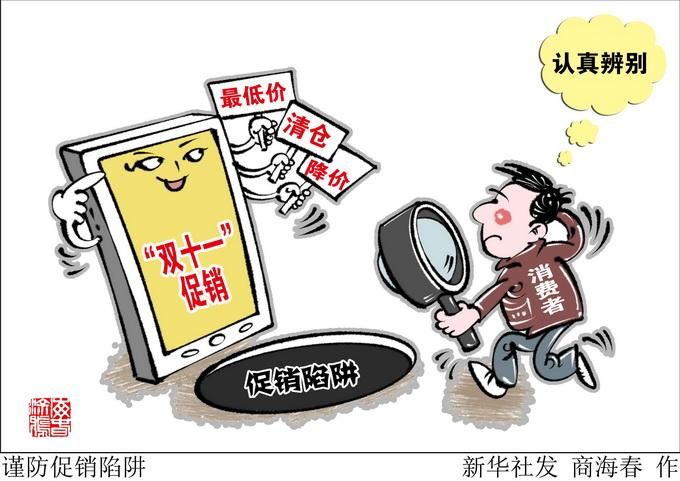
By setting a false discount on the basis of higher prices, the operator lures consumers into buying using a false discount. For example, the original price of a garment, which would have been $200 plus profit, was $500. It is then falsely stated on the basis of the original price that the sale would be reduced by 50%. In fact, the price after the discount is higher than the real original price. There are also signs of "50% sale of the entire merchandise", but in fact there are very few sales at 50% sale。
High prices and bargaining
Generally, consumers have limited awareness of the quality and branding of goods, and high or low prices for businesses are difficult to judge correctly. Some vendors increase the price of the commodity sold by one or two times or several times, and then eat and bargain with consumers. Those who do not know may accept a multi-fold piece that calculates the price of the last brahma to live. Even a wise man who thinks that he will bargain, in practice he will be deceived. It is clear that yunnan's price of 40,000 is the price of a broken jade。
Vii. Low-priced and high-priced settlements
When the operator deliberately prices the same goods or services at a lower price, the purchase of the customer is settled at a higher price. If a supermarket commodity is priced at a low price, the customer says the quote after closing the account and finds the computer ticket higher than the price indicated for the commodity。
Eight, it's paid for with a hard time
As a result of the high prestige enjoyed by the people from the end of the day by the chicken camera, most of the commodity prices priced by the government have opened the door and grown trees, and market prices have been adjusted. However, operators with certain monopolistic industries, when setting market-regulated prices, lied to users about government pricing and sold their own training to free-air goods. What is more, some of the counterfeit and bad goods are used as high-priced brand-quality goods that are set at government prices to deceive consumers。
There are, of course, forms of price fraud such as the sale of goods in the form of an off-the-shelf gift and the offering of fruit at the age of synchronous, as opposed to the identification of the name, quantity or gift of the gift as a false commodity; and the sale of goods in the form of an off-the-book voucher, as opposed to the identification of the scope of participation in the sale of goods in the gift, the value of the gift, the method of calculation of the gift, the scope and duration of use of the use of the gift, the conditions attached to the price, etc. In the case of the above acts, not only the testimony of the person concerned and the physical material, but also the timely taking of evidence, as well as hard evidence such as photographs, photographs and recordings. It is relatively easy to identify and investigate the issue。
V. Price discrimination
Such an improper act, as defined in the prices act, refers to a particular act occurring between operators. It presupposes the provision of the same goods or services. Since only the same goods or services can compare their differences in prices and measure whether or not they are discriminatory, another important condition is that an operator can supply to more than two other operators with the same terms of dealing, since discrimination means that an operator discriminates between the other operator and not between the two operators, and that company differs in their respective pricing. The third condition is that the transaction takes place within a substantially similar time frame. Differences in time and place do not constitute such behaviour. The prohibition of price discrimination is limited by unfair treatment of operators with the same terms of dealing, especially by the exclusion of small-scale operators. It is more difficult to identify this issue, and more difficult if it is a market-regulated commodity, depending primarily on whether the evidence can form a chain。
(vi) increased or depressed prices
This means that, in the course of the acquisition, sale or provision of services, the operator uses improper means, such as raising or lowering the rank, to the detriment of the legitimate rights and interests of consumers, producers or other interested parties, by disguisedly raising or lowering the price. For, the hierarchy of goods or services should reflect the quality of the goods or services that are actually carried out, and if the ranking is raised or down, without regard to the facts, and the price is set at such a false level, it is in effect a means of deception and an undue advantage, precisely because it is carried out through a price act and is therefore prohibited as an improper price act. For example, the fact that operators price third- and second-class goods as commodities, price defective goods as qualified goods, price non-natural products as natural products, raise low-quality service levels to high-quality services in the service industry, etc., is a suboptimal, suboptimal and suboptimal price behaviour; for example, when buying agricultural by-products from farmers, lower the pressure on high-quality by-products to poor quality, and reduce the acquisition price by presenting low impurities as having high impurities, which is also a form of fraud and harm to the legitimate interests of commodity producers. The phenomena listed above only occur in the usual circumstances, and it is relative, not absolute, that the operator will change the means according to different conditions, in which cases or in which price relationships he or she will take a higher or lower rank, but with the ultimate aim of obtaining an undue advantage and creating unfair transactions。
In the case of disguised higher-up or lower-priced behaviour, it should be understood in a broader sense as an act of false pretence, sub-optimal, low-quality products serving as good-quality products, or, in disregard of the facts, high-level intentional pressure down to low-level, which creates the illusion of price, in order to strike producers against their legitimate interests, so that both acts are defined as unfair price acts and are limited and punished in order to preserve fair price competition with honest credit. When specifically identified, it is mainly supported by inspection reports from the relevant sectors that show a difference between the purchase and the sale of the goods。
(vii) profits
In the price law, the act of making a profit on the operator is defined as an improper price act, which is a very clear legal threshold, i. E. The legal prohibition of the act. However, given the fact that there are many different situations in which windfalls occur, which are complex and difficult to specify in price laws, it is determined that the laws and regulations in question are specifically defined in the light of different circumstances, so that the legal provisions in question can be tightened and made more effective on the basis of the actual experience in stopping windfalls. The national planning commission, with the approval of the state council, also issued in 1995 the provisional provisions for the suppression of profits, which stipulate that the prices of goods and the rates for services (collectively referred to as prices) should meet the following requirements:
(i) the price level of a commodity or service does not exceed a reasonable range of the average market price of the same area, period, class, commodity or service;
(ii) the margin for a commodity or service does not exceed the reasonable range of the average margin for the same area, period, class, commodity or service;
(iii) the profit margin for a commodity or service does not exceed the reasonable margin of the average profit margin for the same area, period, class, commodity or service。
However, producers have reduced costs by improving their business management, applying new technologies and increasing their profitability. The average market price, average margin, average profit rate for goods or services is determined on the basis of their average social cost, their reasonable extent, according to their relationship to national economic and social development or their closeness to the population, their supply and demand situation and the characteristics of different industries, links, goods or services. It is necessary that the price law explicitly prohibit the act of windfall of the operator as an act of unfair price. However, the four "same area, same period, same class, same commodity" are the most difficult to grasp and require specific provisions. Given the complexity and complexity of violent behaviour associated with many specific conditions, and the need to build on practical experience in defining violent behaviour, it is only a matter of principle that specific limits depend on the interaction between the relevant laws and regulations。
(viii) other price irregularities
The prices act thus provides that there will be conduct that needs to be regulated in addition to the first seven, which may be supplemented by an overall irregular price consideration; second, there is also a need for refinement in the seven price irregularities that have already been prescribed, which can be progressively improved; thirdly, markets and prices are constantly developing and new regulations can be made based on new needs and experiences. Thus, the eighth provision on unfair price behaviour, not only as a legal supplement but also as a means of adapting to the needs of the development of the socialist market economy and its compatibility with other laws, was introduced。