


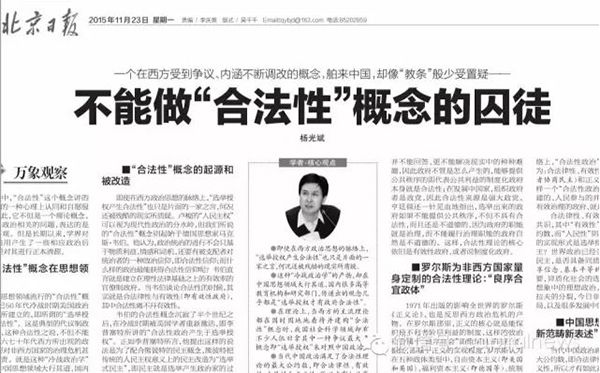
Even in the context of western political thought, the “legitimacy of electoral mandates” is a one-sided, controversial and constantly modified narrative. However, this “cold-war political science” product, which came to china after it came to china, has gone a long way in the realm of thought, with many higher education institutions and research departments in the country passing on the idea that “election mandates are the legitimacy of government”. In response to this social trend, the beijing daily newspaper published a well-known political scholar and chinese people's university professor yang guangbin's article, " prisoners who cannot be considered “lawful”, clarifying the relationship between electoral mandates and the legitimacy of the government, and acting as a source of originality。

Today (2 december), inspector cheung an (wind:capitalnews) learned from this heavy theoretical article with his little friends。
The article describes several key concepts in theory, while many in the social sciences continue to use one of the most controversial concepts, namely, “election authorization”, to compare china's politics, as the prevailing western theory views and constructs the concept of “legitimacy” from time to time。
Contemporary chinese politics has satisfied the largest number of conventions of the doctrine of legality, namely, opinio juris, validity, popularity and justice, so that there is such a high level of popular support。
Huntington has also pointed out starkly that an elected government, if it fails to provide public order, not only does it not have legitimacy, but is also immoral, because the function of government is governance, and a government that is unable to perform its function of governance is naturally immoral。
A law-based, popularly participatory government, governed effectively by fundamental principles of justice, is “political legitimacy”。
The correct way to open this article
In political science, the concept of “legitimacy” refers to a psychological identity and voluntary obedience of the population to government. It is therefore not only a theoretical concept, but also a political-related issue, expressing a vision of political order. For a long time, however, the abuse of the concept by the academic community has had some corresponding political consequences, and it is therefore necessary to clarify its origin。
Abuse of the concept of “legitimate” in the realm of thought
The concept of “legitimacy”, which is currently prevalent in china's ideological sphere, was created by the american political scientist lipsett during the cold war of the 1950s, the so-called “election authorization is the legitimacy of government”. This is typical of representative government theory. Such a statement of legitimacy, however, not only cannot avoid the political crisis that emerged in the west in the last 1960s and 1970s, but is also responsible for the governance crisis and even the failure of states in non-western countries. It is the product of this “cold war political science” that has taken its course in china's ideological sphere, with many higher education institutions and research departments in the country passing on the idea that “election authorization is the legitimacy of government”。
One response to this notion is that the legitimacy of the communist party of china is rooted in history. This makes sense, but further theoretical explanations are needed. By contrast, some western scholars who study chinese politics have taken a cultural approach to contemporary chinese politics from the viewpoint of chinese political philosophy, such as tiando, the hearts and minds of the people, civility, harmony, and the opposite of many chinese scholars. Thus, the concept of “legitimacy” also needs to be properly understood for the political science community。
Origin and transformation of the concept of “legitimacy”
Even in the context of western political thought, “the legitimacy of an electoral mandate” is a one-sided statement, even though it is called into question by harsh realities. Rousseau's “people's sovereignty” can be seen as a watershed in modern politics, but what we call the concept of “legitimacy” starts with the german thinker, max weber. In his view, political domination should not be based solely on material interests, feelings and motivations, but also on a political belief in the ruler, that is, the belief in legitimacy; and what kind of politics would be best served by that belief? Weber has come out as an effective bureaucratic government based on rational law. When weber talks about legality, it is in fact opposability and effectiveness (i. E. Effective government), in which legitimacy is indispensable。
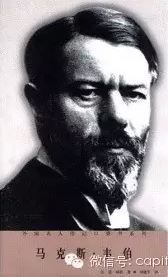
After half a century of silence, the concept of legitimacy in weber was reactivated by american scholars during the cold war, namely, what lipsett said about “legitimate politics arising from electoral mandates”. As lipsset had said, he had made such a statement in keeping with the concept of democracy in the name of pumpett, who had transformed the traditional sense of people's sovereignty into an “election democracy”, that is, democracy was the process of electing politicians. Thus, during the cold war, there were two major transformations of western doctrine, one democratic and the other legitimate. Lipsett replaced weber's opinio juris with an electoral mandate, which gave legitimacy to politics. At the same time, lipsette has inherited the idea of the validity of weber, arguing that the effectiveness of the government contributes to legality, while the long-term ineffectiveness undermines legitimacy; and has objectively stated that electoral democracy is intended to solve the problems of social division, so that the social condition of electoral democracy is a culture of parity, that is, the homogeneity of democracy as it is today. This has been repeatedly emphasized by western democratic theorists dar and satoli。
Back to the weberian huntingtons: "the effective government."
By the 1960s, electorally mandated democracies had been plunged into great political crises in western countries. France's may storm of 1968, the spread of italian terrorism, the pervasive civil rights movement in the united states and the anti-viet nam campaign have plunged the west into an unprecedented political crisis after world war ii. Against this background, the theory of legitimacy in talking about western politics is beginning to prevail. This is due to the german neo-marxist habermas. In his view, there was a crisis of political belief in capitalist politics, the crisis of legitimacy. At the same time, huntington and others were commissioned by the “tripolis commission” of the world's most influential think tanks in the west to write a report on how to deal with the western crisis: the democratic power, later published as the crisis of democracy; and darl, a scholar of pluralist democracy, published the “deprivation of pluralism” that found western countries trapped in unequal politics and a crisis of legitimacy. Not to mention the developing countries of this period, the post-war western countries promoted “development brings democracy” strategies in developing countries, which turned them into what huntington calls “political decay” or even “failed states”。
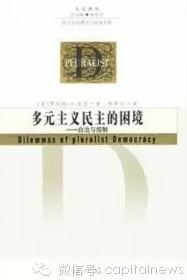
In this larger world political context, huntington makes it clear that the theory of representative democracy (i. E. Electoral mandates) does not answer, let alone solve, the challenges of reality, so that, whatever the government that emerges, the institutionalized government that can provide public order, that is, represent the public interest, is itself legitimate; in developing countries, the organizer of government is a political party, and therefore the source of legitimacy is a strong political party. Huntington has also pointed out, in a nutshell, that an elected government that fails to provide public order, not only does it not have legitimacy, but is also immoral, as its function is governance, whereas a government that fails to perform its functions of governance is naturally immoral. Thus, the core of the doctrine of legality remains effective government, or institutionalized government。
Legitimacy theory tailored to non-western states is a “probable state of order”
The publication of the rolls theory of justice, published in 1971, which affected the world, was also a product of reflection on the political crisis in the west. At the heart of justice in rolls is a system that protects the interests of the most disadvantaged sectors of the population, a political society that is a “well-ordered society” or well-organized one. Thus, on the basis of the degree of realization of justice, rolls believes that in the five polities, liberal capitalism (i. E. The united states and the united kingdom), welfare capitalism (i. E. Germany, etc.) and authoritarian socialism (i. E. The soviet union) are incompatible with the principles of justice, while property democracy or socialist regimes with elements of freedom are compatible with the principles of justice。
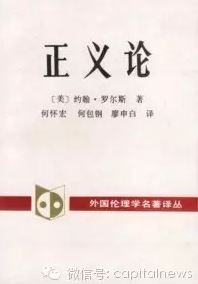
In keeping with the principle of political opinio juris, rolls also considers constitutional politics to be the first, majority politics in everyday life is the second, and majority politics in many cases does not conform to its principles of justice. Moreover, rolls has created for non-western countries a concept of government that should be accepted by western societies — “good order” — whereby governments of non-western countries are acceptable “good order” if they satisfy the basic principles of justice and if they effectively fulfil their duties, protect human rights by law, have peace-loving states and have a consultative process of political decision-making. The reason rolls did so, as he himself said, was that non-western countries had not become the corresponding socio-cultural conditions required by western society。
Fundamental elements and concepts of “political legitimacy”
China’s political tradition is completely different from that of the west, where the political order of the chinese nation is completely different from that of the west’s country – the dichotomy of society. Even in western political thinking, the constituent elements of “legitimate politics” can be summarized in the context of intellectualism as: opinio juris, effectiveness, popularity (election or consultative democracy) and justice. The concept of “political legitimacy” can thus be established: “political legitimacy” is a government formed by law, with the participation of the people and effective governance based on fundamental principles of justice。
There is a common understanding of legality, effectiveness and justice, in which “effectiveness” is the largest number of conventions of legitimacy, while “peoplehood” is controversial, i. E. Whether “peoplehood” takes the form of an electoral mandate or a participatory, consultative democracy? World politics has taught us that, if it is electoral democracy, it is essential to have homogenous conditions (national identity, shared conviction, basic equal social structures), and that electoral democracy in different societies brings not ideal politics as imagined, but rather the disintegration of the soviet union and the division of yugoslavia, the chaos of today's africa, the middle east, ukraine and the ineffective governance of many developing countries。
There is an urgent need for china's intellectual community to “new expression of the new concept”
Contemporary chinese politics has satisfied the largest number of conventions of the doctrine of legality, namely, opinio juris, validity, popularity and justice, so that there is such a high level of popular support. In recent years, both domestic polls, such as those of the national situation centre of the university of beijing and the chinese academy of social sciences, and overseas surveys, such as the asia democratic dynamics survey and the pew survey centre in the west, have shown that china’s population has some 80 per cent confidence in the central government. Such support rates are rare in the world. Is this really a people-to-people issue in chinese culture that can be explained by a representative theory
In theory, when mainstream western theory is looking at and building on the concept of “legitimacy” from time to time, and even when western thinkers like rolls create the theory of “legitimacy” exclusively for non-western countries, many in our social sciences still use one of the most controversial concepts, namely, “election authorization” to contrast chinese politics. The question is, how can many developing countries be governed by “legitimacy” based on representative theory? Or can you govern? Is there morality in a government that cannot govern, that is, a government that fails? Is the theory wrong or the practice wrong
Scholars should have a basic political vision of the world, not merely prisoners of ideas. There is an urgent need for china's intellectuals to “new expression of the new scope of the new concept” in order to take stock of many of today's popular ideas. [this paper has been officially authorized by the public < < changan street > >









