


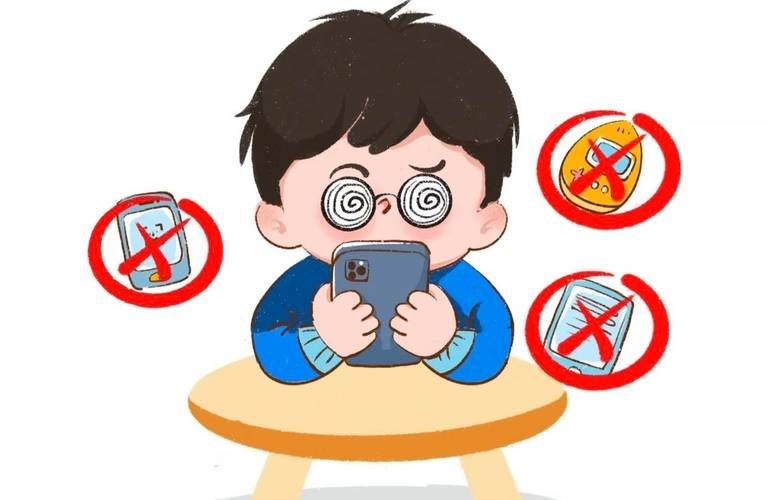
Many parents are deeply confused by taking their children to a visual examination. Even though mobile phones and tablets are strictly controlled at home, and children are almost denied access to electronic products, the results can be reviewed, and there is a decline in vision and even a near-sightedness。
In many people's inherent perception, near-sightedness is looking at the screen. So they treated electronics as the number one enemy, took away their mobile phones and banned watching television, thinking that they could protect the eyes of their children. But reality tells us that electronics are only one of the many triggers for the near-sightedness of children. A large number of invisible blinding areas in life are quietly consuming the child's eyes. It is often too late to find children looking at blackboards, often rubbing their eyes and looking at their heads。
Why don't you play with your cell phone and the kid's gonna be close-sighted? At the core, there is a serious shortage of outdoor natural light。
This is one of the most vulnerable pits for many families. Many parents felt that their eyes were resting as long as they stayed at home without watching the screen. In fact, the cheapest and most efficient way to prevent near-sightedness is through exposure to outdoor natural light。
Studies have shown that ensuring outdoor activity for more than two hours per day can effectively curb the rapid growth of the eye axis and significantly reduce the probability of near-sightedness. The outdoor activity here is not necessarily running, playing, even if it takes a walk downstairs, sitting in the sun, and the natural light in the dark also works。
Kids, school is getting more stressful. Home after school, they do their homework and spend the weekend in various remedial classes, mostly indoors. Long periods of lack of incentives for natural light, even without touching the cell phone, the eye axes will continue to grow quietly and the near-sighted will continue to look for the door. Many parents focus only on screen control, while completely neglecting outdoor time, which naturally fails。
In the second blind district, the family does not qualify for reading and writing lights。
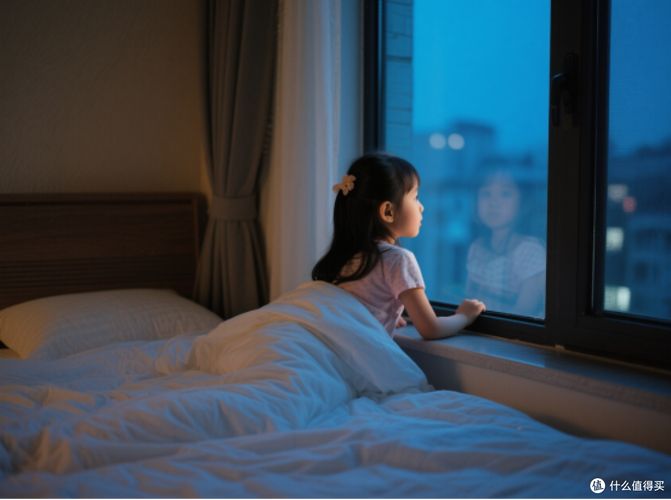
Many families do their homework at night and turn on only the main light on the roof of the room, which either does not turn on or the light is blinding and flashing. The book is lighted while the room is dark, the dimness is too wide, the eyes need to adjust to the light, and they are prone to visual fatigue。
There are also parents, children go to bed and read books, with only a small nightlight on their bed. Close proximity to the eye in a dizziness environment is very damaging to the eye. The correct approach is to turn on both the light and the main light of the room while the child is waiting for a case to study, ensuring that the light is soft and even and that the light does not shoot the child's eyeball. Don't think the light's enough. The balance of the light is more important than the light。
Third blind zone: close eyes, not just mobile phones。
Many parents only prohibit electronic devices, while ignoring other close eye behaviour. Reading books, puzzles, drawings and making manual work for long periods of time also belongs to the eye at close range. The child is immersed in a drawing book or an exercise, sitting for an hour or two, without a long head start, and the lashes are constantly constricted。
Eye fatigue is a little accumulated. Here we share the commonly recommended 20-20-20 eye-protective rule: 20 minutes at close range, looking up at a distance of 6 metres, lasting 20 seconds, allowing tight eye muscles to relax。
In reality, however, most children write their homework for more than an hour without any breaks. The child's focus on investing and the parents are not allowed to interrupt, but the child's eyes are not protected from injury because of his or her studies. Instead of waiting until the child shouts sour eyes, it is necessary to let him rest and to establish the rhythm of rest。
Fourth blind zone, invisible injury in reading and writing positions。
Books are too close to the eyes to write on the table, to read, to read, to read, which are common in the home. Parents keep an eye on mobile phones and rarely correct their positions. The closer the eye is to the object, the greater the burden of eye-ball regulation。
Every day, the child is reminded that the chest is punched off the table, the eye is one foot from the book and the finger is one inch from the pen. Many children write about their heads slowly on the table, requiring timely parental warning. Poor positions are accumulated, accelerating near-sighted development。
The fifth easily neglected point: inadequate sleep and daily diet。
Adequate sleep is the basis for normal child eyeball development. Primary school students are advised to ensure 10 hours of sleep per day and junior high school students 9 hours. Frequent nights and inadequate sleep can disrupt eye development and increase the risk of increased near-sightedness。
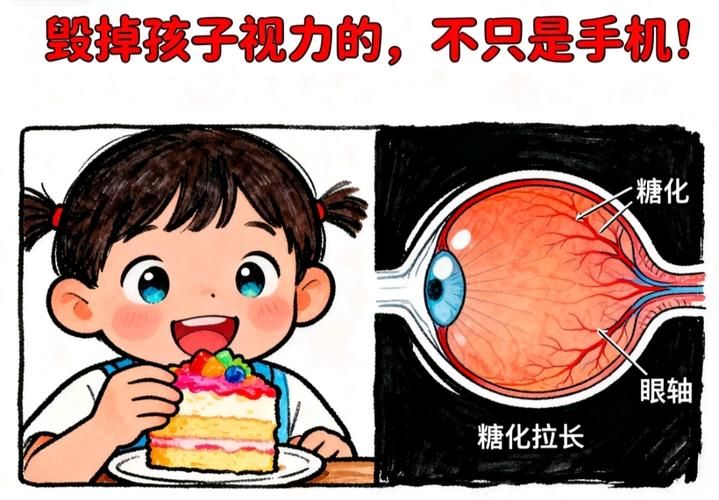
In addition to this, the children's diet is equally linked to their vision. A lot of kids prefer sweets, cakes, candy, sugar drinks. Over-ingestion of sugar can consume calcium in the body, indirectly contributing to the growth of the eye axis and accelerating near-sighted development. The daily diet is as balanced as possible, with more fresh vegetables and vegetables rich in chlorophyll and vitamins and less sugary snacks。
Realism, once it occurs, cannot reverse recovery. Many parents think that near-sightedness can be cured through massage and partiality. All we can do is try to delay the arrival of near-sightedness and control the increase。
A real eye-protector is definitely not just putting your phone away。
First, crowding time ensures daily outdoor exposure to natural light, debrisation time is also available, and extra walk on the school day
(b) second, the adaptation of the light in the home and the elimination of dim conditions for reading and learning
(c) thirdly, to establish an eye-spacing rhythm with a fixed distance from learning
Fourth, constant attention to reading and writing positions
Fifth, sleep assurance, sweet control and balanced diet
Finally, regular visual screening is maintained. It is recommended that a professional eye examination be conducted every six months to monitor eye axle changes and early detection and intervention。
With regard to child-rearing, we tend to stare at the perceived risks, while often ignoring the pitfalls of life. The vision is protected not by the complete isolation of electronics, but by the completion of these invisible blind areas of life. Don't wait for the kid to wear thick glasses。









