


After the fall, the fruit is so hot and juicy, it's only $2 a pound
In the fall, many people can clearly feel changes in their bodies: in the morning, the voice was dry, the mouth was bitter, and it seemed that the water was white and dry; the skin was strained and the nasal cavities dryed from time to time; the air conditioner was put to sleep at night and the throat a little itching the next day. Many people's first reaction is to buy expensive autumn pears, sun roses, bamboo, which is what they think is “good things”。
In fact, it is not necessary to catch up with high-priced fruits, a season-round fruit that comes on the market after the fall, prices are high, many vegetable markets, street stalls are visible, normal business is about $2 a pound, fruit is soft, juicy, and daily eating helps to alleviate all the discomfort caused by the autumn. It's not a rare new species, it's a large pear from the small to the large。
Let's get this straight: it's not a marketing thing, it's not a pear thing. It's just a combination of seasonal features, ordinary people's daily diets, when, how, how, how and how to eat better, and who needs to be more careful and tell the truth. Food is better than food and cannot be used as a substitute for medicines; prices are also common retail prices in multiple markets, with differences in origin, channel, class and seasonal fluctuations, rather than a uniform national price, and there is no absolute guarantee of “two forevers”, which is clear and avoids misunderstanding。
A lot of people are in the wrong place: they're going to have to “boil” at the end of the autumn and buy a bunch of patches and precious fruits, which cost a lot of money, didn't feel good, and they just accidentally ate their stomachs. The old man used to say, "autumn is not a good time, but a good time." it means that in the early autumn, the body slowly moves from hot to dry, with no drugs, no expensive foods, with normal fruits for seasons, mildness and suppleness. Let's talk today about eating pears after the fall, say it once and for all about the reasons for the season, how it's chosen, how it's saved, how it's more appropriate and what it's worth。
(present: the following are daily dietary experiences shared, which are provided only for life and do not constitute medical advice; the individual's body is different, and the food feels different, depending on needs)
Why is it so easy to “do” after autumn? It's not as simple as water
A lot of people wonder, "why don't you think you're sweating in the summer?" how come the sound, the nose, and the skin are all "dry"
It's not hysteria. It's a combination of climate and body acclimatization. It's a big white word。
During the summer, the air was generally very wet, even with a lot of sweat, water gas in the air, respiratory tracts, and skins that were not continuously blown by dry winds; the body was used to “hot + wet”, and the sweat glands were active and their bodies were in dispersive mode. After autumn, the most obvious changes were not immediate cooling, but wind drying and the relative humidity of the air slowly down. Autumn, which is popularly spoken, is essentially a feeling, not a disease, brought about by summer wetness and rising degenerative air。
There is also a real reason for life: it is still hot in the day after autumn, and many people are still in air conditioners for long periods of time; early and late in the morning, people sleep cold at night and air conditioners are running all night; and, together with the fact that many people still have summer habits, drink cold drinks and eat spicy oil, even though their mouths are good and their mouths and throats are dryer. There is also a sense of dryness that is magnified by prolonged exposure to computers, mobile phones, open mouths and water。
Special mention should be made of the two types of autumn drying, “early autumn drying” and “late autumn drying”. The early and cold surroundings of the fall, mostly warm, are typical of dry mouths, tight throats, dry noses, skins on the lips, occasional dry coughs, but with little sting; when the autumn is cold, it becomes cold, with cold hands and feet. We are now in the middle of the autumn, where we are best placed to use warm and juicy season fruits for day-to-day management, not to treat the disease, but to replenish the body with moisture and natural nuts, organic acids, and to ease the uncomfortable feeling。
But not all fruits are suitable for early autumn。
For example, there are warm, warm fruits, like twigs, dynamite eyes, durians, which make you feel hot and hot; there are also sugary fruits, which are too high and sticky to eat after their mouths; and people eat them directly. Sugar cane, with plenty of juice but thick fibers, bad teeth and weak stomachs are not very friendly。
At that point, the preponderance of pears emerged: high water, moderate sugar and relatively flat properties (traditional perception is cold, but not as cold as you would imagine), pro-people prices, high yields, and the time when concentration matures. The most recent retail price in many markets is 1. 5 – 2. 5 pounds, with an average of almost two dollars, to be “one-size-fits-all” at no cost。
Of course, i must be honest: not every place can buy two pounds of pears. The price increases to $34,000 or even higher in commercial super-precisions, well-cleaned boxes of fruit, remote areas and freight costs; this is more likely to be the case in county towns around the land, the agricultural market, the direct sale of the land, and the peak period when the market is concentrated. The reference to “two dollars per pound” is a common feature of the concentration of ordinary currency during the listing period. It is not the national flat minimum price, and there is no mandatory “no buy without this price”, which must be seen objectively and avoid the suspicion of the title parties。
There is also a common error zone to correct: drinking white water in light does not amount to “drying”. It is not water that is useless, it is water that is quickly metabolized, and the oral and throat mucous membranes stay for a short period of time; the fruit contains, in addition to water, minerals such as natural fruit glue, a small amount of organic acid and potassium, which can sustain the feeling for longer. And that's why many people say, "it's nice to have a few drinks and to eat a pear."。
Once again, it's just a regular season fruit, not a special medicine. If continuous coughing and throat pains persist for days, fevers and chest suffocation, it is important that medical treatment be provided in a timely manner and that the disease not be solved by pear。
Why did it have to be pears? Not plain pears, not other high price
There are too many kinds of pears on the market: pears, pears, pears, pears, pears... A lot of people look at each other and they don't know which one to choose. Why are you talking about pears here? And i open it from the few dimensions that are of great concern to ordinary people。
First of all, it's juicy, it's crumbs, it's just fine。
With the right maturity, the skin is not so thick, the consequences of which are white and white, and the tumbles down, and the juice spreads directly through the mouth. I've seen a lot of measurements: mature pears mostly contain 85% - 88% of the water and are upstream in common pear varieties. Unlike some pear that eats "faceless" pears, the pears are the crumbs that most people can accept; they have tiny stone cells, but they don't get thicker than their throats, as long as they're ripe, they don't chew up a lot of dirt。
By contrast, the single price of the pear is usually $4. 6 per pound, and it is enough to eat a few pounds at a time; the aluminum pear is of good quality, but it's a very late breed, and a real large amount of it is to wait until the middle of september, when it is widely sold to more than five or six cents of the pre-prefecture fruit, which is expensive for ordinary families every day; the crown pear comes out early, but some of it is not sweet enough and tastes light; and the acidity of the duck pear is slightly clear, and some people do not like it. In the wake of the autumn, kya pear was concentrated at the highest market peak, with large and widely distributed production, sufficient supply of goods, and prices being pulled to very real areas。
Number two: sweetness is moderate, not panicking。
A lot of people think it's sweeter, it's not right. The sugar is too high and permeable, and when it is finished, the mucous membranes lose their water, and they are sticky and thirsty. Soluble pears are mostly at about 10-12 degrees, and they're kind of sweet, not sweet; they bring a little dim yogurt with them, and they have a nice middle and subsequent mouth, and they don't get tired of eating. It's nice for ordinary people who are worried about sugar and want fresh fruit and water。
Third point: it's “clean” in the public perception, it's flexible, it's free to eat。
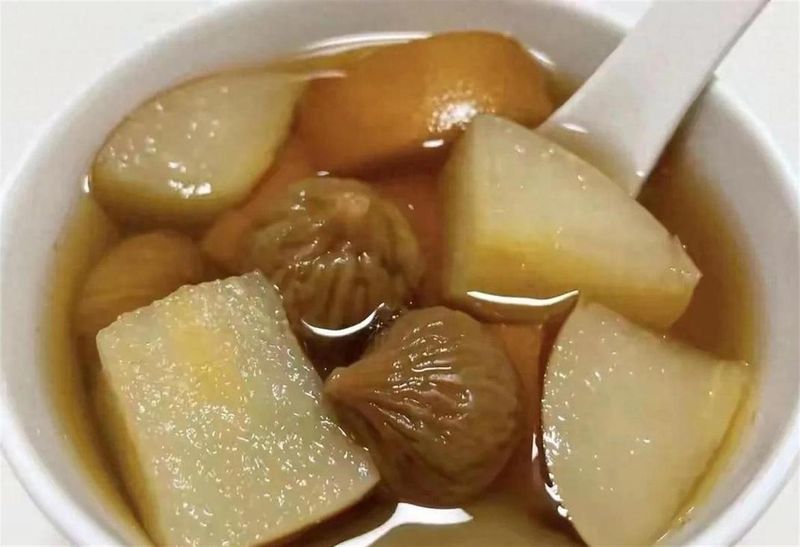
In folk eating experience, pears are the common foods used by people to alleviate their discomfort (note: food, not medicine). Pear is not so thin, it's so dreary, it's not easy to rot; it's both clean and clean, and it's nice and warm. This is very practical: people who are afraid of being alive and cold can cook and eat, and choose a lot of space。
There is also a very realistic advantage: high value for money and no “market premium”。
In recent years, many fruits have been packaged as “net-fruit fruit”, with a dozen labels, boxes and boxes, at several times the price. Kya pear is a very simple road commodity, rarely made into high-end monographs. Most of what you see in the market for vegetables is bulk, not overpacked, not net redheads, and costs mainly from planting and transportation. At a time when the harvest produces a large volume of goods, it is common to sell a pound of $1. 8 to $2. 3 in the agricultural market, and buy three or four for five or six dollars, which is not affordable for ordinary people, and can be used as daily fruits, not as rare items that are bought once in a while。
Of course, i'm also going to talk objectively about the short board of the pears, not to be glorified:
• if the maturity level is not sufficient, it will be a little odoury and the fruit will be rigid
• after long periods of water loss, saliva and less juice become difficult to eat
• a certain thickness of the bark, a slightly more visible stone cell than the autumn pear, and a bit of slag if it is not well picked
• it is just ordinary fruit, which does not immediately “medicate” and does not expect all dry symptoms to disappear for a day or two。
It is the sharing of strengths and weaknesses that is not meant to blow up the market。
Here's the thing: how do we pick the pears? Remember the four intuitive ways, no guess
A lot of people don't want to eat pears, they don't pick them up, they often step on the pit: buying home looks pretty big, they cut the dry bar, they don't have juice, or they get sour and they rot for two days. On the internet, there are special lessons to be said about “deep pear umbilical, textual” approaches, and ordinary people are mist. What i'm talking about here is a big white word technique in the market that can be judged directly by the eyes。
(alarm: these are experiences, not 100% of all-power formulas, but only the probability of picking good results)
One: take the weight, same size, and sink
This is the most useful and simple trick. Two similar heads of pears, one in hand, one in hand, one in hand, one in which the feeling is thicker, which means the water's full; those that are light-floating, most of which have started to lose water, or have poor maturity, fruit and pine and dried up. Don't be afraid to laugh, buy a little bit of it, and the shopkeeper's not surprised。
Two: look at the skin, be clean and bright, and don't get dark and wrinkled
Good pears' skins are light yellow or light brown, with natural light, and not particularly oily (special oils may be thick waxed by humans, not to say they can't eat, but they don't have to be chosen deliberately); a little bit of the skin is normal, little freckles are normal, and a little bit of the brown spot is supposed to be carried by the guacamole without affecting the fruit. What needs to be avoided is the large area of the skin, which is gray, wrinkled, carving, soft black spots, and the colours that are particularly green and almost green, which are probably not ripe enough to squeak。
Here again, a small amount of edible wax is allowed to be used by the state as a means of preserving fruit and vegetables, and normal cleaning is done without fear or fear without seeing the skin shine。
Number three: hardness, robustness, not softness
A small pear with a small finger, strong, tight, fresh; a dent in the dent at the moment, a soft skin, indicating that the head is ripe or about to break. Be careful not to choke, neither civilized nor easy to break fruit, touch and feel. There is also a glimpse of the handle: it is green or freshly dried up, indicating that the harvest is not long, and the handle is completely black and dry, and it is likely to break as soon as possible。
Fourth: look at the pear umbilical
There's a lot on the internet that says, "the deeper the worm, the sweeter it is," but it's over-expanded. I've seen a lot of fruit and vegetable cobbles: the depth and the sweetness of the pear cord are not absolutely the same, but only as a reference. It's more about whether the bottom is intact, there's no cracks, there's no rotting hair. As long as the bottom is clean, with no worm eyes, and the whole body is fresh and sank, it's almost fine, and it doesn't have to die。
There are two little reminders that are easy to ignore when buying:
• do not blindly pursue the “extreme fruit”: mega-pears sometimes grow too fast, and the fruit is softer than the medium head is juicy; the size of the fist is more stable
• a fair share of the market period can be bought, but it is not a one-time accumulation of more than a dozen pounds, but rather wasteful because of the limited conditions in which the water is lost。
And there's another key question: how do you save it? A lot of people put it away for two or three days。
Pear sustainability, but not just throw it away. Practical approaches:
• if it is planned to finish three to five days: just put the air in the air, avoid the sun and leave the refrigerator in a hurry
• if it is to be long: dry surface water, leave a small vent of air in a fresh bag and put it in the freezer room (at a temperature of about 0°4°c), it can normally be 2°3 weeks
Note: don't put too tight on bananas, mangoes, apple piles! These fruits release ethylene, which accelerates the maturity of pears into softness and is prone to early deterioration
• when a pear is found to be in a bad state, take it out and do not infect the whole bag。
The wash also says: "i want to eat with the skin, wash with liquid water, rub the skin with a small amount of salt, and then wash it clean. A more prudent way or skin cutting, both to remove the wax and to reduce the skin residue, is better advised by people with sensitive teeth and weak stomachs."。
Rachel eats pears: how do you choose to eat them? What's more appropriate? What's to avoid
Many people have heard of “pear cold, unable to eat alive”, and others say “live to eat to refill”, both sides of the story, and ordinary people don't know who to listen to. I'm here to make it clear, in a common, everyday way, that it's not black or white。
First of all, it is clear that the so-called “cool” is an empirical description of the food properties in traditional diets and does not amount to “toxic, diarrhea-like”. The vast majority of healthy adults are perfectly safe to eat pears after autumn。
Living food: the most direct recharge for most healthy people
The best advantage of washing the skin and eating it directly, or cutting it in pieces, is to keep the water and the sense of brittle in its entirety, without heating, to ease things. Suitable: people with good stomachs, easy to dry, frequent in air conditioners, no frequent diarrhoea。
A little advice: don't take it out of the fridge and eat it in 10 minutes and back, reducing the intimacy of the stomach; don't eat two or three at a time, and an overload of the good stuff increases the burden。
Eat well (sample pear, boiled pear): better for cold, tight throats, old children
If your stomach is sensitive, you can eat cold fruit, or have a tight throat in the morning. It's easy for two ordinary people to do at home. It's not complicated, it's not complicated。
Practice 1: cooking of pear (most economical)
Pear peels small pieces, removes the kernel (which is a little thick, doesn't recommend cooking together), adds a proper amount of fresh water, boils the little fire for 10 to 15 minutes, and can drink from the fire until it is warm. There's no need to put lots of ice candy in it. Many people boil pear and turn it into sugar, but it's not what it was supposed to be; it's a little bit of ice sugar, not even pears themselves. It's very comfortable to drink warm pear, with softly cooked pear。
Practice ii: vacuum pear
Pears cut a small piece of the top as a lid and dug out the core, which can be filled with two or three pellets (optional, no matter), covered with lids and boiled water for about 20 minutes, and set fire to the fire. Note: many of the web sites are known as "sample porcelain beauties", which are chinese medicine and are not everyday food items. They are not recommended to be bought by ordinary people for pear evaporation. This section only deals with the usual practice of pure food feeders and does not involve therapeutic feeding。
There are several other ways to eat that do not recommend frequent daily work:
• pear squeezing into pear juice: squeezing away food fibres, absorbing sugar faster, drinking too quickly and easily unwittingly ingesting too much sugar; it is better to eat fruit if you want juice
• a large amount of ice cream and honey made into pear ointment: it is difficult to control microbes in the home, without a professional sterilization process and prone to deterioration; high sugar is not suitable for long-term daily consumption; it is also necessary to choose the regular product of the factory, and it is understood that it is a savorite rather than a special medicine
• ice pear, ice pear juice: occasional tastes are fine, but after autumn they are not recommended for regular consumption and can easily stimulate the stomach。
Next is a very important part: who wants to control the volume or try to eat it? ♪ just a reminder, not an absolute touch ♪
Repeat: it's just ordinary fruit, not strictly prohibited, but of different quality, for reference:
• easy diarrhea, cold stomach, cold abdominal pain: as little as possible to eat live pears, to eat hot and hot pears and to try a little
• population with high blood sugar and need for sugar control: pears, although not high sugar bombs, also contain carbon water, must contain weights, preferably between meals, after eating and observing changes in blood sugar and following the instructions of doctors and nutritionists
• older persons, children: children should not eat too much at once to avoid abdominal diarrhea; older persons have bad teeth to eat softly
• diarrhoea and intestinal inflammation: first off, giving priority to medical advice
• allergies to pears (very rarely, but they do exist): do not eat directly。
And there's a question that everyone often asks: how much is appropriate every day after autumn
For a healthy adult, one medium-sized pear (about 200 to 300 grams) a day is enough to eat three meals a day. Fruits are diverse, not just pears, and grapes, pomegranates, apples and other fungus are rotated, and nutrition is more balanced. It must not be understood that “earthings are to be eaten in autumn” and that no single food can be eaten in large quantities for long periods of time。
And i'm here to break a wide-spread error: pear can't cure cough. Many people boil pear when they hear cough. The fact is that warm pears wet their throats and temporarily relieve the discomfort caused by itching, but it has no cough effect. In the case of bacterial infections, paragens, allergies, cold-induced coughing, medical treatment is required, not by pear. This must be made clear so as to avoid the perception of the reader as delaying。
Put it in the current life: why do we need this "not expensive seasonal wisdom" more
And when it comes to here, one might say, "isn't it just a pear?" is that necessary? It's not just pears, but behind this is the state of life that many ordinary people now share。
Now the short video, the shopping platform, is all over the place, pushing the "dry-god": high-end fresh fruit, imported fruit, anointed tea, a variety of gift boxes, a set of hundreds of dollars, as if they were not buying something expensive, or simply not taking care of themselves. Many people are unwittingly taken away by the logic of “price = effectiveness” and growing anxiety about breeding: in autumn, we have to be dry, in winter, in spring we have to detoxify, and every season we have to buy a lot of stuff。
But what is real life? For the vast majority of ordinary people, living lives are real: daily maintenance is not based on luxury goods, but on time-conforming foods, local maturity, high value for money, safety and security. The essence of the event is that we don't have to create anxiety, we don't have to follow prices blindly, we take advantage of the cheap fruits that nature delivers on time, and we do our daily chores。
And many of my elders have kept a habit: "any fruit which is on the market in the season and has a good price, eat it properly, and change it after the season." rather than spending money, they know the simple truth: seasonal foods tend to be natural, fresh in circulation, not stored in cold storage for long periods of time, and are more affordable. Of course, this does not mean that anti-season fruits cannot be eaten, but rather that we should be given an extra saving choice。
There is also a practical point: many working people, parents with children, are fast, and it is very difficult to make a proper daily meal and make a complex tea; a wash of pears can be taken away, skin cutting can be eaten, the threshold is extremely low and it is easy to hold. The fear of “too high a threshold” — complex steps, hard to buy food, expensive prices — is the habit of abandoning it for two or three days; rather, it is a small, readily available and affordable habit that can be done more easily over the long term and gives the body a sense of comfort。
But i'd like to remind you of two extreme faults
First, don't demagogue the season fruit: it's not that "it's gonna be sore if you don't eat pears." the living conditions of each person are different: some are still damp and hot after the fall, others are dry; others are comfortable when people drink enough water to make regular patterns and have absolutely no need to force themselves to eat pears. This section provides only a viable option, not a hard one。
Secondly, do not look down on cheap food: don't think “lower is useless”. Food products are not fully valued and priced; they are more affected by branding, packaging, marketing, scarcity, and do not mean cheapness without daily recharge. The reverse, of course, cannot be said to mean “the cheaper the better”, but the bad, bad and spoiled fruits cannot be bought cheaply。
There is also a realistic view of life: consumption has become more rational in recent years. More and more people are no longer blindly chasing red foods and box fruit, and are beginning to be willing to go back to the market and pick up their food in bulk for the season, to see it fresh, easy and comfortable. The small thing about taking care of a pear is actually a microcosm of this rational living attitude: taking care of yourself is not necessarily costly。
Here, i will also compile a simple and implementable list of routine maintenance (live experience, non-medical programmes) that will facilitate direct reference:
• ensuring a proper daily quantity of drinking water, rather than waiting until it becomes thirsty
• air conditioners should not be kept too low all night, so that they can sleep with an appropriate temperature increase and, if necessary, a basin of water to increase indoor humidity
• a day-to-day diet of juicy fruit, pears, apples, grapes, with a total of 200 = 400 grams
• reduced consumption of long-term spicy, heavy oil, salty food and reduced throat oral stimulation
• a sense of drying of the mouth of the nasal mouth, which can be mitigated with formal lip cream and saline nose spray
• ensuring sleep, less sleep, which increases the feeling of dryness and physical tension
• to visit regular hospitals in a timely manner if there is no improvement over three to five days of persistent discomfort。
And finally, repeat: pears are just an option in the list, not the only answer。
Topical discussion (leading interaction, focusing on accounts)
Read here, it is believed that many people have been reminded of their experiences of eating pears since they were kids, and many have been unable to tell how different pears are picked and how to eat better。
I leave two questions here, and you are welcome to talk about real feelings in the comment section:
What kind of fruit do you buy most often after autumn? Have you ever boiled or steamed with pears
Have you ever stepped on a pear before? Do you have your own little pear trick
We would like to share our experiences with each other in the message below; if you like, you can take a look at it if you like. I will continue to share seasonal food selections, home-grown eating practices, the little knowledge of life that ordinary people can use, not to sell anxiety, not to blow off red products, but to speak of earthly and useful daily goods。
:: disclaimer
This paper introduces generic content for today's headlines, which are intended only for popular dietary experience, daily food use and are not part of medical diagnostics, clinical treatment programmes or authoritative nutrition prescriptions; refers to the retail price of peas of approximately $2 per pound, which is common to most of the country's agricultural and trade markets at the time of autumn, and refers to differences in the physical and health status of each person, which are influenced by fluctuations in origin, channel, pattern, transport, time, etc., and do not constitute price commitments or offers; indicates that a description of fruit effectiveness is limited to physical experience, such as refilling water and throats, does not represent a cure or therapeutic effect; in the case of continuous failure to visit a formal medical institution, pick-up, storage, regular home eating is an empirical technique; does not guarantee the application of 100 per cent of all individuals; does not promote specific brands, health status of each person and a special group of people (blood sugar abnormality, gas disease, insensitive body, chronically ill person, maternal mother, etc.) does not constitute a case-by-law communication convention; does not constitute an example of today; does not constitute readers are asked to read rationally, to judge themselves, and to choose according to their needs。









