


With “90 per cent popular approval” and the active functioning of the local government, the city of hubei finally called back the loud name — zhengyang — the one who fought against the national army in guo zheng and huang yong. Local solicitations can then finally avoid being mistakenly perceived as “single”. The good news is that it is hoped that the new name, which has been replaced by billions, will yield longer-term benefits. However, behind the drums of change that have taken place in so many places, perhaps it is time to think: do we really care about the historical and cultural heritage of our cities
On 24 december 2010, the city in which the station was located was renamed "yingyang" half a month ago, despite the fact that the train station's waiting building still contained the giant word "sing."。
On 26 november 2010, the state council formally approved the change of name of the city of guangcheng in hubei province; on 9 december, the city of huang announced its official change of name to the city of yangyang and its subdivision to the region of yizhou。
As a result of the change of name, the administrative district of the city of zyang remains the same, with three county-level municipalities, three counties and three districts, as well as one and one provincial economic development areas each at the national level for high-technology industrial development and the national level for economic technology development, currently the second largest city in hubei province。
It's called "90% of the people."
Proponents: “i'm sorry for the ease of the word, for the courage that it gave to save history!” opponents: “what is the need? What scientific arguments have been made?”
According to the newsletter of the commission's ministry of communication, the name of the city has been changed from “zianyang” to “zianyang”, first organized by the people of all sectors of society. In 2008, a further 24 deputies and 185 pca members strongly requested renaming. At the same time, many of the chinese overseas who are pro-positive have also proposed a change of name, through different channels, and several websites have also created forums calling for the restoration of the country。
On 9 december 2010, a conference on the change of name was held in the city, in which the city secretary, tang liang jiu, outlined the reasons and meaning of the change as “respect for history”, “cultural heritage”, “advance public opinion” and “advance development”. The name of the city, he said, was a public urban product, which should respect the will of the people, be in keeping with the emotional and aesthetic aspirations of the public and be widely recognized by all sectors of society. According to the popular opinion survey, more than 90 per cent of the population favours a change of name。
The change from the word "sweet" to the word "sweet" immediately provoked controversy on the internet. Proponents: “i'm sorry for the ease of the word, for the courage that it has to offer to save history!” the opposition questions: "what is the need?" what kind of scientific argument has been made? “this is not a name change, it should be called a renaming”. On 21 december last year, jin hong zhong, a professor at the party school of the yangyang city council and an expert in literature and history, told the journalist. At the age of 71, jin hong zhong is one of the authors of the chinese history dictionary and the twenty-fifth history dictionary, and the author of the tsang city's renaming to hubei province and the state council。
Jin hong zhong said that at the beginning of liberation, yangyang and xing city were small towns under the supervision of yangyang county. In may 1950, the two townships formed the city of zhuang, which is part of the office of the commissioner of zyang district in hubei province, and in 1955, which was renamed the office of the commissioner of zyang in hubei province, and in 1979, the office of the regional administration of zyang in hubei province. The zyang region was abolished in august 1983 and its administrative area was incorporated into the local municipality. “if the city had been established directly as the city of yangyang in 1983, it would have been so short of the present.”
Jin hong zhong said that the city had many names, but the longest-standing, most historic and most far-reaching phase of its existence was the one named after yang. When the country fought in the spring and autumn, the country had the administrative structure of yangyang; it was established in 206 b. C. And is now 2216 years old。
After 13 years of construction in east han, i. E. In 208 a. D., the zianyang county was established and since then zyang has been a state, capital, province and county colony known as the “south boat north horse” and the “seven provinces through”. In more than 2,000 years of history, the name zianyang has been marked with many historical events, stories and figures, such as zhang yu and yu yu, sankoi and lee, who are called kings. There are also many historical figures, such as wu zhu, guan yu of wu, meng hoon, and shishu dufu, all of whom have been with zhengyang; 32 of the 120 times of the three nations act were in zyang。
The story of guo jing, huang yong-yang, as depicted in the golden man's novel "the sculptor of heroes" was even mentioned in the arguments of many of the more famous fans。
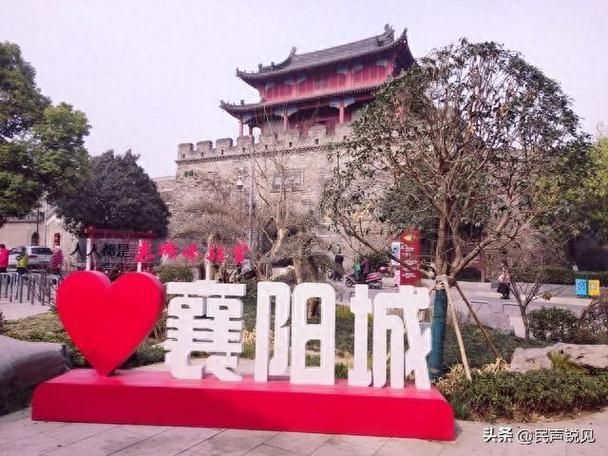
The old city secretary admitted that he wasn't thinking well
“the city of zhengyang was abolished in that year because of a lack of cultural heritage and because of the mood of the cadres of zyang and zheng city.”
With regard to the change of name, it is widely stated that it originated in the daily people's journal, “what is a zianyang” of 9 october 2001, which, according to the author, is a mere instant compared to the zianyang of 2000, although it took 50 years. Wingyang's reputation is too high and its cultural background too deep, and it has already melted into chinese memory。
As the author of the change of name, jinhong thong acknowledged that li's article had facilitated the renaming process, but that was essentially due to the proposals and proposals of the delegates and members of the political consultative council。
More profoundly, since 2000, the city has experienced embarrassment in seeking external funding. In the past, the city's leaders have led a team to the job. When it comes to zhuang, it is often said that he is the city of hunan, and the city's leaders have been busy explaining that zheng yiyang is liu's place. Listen to each other and stand up. “when it comes to yang, it is easy to find a sense of identity and to talk about it.”
In 2008, 24 deputies and 185 members of the political consultative council once again made a strong appeal for the renaming of yangyang and the official launch of the change of name. On 21 august of that year, the hubei department of civil affairs granted permission to the city civil administration to report the change of name. On 26 august, the civil affairs bureau convened a meeting of a number of local experts, at which a division of labour was drawn up by mr. Shinchong hong to prepare the renaming material。
On 27 august, the chief of the geographical names section of the municipal civil administration, li shuhua and jin hongzhong, together, prepared a thousands of words for the city of xianyang, faxed to the hubei department of civil affairs. In particular, jin hong zhong said that according to a popular questionnaire conducted by the municipal congress and the political consultative council, 80 per cent of the population agreed to change their name, 10 per cent opposed and about 10 per cent did not care. (this is slightly different from the "90 per cent of the population agreed to change their name" in the jianyang city council communications department's draft
At the beginning of december of the same year, the governor's office informed the department of civil affairs of hubei province that it had agreed to a change of name, but that the request was incomplete and stated only the advantages of a change of name and did not mention the unnamed ills。
As a result, the city redrafted the material by replacing the word “rename” with the word “rename”. On 5 january 2009, a document was issued by mayor lee xinhua. The ministry of national civil affairs soon informed that the expert validation meeting would be held in beijing on 16 january 2009 and that a “complaint” would be made by a representative of the municipality. In accordance with the procedure, an expert may be invited through the ministry of civil affairs to present the case to the state council。
At a time when secretary tang liang zhi is studying at the central party school, the members of the “responding group” are the city secretary tang liang zhi, the minister of municipal affairs and war, liu de xing, the secretary-general of the civil administration for geographical names, chu sung-jin, the chief of the geographical names section of the district divisions, lee shuhua, the expert in literature and history, and the journalist zou jiabin。
Jin hongzhong explained that journalists had been invited to the meeting because of a video showing, in addition to the yingyang profile, a message from the city secretary zhang, who had opened the city in the evacuation area that year. In that video, zhang zhang, age 77, admitted that it was “wrongly thought out”: the city of zhangyang was abolished that year because of a lack of cultural heritage and because of the mood of the cadres of zyang and zheng city。
On the same day, the 13 experts who participated in the validation meeting passed a change of name to zianyang and subsequently submitted it to the state council for approval。
Approved by the state council on 26 november 2010 for 22 months。
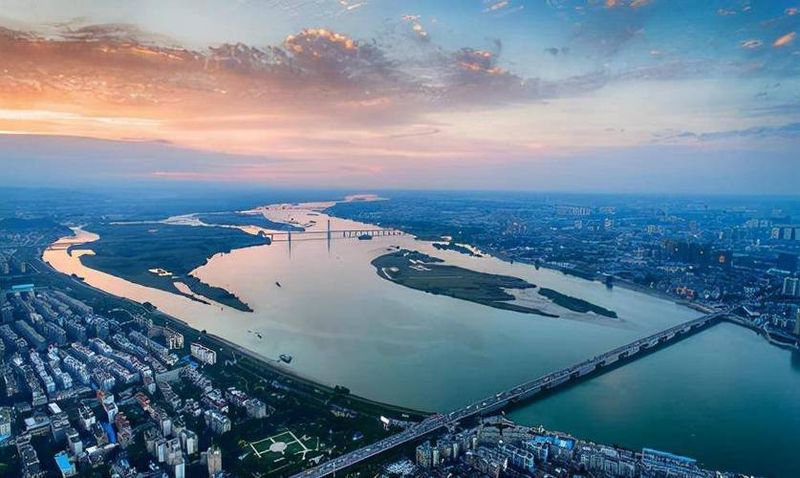
The young man lost his sense of belonging
"i was born in the guillotine, and my guacamole never existed!"
Lee jun-yung is a member of the jiang folk culture community and claims to be a supporter of yang's changing name by exploring folk culture with “grain vision, professionalism”. In his view, his country was a cultural symbol with deep connotations that should be used for the benefit of his people。
In the streets of changyang city, journalists interviewed several interviewees randomly, most of whom said that they should change their name to yang, and others said that they did not care what their name was, provided that the people benefited from it。
But the daughter of lee jun yong who went to shanghai to study in shanghai cannot accept it. On the day she announced her name change, the daughter called: "i was born in zhuan, and my zhuang has not existed since!"
For young people born of age, the sudden change of name may have left them without a sense of belonging。
Maran, 19-year-old, first-year student at a university in sichuan, graduated from the city of huang. For him, when he went to primary school, the noise of the grown-ups became a reality, and suddenly there was a feeling that something had been emptied out of his mind。
In contrast to a number of scholars, mara has argued that the name of zhengyang has been changed to zhengyang, “it is not fair that the atmosphere is not well known, but it is biased”. In his view, the geographical name “things” contained a good combination of the two central urban areas of “yingyang” and “sing city”, which also sounded atmospheric. And the invisible part of the sun narrows the geographical and cultural boundaries of the region。
She said that she was not a small city that had never developed. In the area of tourism, based on a long historical and cultural background, zhuang became the “city of history and culture at the national level”, the “city of tourism in china” and, in particular, one of china's charismatic cities, from over 600 cities, one of the top 10。
He cited, for example, the town of ishikoshi, once known as the “largest village in the world”, which had been popularly renamed. However, in august 2009, the municipality made it clear that no change of name was planned. Why is there a “hot air” in the private discourse while the official attitude is “cool and clear”? As a result, it was estimated by the experts concerned that if the name of the ishijia market was changed and the name was changed, it would be impossible to complete a billion yuan, while the economic losses that could not be estimated were much greater。
The biggest thing about changing the name of the city is the mess
Pau li said, "it's self-serving, it's natural to be famous all over the country."。
The city of guang, hubei province, has changed its name to "the city of yang" and is again contributing to the "city change campaign"。
On december 5, 2010, the post of the forum of chinese businessmen, " the sun is back and can return to xian? " , triggered a lively discussion among netizens. According to the geographical names survey office of the civil administration of the city of xi ' an, such proposals are made every year at both councils of the city. Although changan is a cultural symbol as an ancient place name, it is not in line with the current administrative division of sian, and the state council's regulation on the regulation of geographical names stipulates that names should not be changed at will。
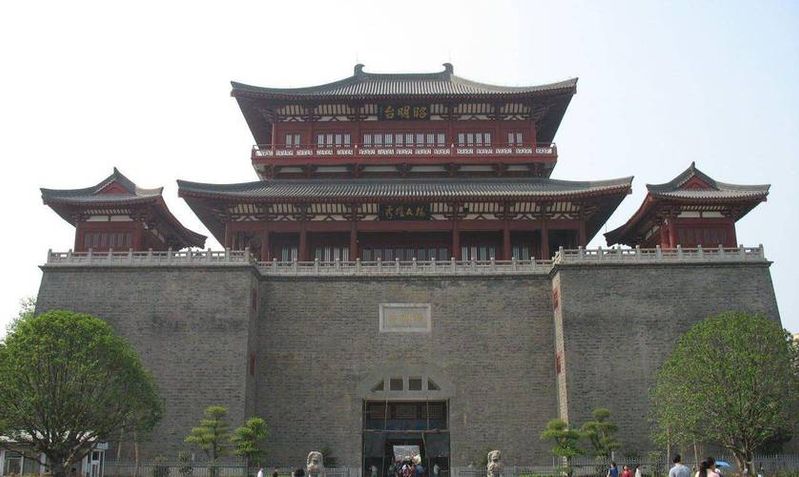
According to liu conservation, director of the geographical names institute of the ministry of civil affairs, the arbitrary alteration and abolition of ancient names has occurred in recent years. The reasons for renaming are so great that there are strong claims of interest. The change and abandonment of ancient names, while justified in the context at that time, was rarely justified by their placement in the history of the chinese nation, which in essence would cause serious damage to historical and cultural resources。
Indeed, there are precedents for several changes in city names in the short term. In october 1994, the xianzhou region, sha city and gangeung district of hubei province were abolished and the city was established. The death of the chinese state after a thousand years gave rise to much controversy. Two years later, the country reverted to the name of zhongzhou, which had been changed for two years。
Zhou zhenxiang, professor at the chinese institute of history and geography at the university of jordan and deputy director of the professional committee on administrative divisions of the chinese institute of administrative divisions and geographical names, stated that geographical names needed to be kept serious and continuous unless they affected the dignity of the nation and undermined the political culture. The renaming of cities should also be based on scientific and cautious measurement of pros and cons, and on the standardization of operations, to the detriment of the wind。
Hu wai, director of the institute of international and public affairs of shanghai university of transport and director of the centre for public opinion and research, also believes that the historical cultural heritage is owned by the local population and that any change of name would require the approval of the local population. The regulation of geographical names expressly states that “names may be changed without change and the local population does not agree to change names and do not change them”。
Some netizens commented that 30 years ago shenzhen did not exist and that now he is a district; 30 years ago, yiu had no name and was the first to think of a small commodity. Pau li said, "it's self-serving, it's natural to be famous all over the country." if you focus your main effort, you're turning it into "zhu gyang-lang market" and "kou yang-yung city" or "kou yung-yung" or "pickball" and "eggs"
The cost of renaming is huge
The administrative cost of changing maps, seals, papers, signs, etc. Will be at least $100 million
On 22 december 2010, the large tablets in front of the city council and the city council were replaced, but the sign on the public security watch room on the side of the gate was still “the city”, while the buildings in the city included railway stations, the word “the city”. The change of seals, tablets and official pages of the offices of the city's change of name team is to be completed by 1 january 2011。
Journalists at the sunyang street tablets learned that the price of a standard stainless steel tablet of 2. 5 metres high was between $420 and $450。
Jin hong zhong indicated that the issue of administrative costs had been taken into account in drafting the renaming material. It's just a change of name, but the whole country is a game. World maps, reprints of maps of china, of provinces, cities, counties and districts, of all units of cities, counties, communes, towns and villages, of financial regulations, of all types, of seals, of checking, approving, certifying, recording, etc., of signs, signs, tablets and of all types of household registration, identity cards, diplomas, work permits, publications, paper paper, redhead paper, and of all forms of printed material with the word “single” on the unit's letterhead, etc. Changes to maps, seals, documents, signs, etc. Would entail costs, which would amount to at least $100 million for the entire administration。
At the same time, he admitted that the estimates of the administrative costs had not been included in the report on the change of name, “because the ministry of civil affairs had to do so, the state council had to do so”
The change of name was extremely low-profile, and local media reports stated that the city had clearly stated that it was committed to simplicity and economy, that it did not celebrate, that it did not invite its superiors and guests, and that it did not organize a special change of name. Even so, the local scholars in yangyang analysed that the administrative cost of the change would be more than 100 million across the country, but also estimated that the benefits in the long run would be far greater。
This is clearly to be seen. The chinese journal









