


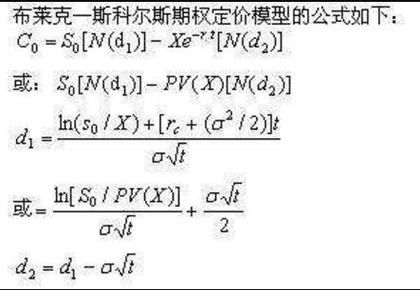
The background and significance of the b-s revision model-based rpa pricing study: theory, practice and optimization, introduction 1. 1 is playing an increasingly critical role as an important financial derivative in today's complex and volatile financial markets. The recognition certificate gives the holder the right to purchase the asset at a given price for a specific period of time, the value of which is closely linked to the price of the asset, the right price, the maturity period, the no-risk interest rate and the volatility rate of the asset. In recent years, as financial markets have continued to develop and innovate, the trading of pre-purchase certificates has become more dynamic and has attracted the attention of a large number of investors. From the perspective of market participants, accurate pricing is essential for investors. In the investment decision-making process, investors need to rely on reliable pricing models to determine whether the value of written-in certificates is overvalued or underestimated and to decide whether to buy, sell or hold them. Inaccurate pricing may lead investors to make erroneous decisions leading to investment losses. For distributors, reasonable pricing is the basis for effective risk management and profitability. Once the issuer has issued a pre-recognition certificate, it is necessary to manage the risk through such strategies as hedge, for which accurate pricing is a prerequisite. In the event of unreasonable pricing, the issuer may be exposed to greater risk exposure and may even suffer significant losses. From an analysis of the development dimension of financial markets, precision pricing is the guarantee of healthy and stable markets. On the one hand, sound pricing can facilitate fair trade in markets, reduce price manipulation and market distortions, and increase market transparency and effectiveness. On the other hand, accurate pricing helps to increase market liquidity and attract more investors to trade, thereby enhancing market dynamism and competitiveness. In addition, as the process of globalization of financial markets accelerates, the pricing study of pre-submitting licences has also played an important role in the international integration of our financial markets. By drawing on advanced international pricing models and methods, conducting research and innovation in the light of the actual situation in our financial markets, it will be possible to upgrade the pricing capacity and risk management of our financial markets and to promote their international development. 1. 2 the objective of the research and innovation point study is to provide an in-depth analysis of the characteristics and licensing conditions of the pre-requisites, to construct a precise pricing formula based on the b-s modified model, to improve the pricing system for pre-requisites, and to provide investors with scientific, reliable theoretical support and decision-making references. At the same time, empirical research on pricing formulas has contributed to the sound development of capital markets by in-depth exploration of the theory and application of probatives. The innovation points of this study are reflected in an in-depth exploration of the application of the modified b-s model under complex rights conditions. The traditional b-s model, when applied to the pre-subscription certificate pricing, tends to have some limitations because of the complex conditions under which the pre-subscription certificate is issued. Taking these complex conditions fully into account, the study has modified and optimized the b-s model to enable it to more accurately reflect the value of the written-in. The innovation and expansion of models through the introduction of more realistic assumptions and parameters, as well as the application of advanced mathematical methods and techniques, have improved the accuracy and reliability of pricing. 1. 3 the study combines research methods with data sources to ensure comprehensiveness and depth. The literature research approach is the basis for an in-depth understanding of the current status and trends of research on the pricing of pre-acquisition certificates through extensive access to relevant literature at home and abroad, drawing on research findings and lessons learned by predecessors, and providing theoretical support and research thinking for subsequent studies. Theoretical analysis is at the core, with in-depth profiling of the characteristics and conditions of the right to license, rigorous theoretical extrapolation based on the b-s revision model, establishment of scientifically sound pricing formulas, and rigorous mathematical certification of formulas to ensure their correctness and validity. Empirical analysis is key, using market data and historical transaction prices for empirical research on pricing formulas, assessing the strengths, weaknesses and scope of application of models through validation and analysis of actual data, and providing a basis for their further optimization and refinement. In terms of data sources, access is mainly obtained from multiple authoritative sources. Financial databases such as the wind finance database, which covers millions of global financial market data, including equities, bonds, foreign exchange, futures, market indices, etc., are updated in real time and of reliable quality and provide rich market data resources for research. Open data from stock exchanges are also one of the important sources of data that directly reflect actual market transactions, with high levels of authenticity and reliability. In addition, studies and statistics issued by relevant financial institutions have been collected that analyse and interpret markets from different angles and provide more comprehensive information for the study. The definition and characteristics of the pre-subscription certificate as a financial derivative fall within the broad scope of the equity certificate. It gives the holder the right to purchase a certain amount of assets (usually shares) at a specified price at a specified time. Unlike a general equity certificate, the pre-submittance certificate is issued by a third party other than the listed company and the issuer is usually a well-established financial institution. These financial institutions either hold large shares of the company to which they belong for exchange at the time of the investor's arrival, or, with considerable financial strength, take responsibility to the investor under the terms set out in the certificate of entitlement. In terms of the revenue structure, the value of the pre-subscription certificate depends mainly on the subject-matter asset price, the right-to-hand price, the maturity period, the no-risk interest rate and the subject-matter rate of volatility. When the price of the subject asset rises above the right price, the holder of the licence may buy the subject asset at a lower price and sell it at a market price, thereby earning the difference; if the subject asset price is lower than the right price, the holder may choose not to do so, at which point only the cost of the purchase certificate is lost. This revenue structure allows the pre-subscription certificate to provide investors with an investment option in the event of a favourable future for the asset at a lower cost than the asset directly purchased. The pre-subscription certificate has a significant leverage effect. Since the market price of the certificate is relatively low, investors can retain the right to subscribe to the stock simply by paying the price of the certificate. For example, if the price of a stock is $50, the corresponding bid recognition card price is $5, with a ratio of 1:1. When stock prices rose by between 10 and 55 dollars, the return on the direct purchase of shares was 10 per cent, while the return on the purchase of licences was (55-50) \div5 = 1 %. This reflects the small size of the subscriptions, which can magnify the potential returns of investors, but also the risks, which would be higher if equity prices fell. In addition, the price volatility of the pre-subscription certificate is usually greater than the target stock. Their prices fluctuated not only with market price fluctuations in equities, but also with residual durations, volatility rates, etc. When the time value decreases towards maturity, the price volatility of the portfolio may be more intense; when the market expects the volatility of the target assets to change, the portfolio price will then fluctuate significantly, creating additional investment opportunities and risks for investors. 2. 1. 2 the right-of-title price analysis is a key element of the right-to-purchase conditions, which directly affect the intrinsic value of the right-to-purchase licence. The right price is the price at which the holder of the right certificate is entitled to purchase the subject-matter assets. When the market price of the subject asset is higher than the right price, the weight of the margin between the two increases the attractiveness of the right to investors; and, conversely, when the subject asset market price is lower than the right price, the underlying value of the right is zero, at a time when the value of the right depends largely on the time value and market expectations of future price trends. The underlying value of a right-to-purchase licence, assuming a right-to-purchase licence price of $30 and the current price of a stock price of $35, is 35-30 = $5. If the equity price drops to $28, the underlying value of the licence is zero, the price may be determined mainly by the possibility of stock price increases over the remaining period and market expectations of volatility. The duration of the exercise of rights is the period during which the holder of the certificate may exercise its rights and has an important impact on its value. In general, the longer the period of power, the higher the time value of the certificate. This is due to the longer lead time, which gives more time and space for fluctuations in the price of the assets targeted, and increases the likelihood that the certificate will have an intrinsic value at the time of the issuance. For example, in the case of a pre-requisite for the same subject-matter asset and the right-to-handle price, the right-to-handle price is usually higher than the right-to-handle price for a right-to-handle period of one year. As the duration of the right draws closer and the time value diminishes, the price of the licence will gradually converge with its intrinsic value. At the maturity date, if the certificate remains outside the price (the price of the asset is lower than the right price), the value of the licence is zero; if the price is within the price (the price of the asset is higher than the right price), the value of the certificate is equal to its intrinsic value. In addition to the right price and the length of the right, other special rights conditions, such as barriers, may exist in some of the pre-subscription certificates. The barrier condition is that the terms of the certificate change or the certificate directly lapses when the targeted asset price touches or exceeds a given price level。such special conditions add to the complexity of licensing and impose higher requirements on investor risk assessment and investment decision-making. If a pre-subscription certificate sets down barriers, it automatically lapses when the price of the targeted stock falls to a certain level, and investors are unable to exercise their rights even if the subsequent stock price rises. This requires investors, when investing in such certificates, to focus not only on the relationship between the price of the targeted asset and the price of the right, but also on changes in the price of the barrier and the possibility that the price of the targeted asset may touch the price of the barrier. The scenario b-s model for the 2. 2. 1b-s model, presented in 1973 by fischer black and myronscholes, provides an important theoretical framework for a rights-based pricing based on a series of assumptions that simplify the complexity of the real market. Assuming that stock prices follow geometric brown movement, this means that stock price changes can be described in a random process. In mathematics, the logarithmic changes in stock prices are subject to normal distribution. The formula is ds t=mu tdt+sigmas tdw t, of which s t is the asset price, \mu is the expected rate of return, \sigma is the rate of volatility, and w t is the standard brown movement. This assumption allows for the use of probabilistic and random process methods to analyse stock price fluctuations and provides a basis for subsequent modelling. In the real market, while stock price volatility is not entirely consistent with geometry in the brown movement, it is to some extent akin to the trend of change, and right-wing pricing provides a reasonable starting point. Assuming a constant and known risk-free interest rate during the life of the option. No-risk interest rates are an important parameter in options pricing, representing the time value of funds and the opportunity costs for investors. In the b-s model, it is assumed that the risk-free interest rate will remain constant throughout the life of the option, thus simplifying the calculation process and providing a clear interpretation of the options pricing formula. In real markets, risk-free interest rates are subject to fluctuations influenced by a variety of factors, such as the macroeconomic environment and monetary policy, but in a relatively short period of option validity, such volatility can be overlooked to some extent, thus giving some legitimacy to the assumption of constant risk-free interest rates. The b-s model also assumes that there is no friction in the market, i. E. No tax and transaction costs, and that all securities are fully divided. In a friction-free market, investors are free to buy and sell securities without affecting their investment decisions because of the existence of taxes and transaction costs. The complete segregability of securities means that investors can purchase an arbitrary number of securities according to their needs, making market transactions more flexible and efficient. However, tax and transaction costs are unavoidable in the real market, which may have an impact on options prices, and amendments to which these factors need to be taken into account in applying the b-s model. In addition, the model assumes that the financial assets have no dividends or other gains during the life of the option (the assumption was subsequently abandoned). The distribution of dividends could lead to a decline in stock prices, thereby affecting the value of options. In the original b-s model, in order to simplify calculations, it is assumed that financial assets will not pay dividends during the life of the option. In practice, however, many equities pay dividends on a regular basis, so that when applying the b-s model, the dividend factor needs to be adjusted to more accurately price options. The b-s model assumes that the option is a european option, i. E. Not enforceable until the maturity of the option, but only on the maturity date. This feature of the european option makes its pricing relatively simple, as the possibility of an earlier right need not be considered. American options, on the other hand, can be exercised at any time before the expiry date, and their pricing is more complex and requires more consideration. The b-s model, which applies mainly to the pricing of european options, provides a concise and efficient approach to the pricing of european options. The model also assumes that there are no risk-free arbitrage opportunities, which is an important condition for financial market balance. In a non-arbitrage market, the price of any asset should be equal to the present value of its expected future cash flow, or arbitrage opportunities would exist, and market participants would buy and sell assets to earn a risk-free profit until prices were adjusted to a balanced level. The b-s model is based on the principle of arbitrage and ensures the legitimacy of options pricing and market validity. In addition, stock prices wandered randomly, assuming that securities transactions were ongoing. Continuing transactions mean that markets are active at all times and investors can trade at any time. The random movement of stock prices shows that changes in stock prices are unpredictable and that their future prices are related only to current prices and random factors, which is consistent with the geometric brown movement assumptions and further reflects market randomness and uncertainty. 2. 2. 2 model construction and the construction of the b-s model are based on the principle of arbitrage, with the core idea being that, by building a portfolio, the benefit of the portfolio is the same as that of the option, so that in a market without arbitrage opportunities, the option price is equal to the cost of the portfolio. Assuming that investors build a portfolio containing a certain number of nominal shares and risk-free bonds, the value of the portfolio is equal to the right value. The s-based stock price, c the european-style subscription option price, r the no-risk interest rate, the volatility of the \sigma-based stock price, t-term maturity, and t the current time. According to ito'slemma, full calibration of option price c (s,t) for stock price s and time t is available: dc=\frac{\partialc}{\partials}ds+\frac}dt+\frac{\partial}dt+frac}\frac}(\frac{\partial^2c}{\partials^2}(sigmas)^2dt of which ds=musdt+\sigmasdw, \mu is the expected rate of return on shares, dw is the standard brown movement. Since the built portfolio is risk-free, the rate of return should be equal to the no-risk rate of interest r. By adjusting the ratio of equities to bonds in the portfolio appropriately, the risk of portfolio exposures is reversed, i. E. Changes in portfolio value are not related to changes in equity prices. After a series of mathematical extrapolations and transformations (including solutions using differential equations), the b-s options pricing formula was finally obtained: c=sn(d 1)-ke^-r(t-t)}n(d 2) of which: d 1=\frac/2003/(s{k})+(r+\frac{sigma^2})(t-t)}{\sigma\sqrt{t-t}d 2=d 1 sigma\sqrt{t-t}n(d) is the probability of the difference in the standard normal distribution being less than d, k has the power price, e the natural base. This formula indicates that the price of european-style subscriptions consists of two parts: one is sn (d 1), which can be understood as the value of the shares held by the investor for n(d 1); the other is ke^-r(t)}n(d 2), which is the present value of the right price discount at no-risk rate multiplied by n(d 2). Intuitively, the value of options depends on factors such as the price of the target stock, the right price, the no-risk interest rate, the maturity of the option and the rate of volatility of the target stock price. This formula allows for a more accurate calculation of the theoretical price of european-style subscription options, and transaction and risk management in the power market provides an important tool. 2. 2. 3 the application of the b-s model in options pricing is widely applied in general options pricing and has significant advantages. The model has provided a concise and effective analysis formula that allows investors and financial institutions to calculate the theoretical price of options quickly and accurately. In actual transactions, investors can compare theoretical prices based on b-s models with market prices to determine whether options are overvalued or undervalued, leading to sound investment decisions. If the theoretical price of an eu-style subscription right is calculated through the b-s model at $5, while the market price is $6, investors may consider the option to be overvalued and thus opt to sell or not buy it; conversely, if the market price is lower than the theoretical price, investors may consider buying the option. The application of the b-s model has contributed to increased efficiency and transparency in the options market. It provides market participants with a clearer understanding of the mechanisms by which options prices are formed and facilitates fair trade in the market. Prior to the b-s model, options pricing lacked uniform criteria and methodologies, and market prices were subjective and uncertain. The emergence of the b-s model provides an objective criterion for the rationalization of market prices and reduces price manipulation and market distortions. The model also provides a powerful tool for risk management in financial institutions. When issuing and trading options, financial institutions need to assess and manage the risks of options. The b-s model can assist financial institutions in calculating risk indicators such as delta, gamma, vega, which measure the sensitivity of options prices to the target asset price, volatility rates, etc., and thus help financial institutions to improve risk hedges and asset allocation。by adjusting the ratio of assets to options that are the winnings of the portfolio, financial institutions can use the b-s model to calculate appropriate hedge strategies, reduce risk exposure and ensure robust operations. However, there are limitations to the b-s model. Their assumptions are not fully established in the real market, such as the existence of frictions in the market, the non-risk interest rate is not constant and stock prices do not fully follow the geometric brown movement. These factors could lead to differences between theoretical and actual market prices calculated by the b-s model. Changes in stock prices, such as leapfrogging, may occur when markets are more volatile and do not conform to geometric brown movement assumptions, when the accuracy of the b-s model is affected. In applying the b-s model, appropriate adjustments and amendments to the model need to be made in the light of actual market conditions to improve the accuracy of pricing. The modified 2. 3. 1 of the 2. 3b-s modified model relates to the adjustment of the pre-subscription certificate because the pre-subscription certificate has special licensing conditions and the traditional b-s model requires a series of adjustments in its application to its pricing. In terms of parameter setting, the treatment of right price and right duration needs to be more sophisticated. As noted earlier, the right price and duration of the right to issue a subscription warrant have a significant impact on their value and there may be special licensing conditions, such as barriers. In the b-s model, the right price and duration of the right need to be redefined and adjusted in accordance with these special conditions. In the case of a pre-submittance certificate with the conditions to knock down the barrier, the value of the certificate becomes zero when the price of the asset subject to it touches the barrier price. In the b-s revision model, there is a need to introduce the parameter of barrier prices and to amend the options pricing formula accordingly to reflect the impact of this special licensing condition on the value of the certificate of rights. In terms of assumptions for adjustments, some of the assumptions in the b-s model are not fully consistent with the actual status of the recognition certificate and require appropriate modifications. While the traditional b-s model assumes that the financial assets have no dividends or other gains during the life of the option, in practice, the targeted shares may deliver dividends, which may have an impact on the value of the pre-claiming certificate. The b-s model would need to be amended to take into account the dividend factor in order to better price the recognition of the right to purchase. The payment of dividends can be seen as a continuous cash flow, deducted from the price of the targeted asset, thereby adjusting the parameters in the model. The adjusted b-s modified model formula can be expressed as c=se^-q(t-t)}n(d 1)-ke^-r(t-t)}n(d 2), where q is the dividend payment rate. The issuance and trading mechanisms for pre-subscription certificates are also different from the normal options and need to be considered in the b-s revision model. Pre-subscription certificates are issued by a third party other than the listed company and are issued in such a way as to affect the price of the certificate. In the model, relevant variables could be introduced to reflect these factors, such as the issuer's credit risk, the supply-demand relationship of market-to-power certificates, etc., in order to improve the accuracy of the model's pricing of pre-purchase certificates. 2. 3. 2 to make the b-s revised model more relevant to market realities, amendments that take into account market realities need to incorporate such practical factors as market liquidity, transaction costs, etc. Market liquidity is one of the important factors influencing the price of financial assets, including the availability of subscriptions. In less mobile markets, the sale and purchase of pre-subscribed certificates may face large trade price differentials that increase the transaction costs of investors and thus affect the actual value of the certificates. In the b-s revision model, the impact of market liquidity on market-based prices could be reflected by introducing parameters such as trade price differentials. Assuming that the difference is \delta, the purchase price and the sale price can be adjusted to reflect more accurately the actual market transactions when calculating the licence price. Transaction costs are also important practical factors, including commissions, stamp duties, etc. These transaction costs can directly reduce the returns of investors and thus affect the pricing of pre-subscription certificates. In the b-s revision model, transaction costs may be deducted as a deduction from the theoretical price of the certificate. If the transaction cost is c t, the adjusted certificate price formula can be expressed as c'=c-c t, in which c is the licensing theoretical price when the transaction cost is not taken into account and c' is the actual licence price when the transaction cost is taken into account. Estimates of market volatility are also areas for improvement in the revised b-s model. The b-s model assumes a constant rate of volatility in the price of the asset, but in the real market the rate of volatility varies over time and is uncertain. In order to estimate the volatility rate more accurately, some dynamic volatility models, such as the garch model (extensive heterogeneity model for self-return conditions), could be used. These models can better capture the temporal characteristics of volatility and thus improve the accuracy of the b-s modified model for the price of pre-subscription certificates. An estimate of the temporal volatility of the price of the assets marked by the garch model \sigma t, and its replacement in the b-s revision model, would provide a more market-friendly, documented pricing result. The impact of the investor's risk preference on the price of the pre-subscription certificate could also be considered. While traditional b-s models assume that investors are risk neutral, in the real market, investor risk preferences vary. Higher-risk investors may be willing to take greater risks for higher returns, while lower-risk investors prefer robust investments. In the b-s revision model, the different risk attitudes of investors could be reflected by introducing risk preference parameters, thus enabling the model to more accurately price pre-entitled certificates to meet the needs of different investors. The establishment and interpretation of key parameters 3. 1. 1 from the pricing formulae derived from the b-s revision model and the extrapolation of the 3. 1 pricing formulae need to clarify and explain a number of key parameters before extrapolating the recognition certificate pricing formulae based on the b-s revision model. The current price of the s-based asset is the basis for the recognition certificate pricing and directly reflects the level of value of the asset in the current market environment. In a stock market, if a pre-subscription certificate is based on a listed company stock, s is the market price of the stock at a given point in time, which fluctuates with a combination of factors such as market supply and demand, company performance and macroeconomic environment. The right price, expressed in k, is the price of the asset subject to which the holder of the licence has purchased in the exercise of its right and is a key factor in determining whether the pre-subscription certificate has an intrinsic value and the intrinsic value. When the price of the asset is higher than the right price k, the pre-conception certificate has an intrinsic value of s-k; when s is below k, the inherent value is zero. The maturity of the certificate is recorded as t, the current time is t, while t-t indicates the remaining maturity. The remaining maturity has an important impact on the value of the pre-subscribed certificate, and generally the longer the remaining maturity, the higher the time value of the certificate, as the longer the period gives more opportunities for fluctuations in the price of the asset to be targeted and increases the likelihood that the certificate will receive the proceeds when the licence is issued. The no-risk rate r is the rate of return available to investors under no-risk conditions, usually replaced by an approximation such as the national debt rate. In the recognition certificate pricing, no-risk interest rates are used to discount future cash flows to the current moment, reflecting the time value of the funds. Higher risk-free interest rates would reduce the present value of future cash flows, with a negative impact on the price of pre-subscribed certificates; conversely, lower risk-free rates would increase the price of licences. The volatility of the target asset price \sigma measures the degree of volatility of the target asset price and is one of the important factors affecting the pre-subscriber certificate price. The higher the volatility, the higher the likelihood of greater volatility in the price of the targeted asset in the future, the higher the value of the pre-submittance certificate, as it increases the chances for holders of the certificate to obtain higher returns. The value of the volatility rate could be determined by means of historical data calculations, estimates of implied fluctuations, etc. 3. 1. 2 the extrapolation steps and mathematical logic are based on the b-s revision model, which leads to the proprietorship formula, and first on the rationale of the b-s model, which is to induce an option price by constructing a risk-free portfolio. In the b-s model, assuming that the target asset price s follows the geometric brown movement, the dynamic process can be expressed as: ds=musdt+\sigmasdw, the expected rate of return of the target asset, dw, the standard brown movement, and \sigma, the rate of volatility of the target asset price. The b-s model would need to be amended in the light of the complexity of the conditions under which the right to subscribe may be issued. Taking into account the special licensing conditions that may exist for the recognition of a licence, such as barriers, it is assumed that the value of the licence will change during the validity period when the price of the asset subject to the certificate touches the barrier price b。in order to address this situation, an indicator function i is introduced, i=1 when s\geqb; when s









