


The robot's follow-up technology has been an important element of human interaction. Following technology, when it comes to specific applications, you have to discuss its application, and maybe you know the smart suitcase. It's a follow-up technology, you don't have to pull, you follow the robot. How do robots follow? This post by kenshin network is here to show you how to follow robots and how to follow them。
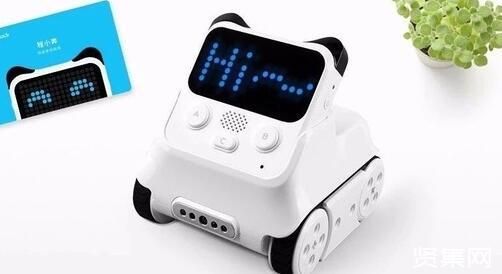
Follow the robots
Automatically follow two main solutions: direction and distance。
There are also two broad categories of solutions: one listening and one looking。
Listening is listening to signals. Bluetooth is good for radio, strong is close, weak is far away, and the problem of distance is solved. The direction is complex, usually three points. In the case of bluetooth, two bluetooth modules — a and b and a and b — have been fitted with a fixed (i. E. Known distance) installation and one bluetooth module c has been followed。
The physical locator process consists of constantly switching the bluetooth connection, starting with a company c, judging ac distance by signal strength, and then b company c, on the same basis and on the same footing. The question becomes: "the triangular length of the triangle is known, the position of the two dots is known, and ask where is your third dot?" look closely at the issue of parity, and you'll find it's not the only solution。
It's a circle in space, countless solutions, and two solutions on the plane. You can go through it, try it wrong, but the first step is basically unopposed。
The answer is that the vast majority of applications are robot-to-man, with large differences in size, and it's very unlikely that something like moving from a position of solver to a place of demagogic robots will happen, and it's really hard to turn around, so just keep walking. Of course, it's a different story to be followed by two equivalent robots。
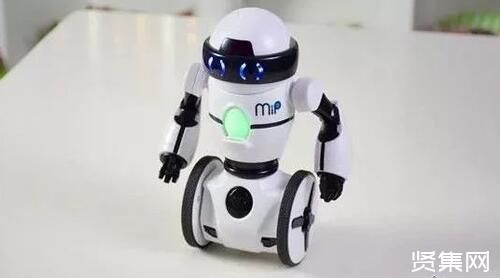
In particular, most of the "hearing" is "whole perception". However, the use of ultrasounds does not pose a problem of polylysis, and ultrasounds are directed signals of transmission and transmission, which can be resolved by adding a position feedback to the sensor。
I have also seen a golf prototype machine that relies on radio signals to follow. The positioning approach is basically consistent with the example of bluetooth。
In conclusion, this method of “hearing” is one of the most beautiful types to be used in a way that is completely inappropriate, leaves aside the above-mentioned problem of multiproblems, the signal is highly susceptible to interference, and the variation error between strength and distance is very large。
The meaning of “looks” is relatively clear. Face recognition and characterization are listed here. There is no directional problem with this approach, and if you see it, you turn around. The distance depends on the size of the image。
Face recognition is actually quite a technicality, but the practice of self-following is not very rich, and it's weird to think about hanging around a camera and floating around。
Characterization is typically color-based, a little bit more color-based, a little more advanced is color code。
Taken together, “the environmental impacts are greater and the hardware requirements are higher。
Automatically following the combination of many methods involved, unfortunately, remains largely within the category of “how to look at it at once, and how to do it carefully”。
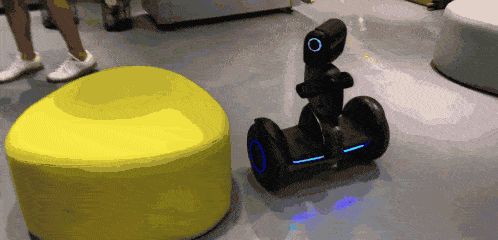
How do robots follow
An in-depth understanding of the word “following” encompasses two steps: one, knowing where the target is; and two, being able to follow it. In following us, we also need to deal with the escape of the barrier, so there are two more things to do, to identify the barrier and to avoid it. So in my view, following requires at least the following four technical modules: human positioning module, barrier identification module, dynamic path planning and shelter module, robot walk module. The following is an analysis of the achievable scenarios for each module。
I. Human positioning module。
There are multiple approaches based on visual positioning and sensor positioning, each with advantages and disadvantages。
The advantages and disadvantages of sensor positioning are:
X. Y,z coordinates capable of obtaining a target
2. Available at 360 degrees
3. Targets are less affected by barriers
4. The barrier cannot be judged and other technologies are required。
Based on visual realization, the methodology is enriched by multiple combinations of technologies. For example, a combination based on depth cameras to identify human bones directly + face recognition + signature recognition. Atlas robots like boston power are based on visual recognition for walking and moving objects。
The advantages and disadvantages of visual identification objectives are:
1. The ability to obtain not only x. Y. Z coordinates, but also a 3-d turning angle of the object relative to the camera to obtain more extensive decision information
Visual units can be used not only to identify targets, but also to identify most barriers
3. Visual perspectives are limited, generally not 360 degrees, and are affected by sight and can be obscured。
Ii. The barrier identification module
When humans are identified, the next step will normally be to think of how to identify the barrier. The identification of the barrier, commonly used techniques are depth camera recognition, ultrasound ranging, and infrared ranging. Depth cameras and infrared ranging have the advantage of being cheap and fast, but cannot identify glass and black objects, which can be supplemented by ultrasound ranging; laser radar and millimetre multi-radar can also be considered if costs and volumes are not limited。
Iii. Module on dynamic path planning and protection
Dynamic routing and avoidance module dynamic routing are equivalent to robotic brain. You know where the target is, you know how to get your legs, and you need a command center. This work is very easy for people. But for robots, it's not that simple. Generally speaking, you need to build a two-dimensional space map (if, of course, a 3-dimensional space map works better) and to make the map grid a small square that can or cannot be accessed. Supports path-planned algorithms, following target. The difficulty of the entire programme is that the targets and robots are dynamic and need constant adjustment. And, of course, if you're less demanding to follow, a few simple rules are achievable。
Iv. Robot walk module
The robot walk module, which essentially completes the walking function, may appear to be a simpler module, but it is very complex. A good walk module, at least to support line speed, angular speed, mileage and positional indications. If you're doing the right thing in front, you don't have a good robot chassis, and you can't follow。
These are the principles of follow-up robots, which are presented to you by kenz, and how robots can follow them, in the hope of providing you with information。
Note: all the graphs in the article reproduce pictures on the internet, torts are deleted









