


Seven colour yunnan
It's one of the most diverse provinces in the country
It's a microcosm of the chinese family
It's a colorful national style
The diversity and richness of yunnan culture
Yunnan is beautiful
Yunnan's minority dress is more beautiful
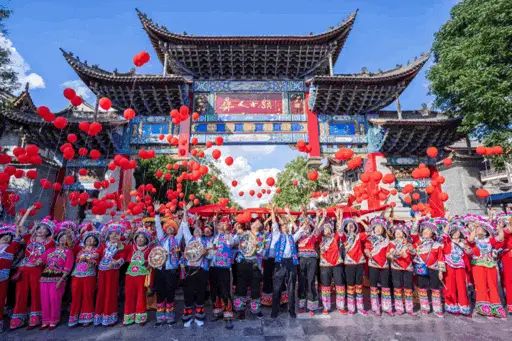
When the valet moves out to the world
Minority dress
It's also creating new trends
As the most direct expression of national culture
Beautiful and unique dress
It's a beautiful landscape for the nation
It's in its own unique way
It's about a people
Today
Come with the clouds
25 ethnic minorities in yunnan
Enjoying the uniqueness and beauty of the nation
Feel the strong national spirit
Nationalities
The ethnic group is mainly located in yunnan, sichuan, guizhou and guangxi provinces. They are black and their clothing is generally black or blue, and they are colored in red and yellow, respectively, in the name of power, passion and kindness. In yunnan, the 彝 ethnic group is mainly located in the chu hyu彝 autonomous region, the red river hani 彝 autonomous region, the kunming city suk lin 彝 autonomous district, etc。
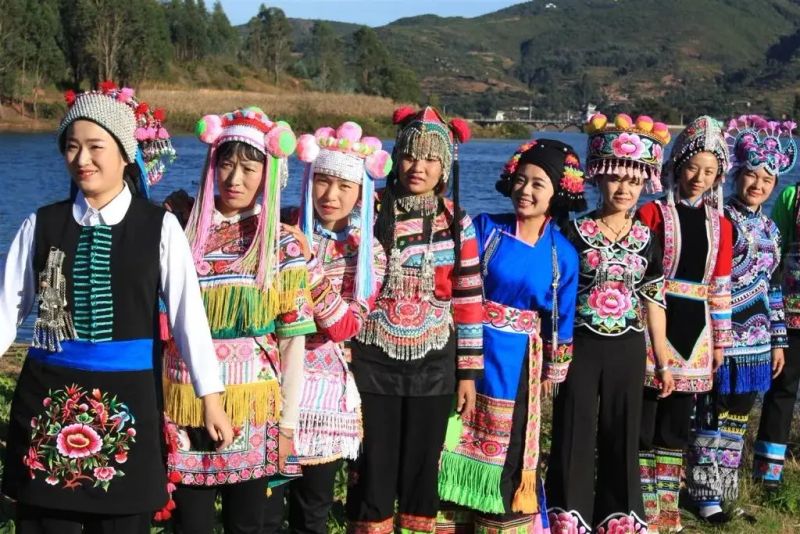
Tsu hyuzhou traditional garments
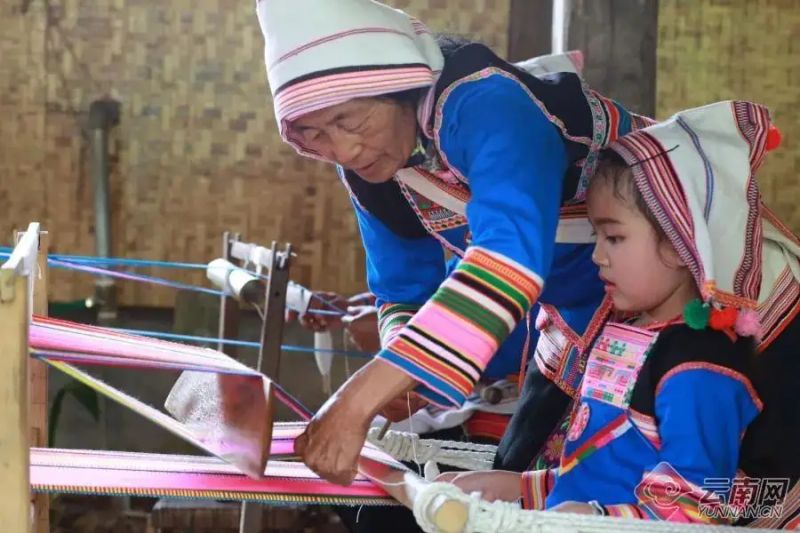
The women of the hau clan are able to weave, with a simple roller-by-carriage, with different forms of flowers, dark flowers and geometry, so that they can sew their own clothes, bets, beddings and backpacks, complex and well-stretched and durable。
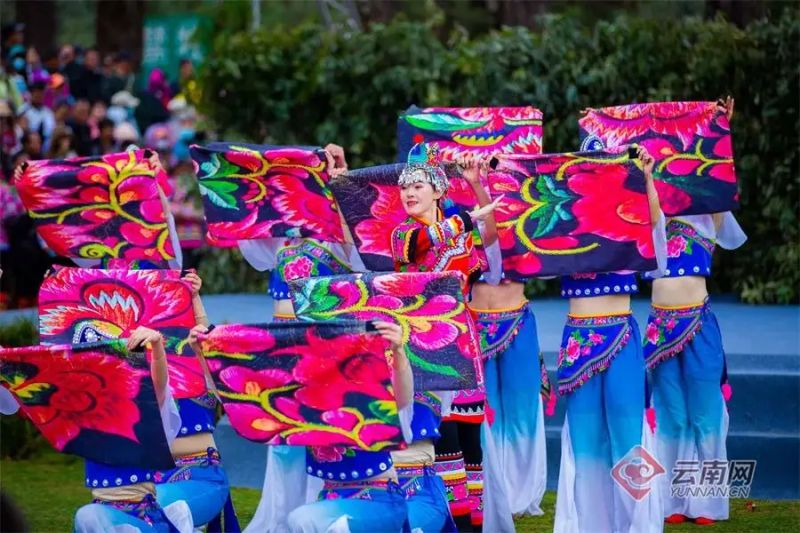
The zhuozhou embroidery scheme
The guacamole is a feature of the glamour dress, most of which is made up of women with all kinds of embroidery from head to toe, each of which is a fine craft and each village has embroidery hands。
White
The whites are one of the yunnan ethnic minorities, mainly concentrated in the dalit autonomous region and the city of ligang。
The white people who live at the foot of the mountains and on the shores of the mother sea, their clothing is white. White girls wear white or light coloured blouses, long hairs, and embroidered headscaps. White men wore white cloth headscarfs, white shirts, belts, black and blue shoulders, loose pants and decorated legs。
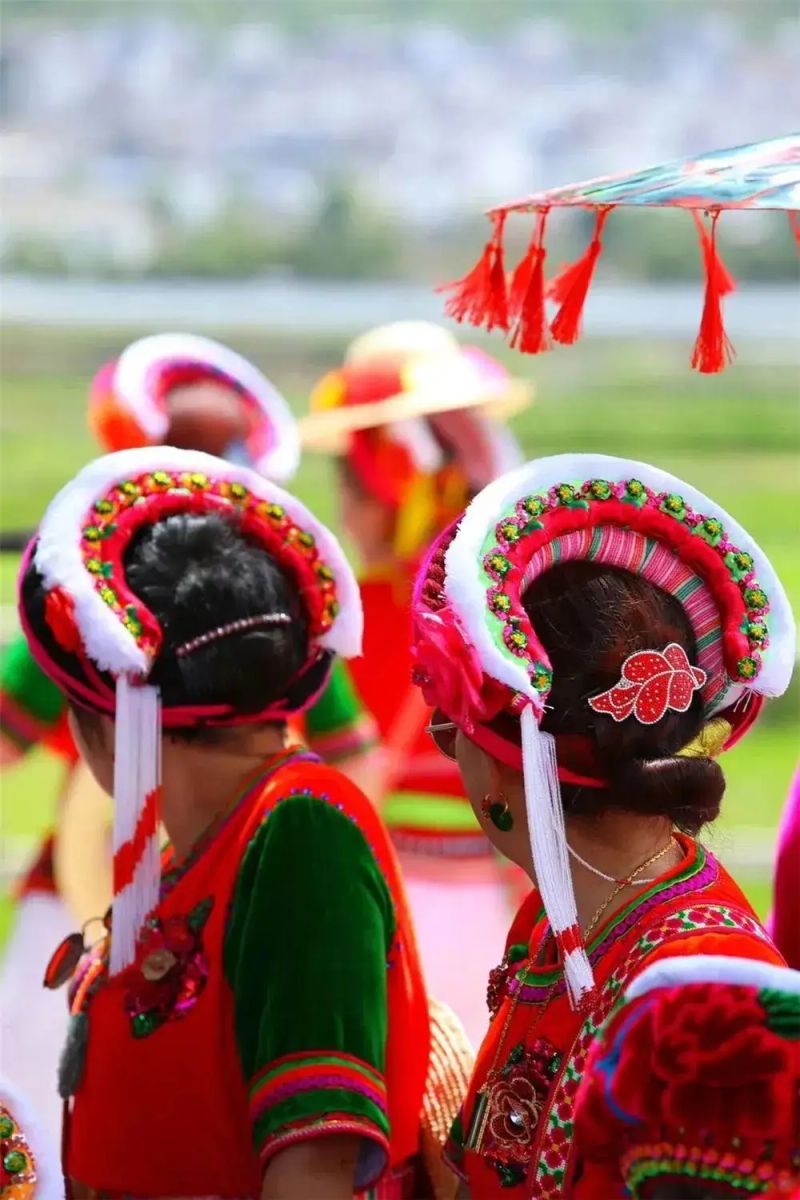
Da lisi's white dress
The white girl's head was decorated with an embroidery of square embroidery, folded with a dyed turban, shrouded under her headpad with red ropes and a pashline to her left ear. The white people are skilled and crafty, and their garments vividly interpret the words “fun and snow moon”。
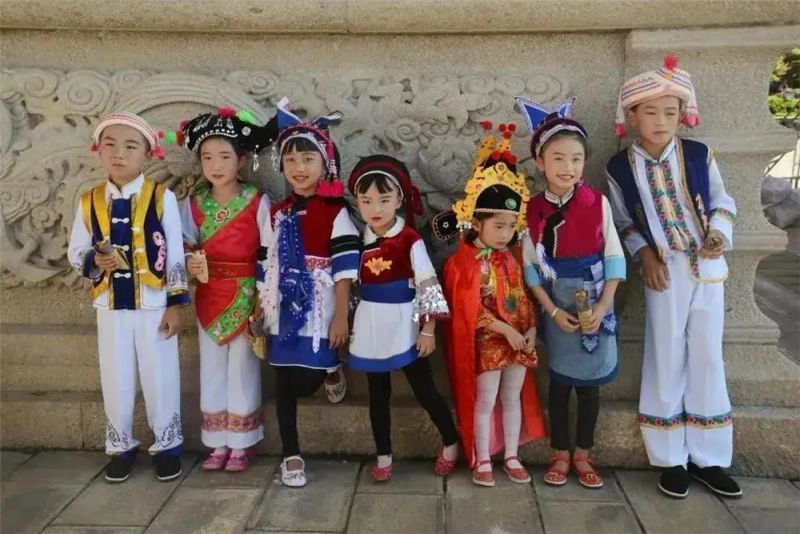
White children's dress in da lisi
Hanne
The hani are mainly located between the yuan and the landu river, and are concentrated in the hani autonomous region of the red river, as well as in the zian autonomous district of jiang city, the mejihani autonomous district, the tung autonomous district of the xin pyeongxi nation, and the hani autonomous district of the town. Hani clothing is famous for its most prominent form of love: women wear short-cut bras, short skirts, coats embroidered, bras full of silver bubbles and head coverings, filled with silver bubbles, red thongs, toothbones and husks。
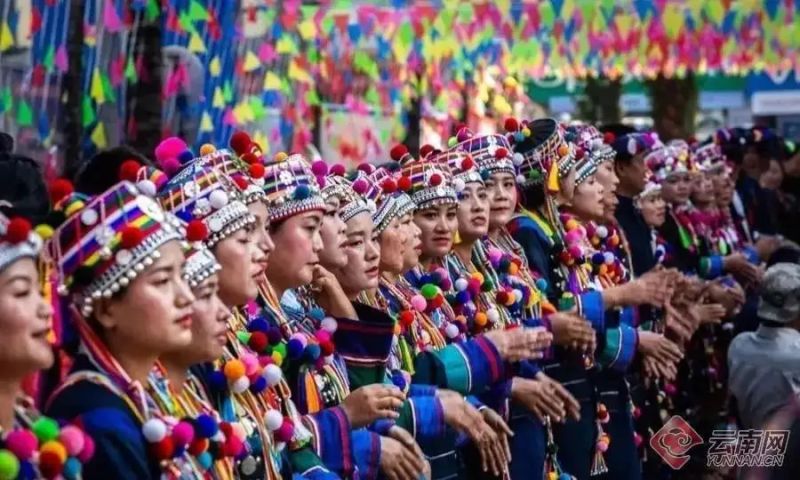
Because of the differences in affiliations, clothing is much different and difficult to describe. For example, women belonging to the hani car shafts wear shorts and tights and wear sharp caps。
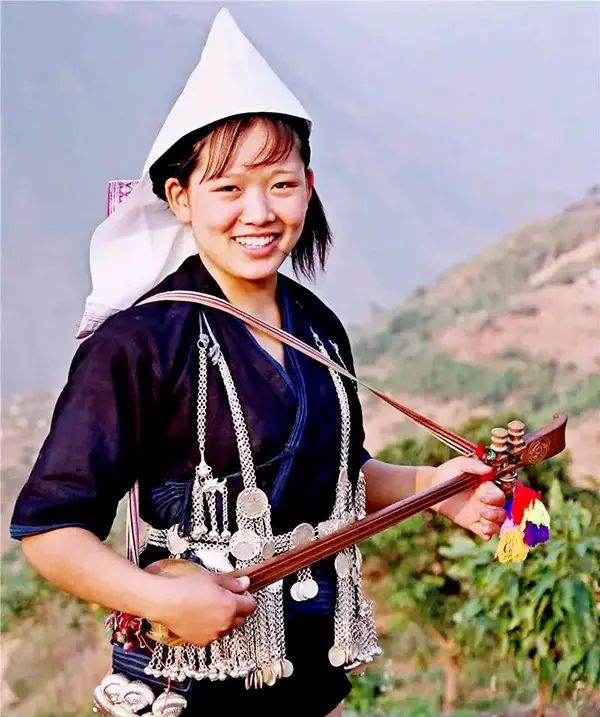
The hani cars are clothing
The tiara of the cargirls, which consists of three types, i. E. A tiara (sweet), a tiara (sweet shirt), and a tiara (back vest), which is based on home-made tans, which are strewn for the headless, and which is accompanied by tight, super-short shorts, fully reflects the simple and enthusiastic national character of the hani cyclist。
Strong people
The strong are concentrated in guangxi, guangdong, yunnan and guizhou provinces. As one of the most populous ethnic minorities in the country, there is also a wide variety of fine clothes. On the whole, strong women are more likely to wear green waxed skirts, some of which are more elegant and others more expensive. In yunnan, the strong are concentrated mainly in mansan hmong autonomous region, red river hani zhi autonomous region and xian city。
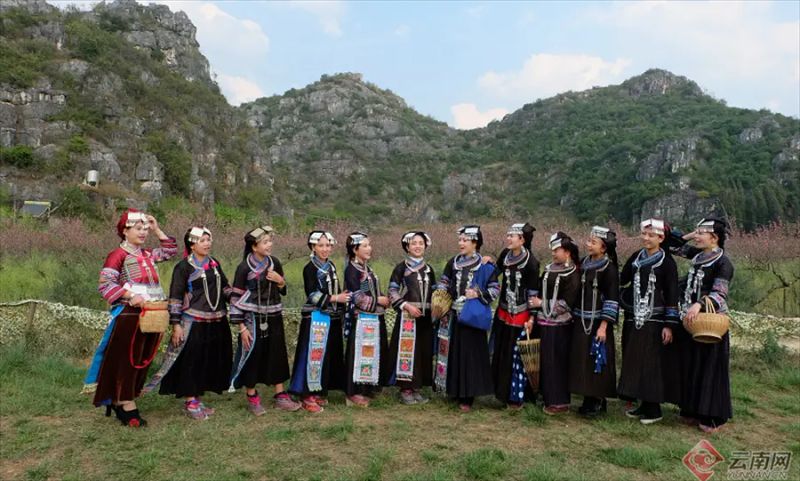
There is little variation in the clothing of the strong men, most of them wearing pairs of shorts, with long trousers and belts, which are usually made of more than two metres of domestic fabric. In some areas, older men also wear long shirts or shorts。
Toms
In yunnan, the tung ethnic group is mainly located in the western bizon autonomous region of natsu, the de hongtung ping autonomous region and the red river hani autonomous region of zhuang ethnic group。
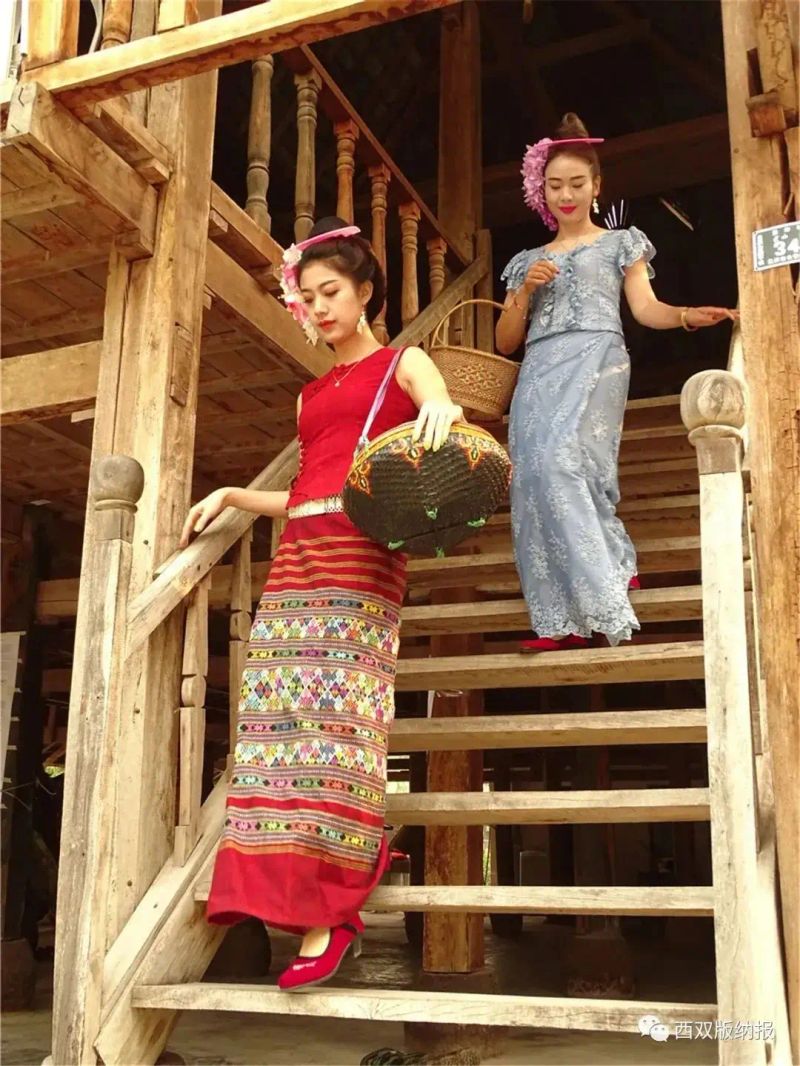
The western bizonal tucos
Most of the western double nathoons, in shorts and long skirts, display the fine body of the tung women in an extremely fine fashion; the red river's bouquets, which embroidered many silvers and bouquets on their skirts, are gorgeous; the north-western toms, which are represented by large-sleeved shorts and fire-grassed skirts, and the feeling of fish fins on their waists; and the black toms in finnam, which wear large-sleeved arms and a different style。
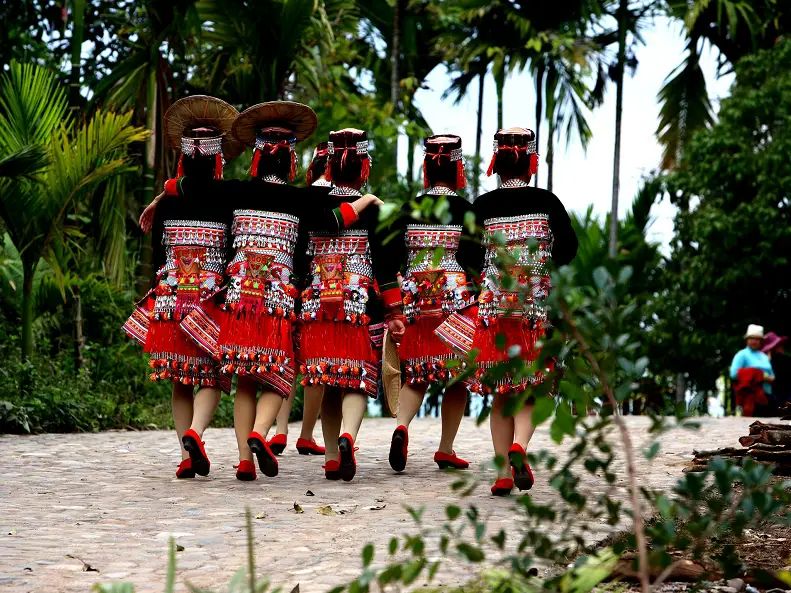
* the present document is being issued without formal editing
Hmong
The hmong are mainly located in the provinces of guizhou, hunan, hubei, sichuan and yunnan. Hmong clothing is not only multi-form, but also culturally rich. The hmong women's dress depicts the ancient history and traditional culture of the hmong, according to which many of the happy stories can be learned, and is a pictogram of the millennia with them。
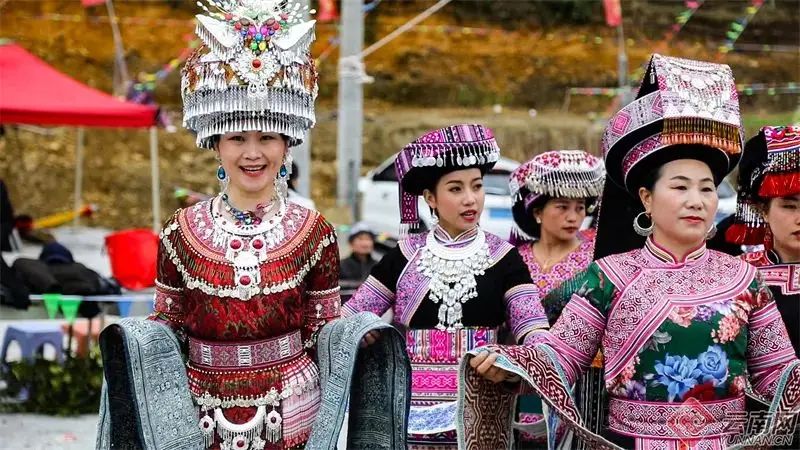
At the hanayama festival, the hmong boys dressed in corsets of collars, a golden half-armed cape embroidered with a geometric pattern, with a crown on their heads and hands in order to perform chicken dances to impress girls。
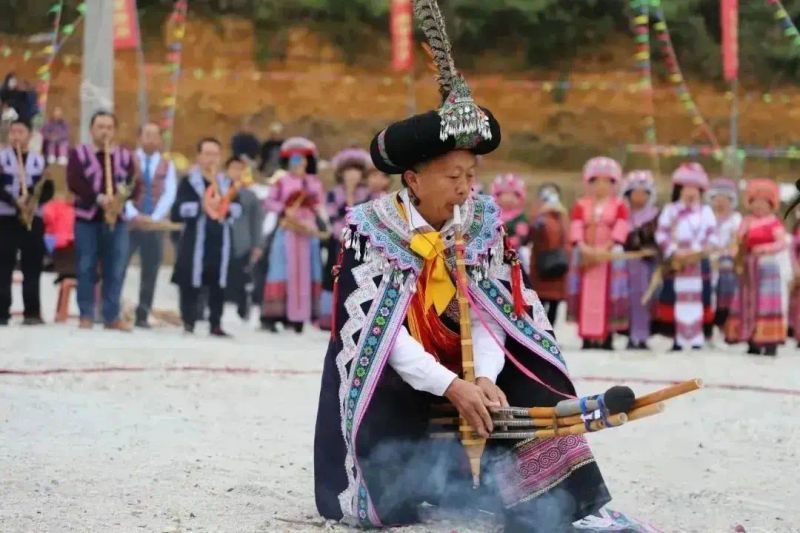
Family
The returnees are a large ethnic minority in china and are distributed throughout the country. In the towns, their clothing is more or less the same as that of the han; in yunnan's part, they are also dressed in national clothing such as those of the yans and the tongs。
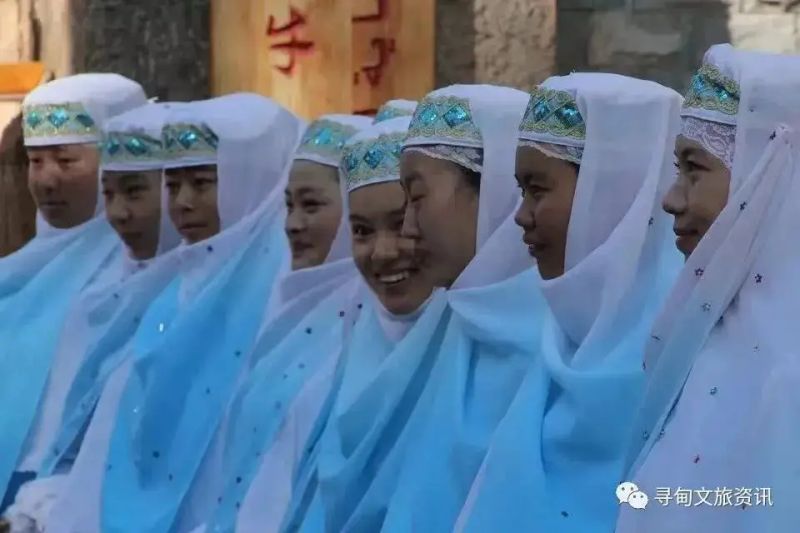
Figure source: “information from the search brigade”
The white hood, known as the "hat", is also known as the "cap". They are made of white cloths or hooked with white wires, while black hats are made of wadas, velvets, or made of black hair wires, with a simple atmosphere. The face of a muslim woman protects her hair turban, also known as the ancient one. They are made of fine fabrics such as silk, silk, veil and velvet, in a barrel that covers all the hair, half the face, necks, warm, sunproof and mysteriously beautiful。
Family
The majority of the hao ethnic group live on the slopes of the valleys on the banks of phexi, north-west pheixin, qing dynasty and jinsha. The garments vary considerably depending on the place of residence, and there is a habit of naming the subdivisions with their colours. They wear sackcloths or long skirts dressed in white beaks; they wear black skirts in black clothes and wrap their heads in blues; they have become broad-based, with unique outfits: the "flowers" in wingsing county are on their skirts, with coloured cloths on their skirts; the "flowers" are on their garments, with long strips of colour embroidery on their clothes; and the whole of the mountain is fragrance。
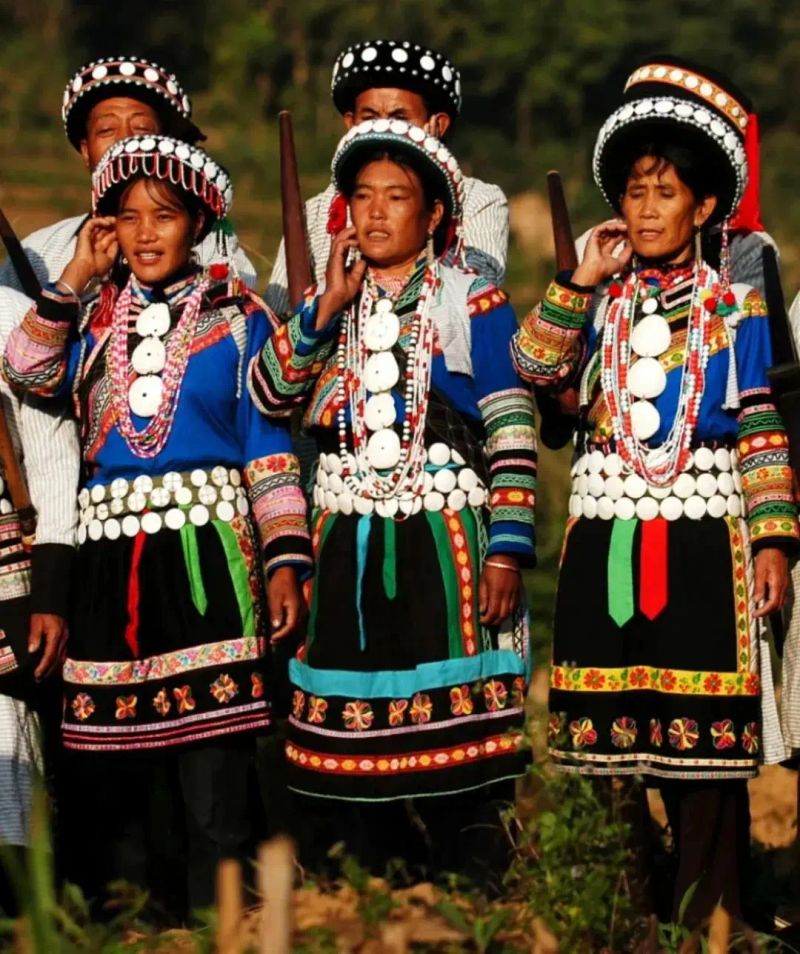
We're talking about the "mixing the river" public sign
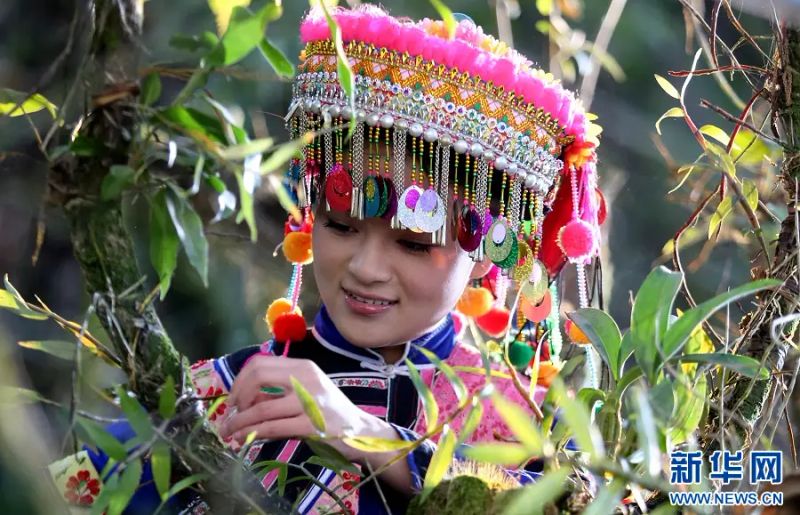
New hwa network, the communications department of the baoshan city council
Since the zen people had moved from north-west china, they generally believed that they were the dragon's heirs, and had kept their fliers on their clothing and valued them, they had to lift them before sitting down and not be able to crush the “lone tail”。
Families
They are mainly located in the west bank, in the qianqing district of the city of zhang, the wa autonomous district of the guang matung ethnic group in the north, and in the city of pumma, in the qing la xuan ethnic group, in the south. Men are generally dressed in black cloths, entangled heads, stylish shapes and color. Women's clothing is also dominated by black, with the lashasi branch wearing short skirts and red stripes, and the lashana branch wearing long shirts with slashing and square colour strips on both sides。
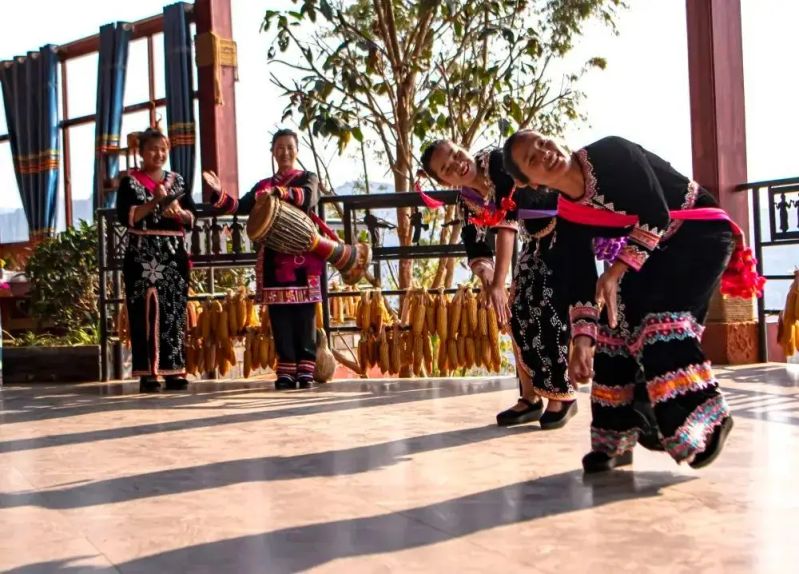
Xinhua news agency journalist jiang wen yeo
The women of lachana, the lajuna branch, wear long clothes, which are more characteristic of the north than those of other south-west minorities. The make-up of the long clothes is complex, with fork down and a different colour geometric collage on the edges of the clothes, and a shaking position。
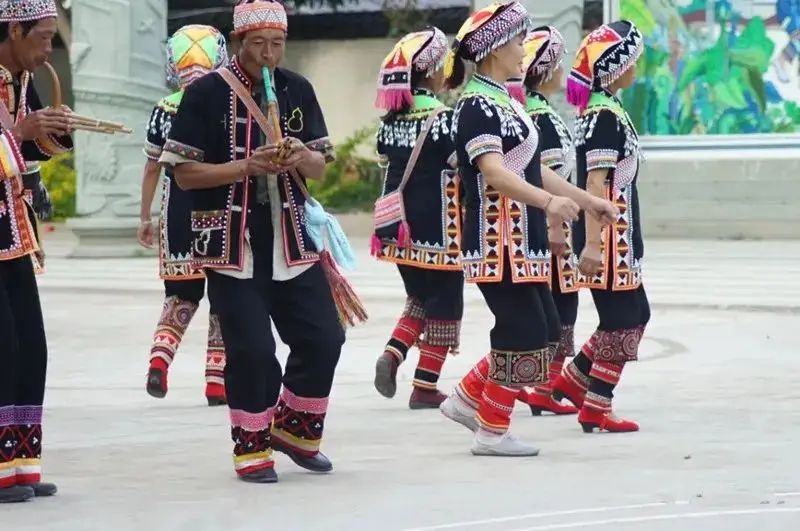
: department of culture and tourism of the tom autonomous district of the wa b two-jiang lajoon
Wa
In yunnan, the wa are concentrated mainly in the last-ever wa autonomous district and the western union autonomous district of pumma city. The wa worship red and black, and most of the clothing is black, supported by red, and preserves the ancient mountain nation。
Wa women have long-haired shawls, with moon-shaped silver hair on their heads, which are usually made of silver or aluminum blade bends, and spiral bands on both ends. It's very visible, with cross flowers and horns。
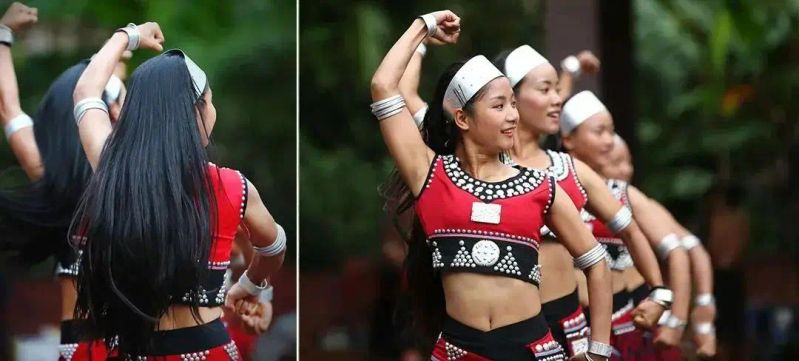
Source: yunnan province local codification commission office
Nasci
The majority of the nassi live in lijiang, north-west of pfifeng, and the rest are located in other counties in yunnan and in sichuan salt source, salt side, wood, etc。
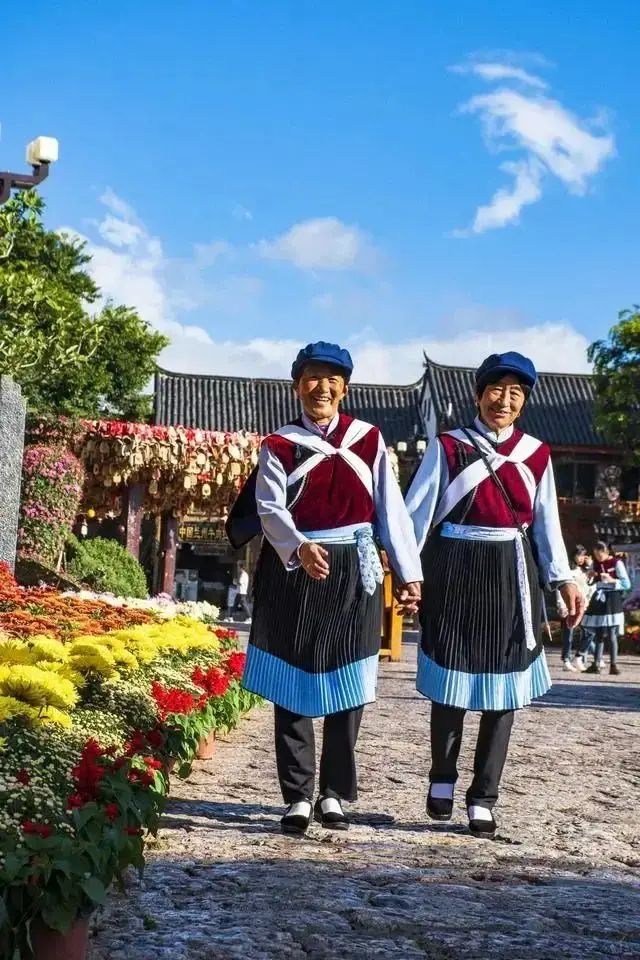
Yang su-fu
The most prominent of lijanasi women's garments is the seven-star sheep-skin shawl, which has been recognized as a typical nassian costume, with the words “shawing with moons”, and the nassi are immediately remembered. But there are other features of nassi clothing, such as nassi women in the shangri-lah area, wearing long skirts and a hundred skirts, decorating colour lines and metal ornaments on their heads and wearing white goat skins, which appear to be a continuation of the custom of dressmaking, as documented in history books such as the post-handman book, in which the nassi people's name is handai。
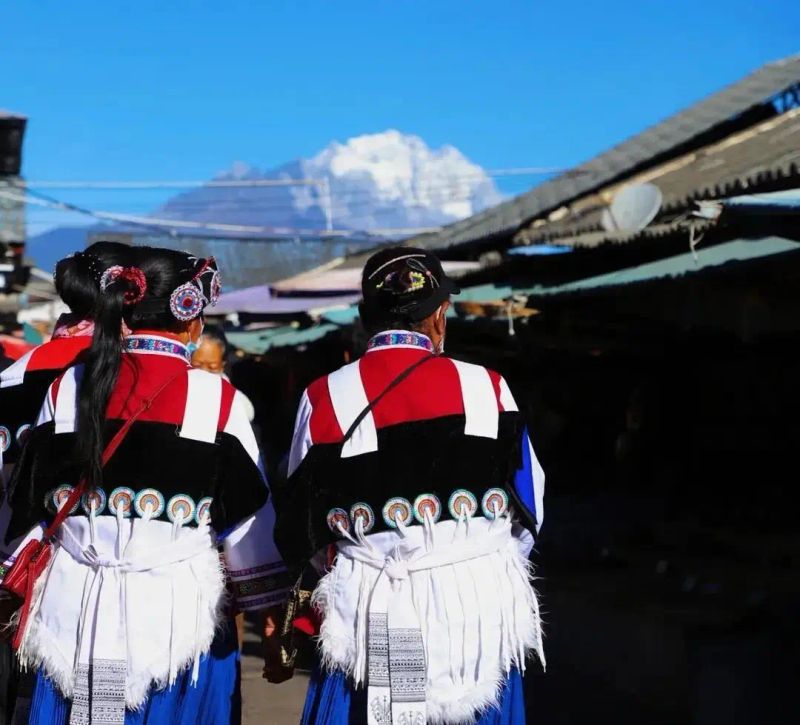
Figure source: learning power ligang learning platform, micro-city of civilization public
Nassy girls usually have 10 to 12 round silver medals engraved in the sun, with hair braids on the top of their heads around them, which are simple and bright, the most beautiful scenery in nassy's dress。
Groups
The laos live mainly in the guangxi chu autonomous region, guangdong, yunnan, hunan and parts of guizhou. In yunnan, the main concentration is in the hanni autonomous region of the red river and the hmong autonomous region of wenshan. The “white head” in yunnan is the result of women's love for white threads, while the “blue hair” is known for its good dyeing。
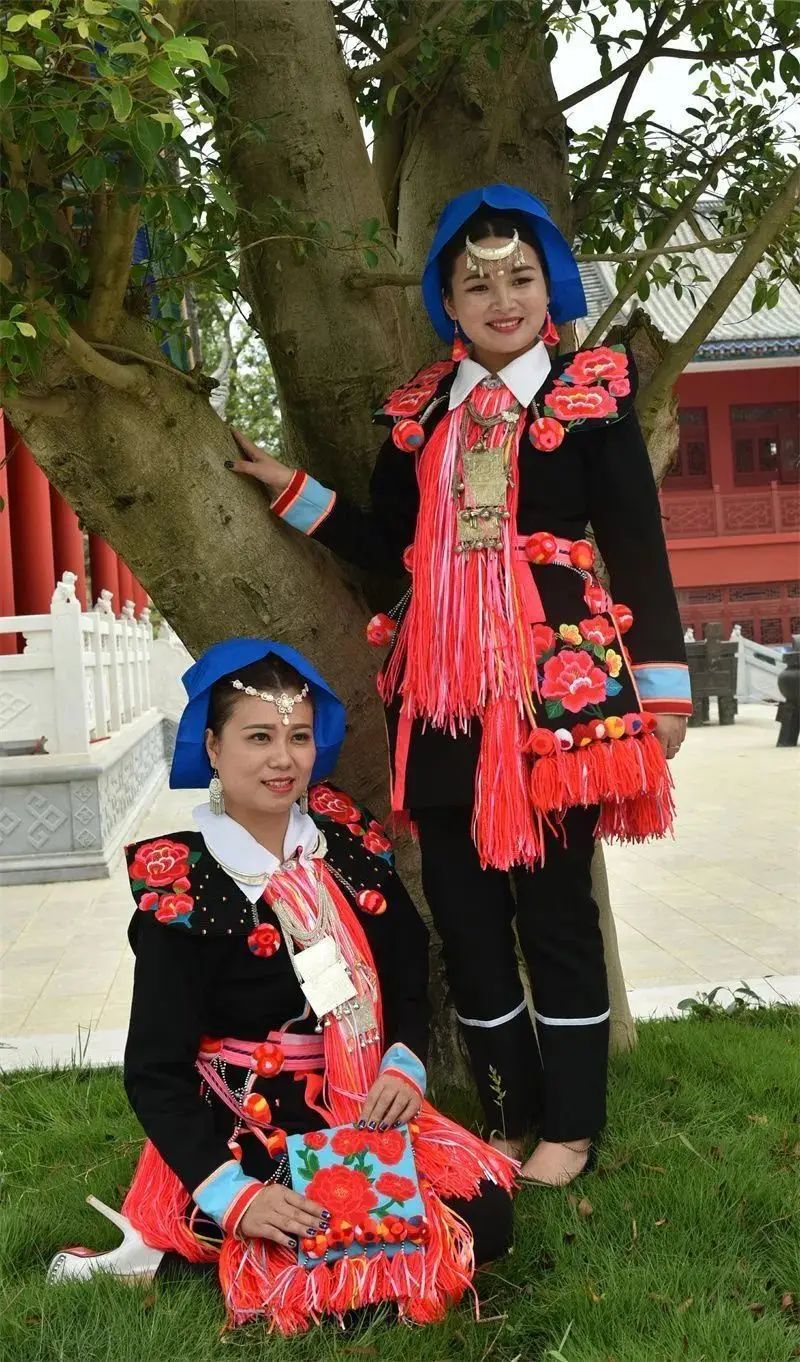
Blue dress and clothing
There are also moving legends about clothing, such as the yunnan legend that, when they moved south, they made an appointment to mark the palava, which later evolved into a red cape, a “red head”, which is a model of the palava, and the back-line group, which did not find the palava and instead used the bar and the leaf to mark it, then turned into a “blanket” with a cylindrical twirl and a “salve” with a pap。
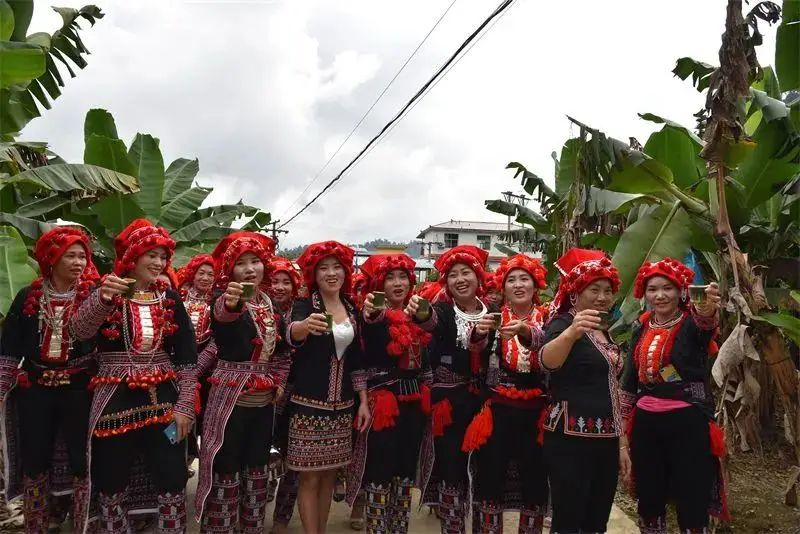
Motivated clothing
People of ping
The main ethnic groups are located in the dhuong-hong-tao autonomous region, in the districts of zhuchuan, yingjiang and reilly. Every person is infected with that atmosphere when the women of the peaks shake their shoulders together in the collective dances of the traditional festival, the "ninau songs " , so that silver bubbles on their shoulders and silver falls with their drums brushing。
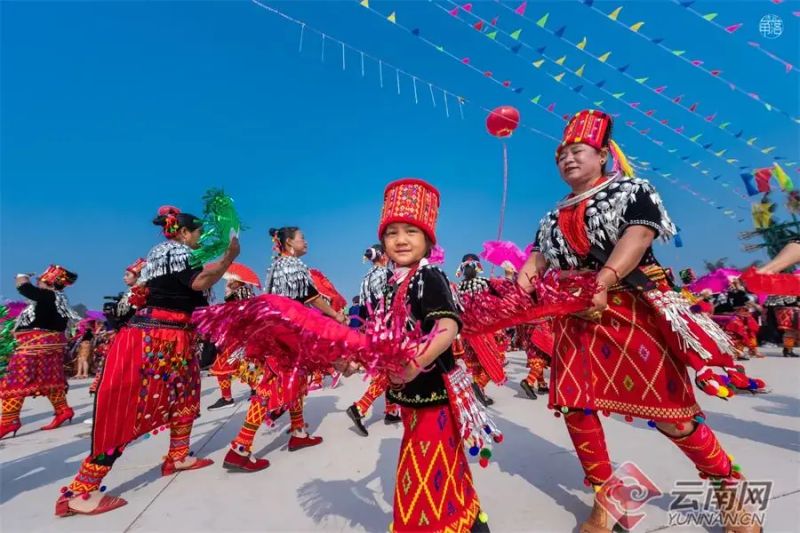
Black clothes, silver bubbles, red skirmishes and broad edge red wraps are the most typical costumes for women in the scenery. The legend is that the female ancestors were dragons, and silver bubbles were dragons, and that she was joined by the son of the sun, giving birth to the straight-flowing viewers。
Tibetans
In yunnan, tibetans are mainly located in areas such as the diking tibetan autonomous region. What is memorable about tibetan clothing is the long sleeves and neon-like neon aprons of tibetan women, which are half-sweet leather robes of the kombas。
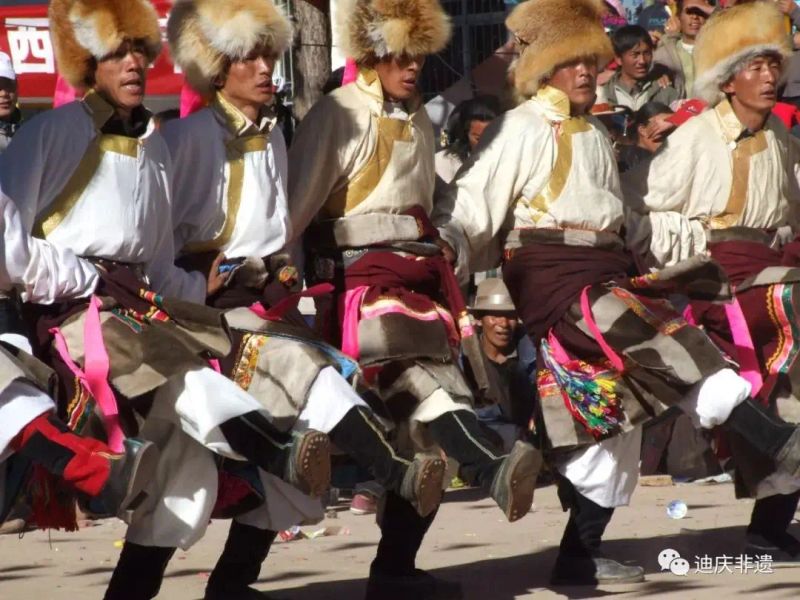
Image source: "dicking off"
In yunnan, tibetan men generally raised their robes above their knees, took off their sleeves and attached them to their waists, with a long knife, except for clothing such as sprouts of fire. (b) a single earring with a red-wired braid on the head or on the wheel, or with a hat and a pinestone in the ear。
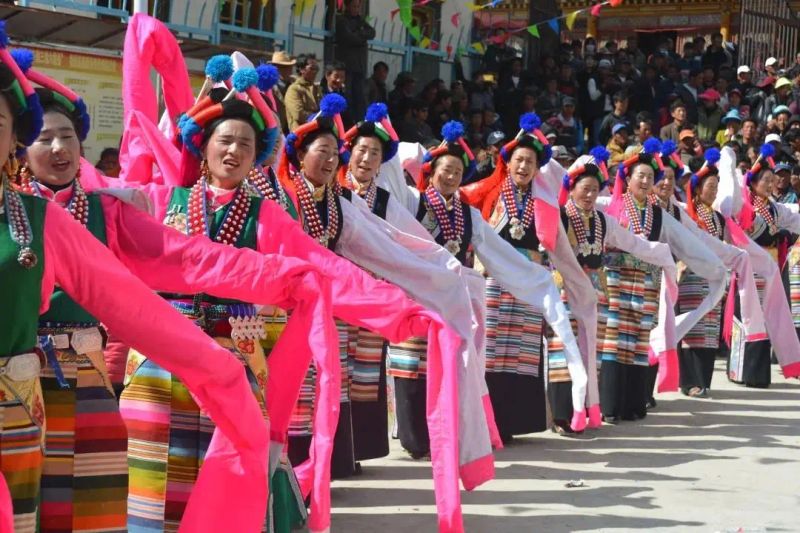
Tsugen: “the tachin cultural palace”
Tibetan women's emblematic striped aprons, “false”, are usually made of hair-covered “twilights” with red, green, blue, yellow and white colours, sometimes ranging from 14 to 20. The smaller the stripes, the more elegant they are, the more noble they are。
Blanche
In yunnan, the browns are concentrated mainly in the zhui district of the western bizon autonomous district of namang and the zhuang self-governing district of pumma city. Brown dress is colourful, embroidery is excellent, sutures are sophisticated and highly distinctive, and traditional garments range from planting large-tree cotton to forming textiles, all of which are not handmade。
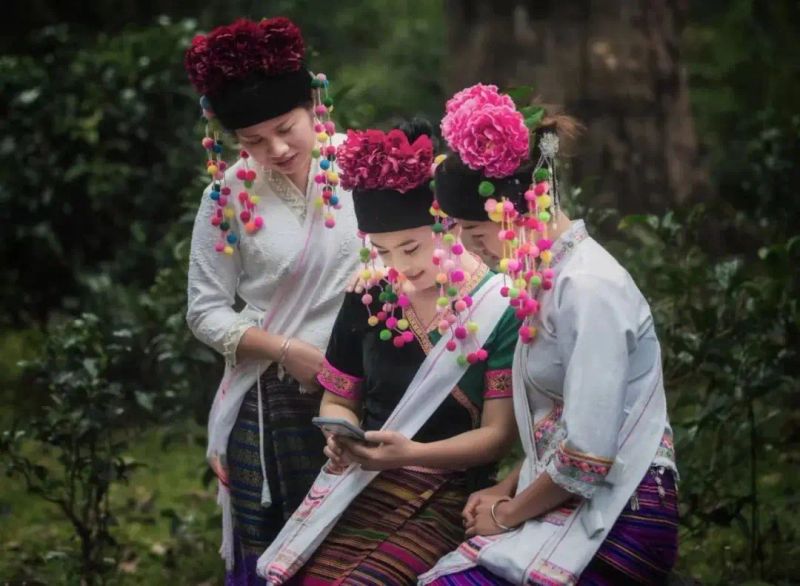
I'm sorry
Brown women often wear narrow-sleeved shorts and wear double striped skirmishes, strangling their positions. It is customary for a woman to have her head wrapped around a cloth, which is usually painted with coloured wireballs, buttons, coloured beads or silver bubbles. Married women usually have undecorated buns, warm beauty and a hairdresser。
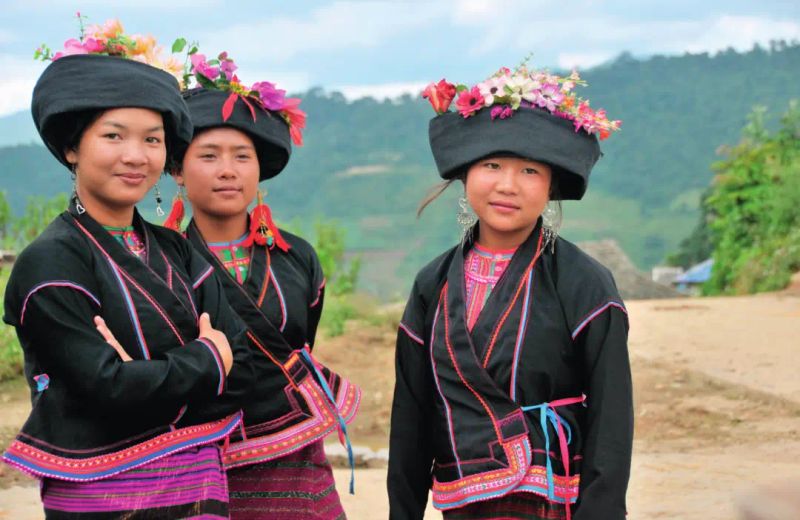
♪ i'll be back ♪
The upper cuffs of brown men and women are typically triaded in black and blue. Black represents the earth, red represents the fire pond and blue represents the sky。
Burkina faso
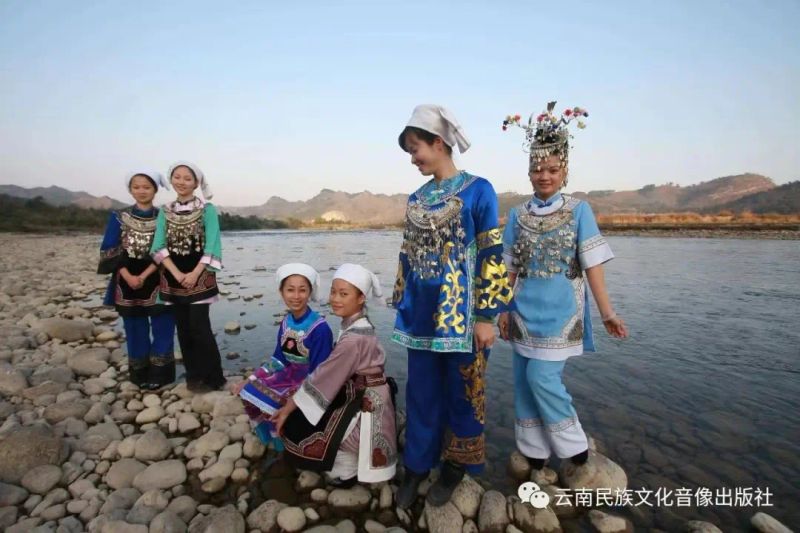
The bui are mainly located in guizhou, yunnan and sichuan. The fresh and light of the bui garments, which are of the blue and white colours. Women's dress is more diverse and varies from place to place, and traditional bui women's dress is characterized mainly by flower-side collars and long skirts. Men's clothing is relatively simple, with young and middle-aged men wearing headscarfs, short-dressed, usually white, green or blue, and long pants。
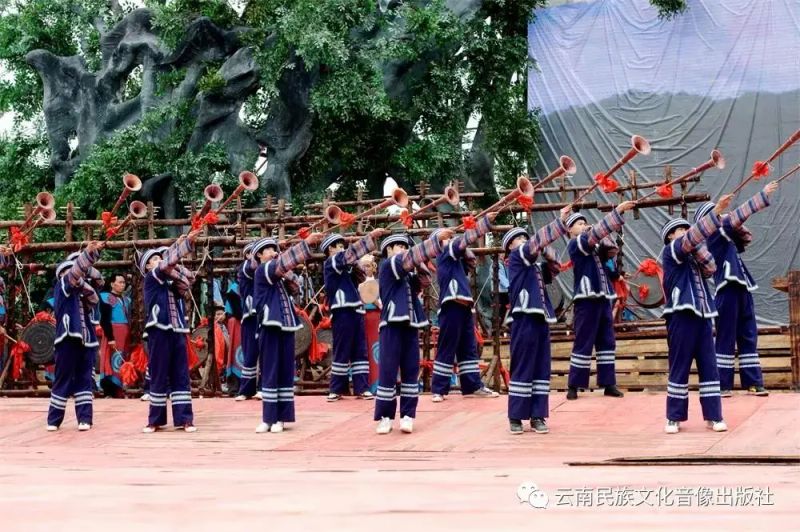
Figure source: “victoral public number of the yunnan nation cultural audiovisual press”
Some of the bui women are also uniquely dressed in fine pretenses and tattered “fakes”. A variety of processes, including wax dyeing, dyeing, flower picking, knitting, embroidery, etc., are present in one body。
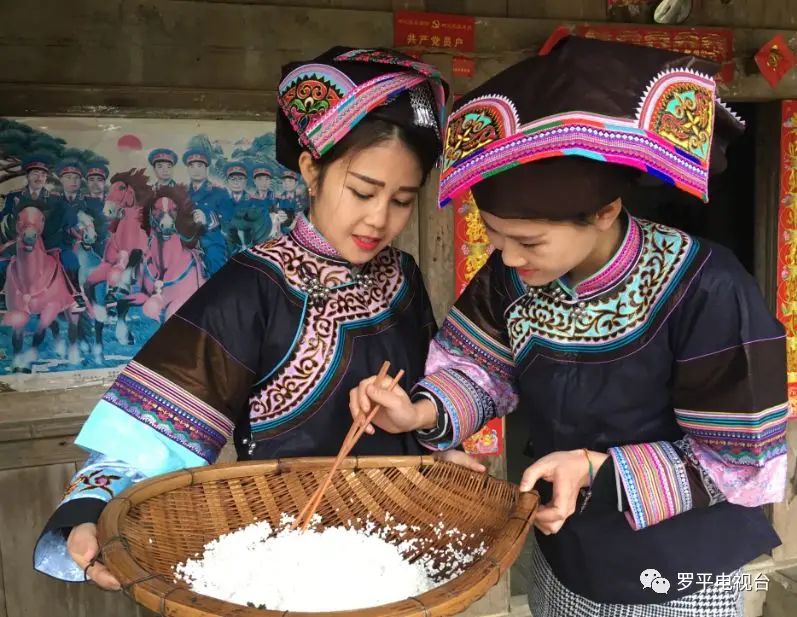
Figure source: “loping launch”
Achange
The achan ethnic group is concentrated mainly in the village of zhuanzhou, in the dhuntung ethnic group of yunnan province, and in the towns of zhonggang and kyushu. The achan ethnic group in liang county is predominantly agricultural, and women generally produce their own clothing in accordance with traditional technology, so that their ethnic characteristics are more fully preserved. The achan handicraft industry is relatively well developed, and dressmaking is influenced by other ethnic groups, who have taken advantage of the local silver handicrafts by adding a lot of silver to their clothing and changing its colour, material and shape。
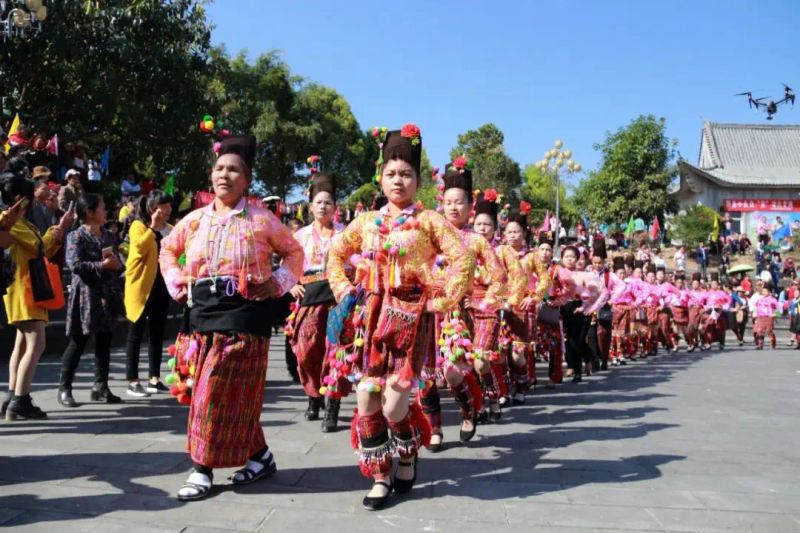
Image source: "dehong man brigade"
The blades are the objects of the men of the achan ethnic group and, until today, the children of the achan group will wear the achan knife and will be handsome and powerful。
Pumi
The pumi are concentrated mainly in the ramang pumi autonomous district of the jaejiang autonomous region, the ningjian autonomous district of lijiang city, the yulong nassi autonomous district and the visij autonomous district of the di gyeongxi autonomous region. Pumi dress is white. The pumi people in the langangs and others are used to wearing white-haired shorts, white-skinned shoulders, white-skinned legs, and the pumi women in the ning-ting region love to wear a white-skinned coat and a long skirt. The pumi men's clothing consisted of long-haired collars and coats, which were often worn between their waists。
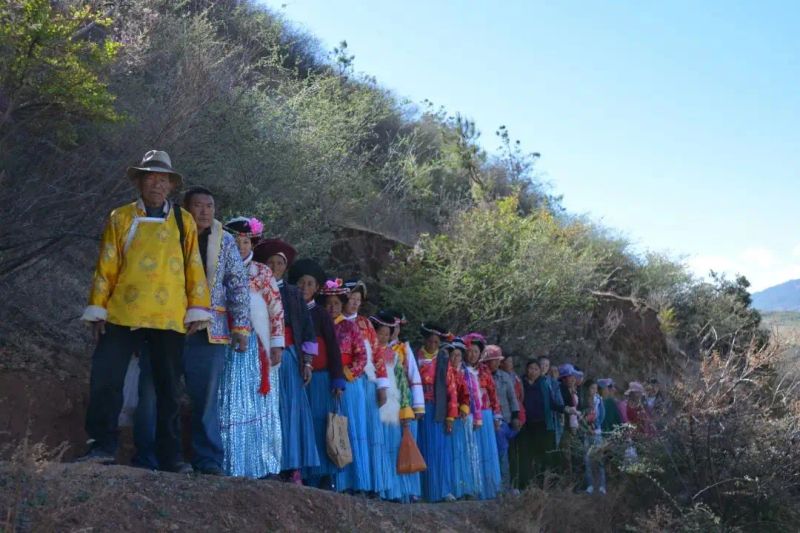
Image source: “lijiang wen brigade”
The pumi shawl is made of white goat skins with decorated furs, furs, emeralds, seashells, manaus, etc., high-end atmospheres, warm luxury. The belts are self-weaved fine crafts, weave and weave, both for men and women, and are attached outside the long shirt. As a result of the time and hard work invested in the weaving process, girls often gave their own hand-weaved belts to their boyfriends as tokens。
Mongolia
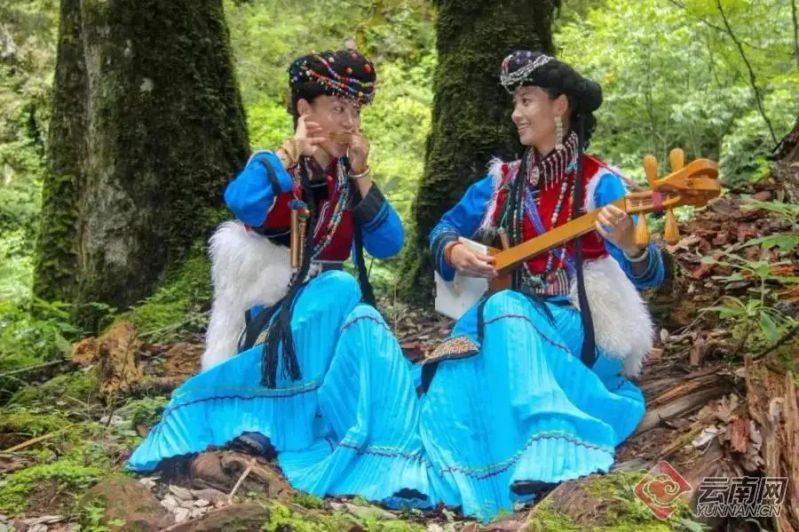
In yunnan, the mongolian ethnic group is concentrated mainly in the hinmong mongol commune of tunghai county, yuk creek. Mongols women in yunnan have special features in their clothing and head coverings。
The first is a set of three coats, the first of which is a high-collar, sleeve-to-hand, long-dress and ass; the second one is in the middle without a collar, with the same sleeves, long clothes as the first one, wearing the same cuffs of the time and between the elbows and arms; the third one is a shirt with no sleeves, a shirt with a shirt on the waist, a thong of silver, which is different in sizes on each side, a belt on the waist, a fine picture of the top of the sleeve, high-collar and waist belt, and three clothes with the same lengths, followed by a pretty look on the back, and some styles of the northern mongols' clothing are preserved in this dress。
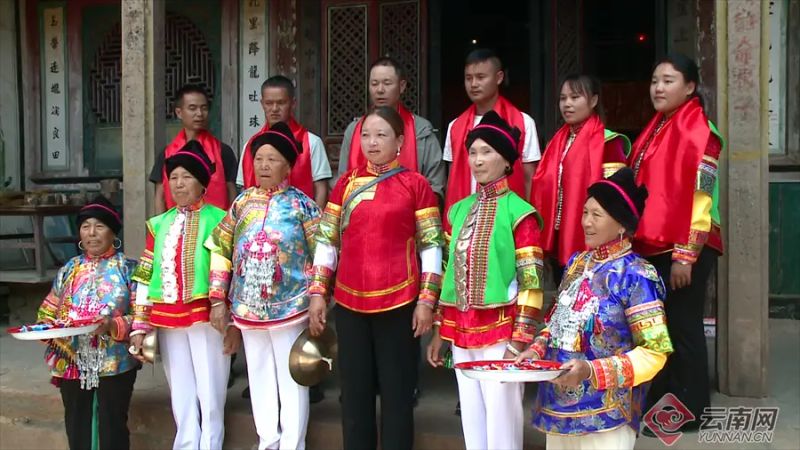
Mongol dress in the hinmong mong commune of tonhai county, yu creek
Yunnan mongols women's heads are also known as “triple water”, and shoe jewellery is also highly specialized in three forms: girls, young women and middle-aged and elderly women. In the case of adolescents, they wear crown hats, with two braids around them and red tails. A woman who is married is not wearing a hat and has her head wrapped around her head. After the birth of the child, their hair will be all over their head and covered with a headpan。
Angers
The angry ethnic groups are mainly located in yi shui city, fugun county, ryon autonomous district of goonshan, lampyong pumi autonomous district and visi傈僳 autonomous district of di gyeongxi autonomous region. The fury prefers to weave stripes similar to the one-long carpet, with two sackcloths in a dress. The man, with his swords and swords, appears to be a man of the world。
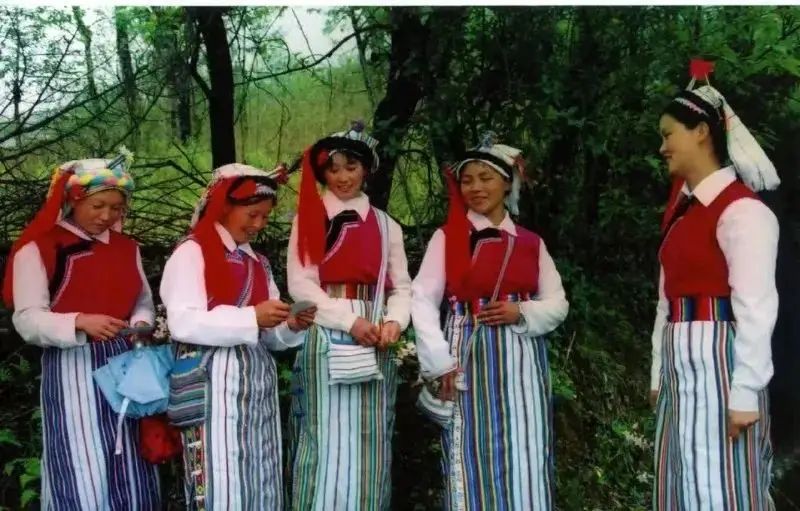
Figure i: directorate of culture and tourism, ruijiang county
Haebe was an ancient currency in circulation, and in order to keep it safe, angry women prefer to tie their shells to their heads. Angry women's heads are usually made of semi-lunar beads made of corals, sea bees, etc. Commonly, a large round shell with a diameter of about 5 cm is worn on the chest, while a number of coloured beads of varying lengths are attached to the chest or on a tilt。
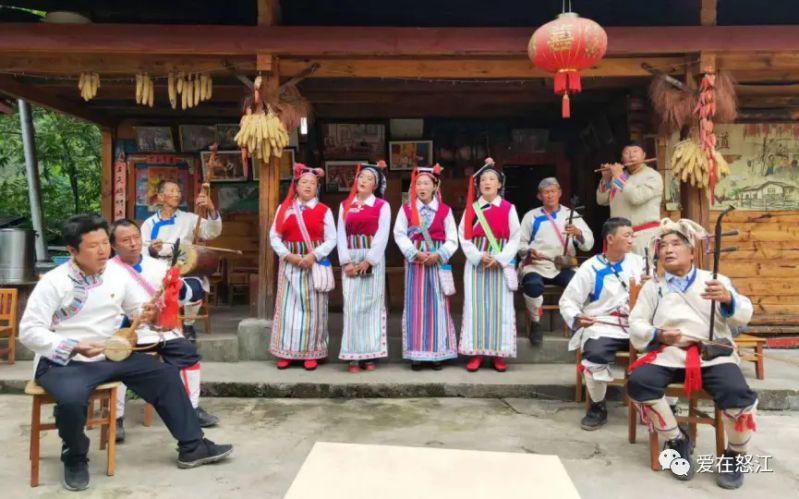
Figure source: microtravelled rivers of wikimedia commons
Kinos
The kinnos are one of the yunnan ethnic minorities and are concentrated in the kino shan kino commune of the city of zinghong, the western bizon autonomous region. The men of the kino ethnic group generally wear sackcloth shorts with no collar and long sleeves, with black-covered, orange, yellow and white embroidery pattern “perfore-marked” on their backs and under their sackcloths。
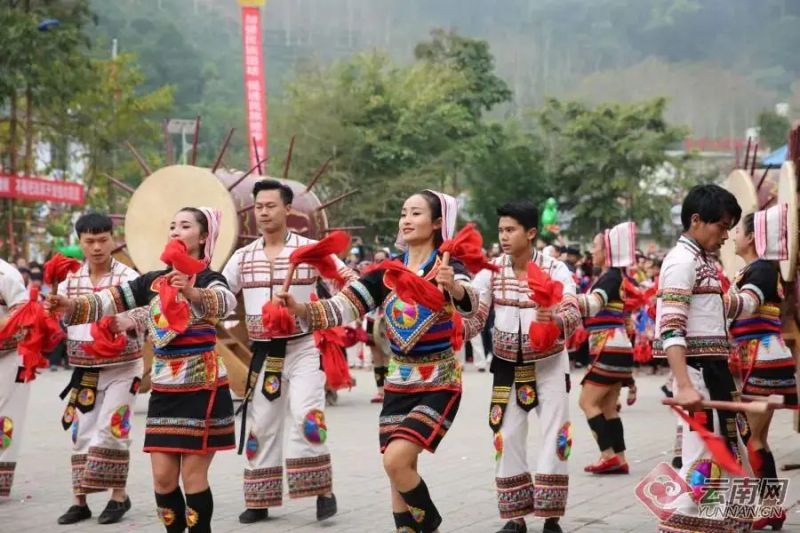
Women of the kino ethnic group wear a coloured dress, called the “rainbow clothes”, a flower-picking chest with fine drawings on their chests, and the essential tattoos on their chests are folded, which is about the transformation of the thiopee, representing the creation legend。
Deang
The deon ethnic group is mainly located in the tehon-tung zhuang autonomous region, the city of paoshan and the city of poo-chang. Deon women in short skirts are distinguished from their waists. The waist is both an expression of age and a symbol of beauty and a token of love for young men and women。
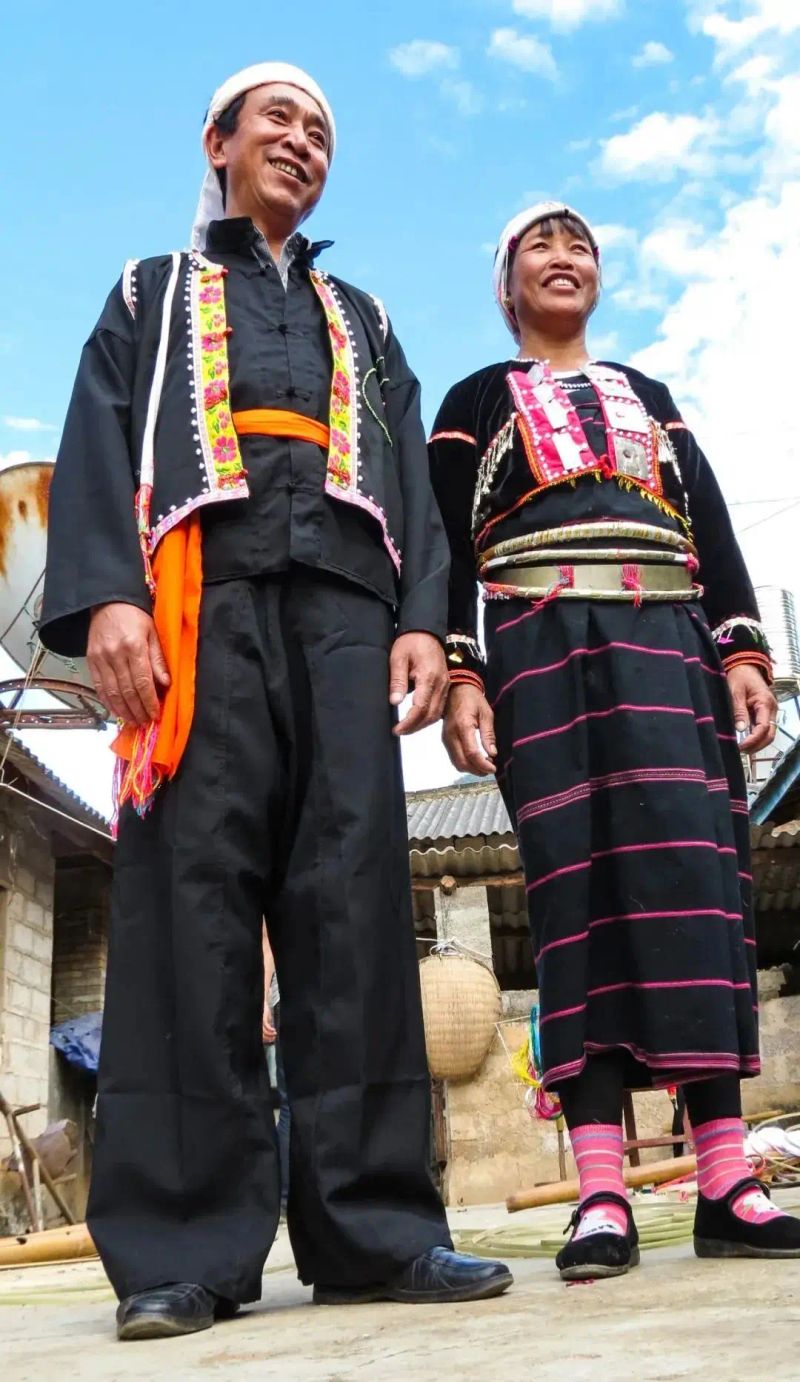
Figure source: "hingchun is at its end"
The deon ethnic group, both male and female, prefers to decorate many red-styled fluff balls in wraps, shoulders, heads, cribs, buns, etc. The stars of the different colours respond to each other, and lin's eyes are full of light, which makes the black blouse so glamorous that it is the deon's most proud and beloved decoration。
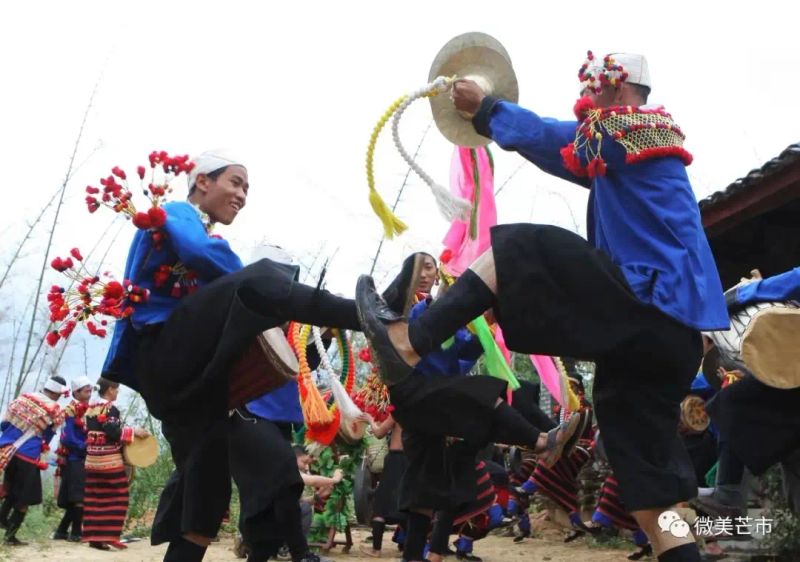
Figure source: micro-community news public number
In addition, women of the deon ethnic group have fine grafts engraving them, usually for deer, bird, weed and geometry, made by their own highly skilled silversmiths。
Water
Yunnan's aquatic communities are mainly concentrated in such areas as gudang aquarium and yellow mud river town, in futeng district, tuang city。
Kodang aquarium, kudang aquarium, kutang city, kutang city
The aquarium is predominantly black, with black heads, wide-sleeves, black skirts or black pants, and women with a black apron on their chests. They are all black, but they are not bored because of the velvet edges of the chest and sleeves, which have a bright spot in the bottom of the black, and they have a stymied image。
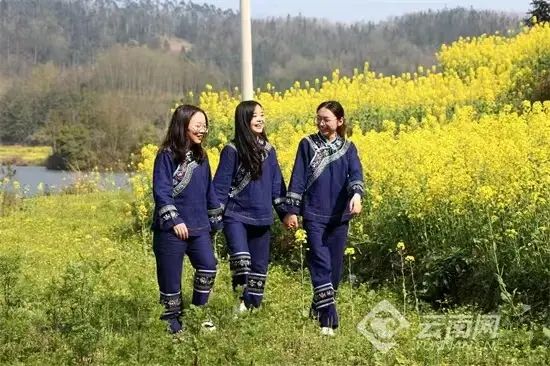
Aquatic women wear black or square headscarves on a daily basis, but are dressed differently: a silver crown with a "out" shape, with silver flowers, silver chips and chains at the bottom of the crown. The upper half of the body is made up of a moon-shaped collar, a chain of silver and silver bells。
Aquarian men usually wear blue pairs of panties, with shorts and long pants, and have blue or black headscarves on their bodies and waists, and sometimes have to adorn them。
Population
In yunnan, the manchuria are concentrated mainly in the luyang district of paoshan city. The traditional mandarin dress is more typical of long-shirts, initially worn on horseback, suitable for both the need to ride and the cold and widely used. The woman's dress is covered with a wide robe, a “two heads” comb, a black fan crown, and her feet are covered in high-heel horses or bouquet-bed embroidered shoes. The tiara was broader in the early stages and later narrowed down, with both sides opening up higher。
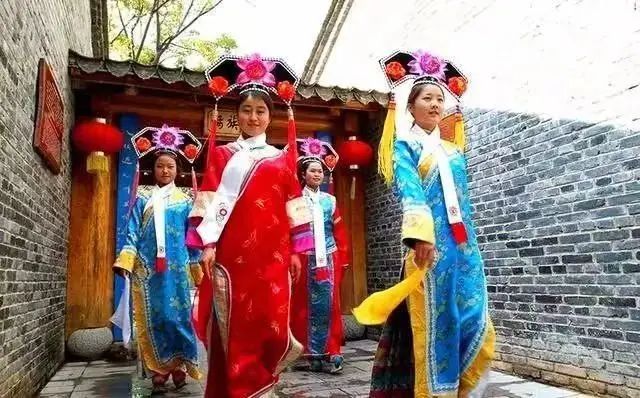
Man-cooked clothing in the village of quilang, poushan city
The tiara is full of words, and the man wears the tiara, which is easy to ride, and the woman's tiara is covered with flowers or tiaras on her skirt, neck, sleeve, etc。
Independence
The zilong are concentrated mainly in the zilong river river valley, which is located in the zongshan zilong autonomous district of goonjiang. Since ancient times, the women of the quil long have used their waist machines to woven linen into blankets, laced in pieces and slashed over them. Now, the uniracian men, women and children are dressed in all kinds of modern clothing, but the warm and unscathed “one dragon blanket” is still their favorite。
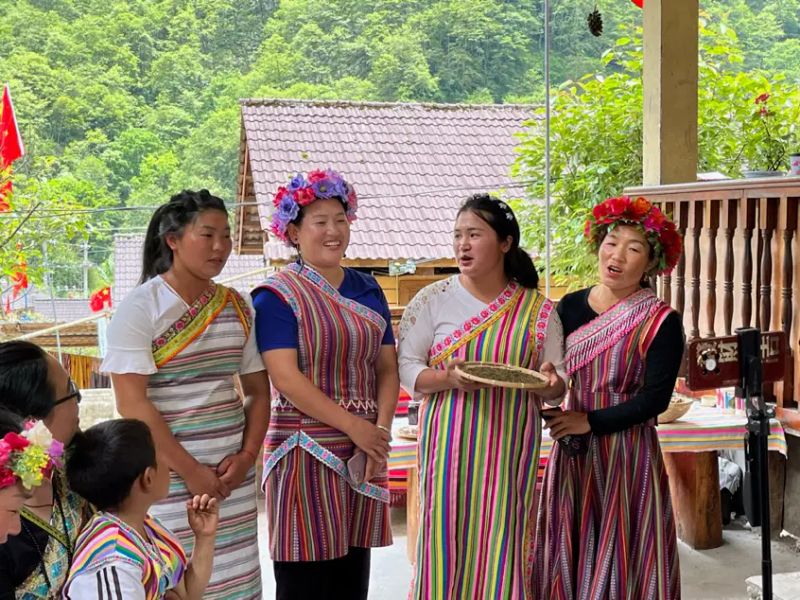
Tsai-ree
The one-on-one blanket is a symbol of the monologue, dressed during the day and given at night. The only dragon women are woven, starting with skin peeling and tan lines, all hand-made and made up of large, broad blankets that are easy for men, women and children to wear, easy to wear and easy to hide。
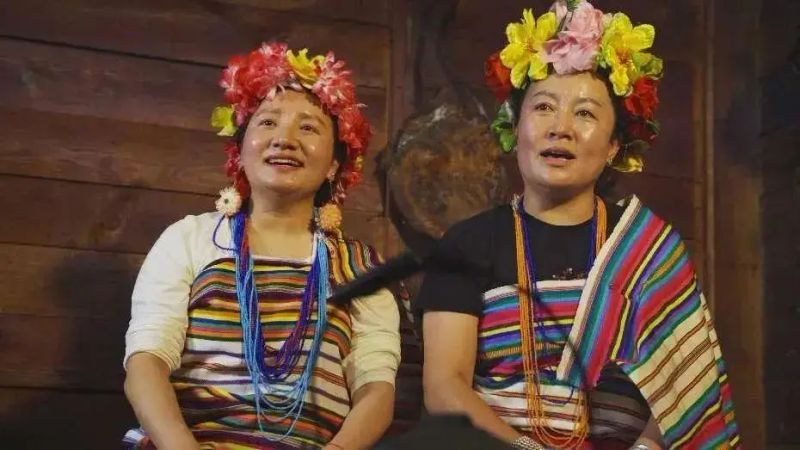
Source: yunnan province local codification commission office
Influenced by geographical differences and time developments
The dress of the same minority
There are differences in size or size and detail
But it's a symbol of a beautiful inner core
And the fine fashion
It's the eternal theme
Cover emoticon package
I'm sorry









