According to the jcj, on november 11, the famous japanese dairy brand, mingji milk, was detected in the product and announced the recall of about 45,000 bottles of bottled milk。
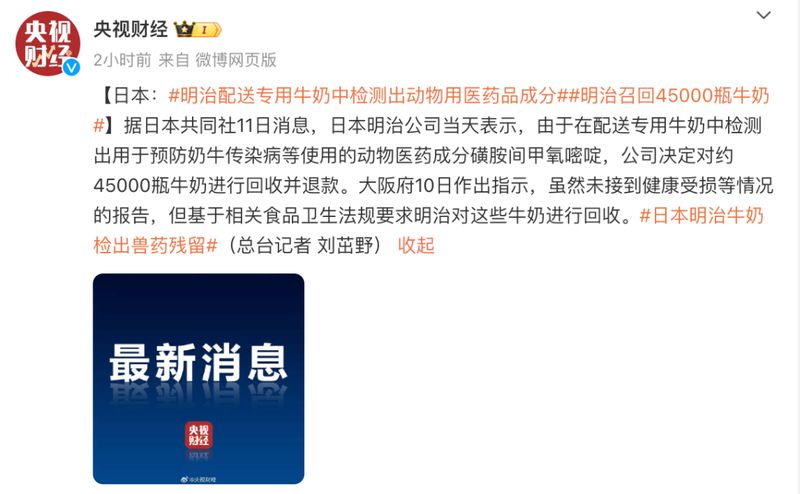
It has been reported that this veterinary residue, known as sulfamide methamine, is often used for the prevention or treatment of infectious diseases such as cattle or pigs. Since the substance may remain in the emulsion and have adverse effects on the human body, it may not be used in animals for 72 hours before milking, in accordance with safe production regulations。
The remaining milk was found to have been produced by the kansai factory in the mingji dairy industry, located in the city of baeng, osaka, mainly for 180 ml bottled at door。
Local time, on 6 november, during an inspection of the factory, the local government discovered the residue of veterinary medicine and ordered migi to recall the issue product in accordance with the relevant food safety regulations。
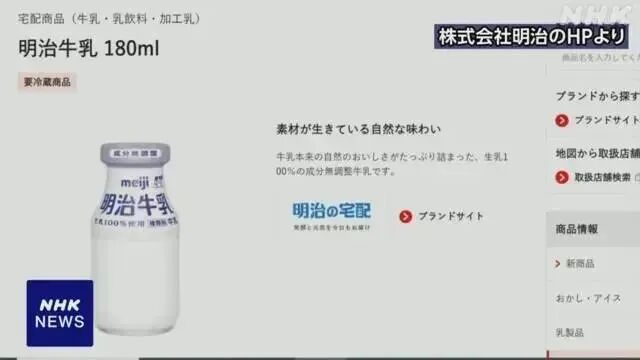
To date, about 45,000 bottles have been recalled. However, as a result of the preservation period of the problematic product as of 13 november, the product has now been sold to various regions of western and central japan。
On 11 november, the migi dairy group announced the recall of products and stated that the raw milk and production process would be thoroughly investigated to prevent similar incidents。
In its bulletin, the company argued that there was no evidence that there was a significant risk to the human body from residual sulfadoxine。
In response, some netizens said, "it's over, it's best to drink it..." and "no more to buy the brand."

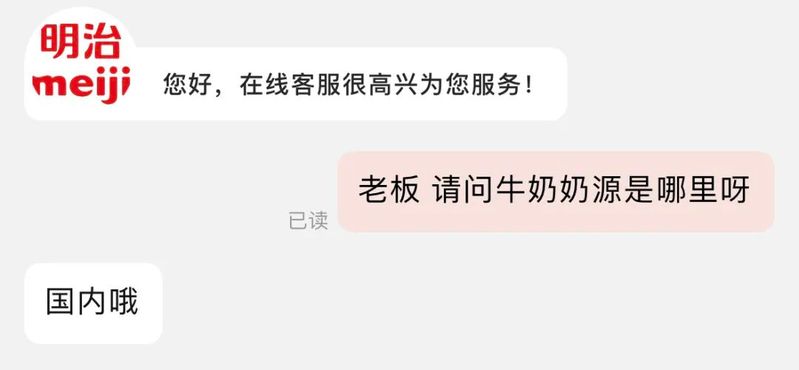
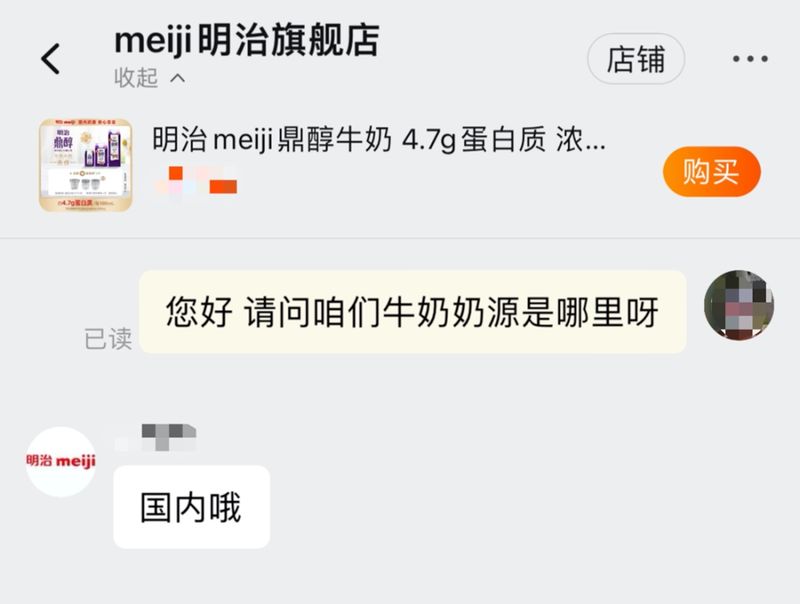
At the domestic level, the customers of the miki shop at two electrician platforms stated that mingjie was a japanese brand, but that its products were domestic milk。
It is worth noting that this is not the first time that the japanese milk industry has been detected as food safety。
According to ongwan, before that, the japanese milk powder was detected as radioactive. In december 2011, mingji milk corporation of japan announced that it had detected radioactive caesium at 30. 8 beckler/kg content in a can of 850 grams of “mingji step” milk powder produced for sale and that it would recall 400,000 cans of infant formula powder in japan for free replacement. However, the chinese market is not included in the free replacement scheme. According to mingjie dairy china, all domesticly sold milk powder outlets are produced in australia and have nothing to do with japanese milk sources。
In one case, caesium was detected in milk powder for the first time since the accident at the nuclear power plant. Although the caesium content did not exceed the ceiling set by the japanese authorities, it reduced domestic consumer confidence in japanese food. As a result, market ownership in the mixil dairy industry has declined sharply。

In may 2023, mjc published its fiscal year performance as at march 2023. Of this amount, china's operating income was 21. 4 billion yen (approximately 1. 1 billion yuan), representing an increase of 2 per cent in the rmb. Since 2021, mingji has increased investment in the chinese market. Mingjie expects to increase sales revenue in china by 36 per cent to 29. 8 billion yen (approximately 1. 538 billion yuan)。
Fortien city media center