


The article summarizes the six broad categories of pricing strategies, which are analysed and studied together。
A complex world of prices exists before every operator. Prices are one of the sources of product glamour, and they play an invaluable role in attracting consumers, enhancing competitive advantages and shaping good images。
Prices are an important means of competition, and if products fail in price strategies, they can have a direct negative impact on product competitiveness, firm profitability and dynamism. Prices can be said to be the most competent weather forecaster in the market, which always reflects the market with sensitivity。
Thus, finding appropriate pricing strategies for their products in a world of tumultuous prices has become a realistic topic that needs to be explored in depth。
First, the authors summarized the following six categories for common pricing strategies:
The rapid occupation of markets is based on “infiltration pricing”; the privilege of the first crab eater [slubber pricing]; the dichotomy of the indoctrination [assembly pricing]; the money field, the money field, the price discrimination; the old jealous new dress, the demand-supply balance [dynamic pricing]; and don't trust your eyes。
Please allow me to join you, enjoy
Permeability pricing concept
Infiltration pricing is the entry of markets at low prices, with as much as possible in terms of quantity between price and amount. It enters the market at a lower product price, with the aim of accelerating market growth in the short term, at the expense of a high level of māori with a view to obtaining a higher volume of sales and market occupancy, with significant cost-economic benefits。
The disadvantages of permeating pricing are, on the one hand, difficult to project an image of quality products and, on the other, to influence the return on capital. There are, however, several notable advantages: first, that products can quickly occupy markets and gain a long-term stable market position through mass sales; second, that micro-interests prevent competitors from entering; and, lastly, that low-price strategies also contribute to boosting consumer demand。
Cases

1. Mi
Once introduced, it gave the impression that a large number of users were branded “high-performance, low-price” and that the flagship aircraft only sold 1999 dollars, while the millet 2a and max were down to 1699, 1499, not to mention the lower-level red rice series. On the one hand, mi labels his cell phone-fevering friends through her own thick community genes, in the context of such competitive price escorts, so many soybeans, quickly taking over the market, and then, thanks to the growing sophistication of production and research systems, the unit cost of mobile phone production and distribution decreases with the accumulation of production experience, which can be described as the perfect implementer of penetration pricing。
2. The “9. 9 bag of mail” type
It is estimated that it would be a loss to sell only one of these products to one person, who, in fact, have very low unit prices, but very high individual prices, which combined to make money. That's what makes money。
By the way, what's the unit price? What's the price
The unit price of the goods is the price per se of the goods (e. G. $10 for a pair of socks) and the price per customer is the price of a customer's offer (e. G., it costs $30 for a person to buy three pairs of socks at a time)。
Some businesses may not earn money in the early stages, but their activities attract a large number of people, raising their visibility or boosting the sales of other commodities in their shops. For example, using a five-dollar diet, at a price of $69, a cut of $65, a four-dollar national package, plus good cash returns, it rushes to tens of thousands, takes the number one key word and searchs daily for 25,000 visitors to the baby. The sale of 800 to 1,000 units per day (at a price of 69 yuan) was returned within five days of the loss of the previous period。
3, 360 anti-virus software
Infiltration pricing is free of charge. In another word from the thunder force, internet companies never fight price wars, and we are free of charge。
When zhou hong chong chong started working on the security software, it was the three previously hard-to-reach mountains, rao xing, kimshan and jiangmin, that were being pushed directly free of charge and led to a free trend in the drug-killing industry, with 360 safety software filled with computer terminals. 360 is free because they have two fees and do not need to be paid by users。
Apply scene
If a particular product meets the following:
There is sufficient capital support; the number of users and frequency of consumption of such products is large enough; consumers are price-sensitive rather than brand-sensitive; and the cost of each product can decrease significantly, depending on the volume of the product, with a clear marginal effect。
Such products can then be marketed using permeable pricing。
At the same time, many of the red sea features are consistent with the above. The average red sea is large enough to keep prices low, and firms with low-cost core competitiveness are able to survive well in the market; consumers in the red sea market are price-sensitive and low prices can be favoured by consumers, so they can be red; and products in the red sea market tend to have a scale effect, and through volume expansion costs can be reduced continuously。
Leather pricing concept
The original meaning of blubber is to extract the fat on milk, which means extracting fine. Instead, the so-called lipo-pricing, whereby a business pushes new products to the market, uses some of the consumer's new spirit to set a high price, recovers investment as soon as possible and earns considerable profits before competitors develop similar products. Then, over time, the gradual lowering of prices has allowed new products to enter more resilient markets。
Strengths
Short-term profits can be maximized to take advantage of the benefits of high prices, enabling firms to recover investment quickly at the beginning of the new product's listing; high prices can be used to control the growth rate of the market, allowing production capacity at that time to be sufficient to meet demand, to mitigate supply and demand conflicts, and high profits at higher prices can be invested to gradually scale up production to match demand conditions; there is greater room for price adjustment, with greater room for price adjustment when their new products reach maturity, and the competitiveness of the enterprise can be maintained through gradual price reductions; and the brand image of high prices and quality can be easily shaped。
Disadvantages
The demand for high-priced products is limited and excessive prices are at the expense of a certain amount of sales; it is simply an invitation to invite competitors, imitation products and alternatives are available in large numbers, forcing prices to decline sharply; prices are much higher than value, to some extent damaging consumer interests and inducing public relations problems; it is difficult to define how high prices are. Cases
1. Iphone x
In contrast to the previous version of millet, the newly listed iphone x has been typically priced as lipo. In the case of sales in the chinese market, for example, iphone x was sold at a retail price of rmb 8388 in the official apple store, and the cow market was sold at a price of rmb 8388. Even for many years of pollen, it was a high-priced product, but on 3 november, the first supply was sold out. Apples have been successfully and repeatedly priced, and it is foreseeable that, as the iphone x heat drops, there will still be a new machine-type stimulant powder purse next year。
2. Limited sneakers
From official jordan to yeezy, to a combination of off-white, these products were launched in a limited roller, with a large amount of sneaker's appetite, and if you want to taste them, it will cost much more than their mere value. At the same time, there is no lack of faithfulness in the size of the shoes, and this group is relatively unsure of the price and can essentially maximize the benefits of each shoe. Then, with the passage of time, the old shoes will rot on the street, where the factory will introduce various records of “new”, such as “fasting”。
Apply scene
The environments suitable for such a strategy are:
There is a pool of consumers in the market that have strong purchasing power and are not sensitive to prices; products have a clear differential advantage and few other commodities can be replaced; when competitors join, the enterprise has the capacity to shift pricing methods and improve competitiveness by increasing value for money; the brand of the enterprise has the impression that high-end products in the market must support high prices; and the cost of producing small quantities of products cannot be as high as offset the benefits of setting high prices。
Where the above conditions are met, enterprises may adopt a lipid pricing method。
In industry, the use of lipid pricing is common in industries that are less competitive. Branding is often the most important precondition for lipo-pricing, and apple, as described above, meets the above five conditions, so it has been successful. In some industries, the purchase of products or services is not a one-off one-time exercise, and in many enterprises it is continuously priced, once and for all. This pricing approach maximizes the benefits of enterprises, but once competitors who have adopted new pricing methods have emerged, or when consumer purchasing habits have changed, the pricing approach is in jeopardy. It is important for enterprises to understand that, even if they succeed, they will soon become out of place as a result of increased competition. What they need to do is to be sensitive to changes in the market and to take the initiative to come down the high steps of skim pricing, or they will pay a huge price when competitors adopt permeable pricing when products are close。
Portfolio pricing concept
Portfolio pricing refers to pricing methods that, when setting prices for complementary and related products, match some of the attitudes of consumers and set prices higher or lower for some products to achieve overall benefits. For example, consumers are more sensitive to the price of demurrage, high-value products, and vice versa, to the price of cheap products. Some, by lowering the price of the former and raising the price of the latter, would benefit each other from both sales and increase the total profit. It needs to be noted that high and low prices are generally inappropriate for frequent changes to preserve the consistency of price policies in consumer perceptions。
Specifically, the common portfolio pricing categories are as follows:
Product line pricing: the design of products with different functions and qualities, such as car configurations, depending on the different types of consumer needs; by-product pricing: pricing using different parts of the same product with different values for certain consumers; binding pricing: combining several products for sale at a price lower than the total at the time of the respective sale, with the core being expensive to buy a single product, but cheap to buy a package, such as a single spot and a set that is common at meals; alternative pricing: that is, the provision of major products is accompanied by the provision of alternatives. The main product is cheap and alternative products are expensive, such as barbecues and beer prices; ancillary product pricing: similar to a two-part fee, the product is free of charge but a cost for consumables, such as printers and cartridges; step-by-step pricing: from free to fees, from fees to more fees, such as park tickets and extra fees for special projects after entering the park; and single pricing: by grouping a combination of goods of close value, consumers avoid thinking about prices and comparing, such as a $10 shop. Cases
Corresponding examples have been given in the conceptual part of the preceding section for several common types of portfolio pricing。
@zhoustart: an interesting example of mcdonald's single and combination pricing, available at https://www. Zhihu. Com/qastion/28587559
Apply scene
The use of portfolio pricing may be considered when the following conditions are met:
Consumers have different functional and quality requirements for the same product; dependent on the essential and high frequency of consumption of subsidiary products belonging to the dominant product; products can be priced in combination, and the products are tied to demurrage through preferential sale
In addition to the above scenario, a combination of pricing methods, such as the rational identification of high- and low-priced areas, is acceptable to consumers。
The concept of price discrimination
Price discrimination usually refers to different sales prices or tariffs applied by providers of goods or services to different recipients when providing goods or services of the same grade and quality. Generally, if all consumers have sufficient knowledge, there is no price difference between products of fixed quality units. Because any salesman who tries to sell a product at a higher price than the existing market will find that no one will buy them. However, price discrimination is common in certain specific contexts。
The author travels frequently to and from zinjing, and every time he leaves a railway station, many drivers pay more than the foreign accent and young ones; it seems appropriate to leave often。
This traditional price discrimination is also a price-fixing exercise for the same goods. But this approach is unsustainable and has many negative implications。
"i'm gonna get out of the car and i'm gonna find myself killed, and i'm gonna get 30 bucks when i turn."
Traditional price discrimination is based on the use of information asymmetries, which are relatively short-sighted and unsustainable. Most of the fruits of the current price discrimination against this seed are price differentials acceptable to several consumers through “how much to pay”. Specifically, we conduct a detailed analysis in the later applicable scene。
Cases
One, cabbage, delivery
Do you remember when the o20s and the car wars were all kinds of coupons? One of the students might ask, "we've taken advantage of the coupons. How can we be discriminated against?" it's different from "important" and "cost" for each user。
(1) amount of coupons
We all know that the average coupons are not fixed, that i may be lucky enough to get $10, or that i may be lucky enough to get a few cents, but is it really about luck? Not at all. The author was once fortunate to be a small participant in the o2o money war, given that the pool is, after all, capped, and that a reasonable burning of money became a topic, when users were divided into “old users”, “sleeping users”, “single-product active users”, “new users” etc. For a faithful old user, the size of the platinum did not affect the decision-making of that group, so they were always “lucky” when they robbed the platinum; on the contrary, he was often “lucky” for a new user of our platform. This is price discrimination through [the degree of importance]。
(2) sharing of coupons
Now that we're done with the car or after the take-out, if we share it in the circle of friends, we'll still get the platform coupons. By the time i consume, i get more concessions than people who don't have them, because they're different。
2. Air tickets, film tickets, tickets and tickets
(1) air travel business class, business class
Is it always suspected that business needs are the first to have these rows of business class, or is it the first to have business class? Business class and business class were set up by aircraft at a small increase in cost, but profits were multiplied, and the cost of business class tickets doubled on the same flight。
(2) first screening tickets
The premiere film is not much of a colored egg, but it is more expensive than the average ticket price, which takes advantage of price discrimination caused by [sequence] differences。
(3) children's, students', adult, elderly, members tickets
As is often seen, children below 1 metre are free of tickets, half-priced student certificates, full adult prices, public transport cards for the elderly and membership fees for various online and offline shops. Although politically correct human beings are not the same, such operations actually take advantage of different [classical] price discrimination。
Apply scene
As mentioned earlier, the simple use of “information asymmetries” to discriminate against prices would make consumers rather angry if they found out, and would not want to be fooled in that way again。
But is price discrimination really so "absolute"? In fact, it is not always possible to obtain answers through the preceding examples。
The traditional approach does not work, so let's take stock of the circumstances in which price discrimination can be used to win-win buyers and sellers。
“retention of key people with limited resources”
Price discrimination [of importance] may be imposed on different consumers by varying levels of product dependence, or by differing levels of importance to companies。
2. “the number of people who work is greater and the number of people who pay is more favourable”
If you want to enjoy low-cost consumers who are willing to pay costs other than “money”, such as time costs, human connections, etc., you can discriminate at different prices by [costing]. It is important to note that such payments must be simple and operational。
3. “priority is valuable, and there is an inherent consensus”
Price discrimination can be achieved by [sequence] when the freshness of the product is of value。
4. “incomes more and vulnerable groups less”
Price discrimination occurs through [classification] when there is a clear hierarchy among the target groups for product services. It is important to note that the class here is not defined subjectively, but needs social consensus, such as the elderly, students, members。
5. “give price-sensitive persons a preferential opportunity to retain them”
When products want to retain price-sensitive people, they can release opportunities to form a low price. When a discount product is introduced every day, it is a price discrimination through [opportunity competition]。
Six, "b'll cost more."
Unlike the product line pricing mentioned in the previous portfolio pricing, where there are qualitative differences in products, the production costs of homogenous products are often very different, except through detailed classification of categories and levels, which result in price discrimination [of a product of the same quality]. Is it really expensive to see the skins of various kinds of games, such as dota2's toes? G fat paid me back
Dynamic pricing concepts
Dynamic pricing refers to a strategy by which an enterprise can sell the same product to different consumers or to different sub-markets at different prices, depending on market demand and its own supply capacity, in order to maximize gains。
In fact, dynamic pricing is not much of a novelty, for example, because vegetables become expensive by winter, because there is less supply and, like rising house prices, because there is more demand。
Only in the age of the internet, this “dynamism” is made more real-time and agile by the increased computing power of data combined with a variety of algorithms. It remains true that the rules for dynamic pricing are still determined by the market (supply and demand) as “unseeable hands”。
Let's take a look through a simple trend map, where:
Orange lines represent demand trends, with lower prices and increased demand
The blue line represents the supply trend, which increases as prices rise
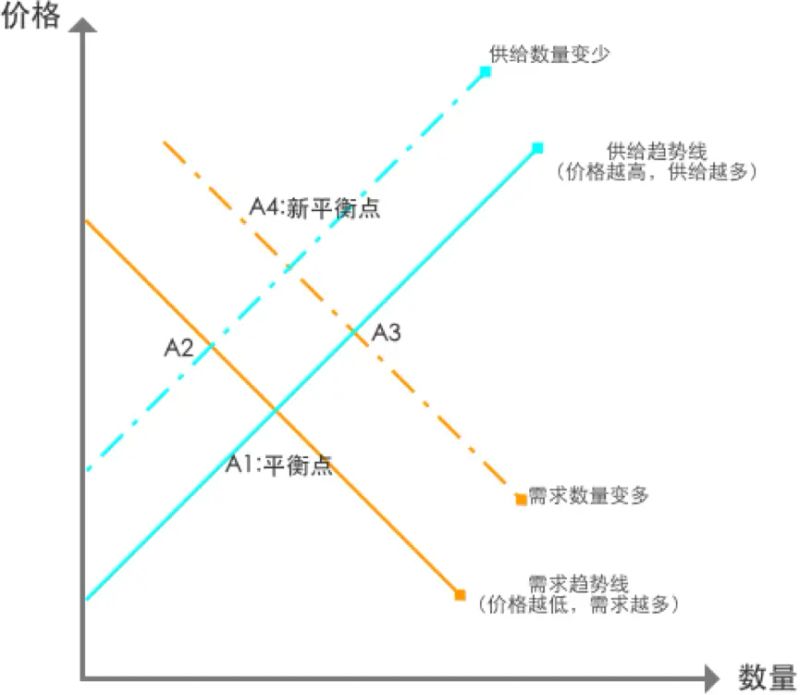
In summary, dynamic pricing is in fact a process of re-establishing the balance between supply and demand in the light of changes in market demand and supply capacity。
Cases
As an internet practitioner, the hottest dynamic pricing cases in recent years are going to count uber, and we're going to analyze the uber case。
First, is there something unique about uber's dynamic pricing
The difference is that most industries that use dynamic pricing have stocks, such as aircraft that take off, the performance starts, and time is empty, and that part of the revenue is lost forever, so they have to sell their stocks as quickly as possible, so traditional dynamic pricing is adapted to supply。
Uber is different. At times when people are in the strongest need for a ride, it is often precisely when drivers experience less pleasure and even higher risk factors, such as early and late peaks, such as wind and rain. In these cases, without incentives, the number of drivers on-line will naturally decrease. Thus, the particular distinction between uber pricing and other industry practices is that it mobilizes supply。
And then look at uber's dynamic pricing model based on “balance supply and demand” incubation:
1. General dynamic pricing
Logical basics refer to the supply-demand balance map, which goes in the middle of hailing when a certain area is stormy. In order to stimulate more drivers to come here to provide their services, dynamic increases in the cost of the car are applied, the number of empty cars increases and ultimately the balance of supply and demand is balanced with higher costs for the surrounding regions. The essence is that people react to incentives。
2. Individualized pricing (in fact using price discrimination)
In order to achieve a “measurable customization” of each region, uber has developed a large-scale econometric model and database that quantifys relevant variables such as passenger/driver sensitivity to prices, waiting times, etc. In different regions, and adjusts algorithms immediately to changing market conditions。
By way of illustration, when a passenger calls a car, uber estimates the mileage and time in advance and generates a single price for the car, combined with a dynamic increase factor. The spread of a single price, on the other hand, has greatly expanded the product space of uber in terms of pricing, allowing for different pricing strategies for different users based on user information that uber knows about。
In sum, dynamic pricing is based on their 100 per cent belief in the invisible hand of the market, as uber himself put it, “the premium is not planned, but based on a dynamic balance between supply and demand”。
Think
The context in which dynamic pricing is applied is not exhaustive, and as long as it involves balancing supply and demand, it may be considered appropriate。
More worth discussing are the related issues arising from the use of dynamic pricing strategies。
In fact, airlines, hotels, and so on, why is uber so reacted? I think it is because of the asymmetry of information between the two sides, on the one hand, that drivers, at their peaks, can learn and choose which region to raise and choose through the information provided by the platform and their own experience; and, on the other hand, that passengers cannot judge the number of drivers available in the region, but rather that an algorithm determines the price behind the scene。
The increase in prices in times of difficulty in using a car would allow people to transfer complaints about a driver taking advantage of a robbery to a company. As a result, some travelling users simply stopped passing through uber, out of mistrust of the platform。
Thus, if we want every taxi driver to be able to get a cab, this option is clearly not achievable。
It was felt that the above-mentioned situation did not allow for a complete shift to dynamic pricing, and that uber's application of economics principles was no exception. But can the application of balancing supply and demand be achieved one step ahead of schedule through the empty car? Let's not wait until we get to the point。
The uber could advance on the basis of large, real-time data, modelling, optimization, empower the system to estimate demand, identify the time and location of the highest returns and make recommendations. If cars can be moved ahead of schedule from a region where demand is greater to a region where demand is smaller, this will also improve supply to the overall market。
From the point of view of moving out of uber, of course, it is more “corresponding” in terms of balancing supply and demand to satisfy everyone's travel needs。
The psychological concept of pricing
The price-fixing approach here is to psychologically make consumers more receptive to product acceptance and price acceptance by means of tail count, comparison, split, wording, substitution, etc., in the case of price fluctuations。
Cases
1. Less 1 decimal places
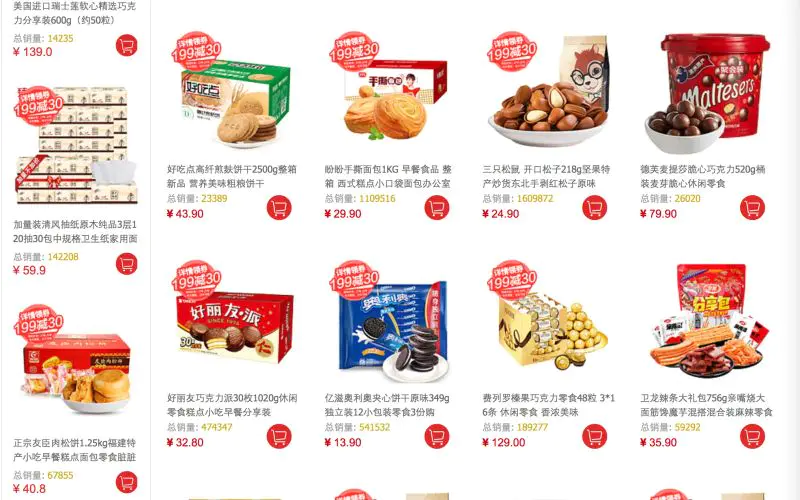
What is now accepted as online payment is no longer painful, making it easier to adopt a “minus one” strategy. As shown above, all kinds of xx. 9 are to be seen. Similarly, it is not difficult to understand why nine, nine, instead of ten, packages。
2. Breaking the impression
In fact, there is no price for anything that is accurate at the outset, and most of our expectations about prices for certain kinds of things come from our subjective impressions。
In other words, when you give a reference price, people tend to judge your price as high and low。
(1) detachment of various types of fees from the exhibition
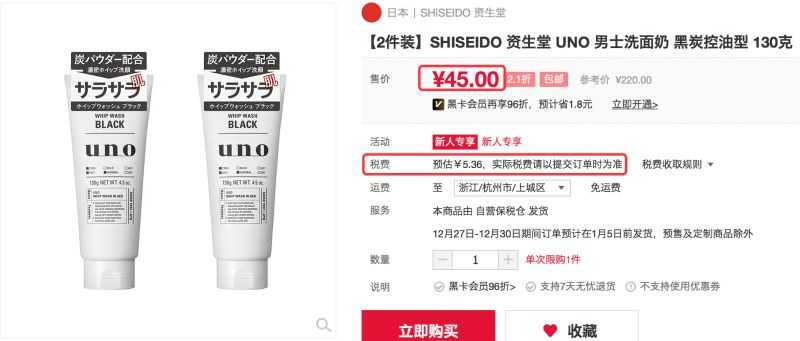
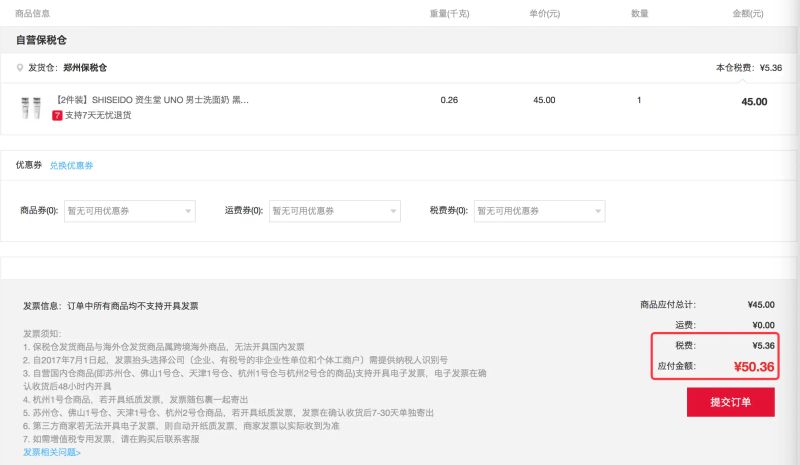
At first glance, the price i buy abroad is much cheaper than in domestic stores, because people tend to compare it with basic prices, rather than getting the total price。
(2) presentation of the price of the phased programme
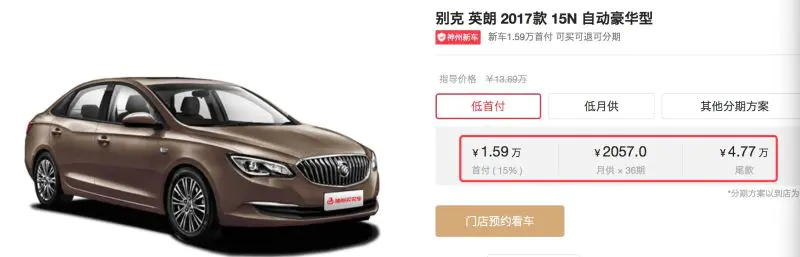
In the face of large commodity prices, it is easy to discourage them, so that the first impression is that a price can be touched, and it is often easier for consumers to become interested in the product。
3. “intentionally” displays high prices
Is it possible for people to see an unexpectedly high price, so that our offer is “showed” lower? It's possible, even if this high-priced commodity has nothing to do with our product
For example, selling on idle fish, you can mention the price of other commodities, the higher the price, for example, i'm selling cat food, and, by the way, garfield's going to need one。
4. Reducing the sensitivity of “paying”

What's the difference between a casino chip and a gift card? In fact, they all change the way things are traded, making consumers less sensitive to spending. By creating an intermediary between money and goods, while people know that they are paying, the sense of money is slow。
So, developing a payment broker is also a good option:

5. Stimulating purchasing desire
“give consumers a reason to spend”
Everyone has some interest in what they can buy but not buy, which requires a reason for a buyer to pay the consumer, be it valentine's day or children's day, which simply forces the seller to find a happy reason, in short, to give the consumer a chance and give the consumer a reason to pay for it。

Watching a car for a long time, seeing a new year's eve suddenly wanted to make an appointment, orz。
Concluding remarks
Through a shallow analysis of several of the above-mentioned sub-categories of common pricing strategies, it is not clear whether the small partners can inspire a hint of pricing strategies for their own products
In fact, the market environment has changed a lot, and no strategy has been to be able to keep eating old books and to be fully adapted to the market, and i believe and expect that the internet era will be accompanied by more unexpected “price wars”。
Author: ming, not in circulation. The article was written to urge self-reliance and to see how long it lasted。









