


A lot of people mentioned itAir pressesIt's only a screw, but it's hard enough to carry it to 35 mpa, vortex quiet to the lab, and it's really a five-type temper that doesn't step on the pit。
Hard pressure on the piston to the double air press
The core of the move to the double air press is the piston movement back and forth in the cylinder, which squeezes the air into smaller and smaller spaces to compress. Different angles by cylinder, in the form of stand-alone, bedroom, v, w and fan structures. These types of pressure cover a wide range, ranging from low pressure to even higher 35 mpa, with few alternatives available under ultra-high-pressure conditions, and low- and medium-voltage, high-pressure relative to thermal efficiency of many other types。
The costs are equally clear: the inertia resulting from the re-movement of the piston is difficult to achieve in a fully balanced manner, both vibrations and noises are high at the time of operation and the base must be reduced. Combined with intermittent venting, cyclical pulsations of the current, the downstream cans are usually held to calm fluctuations. Single exhausts are limited by the size and speed of the cylinders, and large-flow conditions can only be combined, resulting in an increase in surface area and management costs。
Scrambling with spin bites
The screwdriver is one of the most installed at the current industrial site. The air moves from the inductive end to the dent between two rotors, the rotor turns, the dentary volume decreases continuously, the gas is pushed gradually towards the vent, and the process volume changes are continuous, so the vent is evenly stable and there is no pulse. The current mainstream is the oil-spray screw machine, which uses lubricating oil for three purposes, with single-stage compressions ranging from 7 to 13; oil-free synchronizing with gears to keep rotors out of contact; exhausts without oil; and much more for the food, pharmaceutical and electronics industries。
The screwrs have small vibrations, low noise, smart controls on the panel, remote monitoring and automatic referencing. However, the precision of the rotor-type line processing is extremely high, and the whole machine acquisition cost is much more expensive than the compounding of the specifications; single-stage compression is capped, with much higher-pressure cascades, and the complexity and price of the system will jump. In addition, there is a marked decline in efficiency at very low loads or frequent stoppages。
Centrifugal air-voltagers throw high-speed air out of a leaf wheel
Centrifugal air is sucked into a fast-rotating wheel, and the blades are thrown out with a gas ring, at a very high speed, and the booster turns the speed into a pressure energy, and the gas is pressurized. The pressure level requires a multi-stage structure, with an intermediate cooler between the levels, which reduces the upper-level ejected high-temperature gas down to the lower-level, both efficient and protective。
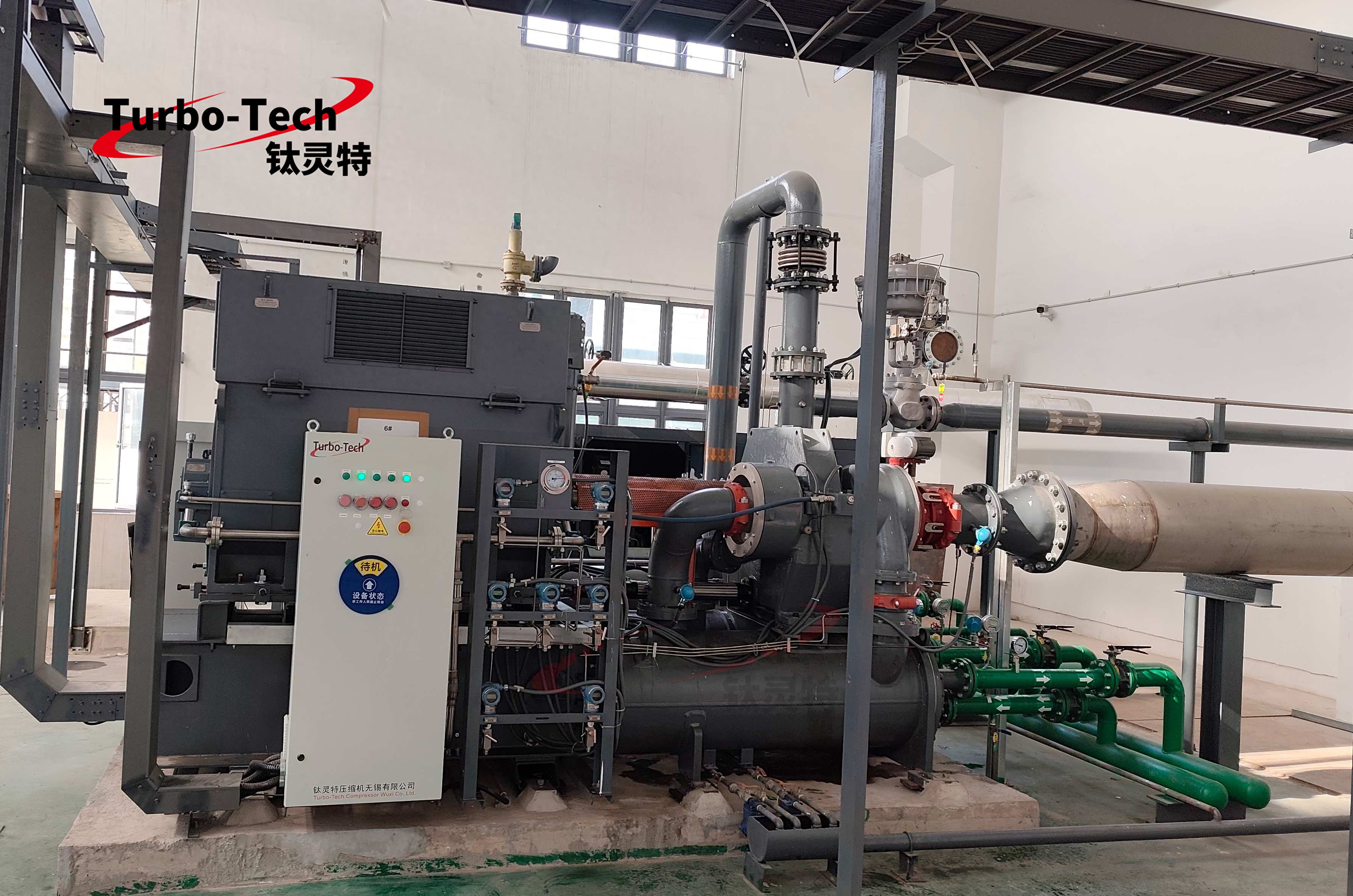
The largest selling points are the natural oil-free airways, the absence of any motor components during the compression process, and semiconductor, chemical, pharmaceutical industries, which are the most used for the most lethal gas source cleanliness cards. Without piston rings and valves, there are very few vulnerable items, and daily maintenance is to check bearings and seals, designed to be more than 20 years old. The cost is that precision leaves wheeling and multi-stage structures bring the price to the highest of all types of air presses, and large machines are activated with a guidance system。
Turbo air presses are quiet enough to run in the hospital
The vortex air presses form a series of small moon-tooth-shaped cavities on a fixed disk and a wheel, and the gas is gradually squeezed into the cavity, compressed and the process is smooth and without impact. Because of the small number of motor parts, the absence of valves and piston rings, the failure rate is extremely low and the noise is also the lowest in all air presses, the hospital operating room, the higher school laboratory, and the underground machine room of the writing building are particularly appropriate。
Structural compaction is another advantage, which is the smallest of both volume and weight under exhaust, and places of space stress. However, the vortex-type line accuracy and assembly gap requirements are very demanding, with high thresholds for processing equipment and process levels and high manufacturing costs. When combined with vortex size constraints, single exhausts do not go up, largely covering only small and medium-sized gas scenarios, and large-flow demand depends on multiple combinations。
The sliders are used in certain small traffic scenarios
The core of the slider is a eccentric rotor installed in a cylinder cylinder, plus several blades that can slide in a direction. The rotor turns and the blades are attached to the walls of the cavity with centrifugal force, dividing the aerobic cavity into different sizes and compressing the volume changes. The entire structure is free of pistons, no valves, movement in a pure rotation, seals between adjacent cavities, multiple compressed cavities working at the same time and a smooth flow of air。
Shortboards are straightforward: there are slide frictions between the blades and the walls of the cask, which are less efficient than the screws and centrifugals, which are more visible, and the cooling system needs additional design. The application of low pressure and low venting is mainly in the case of small air knives, aerodynamic tools and small-flow spraying equipment, which are largely not used by the main industrial gas source and are more of accompaniment in specific equipment。
The selected machine sets these hard parameters
The first step in the selection is to calculate the amount of air used: the maximum peak flow, the average flow, the amount of work pressure, which is the starting point for all judgements. The second step is to look at the quality of the gas source: downstream, when food, medicine, electronics, oil-containing limit values are stuck to death, with no oil or centrifugal or centrifugal patterns directly attached to them; heavy and often variable loads, with the most flexible screw-to-frequency adjustments; and long-term full-load stabilization, with minimal combined centrifuge costs。
The third step is to look at the installation environment: fear of vortex squabbles, small snails or vortexes in space, and high-temperature high dust sites, with emphasis on air filtering and heat dispersion. Don't forget the full life cycle costs, the screws and centrifugal initial inputs are high, but running over 78 years tends to be more profitable than the past. There's no full power, only the one that matches your performance。
What kind of air presses are you running at the factory? What's the problem with the headache? The comment area would be welcome to talk, and it would be useful if it could be passed on to colleagues who are still struggling with their options。









