



Around 2008, there was a "consensus" in the global battery industry that battery prices were set at $800 per kilowatt hour. The rocket industry has also identified launchers and arrows as consumables。MaskThe failure to recognize the accounts meant that the raw materials were removed and recalculated, and as a result, the cost ceiling for the entire industry was lifted. It's worth looking at how this thing works。
First principleWhat are you talking about
The so-called principle of firstness is the lowest assumption in an area, and it will not be broken down. Energy is constant in physics, atom structure in chemistry, and supply and demand in the economy. In an interview in 2018, mask said that he had managed to strip one layer of the problem, to the point where there was only a "fact that could not be omitted" and to reset it from there。
This is completely different from the "like reasoning" that most people are used to. The analogy is what others do, and the first principle is that whatever they do, i'm looking at the most basic physical and material parameters, re-engineered. The answers to these two ways of thinking are often quantitative。
The battery costs have been recalculated
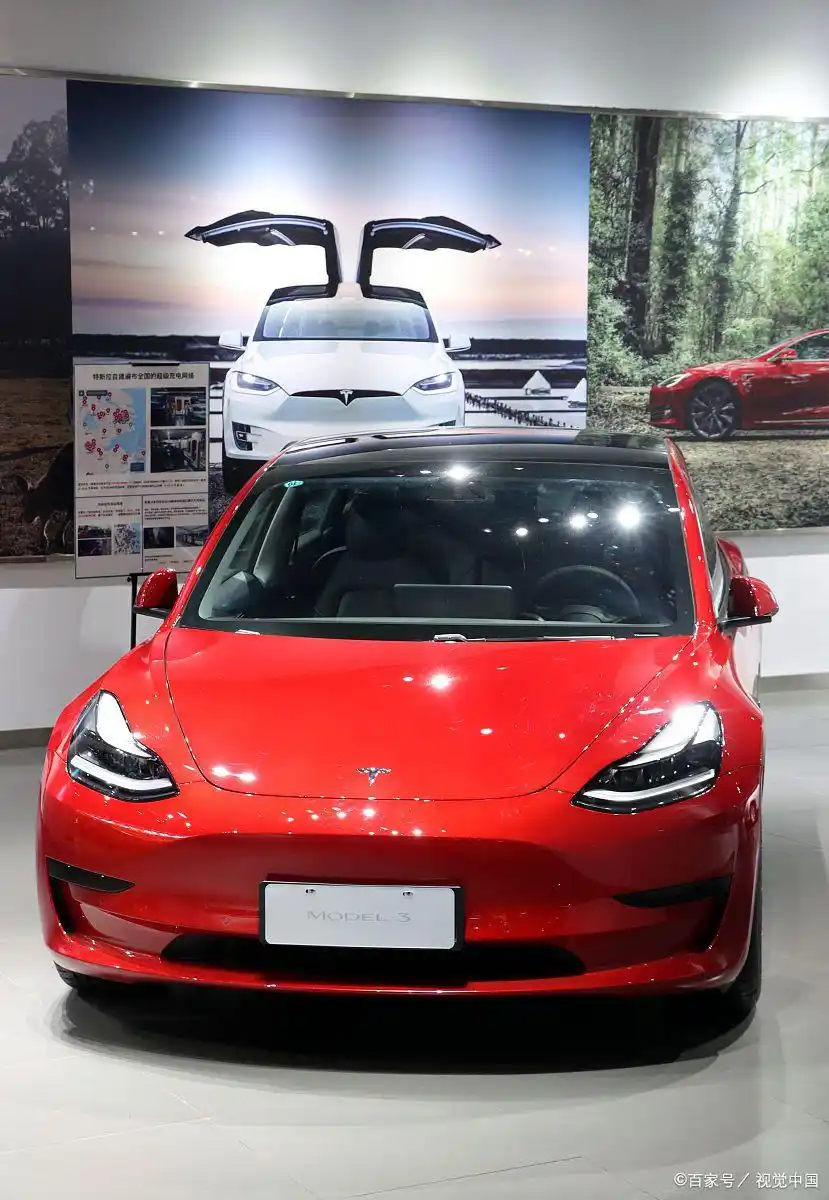
Tesla just started in 2008, when mask asked the supplier how much the battery was, and said, "it's been $800 a kilowatt hour, no good." instead of taking this statement, he asked the team to remove the batteries: lithium, cobalt, nickel, carbon, aluminum alloy casings, polymer diaphragms, which add up the price of these materials at the london metals exchange, at a cost of approximately $80 to $90 per kilowatt hour for raw materials。
This means that there's almost $700 in the middle of the room that's "eat" in manufacturing processes and industry habits. Tesla built its own battery line starting in 2012 to control all negative and negative material pressure plates, core assembly, and modular assembly, and by 2019 the battery cost had been reduced to around $150 per kilowatt hour, which was significantly lower than the industry average。
Why can't the rockets be recovered
Prior to spacex, it was standard practice in the united states space community to throw rockets at once, and the launching towers and arrows were all used. Nasa and the major suppliers think it's normal, because it used to fly like this. From the material cost, mask is involved: of the cost of manufacturing a falcon 9 rocket, engines and arrow structural materials together account for approximately 5 to 10 per cent, with the rest being amortized for launch services, insurance and ground facilities。
He calculated that if the rocket was used again, the hardware cost of a single launch could be cut off in half. The first vertical landing of falcon 9 was successfully recovered in december 2015, the first-stage arrow was re-launched in 2017 and the cumulative number of re-uses by 2023 was over 100, pulling the cost per kilogram from $20,000 of traditional rockets to several thousand dollars。
How does industry become a think tank
The biggest problem with analog thinking is not "wrong," but it makes everyone run along the same road. You ask a chip engineer if he can push it any further, and he'll say, "that's how it used to be." you ask an urban traffic planner if he can completely change commuting patterns, and he'll say, "build the subway and cut the line is a mature option." no one's going to ask, "what is the bottom line of this program? The premise is not valid."。
Identifying yourself is using analogy, and there's a practical test: if you explain a decision that says, "because the industry has done it all the time" or, "someone else has done it," you probably haven't been thinking about the first principle. You're going down to the bottom。
How do you put the first principle into your hands
The core action is called zero: clear all the conditions attached to the current problem, the burden of history, the advice given by others, and keep only the few variables on which they are based. For example, there's a traffic jam in the city, you can't fix a few lanes, you can ask, "what's the essence of people's needs from a to b?" the answer might be, "step shift," which can be solved by a three-dimensional tunnel, a pipe capsule, an underground traffic diversion。
The second move is to ask "why." the product is out of sales, so don't stop at the "enhanced advertising" and ask why, the answer is less functional than the competition, and then why it's less functional, and it's the core material that's out of shape. If we can't go after that node, it's where we really should go. At the same time, the combination of knowledge in different disciplines, medical and material science and structural engineering, tends to spell out unexpected solutions in individual disciplines。
From understanding to making the key step

There's a lot of people who know the principle of first sex, but the vast majority of them are stuck in "find it, don't make it." tesla calculated in 2008 that battery costs could be set at $90, but real production took five years to bring the rate to more than 95 per cent, burning more than $2 billion. The first three of spacex's falcon 1 launches were all unsuccessful, and the fourth was successfully put on track, and by 2015 recovery was ten years。
So the first principle of sex solves "right in the direction," doesn't solve "way." it's..









