


Blue platinum monitoring。
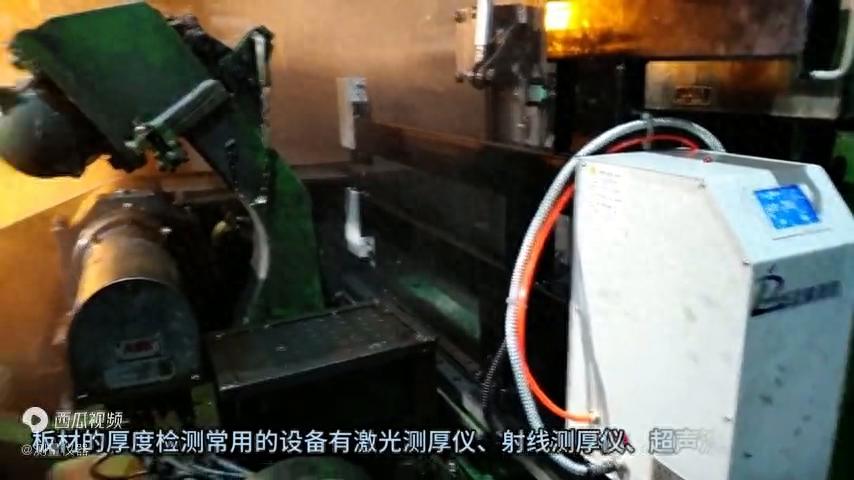
The thickness size of the plate-based product is one of the important factors in relation to quality, and one of the essential equipment for the plate-based line is the thickness gauge. The equipment commonly used for the thickness of the plates is laser thickness gauges, radio thickness gauges, ultrasound thickness gauges, etc。
I'm not sure if i'm going to do this
1. The development of laser thickness gauges: the laser thickness gauges have evolved with the development of laser and ccd technology. Initially, laser thickness monitors were used mainly for online thickness applications using laser light sources combined with optical detection and computer industry control techniques. The ztms08 online thickness gauge, which was developed jointly by a british company based on the production workshop requirements of the plant, was an important early representative of the laser thickness gauge. As laser thicknessing technologies continue to develop, laser thickness gauges gradually demonstrate the advantages of non-contact measurements, non-harmonization of the surface of objects, non-environmental pollution, high intervention resistance and high accuracy. Laser thickness gauges, for example, allow rapid and continuous online non-contact dynamic measurements of hot-rolled steel plates under harsh working conditions, such as high-temperature dust in hot-rolling production lines. The rationales of the laser thickness gauge now include laser triangles, laser locator laser beams that are scanned by retrospect。
2. X-ray thickness gauge development history: in 1951, united states scientist wnlundahl et al. Successfully developed the first x-ray thickness gauge, using a dual-ray source system, which is used mainly for measuring thickness of materials such as tin, aluminium, iron, steel, etc., but with relatively different scope and accuracy. In 1968, kramer et al. Developed an x-ray thickness gauge with calibration capabilities, which significantly improved the accuracy of the measurements. In 1973, a large number of applications of x-ray thickness meters were introduced in the steel industry. In 1979, the united states materials and test commission (astm) included x-ray fluorescent thickness gauges as a standard method for measuring coating thickness. Tosgage-501 x-ray thickness gauges, produced by toshiba japan in 1996, have achieved many automatic controls through computers, resulting in significant improvement in measurement accuracy。
3. Ultrasound thickness instrument development: the idea of using internal structures of ultrasound detection materials began to be explored in the twentieth century. Professor floyd firestone of the university of michigan, in 1940, invented the first practical commercial ultrasound instrument known as the mirror. Developments during the second world war have given further impetus to advances in ultrasound detection techniques. In the 1970s, the first smaller and more portable instruments designed to measure thickness emerged. The processing of digital signals in the 1990s replaced analogue circuits and increased the stability and replicability of measurements。
The laser thickness gauge is primarily used for the overall thickness of the plate and is of unlimited mass. X-ray thickness gauges are primarily used for thickness detection of thin film, sheeting, coating, etc., with materials that affect them and are radioactive. Ultrasound thickness meters are used mainly for coating, with effects on materials, generally for contact offline detection. By contrast, laser thickness gauges have the advantage of non-contact-free online detection, radiation-free, etc., and are widely used in sheeting lines。
Blue penthouse control, lanpeng measurement & control。









