


In the many practical configurations of modern cars, there are a lot of people who want to know what they areAutomaticThe functionality, by virtue of its convenience and safety, is increasingly favoured by a wide range of car owners. Understanding the working principles of automatic presence and the proper use of it not only makes the driving process easier, but also adds a strong safeguard to the safety of motor vehicles。

Analysis of the principle of automatic presence
The automated stationing system consists mainly of sensors, electronic control units (ecus) and implementing agencies. When a vehicle is in a state of operation, the sensor monitors data in real time such as speed, acceleration, brake pedal status and block information for the vehicle. For example, a wheel-turning sensor can accurately measure the wheel's rate of rotation and thus determine whether the vehicle is in a static or moving state; an acceleration sensor can sense the acceleration or deceleration of the vehicle。
These sensors transmit the collected data to the electronic control unit. The electronic control unit, like the “brain” of an automated stationing system, analyses and processes data from sensors. When the vehicle is required to park while travelling, the driver sets down the brake pedal, at which point the brake pedal position sensor transmits the signal to the electronic control unit. The electronic control unit will determine whether the vehicle is about to cease on the basis of information received on the speed, acceleration, etc. Of the vehicle. Once vehicles are confirmed to have stopped, the electronic control module will issue instructions to control the work of the implementing agencies。
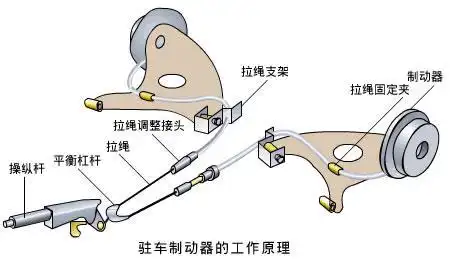
The implementing agencies usually evolved from the electronic handbrake system. Upon receipt of the commands of the electronic control unit, the implementing agency will tighten the brake card to the wheel through an electric drive, thereby enabling the vehicle to be stationary and steady. For example, when a vehicle stops at a red light, the automated stationing system is activated, and the implementing agency quickly exercises power to keep the vehicle static without the need for the driver to keep the brake pedals on。
Guide to the correct use of automatic stationary vehicles
Start and close operations
Before using the automated stationing function, it is first necessary to ensure that the vehicle is activated and that the automated stationing system is in operation. Generally, the medium console of a vehicle will have a dedicated automatic stationary key, usually marked “auto hold”. The driver will simply press the button to indicate that the automatic stationing function is activated when the key indicator light is on. In some models, the automatic stationing function may be activated by default without manual operation at each start-up。
When the driver is required to turn off the automatic stationing function, press the automatic stationing button again. For example, in exceptional circumstances, such as when a vehicle requires a tow truck, or when a fixed stop starts on a steep slope, the automatic stationing function may need to be temporarily closed to avoid operational inconvenience or unforeseen circumstances as a result of system intervention。
Urban congestion techniques
In urban congestion roads, frequent stop-and-stops keep the driver's right foot under stress for long periods of time, at which point the automatic stationing function can achieve its enormous advantage. When a vehicle is travelling in a crowded section, the driver is required to drive normally, and when the parking is required, the brake pedals are gently stepped down, the automatic stationing system automatically activates when the vehicle is stopped, the vehicle remains static and the driver does not have to press the brake pedals continuously. When traffic congestion is eased, the driver will simply have to step on the oil pedal, and the automatic stationing system will automatically unset the brake, and the vehicle will be able to move smoothly. This operation not only reduces the driver's driving fatigue, but also effectively avoids foot sores and increases caused by long-duration pedalsDriving comfortSex。
The ramp beginsOperational elements
Starting on the ramp is a challenge for many drivers, and automatic stationing can easily resolve this challenge. When the vehicle was parked on the ramp, the automatic stationing system was activated and the vehicle stabilized. At this point, the driver did not have to worry about the back of the vehicle. In preparation for the start-up, the driver will first step down the gas pedal, and when the vehicle acquires sufficient drive, the automatic stationing system will automatically release the brake and the vehicle will proceed smoothly. It should be noted that when the ramp starts, the pedals of the oil should be modest in order to avoid the sudden advance of the vehicle due to the excessive size of the door, which affects the safety of the vehicle. For example, when the slopes are larger, it is appropriate to step some more on the gas to give the vehicle greater driving power to ensure a smooth start。

Parking and departure operations
The automatic stationing system is activated when the vehicle is required to stop when it arrives at its destination and the driver sets down the brake pedal to stop the vehicle. If the vehicle needs to be parked for a long period of time, the driver can hang the block into the p block, then pull up the electronic handbrake (some of the models will automatically pull up behind the p block), and finally shut down the engine. Upon departure from the vehicle, ensure that the automatic stationing function is closed to avoid an anomaly when the vehicle is next activated. For example, when parking in the garage, operating in accordance with the above-mentioned steps would ensure the safe parking of vehicles and facilitate their smooth start-up when they are next used。
A mastery of the principle of automatic presence and its correct use will enable us to make better use of this function and achieve a perfect combination of safety and comfort in driving. Whether in urban congestion or in complex ramp environments, automatic vehicles can facilitate our travel as good drivers。









