We used it in the showFluorescent barFrom the earliest chemical fluorescent rods to the medium control rods that can now achieve the fluorescent sea, what are they? Why does a fluorescent stick glow? How do we synchronize the field's support stick
Chemical fluorescent rod
We all know how to use the fluorescent rod -- hand in hand, fluorescent coming。
Let's look at the composition of the fluorescent rod: actually, the fluorescent rod uses a double structure, with plastics (usually polyethylene pe) tubes and glass tubes in the outer layer. The glass tube contains hydrogen oxide solution, while the fluorescent dyes and ester compounds (mostly dichloride, dibutyric acid, etc.) are found in the piping between the glass tube and the plastic tube。
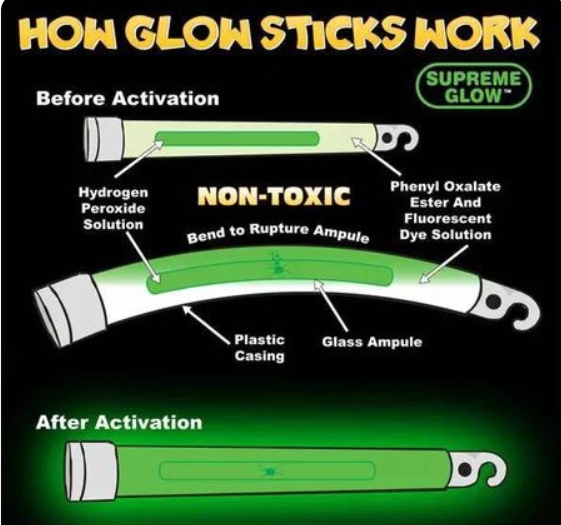
Internal composition of fluorescent rods
Before bending, the two layers of solution don't interfere with each other. Once bending, the inner glass tube is broken, the internal peroxide hydroxyl solution meets external ester compounds, chemically reacts and releases energy; fluorescent dyes receive this energy and emit fluorescent。
The response throughout the process was as follows:
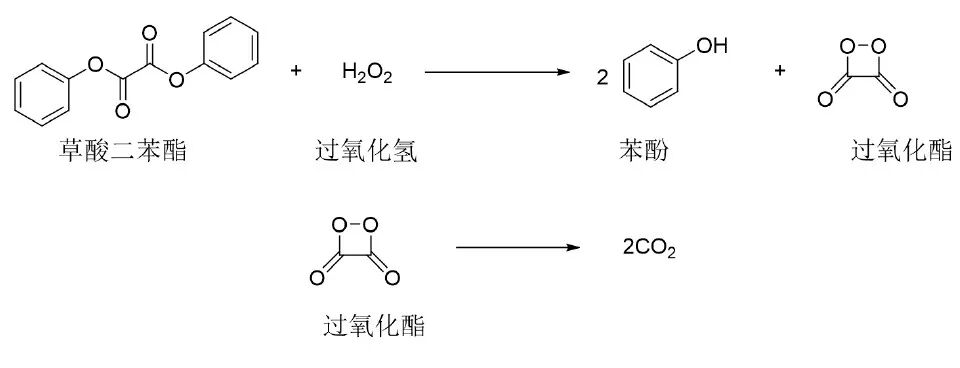
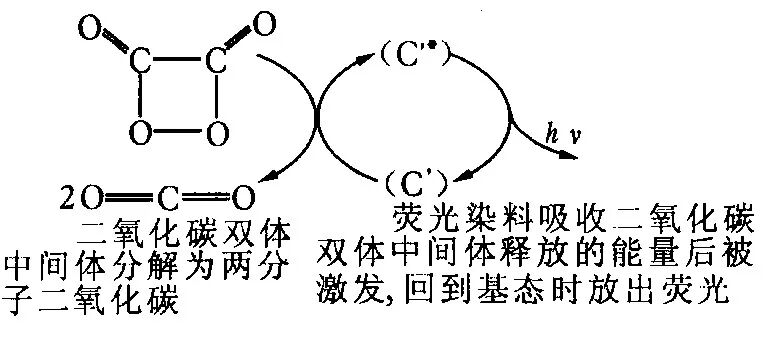
Fluorescent rod luminous reaction
Let's take a closer look at the third step and see how the dye molecule is fluorescent: after absorbing energy, the energy of the dye molecule increases from the base state (s0) to the stimulating state (s1 ' ), which is extremely high and not a stable state, so organic molecules generally release energy back to the base state through chemical key rotation or vibration, but the dye molecule jumps directly to the base state after some energy has been released to a specific energy level (s1) through mechanical motion, i. E., the first electron state, while releasing the remaining energy in the form of photons and fluorescent. “capacity level” is a basic concept in quantum physics, describing the energy state of the nucleotope electrons in different layers of energy (e. G. K, l, m, etc.) and levels of energy (e. G. S, p, d, f, etc.), which correspond to a separate energy value, i. E., the energy level。
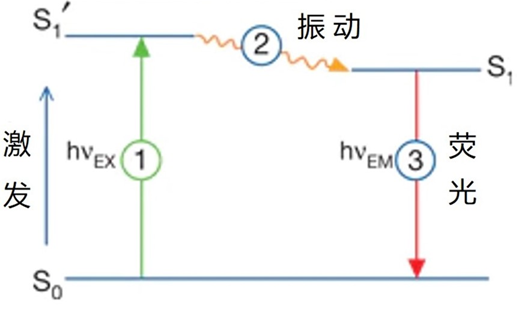
If fluorescent is to be understood in depth, then the "father of fluorescent spectroscopy" alanksander jablonski and his jablonski diagram. The jablonski diagram, which is usually used to describe fluorescent and phosphorus in molecular spectroscopy, shows the molecular stimulation and the possible radiation and non-radiation leaps between them, as shown below。
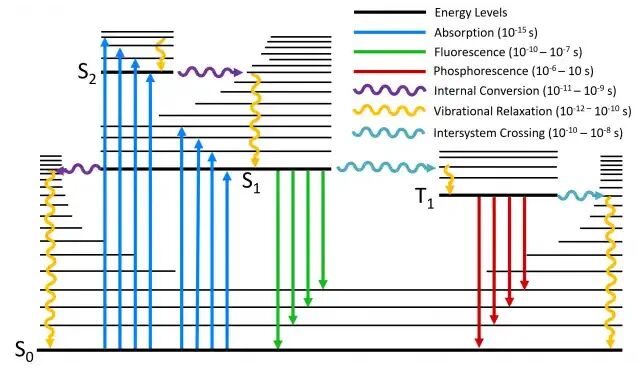
Jablonski chart | map source network
Why does a fluorescent stick send out light of different colours? Because fluorescent panels of different colours contain different types of fluorescent dyes, these dye molecules are mostly polyvalent cycling organic molecules with cosmonal systems (one- and two-key-intersected atoms), which reduce the energy required for electrons to leap and move wavelengths in long wave directions. The substitution of the base, on the other hand, can lead to a red movement of the radiation light into visible light areas. The co-linking chain of dye molecules varies in length and the energy required to be activated varies, resulting in light of different colours。
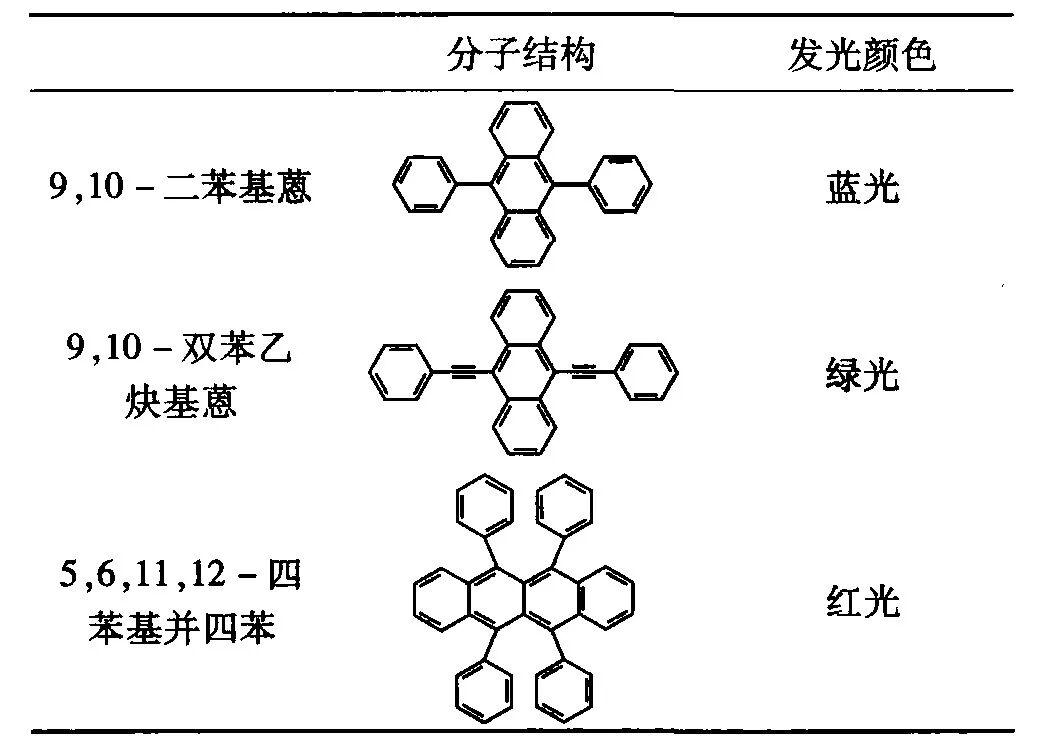
The light color of different fluorescent dyes
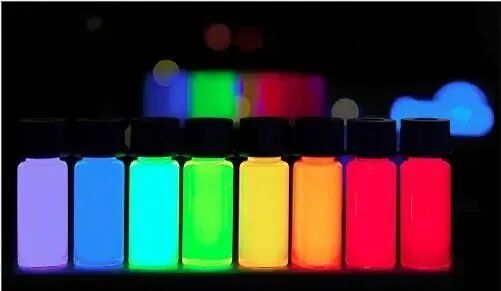
Depending on the compound used in the fluorescent rod, the duration of chemical lighting also changes. The duration of the fluorescent rod as a chemical method is related to the duration of the chemical reaction, while the chemical reaction rate is affected by temperature, the higher the ambient temperature, the shorter the fluorescent time, the greater the initial brightness of the fluorescent rod and the shorter the luminous time。
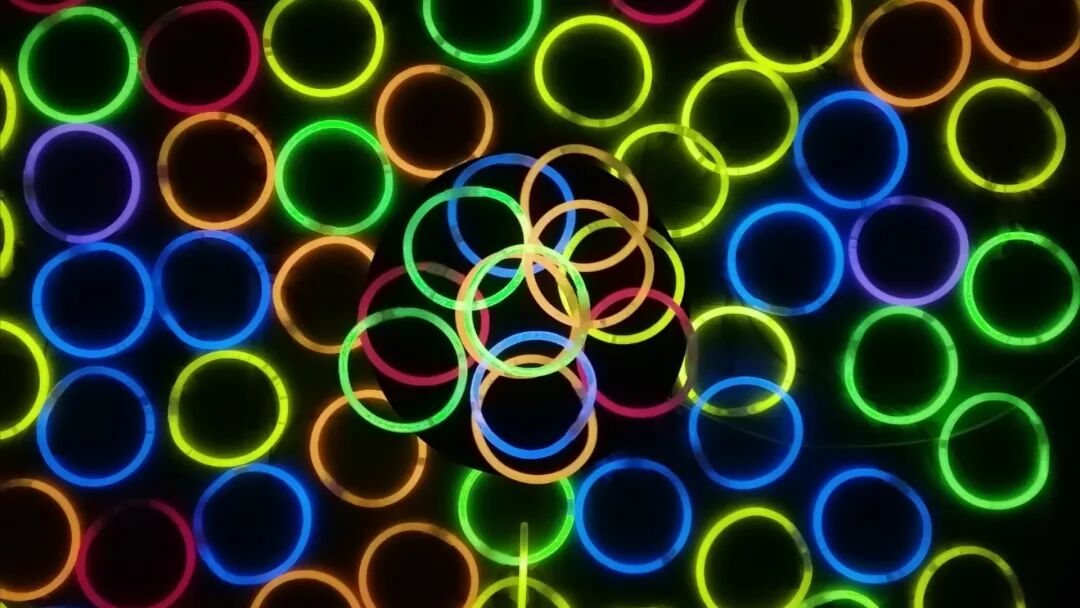
Electric fluorescent rod
NowConcertMost of them used itLed lampsThe blisters, their source of light, are led bulbs. So what's led's philosophy
Led is the abbreviation of light emiting diode, the semiconductor led. As we all know, the diode is a p-n knot made up of p and n semiconductors. The p-type material is integrated into the semiconductor, i. E., the less expensive impurity atoms, which are empty because of the lack of a price-based electron; the n-type material is integrated into the semiconductor atoms at the main impurity, i. E., the more expensive atoms of magazines, and there is a surplus electronic. Thus, the p material contains a large number of empty holes with positive electricity, while the n material contains a large number of electrons with negative electricity。
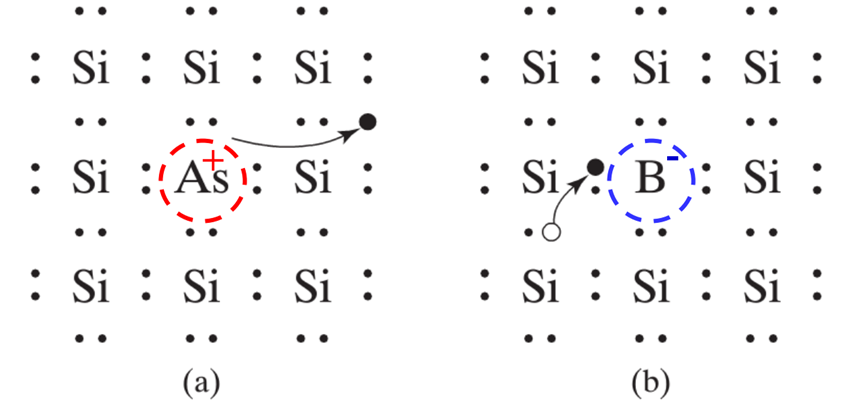
(a) type n semiconductor, (b) p semiconductor
In the case of a power positive polarity attached to the n semiconductor and a negative polar link to the p semiconductor, the voltage tends to pull the electron from the p to the n zone and the hollow from the n to the p zone, creating a depletion zone, i. E. A reverse bias of the p-n knot. On the other hand, under positive bias, free electronics in the n semiconductor move towards the p side, part of the electron is composited with a hollow, and the photons are launched when composite。
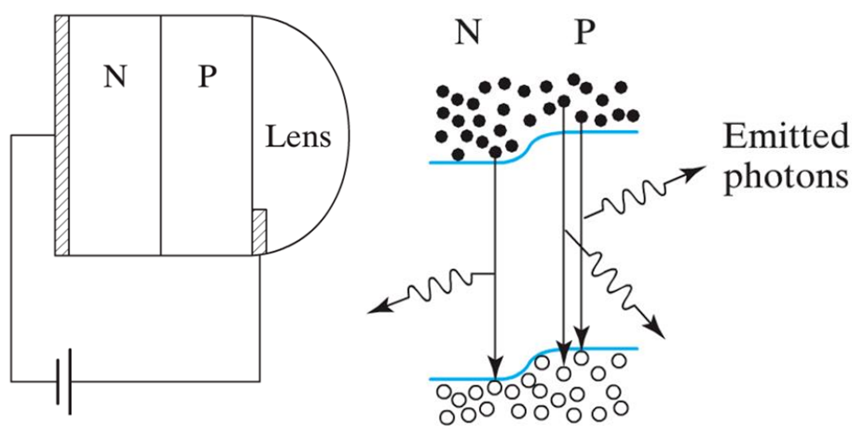
Led luminescence
In the process of compounding, the energy released is the energy difference between the base of the conductor and the top of the price band, i. E., the inhibited bandwidth of the eg (in units: electronic voltsev). Different inhibited bandwidth releases different energy, i. E. Produces different colours of led. The wavelength of leds producing light is related to the forbidden bandwidth as shown below
Different colours of leds can be produced by using different semiconductor materials and acquiring different prohibited bandwidths。
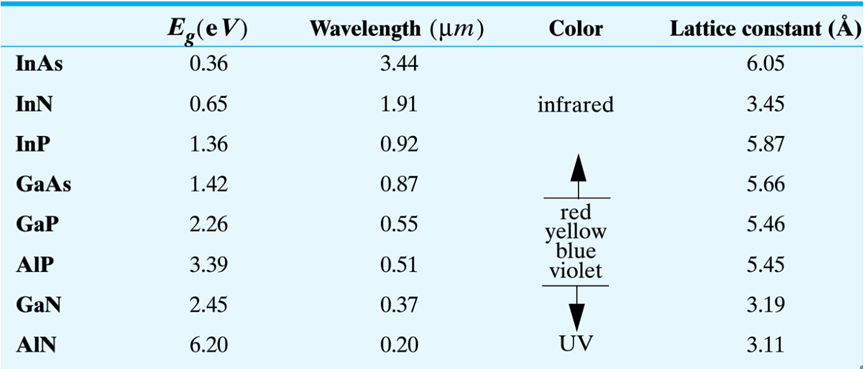
Banned bandwidth for different semiconductor materials and colours for leds
However, precise control over colour is still difficult to achieve on the basis of different materials, and many of the icons are, after all, specific to the hexadecimal code. How do we control the specific color of the aid rod? This requires the installation of multiple led lamps of different colours on the aid stick to change the brightness of different colours through circuit switches. The key to colour control of fluorescent rods is the designer's design of the quantity, type and circuit of led lamps。
Medium-controlled glowing
How can tens of thousands of fluorescent rods be integrated at the same time, integrated, lighted together, extinguished together, changed colours together, and formed diverse patterns
We can try to find an answer to this
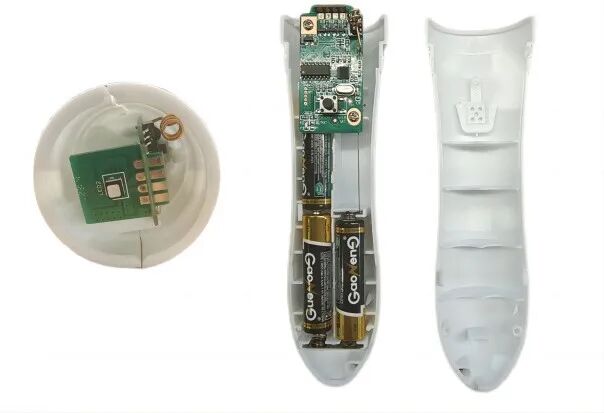
Central control stick dismantling map network
Remove the lights, the handles, the batteries, and we focus on the internal circuit
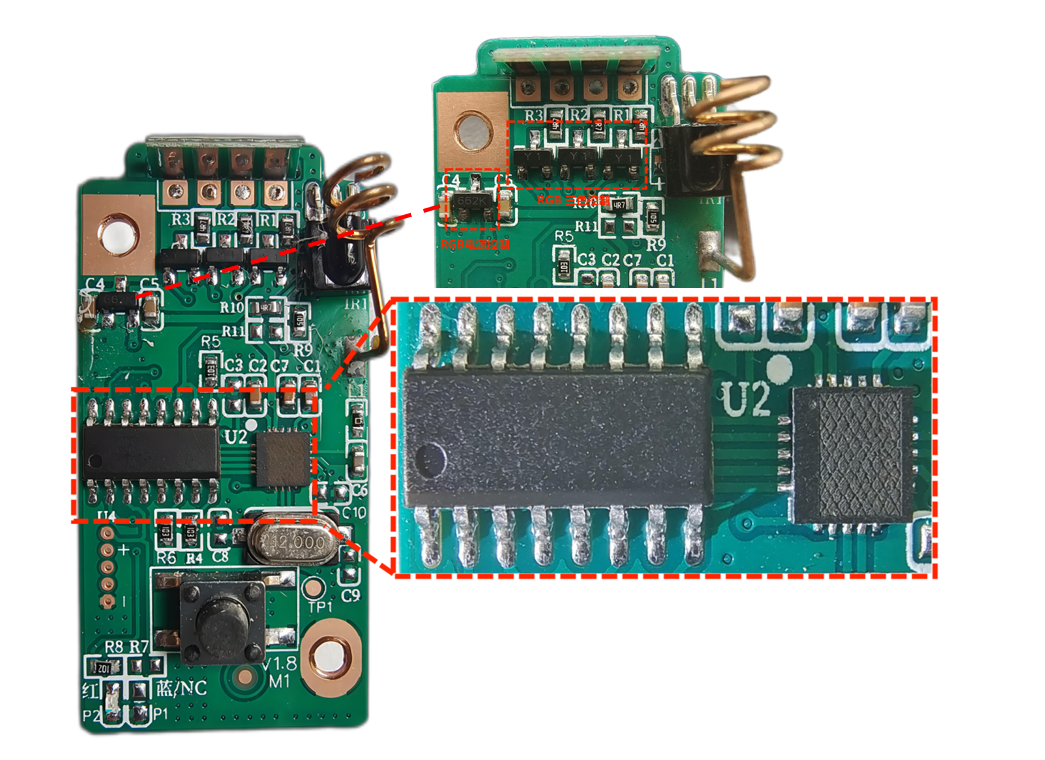
Central control rods to break down circuits and map networks
It can be seen from its visible external antennas and infrared probes that it can switch different light effects by receiving external control signal instructions。
On the electrical road, it can be seen that it uses two chips, the main control chip on the left is the circuit, and the message is received on the right for the uhf radio frequency. The uhf-receiving chip is primarily responsible for receiving signals from the site base station, which is then processed by the primary control chip, which controls the switchover of the rgb lamps in the circuit。
So the key to achieving uniform control is the use of rf frequency chips in fluorescent rods. Radio frequency (radio frequency) is an electromagnetic wave of high frequency communication, because of its high frequency per second and its long-range transmission capability. Wireless communications electronic equipment is launched into the air at a certain frequency through antennas in the form of electromagnetic waves or receives electromagnetic waves from the air for the purpose of transmitting information and communication。
Broadly speaking, the spectrum of frequencies ranging from 3 khz to 300 ghz is referred to internationally as radio frequency. At the national level, the frequency bands used by fluorescent rods are mainly 433 mhz, the former for the control of the concert as a whole or of regional seats, and 2. 4ghz, which is generally for the control of a particular seat at the concert。
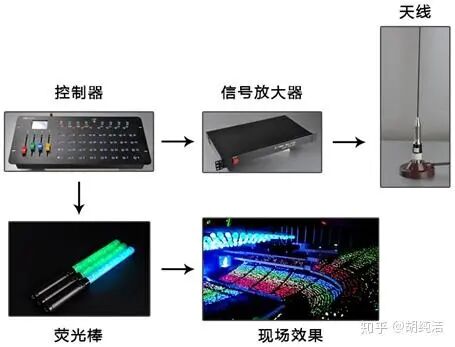
The process of the principle of control
Overall, the medium control is the credit of the rf radio frequency chip. The rf radio frequency chip is able to receive signals from the central console of the concert site and to change colours of led lamps with music and rhythm. This creates a dynamic change of light in the concert
Neither fluorescent rods, leds nor medium-controlled batons represent just the support of the audience below the stage. The presence of the aid stick emphasizes the audience's participation in the stage, and each audience, each fluorescent stick, forms an irreplaceable part of the grand performance. The performers' performances and the viewers' “light sea” echo each other, and each stage is a miracle created by the performers and the viewers together。