


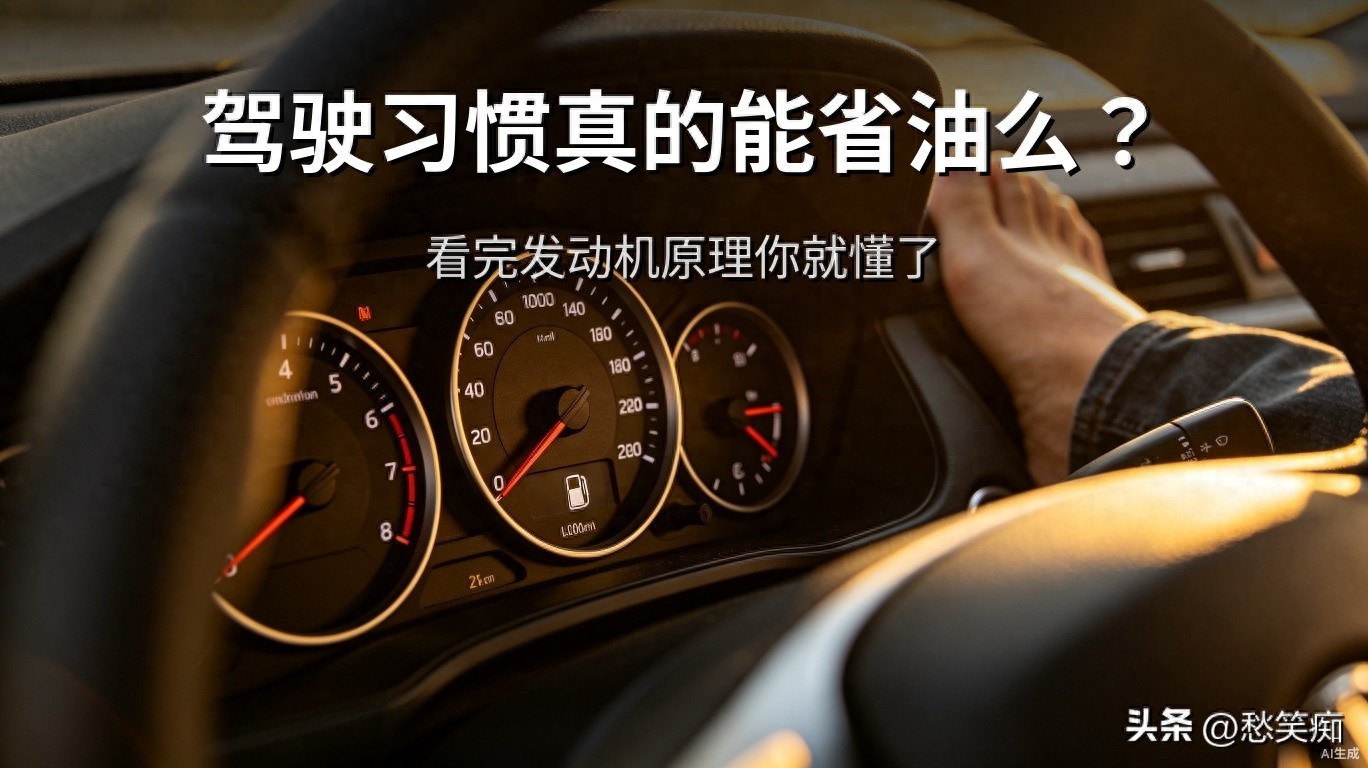
Driving habitsFigure
The same 1. 5t sedan, with 6. 2 l km and 10. 8 l dryed. It's not the car. It's the foot on the gas。
I've been driving for eight years, and the last three years have never been less than 9l. Then he took a long trip with a long-distance cousin to find out that his old oil saving operation was all backwards。
This article, i putEngine principles, the old driver's footwork, a common error zone for newcomers. You'll see. It's very scientific。
- where's the gas
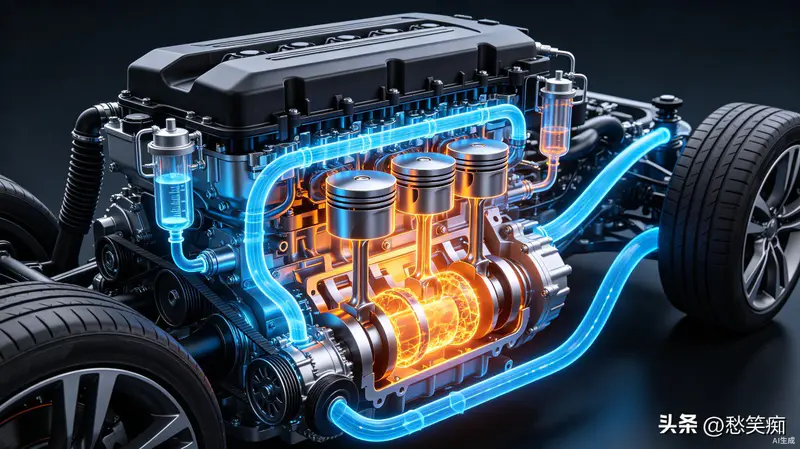
Engine logic chart
You have to figure out how the engine burns。
Gas is burning in engines and only part of the thermal energy becomes power. The most efficient heat condition is approximately 1500-2500 turn/minute. On this "sweet spot," fuel burn is the best, power output is the smoothest。
Once you step on the gas, the car's computer will immediately increase the amount of oil. At this point, oil and gas mix is thicker, and large quantities of gasoline are drained out before full combustion. Data indicate that the instantaneous rate of oil spraying is 30 to 50 per cent higher than the flat rate. The oil on your foot is not just power, but silver with white flowers。
More than that, speed。
Air resistance is proportional to the square speed of the vehicle, while the power required to overcome wind resistance is proportional to the three speeds of the vehicle. That means:
60km/h cruise, light engine, lowest fuel consumption。
At 90 km/h, about **45%** power was used to counter wind resistance。
To 120 km/h, almost **70% of the power of the engine's output ** is in the wind。
That's why the faster the speed, the greater the fuel consumption. It's not the car. It's the laws of physics。
Ii. How much difference can there be between a rookie and an old driver

Freshmen and old drivers drive
My cousin and i had a long trip, 800 kilometres back and forth, and his old runaway watch was 5. 8 l, my new car was 7. 6 l. In the same paragraph 1. 5 l, the gap is close to 2 l/100 km。
Then i looked at the data of my friends:
The old li, who runs the internet, has a good day, and the combined fuel consumption has remained steady at around 5. 5 l。
The first cousin with the driver's license, the same money, can get to 9. 5 l in the city。
The unit of female colleagues starts at the peak of floor oil every morning and every evening。
It is not surprising that the same vehicle has twice as much fuel consumption。
Where's the core difference? It's not the car, it's the foot。
The new guy drives, the gas door only has two slots, "stomp" and "push" and the brakes are all the same. Engines always fluctuate sharply between "high-low-load" and thermal efficiency is never within optimal range。
The old driver's foot is ** "linear" ** -- the gas door slows down like a massage, lets the gas door slide, the brakes are just the last drop。
Iii. Five driving habits that really save fuel
I summed up the common features of low-fuel-consuming owners around me and found that the method was not mysterious。
1. Light step on the gas and slow down the oil
It's enough to step on one third at the start. Slow speed to keep the engine between 1500 and 2000, which is the most fuel-efficient turn zone. The rapid acceleration is not only expensive, but also devastating for speedboxes。
2. Prejudice, less brakes
When the red light was on in front of the car, the oil door was released and the car slowed down. The old driver had a joke: "the brakes are the enemy of fuel. " every foot brake is the oil that you burned before it was wasted。
3. Keep pace and make good use of cruises
As far as possible, fast cruises are used at high speeds to keep the speed of cars within economic speed zones. Most of the domestic vehicles are economically active between 60 and 90 km/h per hour. More than 100 km/h, fuel consumption will rise significantly。
4. Don't let go of people
Lightweight engines are also sprayed with oil, but the meter is not moving, which is equivalent to infinity. When the red light exceeds 30 seconds, it's recommended to shut down. In the summer, the air conditioning was even more exaggerated and one hour could burn 1-2l oil。
5. Don't be too low. Don't be lazy
Fuel consumption increased by about 3 to 5 per cent for every 0. 5 bar below the tire pressure. The boxes of mineral water, folding chairs and fishing poles in the trunk are also free for long periods of time. Fuel consumption increased by approximately 2 per cent for every 50 kg。
Four, these "savages" are actually pits

Automotive refueling door flight
There's a lot of "silent" on the internet, and i looked into it and found it was misleading。
Erection 1: water from the scooter
It is true that the old-calendar space is fuel-saving, but it's different now. When the slide is blocked, the opportunity is activated to automatically cut off the spray and the oil is depleted to zero; instead, it is required to keep the jet out. It's not only not cheap, it's dangerous。
Mistake 2: with high-platform gasoline
The logo represents blast resistance, not oil. The manufacturer wants an extra 92, you add 95, the burn efficiency won't improve, and the wallet will lose weight first。
Zone 3: speed cruise must save fuel
On larger upland roads, fast-paced cruises are more expensive than manual control to maintain the established speed when uphills are pedaled. Oil-saving scenarios for fast cruises are mainly flat highways。
Miss 4: 10 minutes before the heater leaves
In-situ heat vehicles exceed one minute, adding carbon to the waste of oil. The correct approach is to slow down 1-2 km after start-up, allowing engines to warm under natural loads。
V. Accounting: how much can a good habit save a year
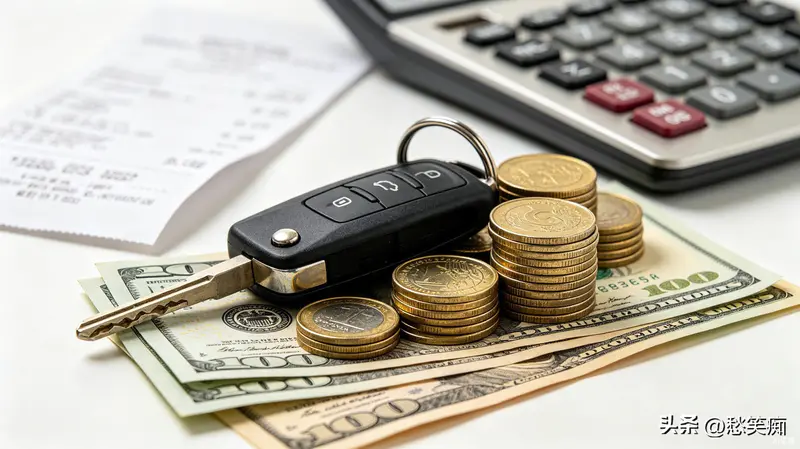
I used to save money driving
Suppose you drive a regular limo and run 15,000 miles a year。
One, fresh start, 9l per 100 km of fuel, 1350 litres of fuel per year, $7. 5 per litre of petrol no. 92, at $10125。
2 old driver-style fuel consumption dropped to 6. 5 l per 100 km, 975 litres per year and $7312 per year。
That's $2813 a year. Three years later, a middle-end phone was saved. If we go to the car exchange, we'll save up to $30,000 for 10 years。
This is not an additional loss to tyres, brake blades, speedboxes. The costs of maintenance and repair are greater and hidden。
At the end
It's essentially a driving perception problem. You understand how the engine works, how speed and resistance are connected, and you know how the gas door should be。
It doesn't make you walk the road like a "mobile roadblock", but it drives the car in a more scientific way, with safety and efficiency。
How much fuel do you need now? How much fuel did you lose after you tried to change your driving habits? Welcome to the comment section, and see who's the real golden foot。









