


Streptococcus is prevalent in various animals, mostly host-specific, with different strains infecting different species. Serial bacteria can cause a range of diseases, including meningitis, sepsis, multiple mammitis, arthritis, endometriitis and pneumonia. The streptococcus has also been isolated in cases of nasal inflammation and abortion, suggesting that it is also related to these two conditions. The pattern and severity of streptococcal infections vary from region to region. There are many serotypes of serotypes, at least 34 of which are serotypes. They vary in their pathogenicity and clinical symptoms, and the same serogenicity and clinical symptoms can manifest themselves in different contexts. Some serotypes are mainly isolated from healthy pigs and are non-pathogenic; some mainly cause lung damage; and others can be infected with pigs and other animals. Some serotypes, mainly type 2, can lead not only to meningitis but also occasionally to human meningitis。
1 pathological characteristics
1. 1 form and dye
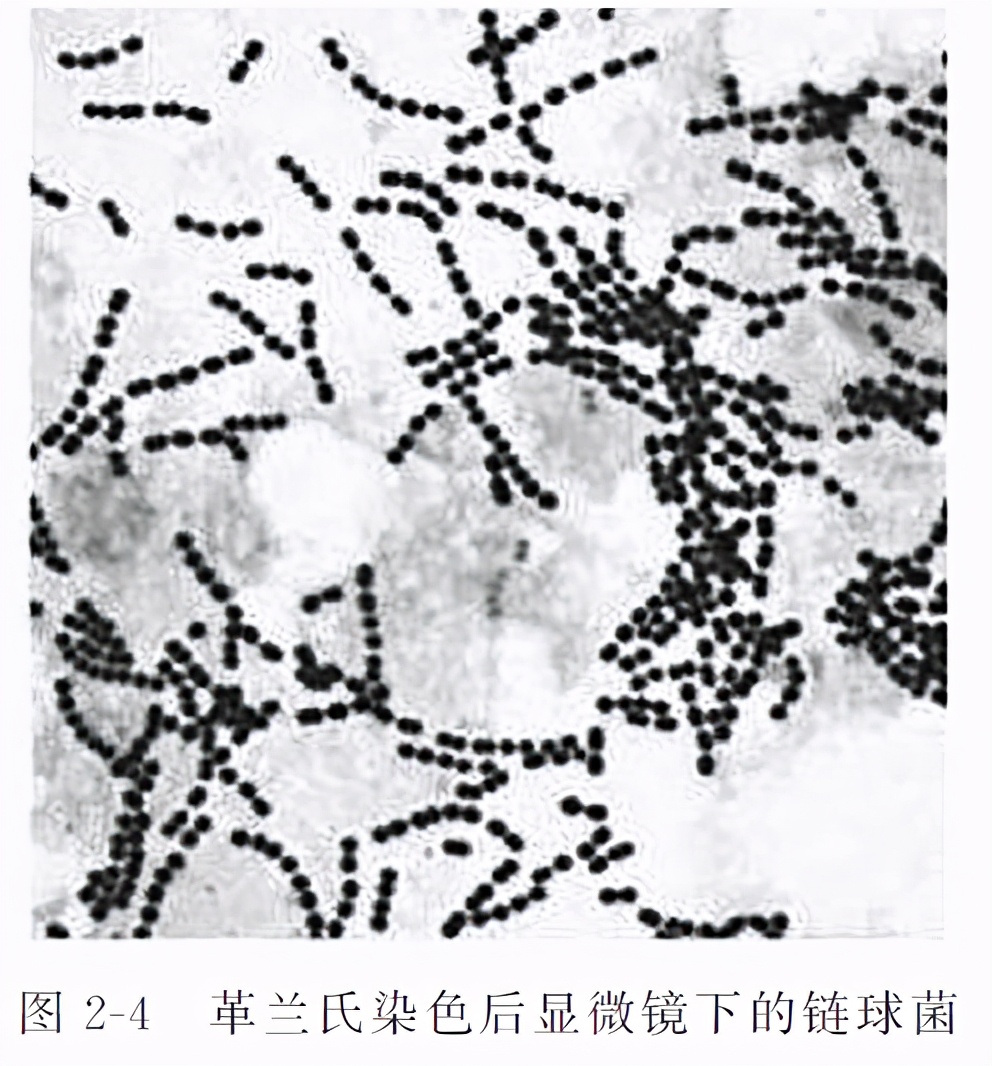
The streptococcus is spherical or ovary, with a diameter of 0. 6 to 1. 0 μm, and is organized in chains. The short is made up of 4 to 8 bacteria, and the oldest consists of 20 to 30 bacteria, and the length of the chain is related to the type of bacteria and the growth environment. Long chains are readily available in liquid cultures and often in solid cultures, and chains of streptococcus cannot be extended indefinitely under normal circumstances, as streptococcus can produce dechained enzymes. Most strains develop 2-4h of translucent acetate membrane in seroplasm, and continue to develop a translucent acetate membrane that can be dissolved by the bacteria themselves. It does not form sprouts, has no lashes, is easily coloured by common alkaline dyes, is chromosomal (figures 2-4) positive, has been bred or swallowed by neutral particle cells over a long period of time and turns to chromosomal negative。
1. 2 fostering identity
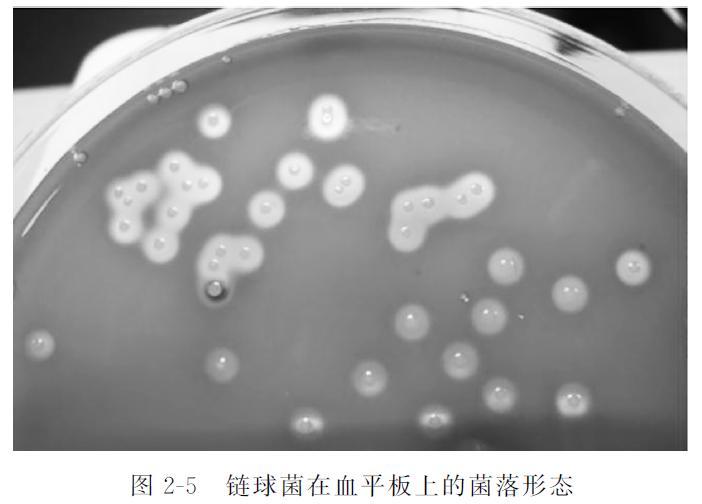
Anaerobic or acoustic bacteria, with high nutritional requirements, poor growth on common cultures, needing additional serum, blood, glucose etc. The maximum growth temperature is 37°c, growing at 20 - 42°c, and the maximum ph is 7. 4 - 7. 6. In serofauna soup, long chains are present and the tube base is sprawled or granular. On the blood tablets, a small bacterium of grey, translucent, smooth surface, clean edges, 0. 5 to 0. 75 mm in diameter is formed, with different strains having different solubility (figures 2-5)。
1. 3 biochemical response
The ability to decompose glucose, sour, glyphs, glyphs, gypsies, pyreol, cotton sugar, algae sugar, and sepsis varies from strain to strain. It does not usually decipher the gynthic glucose, it is not dissolved by the cholesterol, and the enzyme test negative。
1. 4 antigen structures
The antigens of streptococcus are more complex and consist of three main types:
(1) nuclear protein antigens or p antigens, no distinct, all types of streptococcus, which intersect with the fungus grapes。
(2) polysuline antigens, or c-antigens, are group-specific antigens, are multisugar components of cell walls that can be extracted from, for example, rare hydrochloric acid. Using multi-sugar antigens, streptococcus can be grouped into groups according to lancefield serology. There are currently a, b, c, d, e, f, g, h, k, l, m, n, o, p, q, r, s, t, u19 serogroups, each with several serotypes. Depending on the antigen properties of the fungus membrane, the pig streptococcus can be divided into 35 serotypes, i. E. 1-34 and 1/2 with both types 1 and 2 antigens。
(3) protein antigens, or surface antigens, with characteristics of a type, located in the outer layer of the polygluent antigens, which may be divided into m, t, r, and s4 antigens of a different nature. Related to the pathogenicity is the m antigen, which is resistant to osmosis and makes streptococcus easily adhesive to upper skin cells. Based on the m antigens, the group a streptococcus can be divided into over 60 serotypes. R, t and s antigens have little to do with pathogenicity and toxicity, but can be used for streptococcus。
1. 5 classification
The streptococcus are divided into three categories, depending on whether it is soluble and its soluble properties after growing and breeding on the blood culture。
1. 5. 1 alpha- soluble streptococcus
The bacterium is surrounded by 1 to 2 mm wide grass-green slurry rings, also known as streptococcus alpha, which is mostly conditioned。
1. 5. 2 beta- soluble streptococcus
The bacterium is surrounded by a 2-4 mm wide, clearly defined and fully transparent chromosomal bloodring, also known as type b soluble streptococcus, which is highly pathogenic and often causes many diseases in humans and animals。
1. 5. 3 gamma-streptococcus
It does not produce soluble slurry, and it is surrounded by insoluble blood rings, also known as c or insoluble streptocycoccus, which is not pathogenic, is often present in milk and faeces and occasionally causes human or animal infection。
1. 6 resistance
The resistance of the bacteria is generally weak, with 60°c killed by 30min, sensitive to commonly used disinfectants and able to survive for months in dry dust. Type b streptococcus is sensitive to penicillin, erythrin, chlorcin, tetracyclic and sulfamide. Drugs such as βg neamide are the preferred drug for streptococcal infections。
2 epidemiological characteristics
The streptococcus is more widely distributed in nature, in the mouths, nasal cavities, throats of water, air, dust, faeces and healthy humans and animals. It is transmitted through direct contact, air foam or through skin, mucous wounds. Contaminated foods such as meat, eggs, milk and its products are also infected with humans. Patients with upper respiratory infections, as well as areas of human larvae infection, are often sources of food contamination。
Hazard
There are many species of streptococcal, and those closely related to humans are streptococcus. Of the many serotypes of streptococcus, type 2 streptococcus is the predominant pathogen and the most pathogenic. The pathogenicity of streptococcus is related to toxic factors such as soluble enzyme releases of proteins, extraterrestrial proteomics and solubles。
In my country, the outbreak of type 2 streptococcal disease in parts of sichuan in 2005 led to more than 200 infections and 38 deaths. In the netherlands, workers and farm breeders in slaughterhouses have an annual rate of approximately 3 per 100,000 meningococcal meningitis, 1,500 times more than those who do not work in slaughterhouses and 1. 2 per 100,000 meningococcal meningitis. In germany, butchers, slaughterhouse workers and meat factory workers are at high risk of streptococcus settling in their nasal veins. In new zealand, studies after 1980 showed that 9 per cent of dairy owners, 10 per cent of meat inspectors and 21 per cent of pig owners reacted positively to the serocyte 2 serotonus, indicating subclinical infections。
4 test methods
This includes methods of separation of pathogens and molecular biology, immunology, elisa, etc。
4. 1 separative identification methods
4. 1. 1 sample processing
25g (or 25ml) of samples to be examined and 225ml of biosaline water to be formed into a mixture。
4. 1. 2 inoculation and training
Absorption of 5 ml condensed fluid to 50 ml glucose lycerine lynch soup, or direct gravitation on blood tablets (in case of serious contamination from the sample to be examined, from 5 ml to pictosis at the same time), 36 °c culture 24h, vaccination on blood tablets, 36 °c culture 24h, irritation of small strains of type b soluble vertebrates, purification on blood tablets, observation of culture characteristics, solubility and grancide colour, morphology in liquids and solids, as well as cyclophosphate (camp) tests, stremase tests and sepsis tests。
4. 1. 3 camp test
A straight line is drawn on the haemoglomerated tablets with a golden streptococcus culture, and then a line is drawn that is vertically to each other with the streptococcus culture, but is not exposed, with a distance of 3 to 5 mm and a distance of 10 to 20 mm between streptococcus separation. The results of the 24h culture in the 37°c incubator were observed. The soluble areas where arrows appear at the intersection are positive。
4. 1. 4 chain hormone test
Absorption of potassium herbal acid plasma 0. 2 ml, plus 0. 8 ml of sterile physiological saline water, mixing, adding streptococcus 18-24h36°c lysing broth cultures 0. 5 ml and 0. 25% calcium chloride 0. 25 ml, mixing, 36°c bathing 10min, self-condensing of plasma mixtures, observation of the time when the condensation is fully dissolved, fully dissolved to positive, if not dissolved after 24h is negative. At the same time, negative comparisons are made with lysing broth, and positive comparisons are made with known strains of stylase positive。
4. 1. 5 pelican sensitivity test
Bacillus liquids from typical bacterial sources are coated on blood tablets, each platinum sheet containing 0. 04 u is placed on the tablets at 36°c and 18-24h is produced, which is positive if the fungus are found. Contrast with known positive strains。
4. 2 molecular biology methods
The single fungus was selected for vaccination in luria-bertani (lb) broth culture, 37°c oscillation culture overnight, 1. 0 ml suspension in 1. 5 ml centrifugal tube, with a refrigerated centrifuge 12000r/min centimetre centrifugal 10min, discarding cleanup, adding 1. 0 ml fungus double steam, vortex made into fungi suspension, boiled 10min, 3000r/min centrifugal 5min in water bathing pots, and the above liquid was expanded for the template. Upstream quote: 5'
- gtacatttcagattattc-3, downstream quotes: 5 - acgttatcatacgt-3 reaction systems: 10 x buffer5 ml, taq dna polymerase (5u/ml) 1 m l, mgcl2 solution (25mmol/l) 3 m l, dntp (2. 5 mol/l) 4 ml, upstream quote (10 mol/l) 1 ml, downstream quote (10 mmol/l) 1 ml, template 5 ml, supplemented by ddh2o to 50 ml. Reaction condition: 95 °c prevarication 5 , 94 °c variant 1 , 59 °c retreat 1 , 72 °c extension 45s, 35 cycles, 72 °c extension 5 . The pcr product uses 1. 5 per cent of the glucose for electron swimming under 100 v conditions, with an amplification of 197 bp being strep。
4. 3 elisa
4. 3. 1 packaging
The antibodies were diluted to protein levels of 1-10 mg/ml in a buffer package of 0. 05 mol/lph9. 0 carbonate. Add 0. 1 ml antibody to the reaction hole of each polystyrene plate, 4°c overnight. On the following day, the pore solution was discarded and washed three times at 3min each (hereinafter referred to as scrubbing)。
4. 3. 2 plus
0. 1 ml, added to a certain dilution of bacterial fluid, hatched 1h at 37°c in the above-mentioned packaged response hole. They are then washed (with blank holes, negative and positive contrast holes)。
4. 3. 3 enzymes antibodies
Add a fresh diluted enzyme antibody (dilution by drop) 0. 1 ml to the reaction holes. 37°c hatched 0. 5-1h, washed。
4. 3. 4 substrate liquid colour
A temporary tmb solution of 0. 1 ml, 37°c incubation of 10-30m is added to the reaction holes。
4. 3. 5 termination of response
Add 0. 05 ml of 2mol/l sulphate to each reaction hole。
4. 3. 6 findings
In the white background, the result is observed directly with the eye: the deeper the color inside the reaction hole, the stronger the positive, the negative reaction is colourless or shallow, depending on the depth of the colour presented, expressed as “+” “-”. Od values can also be measured: on the elisa detector, at 450 nm, the od values for each hole are measured with a blank cross-section of zero, which is positive if they are more than 2. 1 times the prescribed negative against od values。









