


I, what is itPhotovoltaic transformer
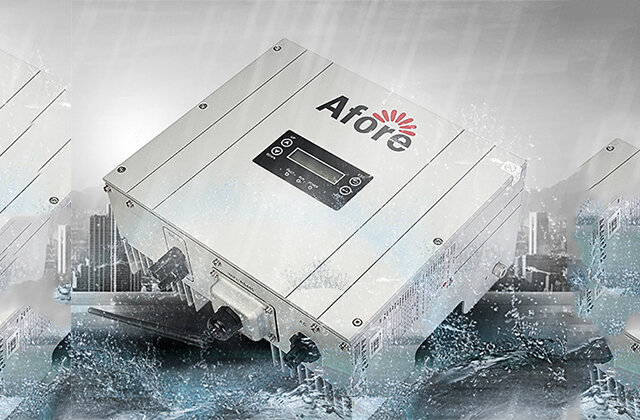
Reverters, also known as power adjusters, can be divided into two types of stand-alone power supply and grid-connection, depending on the use of the reversers in the photovoltaic system. Depending on the wave-shaped mode, it can be divided into a square-wave reverser, a step-wave reverser, a sine-wave reverser and a combination of three-way reversers. For reversers for grid-connected systems, transformers can be divided into transformers of transformer type and non-reversers of transformer type, depending on whether the transformer is present or not。
Ii. Structural rationale
The reverser is an electrical adjustment device made up of semiconductor parts, which is used mainly for direct flowElectricity conversionIt's a power exchange. It consists generally of an upturn and a reverse bridge. The pressurization circuit converts the direct current voltage of the solar cell to the direct current voltage required for the output control of the reverse transformer; the reverse bridge circuit converts the direct current voltage after the lifting to the exchange voltage of the usual frequency. Inverters consist mainly of switch elements such as transistors, which translate straight-flow input into communication output by systematically allowing switch elements to repeat switch-off. Of course, it is not practical simply to produce the reverse-transformer output shape from open and off circuits. High frequency (hfvv) pulse-widening (spwm) is generally required to narrow the width of the voltage close to both ends of the sine wave, to widen the width of the voltage in the centre of the sine wave and to allow the switch element to move at a certain frequency in one direction throughout the half-cycle, thus forming a pulsed wave (sine wave). Then let the pulses form the swirl through a simple filter。
Iii. Material instruments for returners
1. Current sensors
For current sensors, which require high accuracy, rapid response time and are resistant to environmental requirements such as low temperature and high temperature, many domestic plants currently use open current sensors to replace closed circulation sensors such as jce1000-axs, jce1500-axs, jce2000-axs etc
2. The current sensor
The brs series of current sensors are generally used, ranging from hundreds to thousands of as, and output signals are generally standard 0-5a
3. Electrical resistors
Functions
1. Auto-run and shutdown functions
After sunrise in the morning, the radiation intensity of the sun gradually increased and the output of the solar cell increased, and when the output power required for the reverse agent to work was reached, the reverser automatically began to operate. Upon entry into operation, the reversers monitor the output of the solar battery components at all times, and the reversers continue to operate as long as the output power of the solar battery components is greater than that required for the work of the reversers; until the sun comes to a halt, even the rain-weather reversers can operate. When the solar cell component is smaller and the reverser is close to 0, the reverser becomes on-board。
2. Maximum power tracking control
The output of solar cell components varies with the intensity of solar radiation and the temperature of the solar cell components themselves (chip temperature). In addition, the solar battery assemblies have the best working points to obtain maximum power because they have the properties of voltage decreasing with current increase. The radiation intensity of the sun is changing, as is obviously the best work point. In contrast to these changes, the work point of the solar battery assembly is always given maximum power, and the system always obtains maximum power output from the solar battery assembly, which is the maximum power tracking control. The greatest feature of the reversers used in solar power generation systems is the inclusion of the maximum power point tracking (mppt) function。
Iv. Elections and methodology
Power
In general, reversers of the corresponding power segments are configured in accordance with the system requirements, the power of the selected reversers should be matched with the maximum power of the solar array, and the rated output power of the optical reversers is generally close to the total power of the input, thus saving costs。
Key technical indicators
1) select the appropriate input-output voltage range to ensure the optimal mix of products。
2) european efficiency of reversers: its high and low levels will have a direct impact on the design costs and efficiency of photovoltaic systems。
3) maximum power tracking function of solar array (mppt) and its efficiency。
4) attention should be paid to the basic protective functions of the selected inverters, such as overflow/short circuit protection, overpower protection, overture protection, mine protection, island protection, etc。
5) inverters output current wave malformation (thd per cent) is below 4%。
3. Certification standards
As the core equipment of the photovoltaic power plant, in order to ensure its stable, reliable and continuous operation, grid-resilients must be highly reliable. It should have security certification for the destination of sales, electromagnetic compatibility certification, and national networking certification (for example, in europe)
Security: en62109-1, en62109-2









