


Domestic air conditioningIt's usually a split air conditioner! The inner and external are separate
First, we'll learn the principles of split air conditioning
How does the air conditioning cool in our house? We take the example of indoor water spilling。
If we spill water into the room, the heat is absorbed when the water evaporates, and the temperature in the room drops. However, when the water is completely evaporated, the temperature in the room will not decrease again。
If we take certain measures to recycle the evaporated water vapour, so that its condensation continues to become water, and then continue to evaporate to heat, then we can achieve sustained cooling in our rooms。
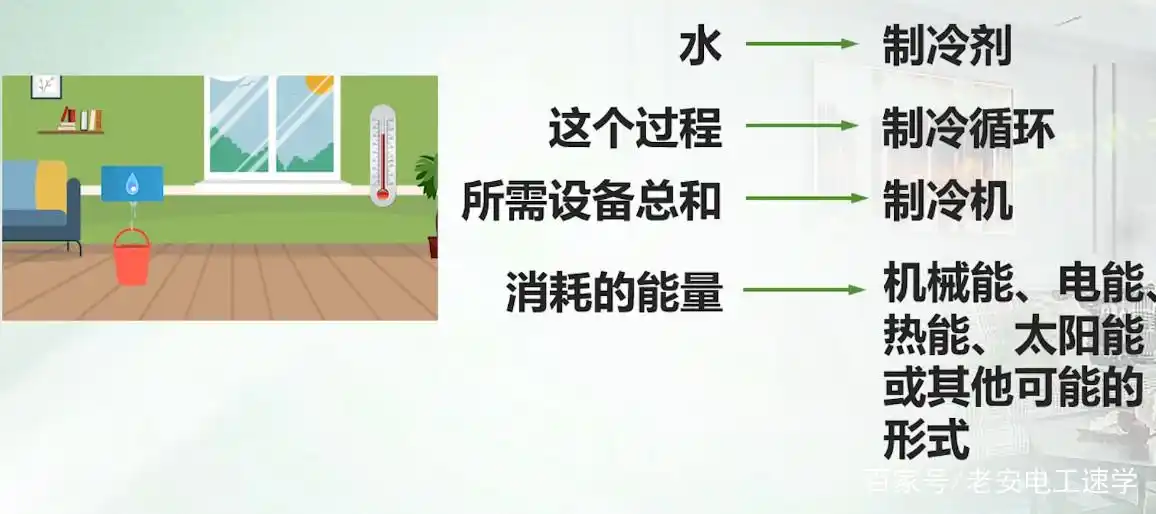
In the process, we call water a refrigerant, the process is a cooling cycle, and the sum of the equipment we need is called a chiller, and the process requires energy consumption in mechanical, electrical, thermal, solar or other possible forms of energy, which is our usual method of aromatic refrigeration of liquids。
In the summer, we know that indoor temperatures are relatively low, outside the room is relatively high, and how can we achieve low-temperature heating and high-temperature heating
For example, we know why we can't cook eggs when we're running water in the highlands. Why is it so easy for us to cook with high-pressure pots
Because it's lower in the plateau, and if it's lower, its boiling point is lower, so we can't cook eggs. In high pressure pots, the boiling point of the water rises, and we can achieve more than 100 degrees of water, so the meat in the high pressure pot is easier to collide. That means the boiling point is lower at low pressure and the boiling point is higher at high pressure。
Can we analyze if five degrees of water can boil? Five degrees of water can boil as long as our pressure is low enough, and 150 degrees of water can sustain a liquid state as long as our pressure is high enough。
Our refrigeration is such a cycle. Refrigeration typically consists of four main components, evaporationers, compressors, condensers and expansion valves。
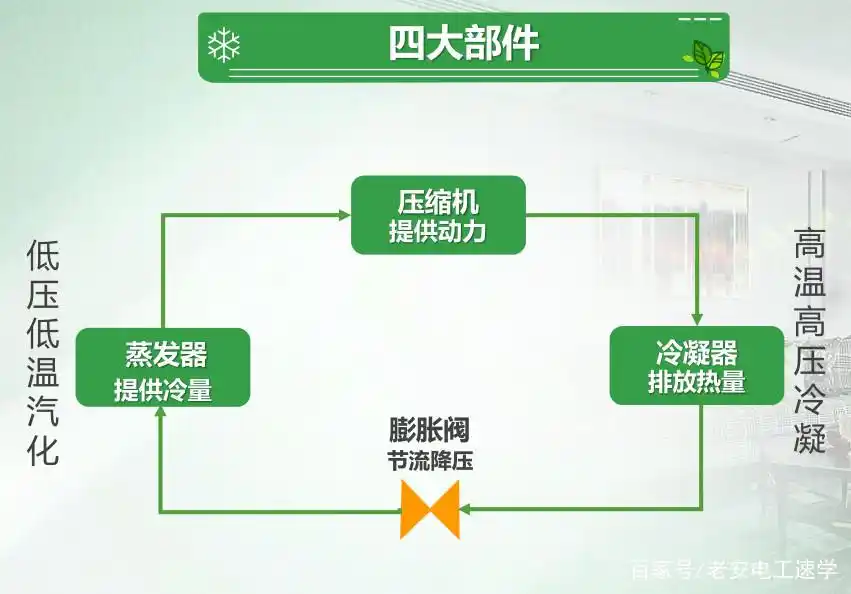
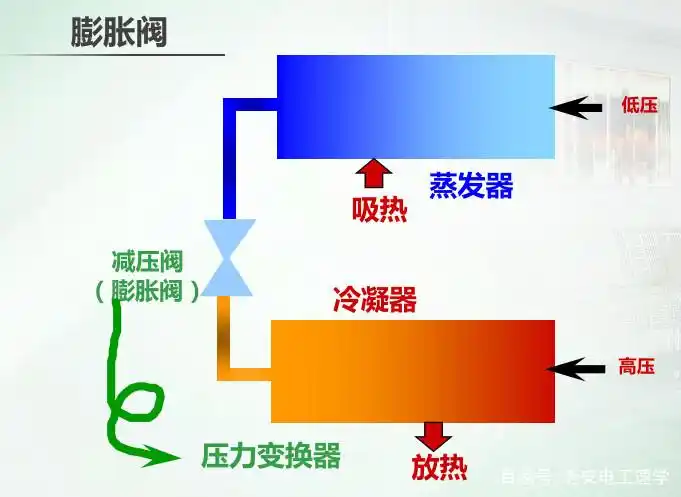
Compressors in this system provide power, condensers release heat, voltage-saving devices (i. E. Expansion valves) act as throttle-relief devices, and evaporaters provide cooling。
In the process, the evapoperator, we keep it at a low pressure enough to gasize the heat at low pressure, and the condenser, we keep him at a high pressure enough to cool it down at high pressure, thus achieving our cooling cycle。
How do we work on split air conditioning? Let's take a look at the heater set up in the summer room。
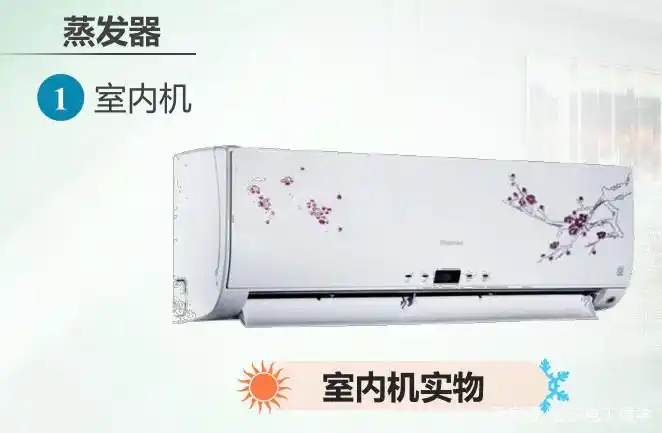
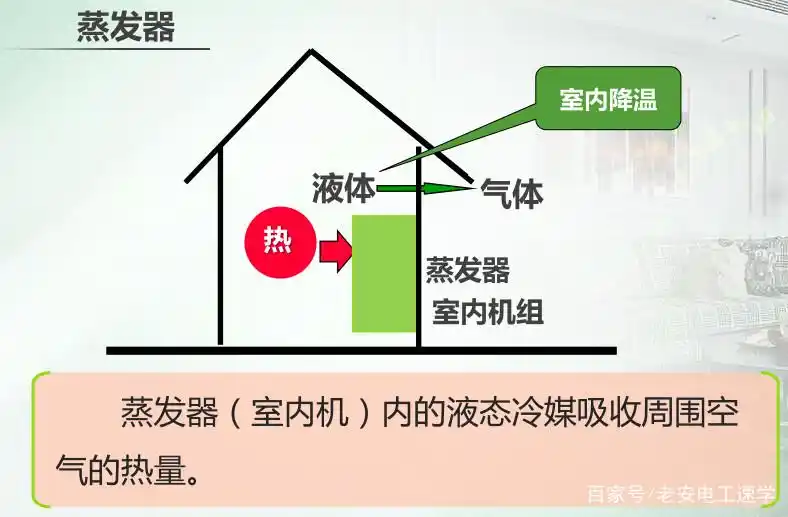
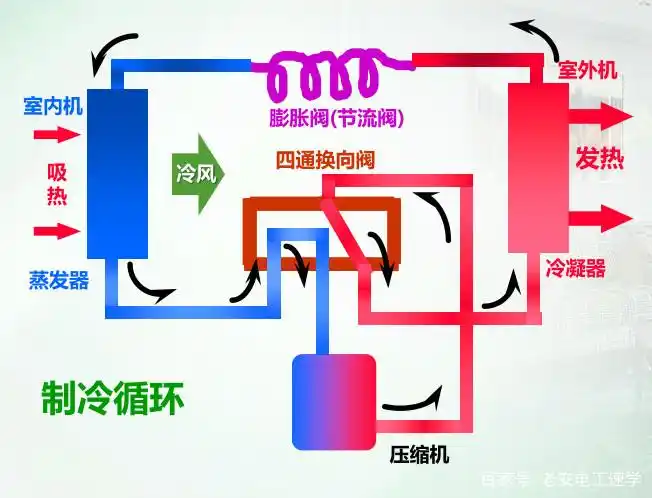
The evaporation unit absorbs indoor heat, and the refrigerant changes from liquid to gas in the evaporation unit, absorbs heat from the surrounding air, so that cooling can occur in the room。
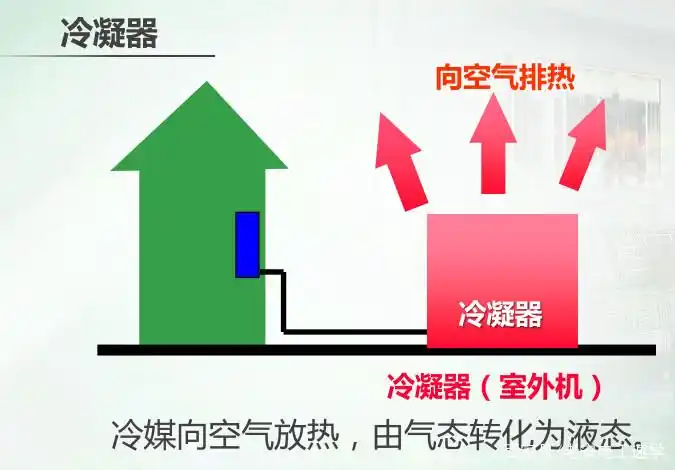
In summer, outdoor heaters act as condensers。
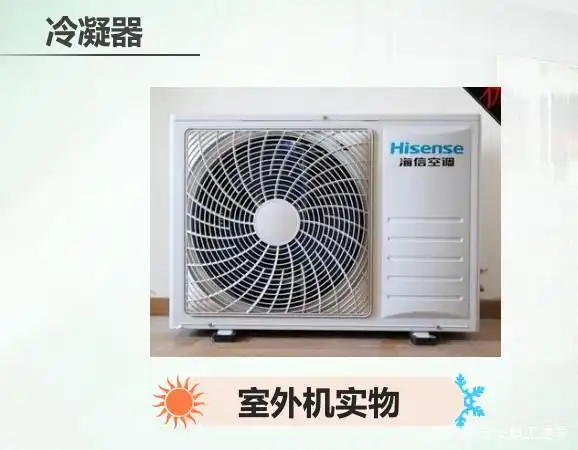
Outside the room, the refrigerant is in the condenser, which changes from gas to liquid condensation to heat, thus excreting to air。
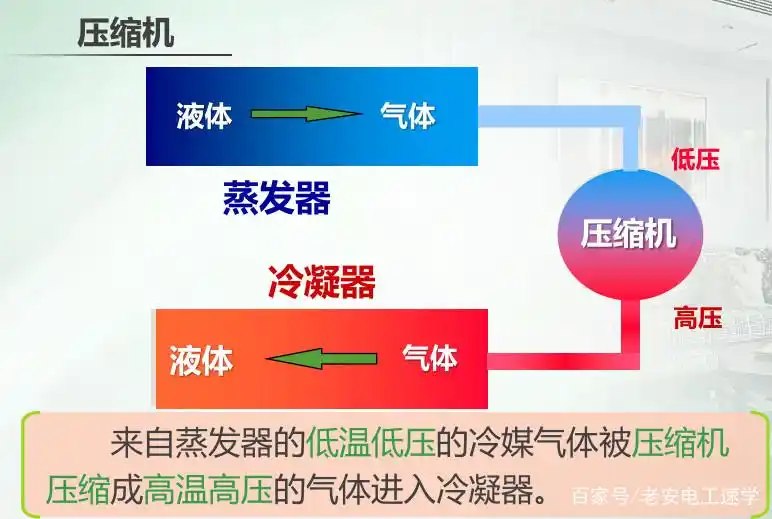
Compressors in our air-conditioning system are gaseous gases that are inhaled from the evaporation unit, compressors compressed into high-temperature high-pressure gases, refrigerants entering the condenser for condensation and heating。
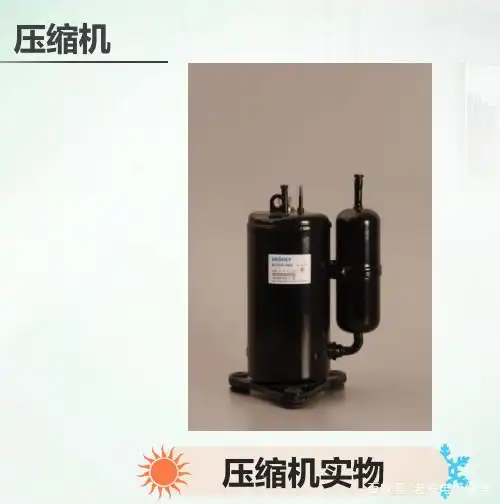
So the compressor's function is to maintain the low pressure and the high pressure of the condenser of our evaporation, so that the evaporationr's low-temperature low-pressure vapour, and the condenser is condensed at high-temperature high pressure。
Domestic air conditioners, which are commonly used in expansion valves and catheters。
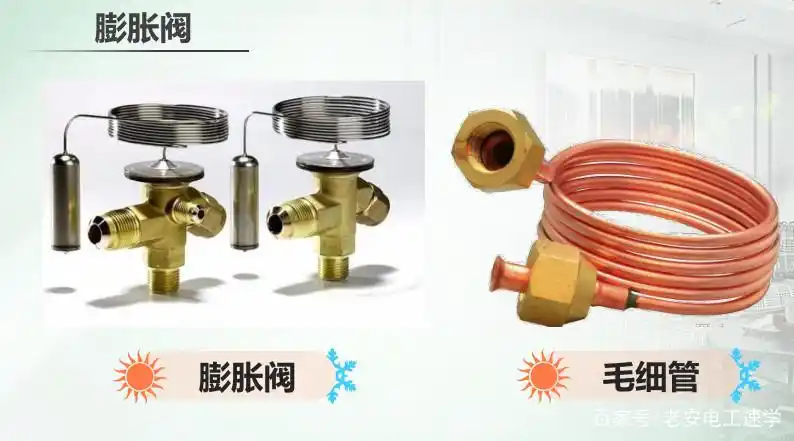
The function of an expansion valve is to depress high temperature high pressure liquids after condensed condensers to low temperature low pressure liquids into the evapoperator for gasification. So our throttle is also a pressure transformer。
Home-based air conditioning can cool during summer, so how does it make winter heat
In winter, we have higher indoor temperatures and lower outdoor temperatures. In the same way, when our air conditioning is running, we still need to take the heat from the cold, the heat from the heat, the process we call itHot pumpI don't know。
In winter, our interior heat exchanger acts as a heater, and in summer, our outdoor heat exchanger acts as a heater. How do we get this heater converted
Thermal pump-type air-conditioning compressors, in the summer, pumped high-temperature high-voltage gas refrigerants enter the outdoor heat exchanger for condensation and heating, then gas-inhaled thermally through the voltage system into the indoor heat exchanger, and then the low-temperature and low-pressure gases that inhaled back to our compressor, thus completing our cooling cycle。
In winter, what we need is indoor heating, where high-temperature and high-pressure gas refrigerants pressured by compressors enter the room for condensation and heat release, then through the throttle-reducing device, then into the outdoor heat exchanger, absorbing heat from outdoor temperatures and returning to the compressor, thus completing the heating cycle。
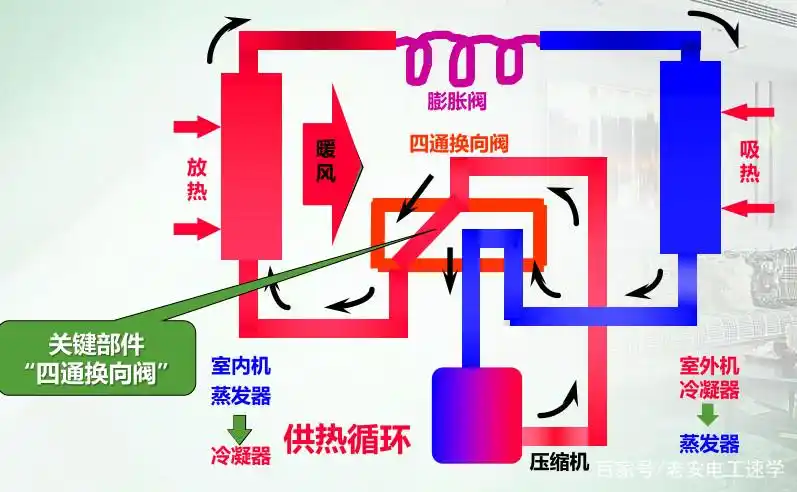
An important component of this process is the four-way valve. How does the four-way valve work
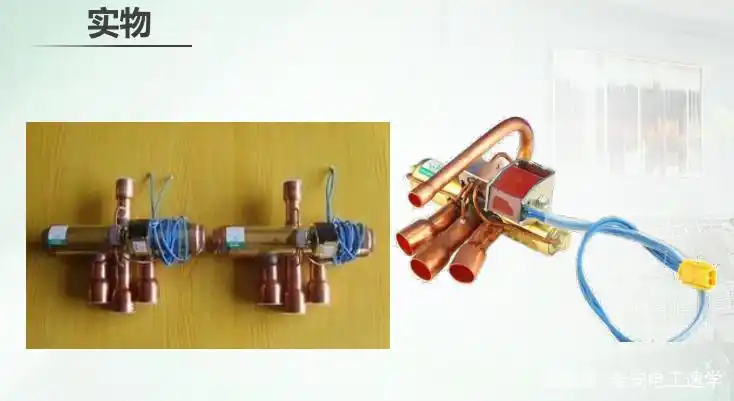
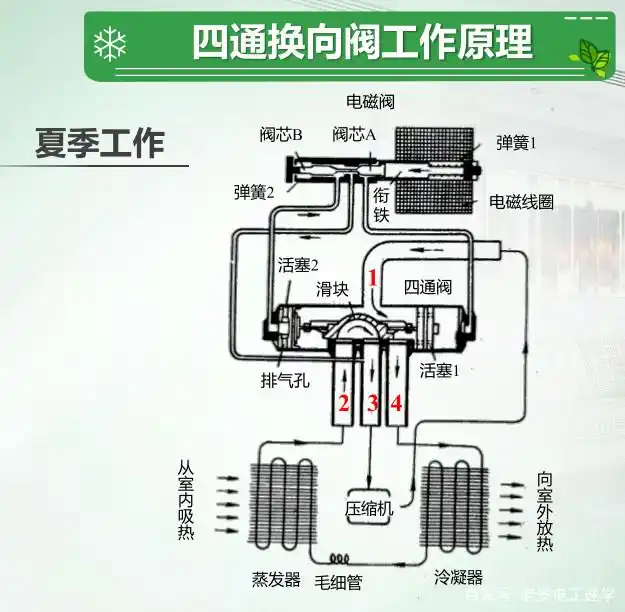
It has four corridors. During the summer, 1 and 4 lines, 2 and 3 lines. During the summer, high-temperature, high-pressure gases that are compressed by compressors are heated by a combined pipe into an outdoor heater, which then intercepts the flow, and from two to three pipes back to the compressor when the interior heater is vaporized。
There is an electromagnetic valve on our switch valve, and in winter, the magnetic valve moves to the right of its half-turned slides in the valve, so that three or four roads and one or two. As can be seen, gaseous refrigerants pressured by compressors go from one tube to the other, then into the interior heater for heating, then through voltage, into the outdoor heater for heating, and four or three circuits back to the compressor, thus achieving the heating cycle。
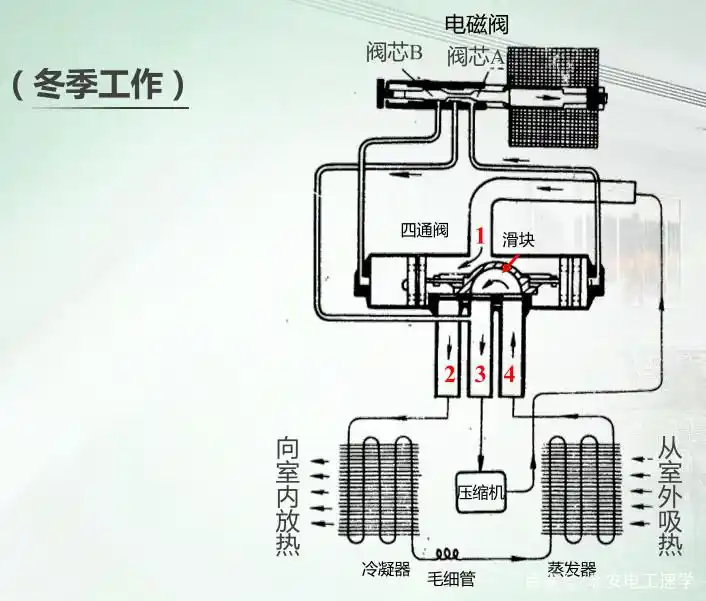
Through our four-way-to-the-valve slider, we can move two, three, three-way circuits, four-way-to-drive sliders, thereby changing the flow of two, three-way or three-way circuits, thereby altering the flow of refrigerants exported by compressors and achieving the conversion of heat and refrigeration。
There are many types of domestic air conditioning. The structure consists of wall-mounted, cabinet-type, ceiling-top, etc.; single cold, heat-pump, electric heat, heat-pump-accelerator, etc.; and fixed and variable frequency, depending on the working condition of the compressor。
When we choose to use it, we can choose according to the size of the user room, the requirements for use, the location of the installation, which is home, the working method of the air conditioner, and what we choose to take into account。









