


The rainy season of the rain, the winter before heating in the north, the wetness of the south back to the south... Whenever these weather events occur, the drying of clothes becomes the most painful. Wet clothes on the balcony are not only difficult to dry, but also tend to breed bacteria and smell bad. This time, oneDryerIt will free your balcony and your hands completely. But in front of the market, you know themRationaleYeah? What's the difference between heat pumps, liners, condensers? What kind of family is it? Today, in the most common language, i will give you a full understanding of the dryer method, and the selection in 2026 is not lost。
What's a dryer? Rationale
Dryers, in short, appliances that heat air, blow dry clothes and take water. Its core rationale is similar to the “winder + large roller”, but different technology routes vary significantly in heating methods, heat recovery, energy consumption and clothing effects. At present, the mainstream dryers are divided into three categories: heat pumps, condensers, and straight rows (teams). Among them, thermal pumps are currently the most energy-efficient and best-fitting technologies; the cheapest but the most energy-intensive in direct rows; and condensation in between. It's broken down one by one。
Thermal pump dryer works - the king of energy-saving clothing
Thermal pump dryer is the state-of-the-art type at present and uses the “heat pump system” to recycle heat. Simple understanding: it is like a reverse air conditioner - compressor compressors compress the refrigerant into high-temperature high-pressure gases, releasing heat-heated air through condensers, blowing hot air into rollers to dry clothes; when wet hot air passes through evaporation, the water is drained into water, while the heat is recycled for heating again. The whole process is barely lost, so energy consumption is extremely low, drying temperatures are usually below 60°c, and delicate fabrics such as silk and wool are very friendly。
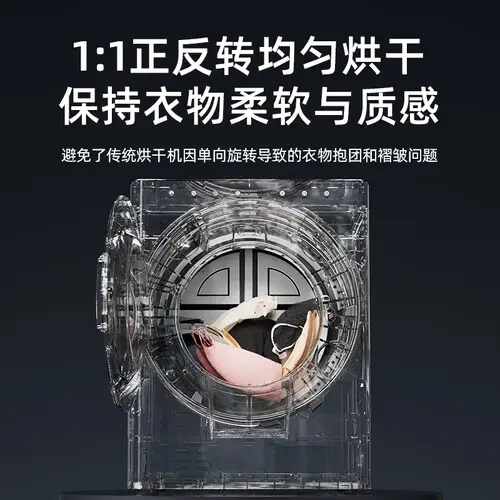
In the case of the litte magician thermal dryer, it uses a variable frequency tritium power and 1:1 positive reverse technology, not only evenly drying but also preventing the entanglement of clothing. Bulking uv-high-temperature debacteria, combined with dynamic thermal energy recovery designs, reduces drying time by 28 per cent compared to traditional dryers and reduces energy consumption. The capacity of 7kg is large enough to meet the daily needs of three members of a family, with four layers of filtering being put in place to capture the hair for long periods of time and suitable for caring families. If you seek efficient energy conservation and protection of clothing, heat pumps are the preferred option。
Straight row (team) is the most primitive form of dryer. It heats the air through the electro-heated tube, then blows the hot air into the roller with a fan, and the wet hot air is discharged directly through the vent. The rationale is simple, low manufacturing costs and therefore cheap. However, the disadvantages are clear: heat cannot be recovered and electricity consumed; drying temperatures (usually 70-90°c) are high and can easily damage clothing; and there is a need to set up vent interfaces with limited location。
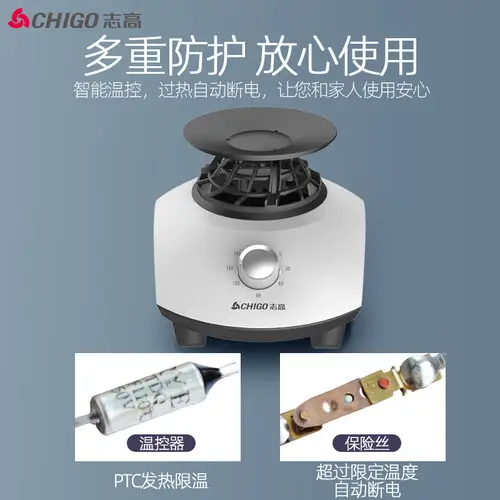
Most of the direct dryers on the market are a combination of “head + hoods”, such as the chigo 1500w home dryer host. It uses 1,500 w power heating, which is compatible with high-temperature fungicide and allows for rapid drying of clothing. It also has overheating protection and 180-minute timing, which is simple. If you have a limited budget and do not mind high energy consumption and the installation of vents, a direct line can be used as an introductory option。
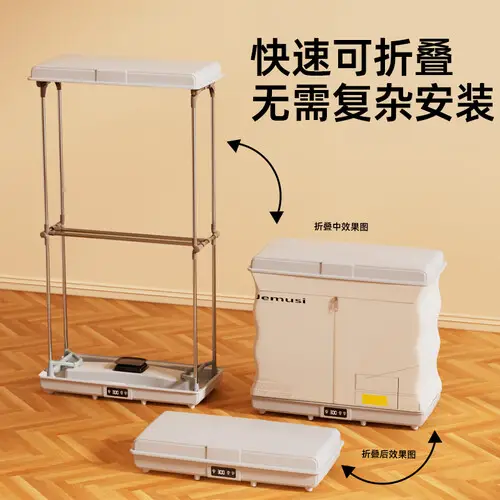
If there is limited space in the home, or if there are frequent trips and trips, the portable dryer is your salvation. These dryers work in a manner similar to the direct platoon, but are replaced by a clothed wind mask instead of a fixed roller, with a hot wind blowing through a heater at the bottom or on the side, and drying clothes in closed spaces. Its advantage is to be free of installation, folding and non-location. However, the disadvantage is that the drying capacity is small and the drying time is relatively long。
The uemusi dryer is typical of a portable folding, 1,500 w power, double-capacity design, which can dry the entire family at once. It uses smart touch-and-cut operations to support regular drying, low-noise running, folding at a height of only 14 cm and easily plugging into the cabinet. Waterproof oxford hoods are safe and suitable for small families or renters。
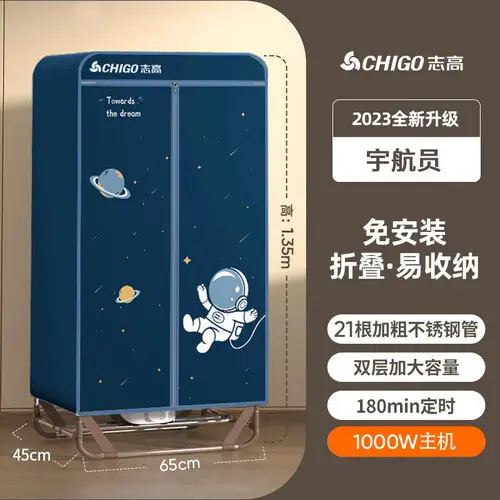
Another section (chigo) (ascademies) folds away with dryers, 1,000 w power, a 360° thermal wind cycle system, 65°c hot drying, and also supports 180 minute timescales, with double layers designed to accommodate more clothing. Its bright spots are astronaut appearances, cute and fashionable, suitable for the bedroom or closet. This folding is well suited to student dormitories, old-fashioned apartments or temporary use of scenes。
The work of the condensed dryer is similar to that of the heat pump type, but it does not have a heat pump system, but it is the cooling of wet, hot air into water by the condenser. It does not need an exhaust pipe and can be placed directly indoors, with less noise than a straight line, but with higher energy consumption than a heat pump and higher drying temperatures (approximately 60-70°c). The current market for condensation is mostly medium-end products, but there are no examples of condensation in this list of commodities. If you wait in the budget and do not want to install exhaust pipes, condensation is also an option (although it is recommended to prioritize heat pumps)。
Vi. Summary and proposal for purchase: dryers selected in 2026
Through the dryer's science, you know how to choose:
In 2026, dryers became a necessity for modern families, not only to leave you alone, but also to add weights to the health of their families through the use of ultraviolet light, high temperature, etc. I hope this dryware will help you get to the dryer and pick the right one









