


YesAdvanced ceramicsThe chemical composition of powders, particle size distribution and granular shapes are important factors influencing material applications in areas such as heat spraying and powder metallurgical。
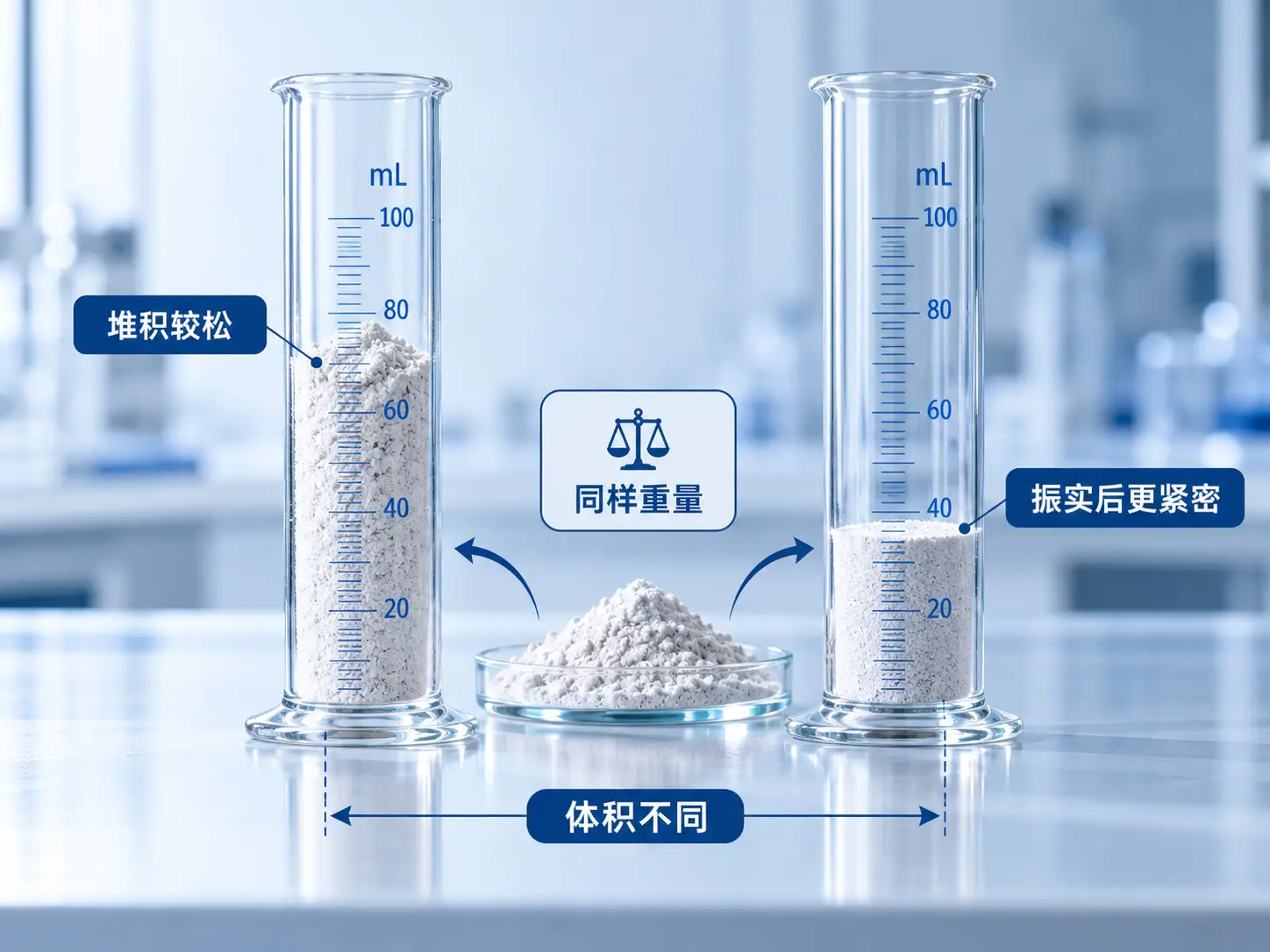
However, there is a concern in the process of actual production and detection: why would the powder of the same weight be filled in containers with different sizes
Even powders with the same chemical composition may exhibit different volume characteristics due to differences in particle shape, particle size distribution and accumulation status。
An understanding of this phenomenon requires an understanding of a key physical indicator of the powder — tap density。
The current edition of " walking into the lab " , we are aware of the behaviour of powder particles and the relevance of this indicator in the quality assessment, starting with the density test。
I. What's a strong density
Vibration density means the mass of the powder in a unit volume after the powder has reached the required state of vibration by mechanical vibration or impact under specified conditions。
Its formula is:
Of which:
Unlike the true density of the material itself, the volume corresponding to the condensation contains not only powder particles but also gaps between particles。
Therefore, oscillation density reflects the overall accumulation status of the powder under certain conditions, rather than the density of the individual particle internal matter。
For example, two powders of 100 g mass, assuming 40 cm-3 and 50 cm-3, respectively, have a strong density of 2. 50 g/cm-3 and 2. 00 g/cm3, respectively。
This is only a set of hypothetical data used to illustrate the method of calculation and is not the actual test results of the swarm product。
Ii. How is the density measured
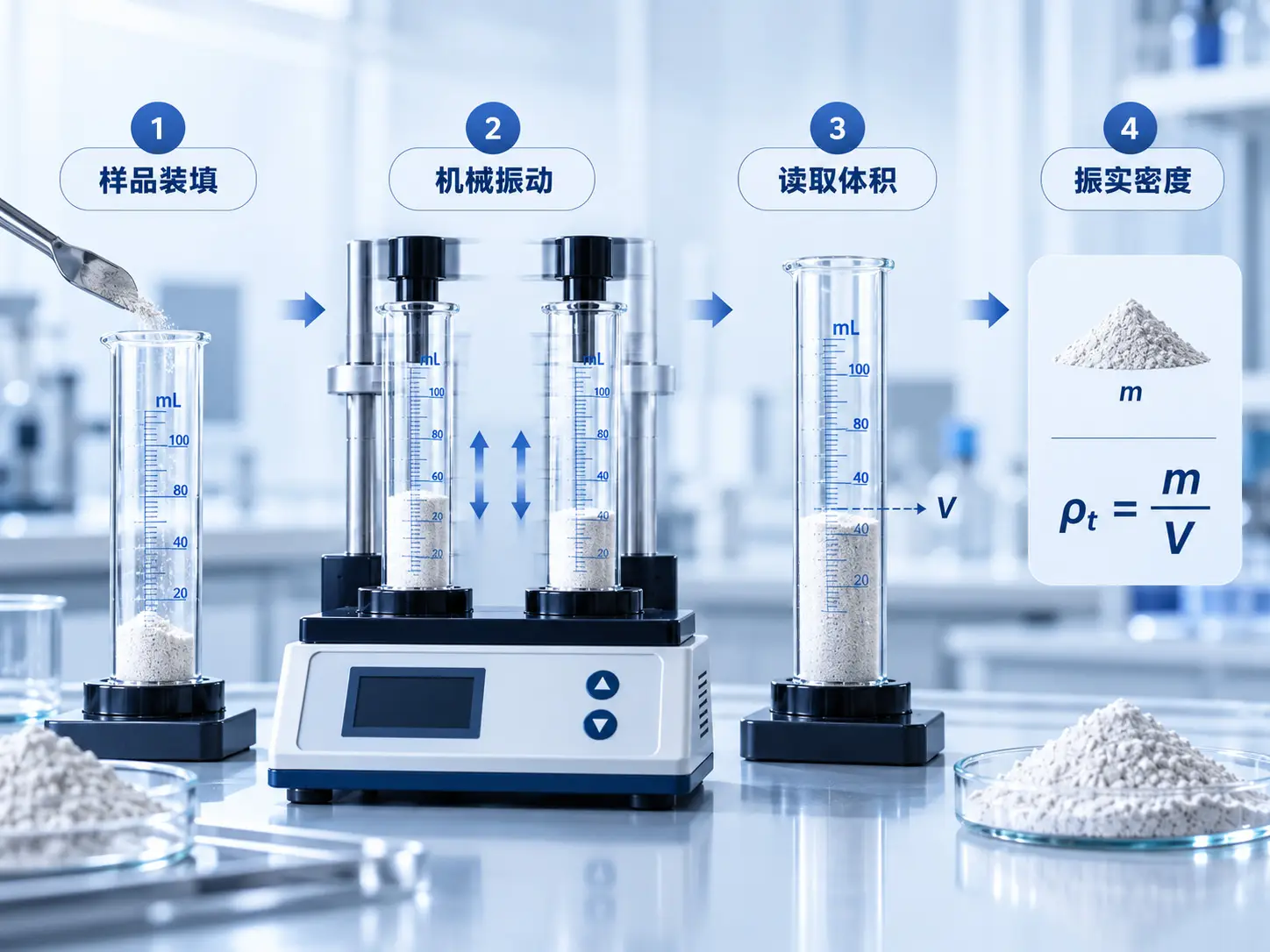
Validation density tests are usually performed using an amplitude instrument。
At the time of detection, the powder sample of the specified mass is loaded into an appropriate cylinder or measurement container, where mechanical vibration is carried out by the instrument in accordance with the specified conditions, so that the powder particles are rearranged during the exercise。
As the vibration process continues, part of the gap between particles is gradually reduced, with which the overall volume of powder usually decreases。
When the end-point conditions specified in the corresponding test method are met, the volume of the vibrating powder is read and the condensation density is calculated in conjunction with the sample mass。
The results were influenced by factors such as the sample's state, packaging specifications, vibration conditions and endpoint determination. Therefore, comparable testing methods and conditions should be ensured when comparing data for different batches。
Our current standard, gb/t 21354-2008, provides the basis for testing. Specific tests should be selected according to product type, customer requirements and applicable criteria。
Iii. What factors affect the density of the powder
Visibility is not determined by a single factor, but is the result of a combination of various powder characteristics。
1. Sampling
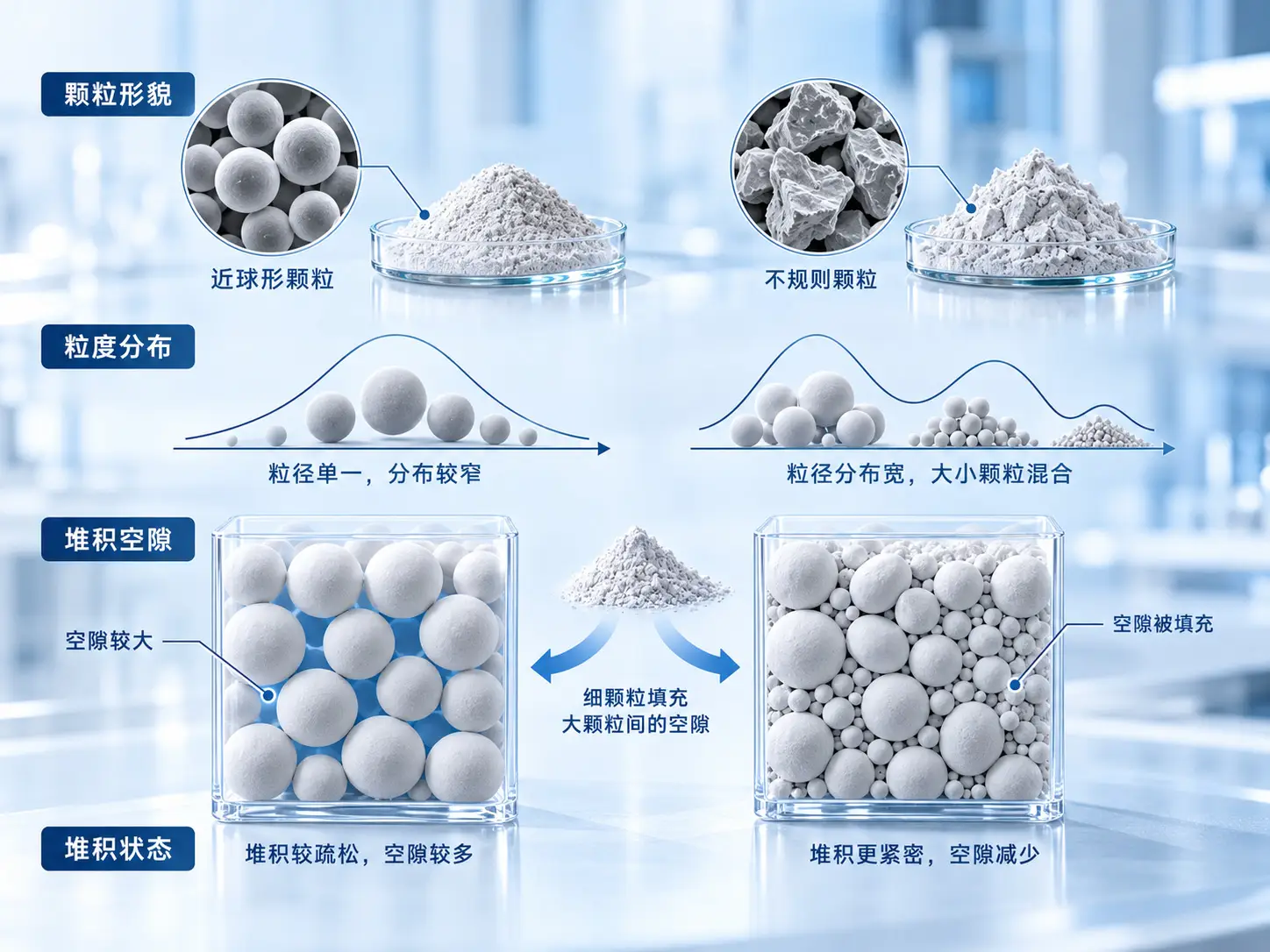
There may be significant differences in the manner in which powder particles in different shapes accumulate。
For example, spherical particles usually have a more disciplined geometry and can form relatively stable stacking structures under appropriate conditions, while irregularly shaped, rough surface particles may influence their rearrangement as a result of mutual contact and mechanical collaboration。
However, spherical particles do not imply a certain higher density, which still needs to be analysed in conjunction with other factors。
2. Particle distribution
The proportion of particles of different sizes in the powder also affects the gaps between particles。
In some systems, an appropriate proportion of smaller particles can reach the gap between larger particles and increase overall accumulation。
However, a high percentage of fine powder may also affect accumulation as a result of increased power between particles and increased reunification。
As a result, there is no simple linear relationship between particle size distribution and oscillation density for all powders。
3. Particle reunification
For partial fine particle powders, the particles may be united by van der waals, electrostatic or other factors。
The structure, intensity and ability to rearrange during the vibrations of the reunification may affect the ultimate physical build-up。
4. Material composition and particle density
The density of the different materials themselves varies。
Even if the two powders have a similar particle-shaped and stack structure, there may be a significant difference in the vibrating density of the material if the actual density of the material is different。
It is therefore necessary to distinguish between the density differences of the material itself and the impact of the particle build-up state when evaluating the density of the material。
Iv. What is the significance of vibrating density for industrial powders
Visibility is a reference indicator in the physical performance evaluation of powders, the significance of which needs to be understood in conjunction with specific materials and application scenarios。
For ceramic powders, vibrating density helps to understand the characteristics of powder piles under defined vibration conditions and provides reference for powder filling, storage and process studies。
In the field of thermal spray powder, there may be a correlation between the particle shape, particle size distribution and accumulation status. Vibration density can be used to assist in comparing the physical characteristics of different batches of powder, but does not directly represent the mobility or delivery stability of the powder。
Accumulation is also of research value for powder systems that need to be filled, suppressed or subsequently cremated. However, the relationship between oscillation density and actual inhibition of formation density, sintering results is also influenced by pressure conditions, particle characteristics and process parameters。
Therefore, the density is not as high as possible, but needs to meet the requirements for material design, production processes and practical applications。
V. Why a combination of other test indicators
For quality control of powder material, only the density of the material is felt and the product performance cannot be fully reflected。
For example, two batches of powder may have similar vibrating density, but their particle shape, particle size distribution and chemical composition are not identical。
In turn, powders with similar particle size distribution may exhibit different oscillation density due to granular shape, reunification or other factors。
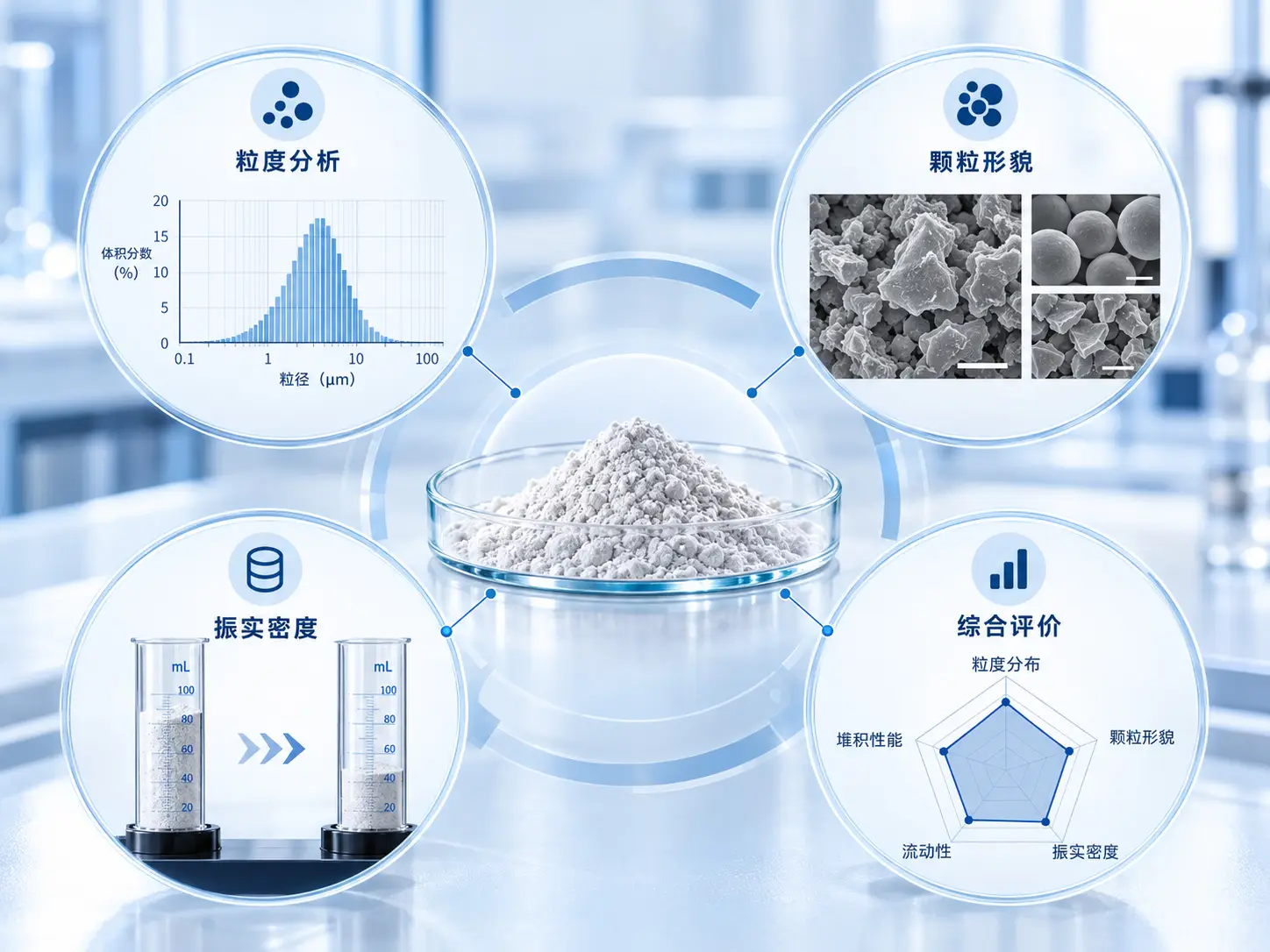
Therefore, sound density testing should be complementary to other manifestations。
Particle size analysis is used to understand particle size distribution; sem is used to observe microforms; xrd is used to analyse phase composition; bet detection provides information on surface area; and amplification density provides additional data from the perspective of particle accumulation。
A more comprehensive understanding of the properties of powder materials, based on multi-dimensional testing and integrated analysis, provides a basis for batch comparisons, process optimization and quality evaluation。
Concluding remarks
From the microforms of powder particles to the state of accumulation between particles, each physical indicator is helping us to understand the material from different angles。
Visibility testing, while relatively intuitive, can reflect powder accumulation characteristics under prescribed conditions and provide valuable reference for pollinating material research and quality evaluation。
For advanced ceramics and heat spray powders, stable product quality requires not only attention to the chemical composition of the material, but also an integrated evaluation that combines physical characteristics and practical application requirements。
Arrivals to the laboratory to understand powders in detail, scientific tests to understand material characteristics and more reliable material technical support for advanced manufacturing。









