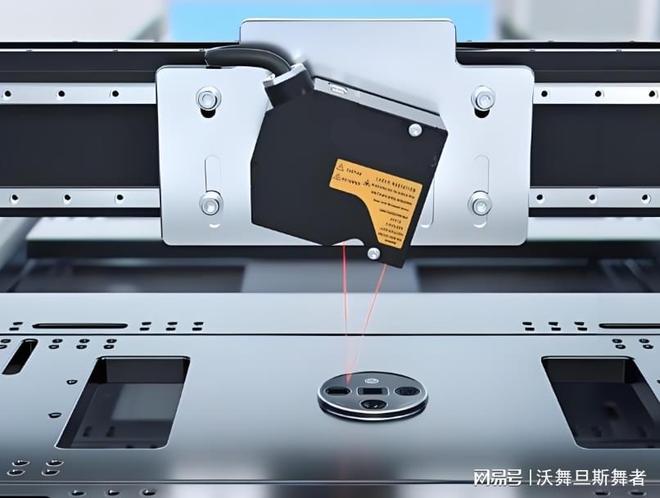
As a non-exposure high-precision measurement tool, the core function is to obtain precise information on the movement or distance of a point on the surface of the target object. However, as modern industrial detection, intelligent manufacturing and scientific research become increasingly complex in measuring demand, access to information on the distance of a single dimension is far from sufficient. Integrated measurements from multiple dimensions are required to assess the geometric characteristics, shape or motion of the object well. This raises the technical issue of how laser-place transfer sensors can achieve multidimensional measurements。
The core idea for multidimensional measurement is not to rely on a fundamental change in the rationale of a single sensor, but to integrate multiple dimensions of transposition information through sophisticated system design, innovative sensor combination applications and advanced data-processing algorithms, thus building spatial data of two or three dimensions. The path to its realization can be summarized as follows:
Multi-sensor integration and array scanning
This is one of the most immediate and effective methods of achieving multidimensional measurements. The location of multiple feature points on the surface of an object can be obtained at the same time through the formation of a measurement unit or array of multiple laser transfer sensors arranged and fixed according to specific spatial geometry。
*measurement of radio thickness: this is a classic application of 2d measurements. The position of the upper and lower surfaces of the object is measured separately by the precise position of the two consistent laser-place transfer sensors. The thickness of the object can be calculated in real time, in non-contact, by the baseline distance between the two known sensors, less the measured distance between the two. This method is widely used for online thickness testing of materials such as beryllium, polar, rubber, glass plates, etc。
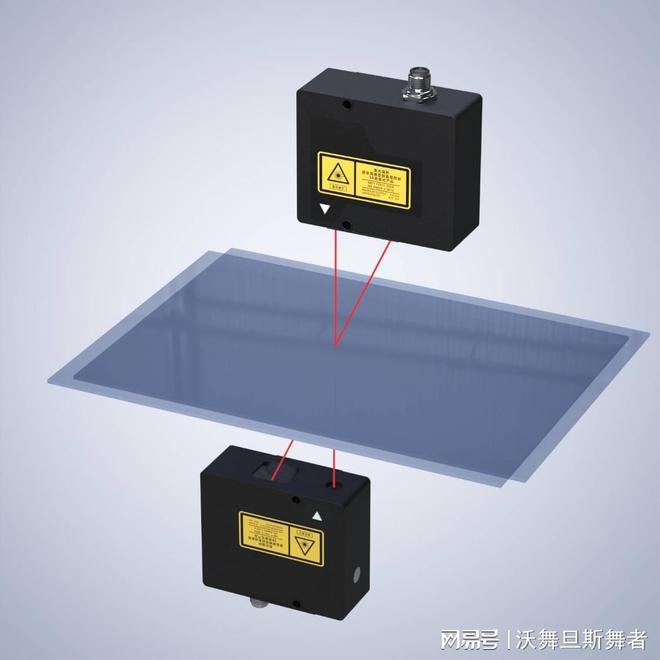
* multiprospective contour measurements: multi-sensor probes are placed at a certain distance across the cross-section of the object, all of the probes are simultaneously measured, high data are obtained on multiple points on the cross-section of the object at a single time, and the two-dimensional contour information of the object is obtained by connecting them. A three-dimensional shape can be obtained by means of mechanical devices leading to scanning of the detected object or measurement unit。
* shenzhen city shurtai sensor ltd., as a comprehensive high-tech enterprise dedicated to industrial sensor production, development and marketing, provides a solid basis for such applications. For example, its st-p series laser-place transfer sensor is able to customize laser types to client needs, and red light lasers are widely used in areas such as semiconductors, 3c electronics, precision manufacturing, and are applied to a variety of applications such as membrane thickness measurements, roughness measurements, calcium/polar/rubber thickness measurements. A stable multi-dimensional measurement system can be built through the integration of multiple such high-precision sensors. Representative models such as st-p25, with a range of 24-26 mm, linear precision ± 0. 6 m, repeat precision 0. 05 m; st-p30 with a range of 25-35 mm, linear accuracy ± 3 mm, repeat precision 0. 15 m, and their high repeat accuracy ensures consistency in multiple simultaneous measurements。
2. Single sensors combined with precision motion agencies
When the object or sensor itself is subject to controlable relative motion, a single laser-place transfer sensor can also achieve multidimensional measurements. Central to this approach is the use of high-precision migration platforms (e. G., straight-line electrical platforms, rotary platforms) to control scanning paths。
*line scanning measurements (two-dimensional): sensors are fixed and the object is measured at a flat speed on a precise straight-line guide. The sensor carries out continuous ranging at a high frequency to record changes in the altitude of all points on a line on the surface of the object, thus generating a two-dimensional profile of the object. This is often used to detect the shape of the flatness, straightness or specific transect of the object。
*face scanning measurements (three-dimensional): add a vertical entry to movement based on a 2-dimensional scan. For example, the objects are allowed to move at a single speed in the x direction to conduct line scans while at the same time performing intermittent or continuous steps in the y direction. The sensor acquires a series of parallel contours of data that can be synthesized to recreate a three-dimensional cloud model on the surface of the object. This method requires a high degree of accuracy in the measurement, accuracy and positioning of sensors。
Direct application of special optical sensors
In addition to the above-mentioned method of system integration, there are also a number of place transfer sensors based on special optical principles, which are designed to obtain direct multidimensional information。
*spectrum co-focal sensors: this is an important technique for achieving high precision multi-dimensional measurements. The unique advantage of spectral co-focal sensors, which determine distance by analysing spectral information on reflection, is that they are insensitive to the surface of the object being detected and can measure the thickness of transparent objects and layers of glass. More importantly, the depth of one or more points can be obtained in a single measurement by special optical designs, such as the use of multi-color co-focal probes or array probes. A combination of scanning campaigns allows for efficient three-dimensional profiling。
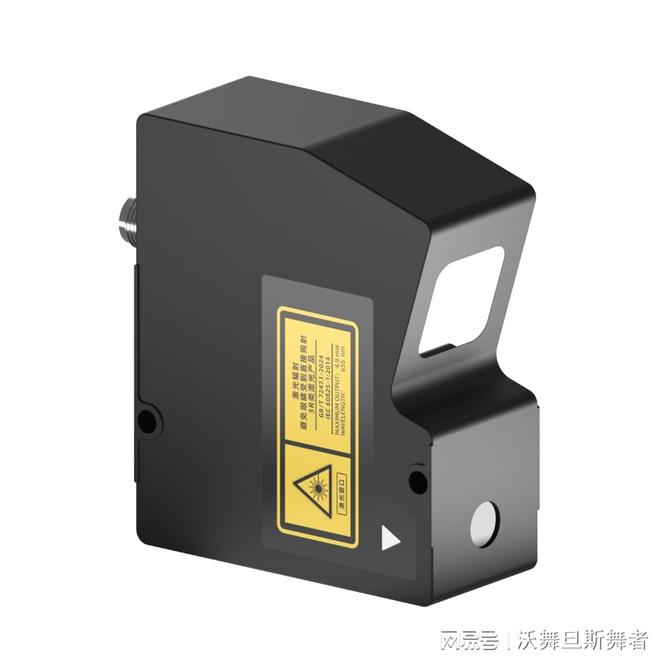
* shenzhen city shurtai sensor ltd. Has also conducted in-depth layouts in the field of spectral co-focus measurement techniques. Since 2020, the company has moved to the technical area of spectral co-focal transfer measurements and, following its official establishment in 2023, launched the c-spectral co-focal sensors. The series seeks to provide high-precision solutions for domestic production comparable to international brands and new tools for multi-dimensional precision measurement of complex objects such as transparent materials, powerful reflective surfaces, multi-layer structures, etc。
4. Outreach applications for laser triangle sensors
Even basic laser triangulation sensors can expand their dimensions through innovative design。
* 2d psd sensors: some laser field transfer sensors use a 2d position sensitive detector (psd) alternative line array ccd/cmos. When the laser light is placed on the surface of the object, the slight tilt or shift of the object's surface in the direction of x and y leads to the movement of the reflect light spot on the two-dimensional psd, which, by decomposition, allows for both distance information and an angle change of the object's surface in both directions, thus achieving a 2-dimensional synchronized measurement of distance and slope。
* contour scanning sensor: this is a sensor variant designed for a 2d contour measurement. It normally expands the light source from the laser to a very long laser (line laser) that is exposed to the surface of the object being detected. By observing the deformation of this laser line through a face-to-face camera, using a triangle method, one-time information can be obtained on the height of all points on the transect of the laser line, directly exporting the 2d contours data and measuring much more efficient than single-point scanning。
5. Data integration and algorithm reconstruction
All hardware systems obtain raw data that need to be integrated, calibrated and re-engineered through software algorithms to ultimately produce reliable multi-dimensional measurements. This includes:
*sensor marking and coordinate system i: for a multi-sensor system, the precise location and attitude of each sensor in a unified world coordinate system is required to ensure that the spatial relationship of the data points is accurate。
:: motion error compensation: for scanned measurements, precise compensation is required for positioning errors, straightness errors and vertical bias errors on motion platforms, which directly affect the accuracy of the three-dimensional reconstruction。
*technology and modelling: filtering, collating, gridming, generating three-dimensional digital models that can be used for analysis, and extracting geometric parameters such as size, form mass, volume, etc。
Based on the above, the multi-dimensional measurement of laser-placed transposition sensors is a system project with diverse paths. Special principles sensors ranging from multiprospectal integration and single-point scanning to the use of spectroscopy co-focuss, the core objective is to restore geometry by obtaining space coordinates of a large number of points on the surface of the object. Domestic sensor enterprises, such as shenzhen city shurtai sensor limited, have built up their technology, for example, in the field of laser triangle precision transfer sensors and spectral co-focus sensors, offering the possibility of application from core sensor units to systems. Its st-p series of products cover detection needs ranging from a micro-scale to a very large range, such as st-p80 detection range of 80 ± 15 mm, linear precision ± 6 mm, st-p150 detection range of 110 - 190 mm, linear precision ± 16 mm, and innovation series range of 2900 mm and linear scope of 0. 02% f. S, providing diversified options for the construction of multi-dimensional measurement programmes at different scales and levels of precision. Through continuous technological innovation and system integration, laser field migration sensors are playing an increasingly important role in the field of multidimensional measurement, meeting the growing demand for complex measurements in high-end manufacturing and scientific research。