


Laser slot transfer sensorYesIndustrial automationAnd there are critical roles in areas such as precision measurements. The working model of such sensors is being optimized as the concept of energy conservation and the technology itself evolves. Of whichEnergy saving modeIt is a function that is often ignored by users but has a significant impact on the long-term operation of the equipment, system energy consumption and stability. This paper will provide a systematic account of the knowledge of the energy-saving model of the laser transfer sensor, helping readers to better understand the value and application of this function。
1. Rationale and modalities for energy-saving models
The energy-saving model of the laser-placed transfer sensor is not simply to shut down the sensor, but to regulate the working state of core components, such as laser launchers, signal-processing circuits, to reduce overall power consumption with the assurance of basic measurement functions or rapid response needs. Its implementation is based on the following strategies:
Work-cycle regulation: sensors do not continuously launch lasers at full power and perform data collection and processing, but rather enter a intermittent working state. During non-active measurement time, the system automatically reduces the power of lasers or puts them to hibernation, while some of the auxiliary circuits are in low-utility mode. When a measurement command is received or a predefined sampling time point is reached, the system is able to wake up quickly and restore to full power working conditions, once the measurement mission has been completed, again to low power consumption. This model is particularly applicable in situations where continuous high-speed measurements are not required。
Smart stand-by and automatic awakening: many sensors with energy-efficient patterns incorporate motion detection or signal trigger logic. In the absence of a valid measurement target entering the detection range or without an external trigger signal during the set time, the sensor automatically transitions from full power operating mode to depth waiting mode, at which point the effort is extremely low. Once the target has been detected approaching or receiving a trigger signal, it is possible to awaken immediately and enter the measurements, and “work on demand”。
Photopower dynamical regulation: dynamically adjusts the launching power of lasers based on measurements of distance, properties of the surface of the object being measured and the currently required measurements of precision. For example, when measuring objects at close range and high reflectivity, a proper reduction in the launch power can yield a good signal mass, thus saving energy; and when measuring objects at long range or low reflectivity, automatically increase power to ensure stability. This self-adaptation optimizes energy efficiency while maintaining performance。
2. Core advantages of energy conservation models
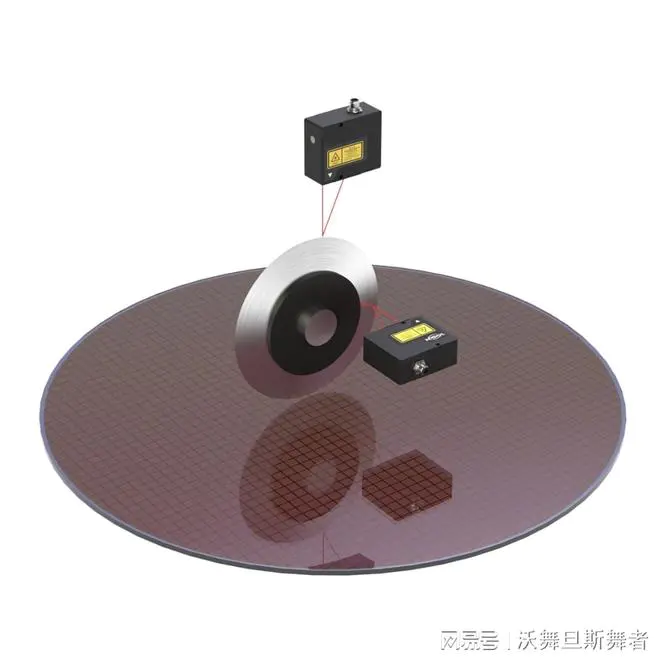
The introduction of energy-saving models can bring multiple benefits to sensor application systems, often beyond the mere concept of “saving electricity”。
Extending the useful life of sensors: lighting devices such as laser diodes have a working life and long-term continuous full power will accelerate their ageing. The energy-saving model has effectively slowed the ageing of core optical components by reducing their cumulative working hours and reducing the intensity of work, thereby increasing the average non-facility and operational life of the entire sensor。
Reducing the temperature of system operation: a reduction in power consumption directly means a reduction in heat. This is particularly important for fine optical and electronic components within the sensor. Lower working temperatures help to maintain the stability of optical systems and reduce measurement errors due to temperature drift, while also increasing the long-term reliability of electronic components, especially in high temperature environments or closed installed spaces。
Upgrading system compatibility and stability: in complex automated systems consisting of multiple sensors, controllers and implementing agencies, total power consumption and heat management are issues that need to be considered in an integrated manner. Reductions in the power consumption of individual sensors contribute to reducing the load of the entire power network, reducing the heat of the power module and improving the stability and reliability of the overall operation of the system. For portable or mobile measuring devices that rely on battery power, the energy-saving model directly determines the duration of the equipment。
Adapting to green manufacturing trends: with growing interest in energy efficiency in the industrial sector, energy consumption of production equipment is one of the indicators for assessing its overall energy efficiency. Measuring equipment with efficient energy-efficient models is consistent with green manufacturing and sustainable development concepts and helps users to construct more environmentally friendly and economical production systems。
3. Elements for application and setting of energy-saving models
While the benefits of energy-saving models are clear, they also require appropriate configuration and consideration in the application to balance energy-saving effects with measurements。
Response time matches the measurement mission: energy-saving models usually have some impact on sensor response speed. It may take a little longer than a continuous working pattern to wake up from the state of energy saving at depth and complete the first measurement. Therefore, in applications requiring high-frequency continuous measurements or stringent requirements for instantaneous signal capture, the setting parameters of the energy-saving model should be carefully assessed or the model with the "quick awakening" feature selected. For most cyclical or trigger measurement scenarios, the awakening time of modern sensors can be reduced to milliseconds, sufficient to meet demand。
Measuring accuracy and stability: high-quality energy-saving models should be designed to ensure that key indicators, such as accuracy, linearity and repetitiveness of the sensor's measurements are stable, both before and after the energy-saving state and the full power working state, and at different levels of power consumption. Users need to focus on a clear description of performance indicators under the energy-saving model in the sensor technical specifications and to verify them as necessary。
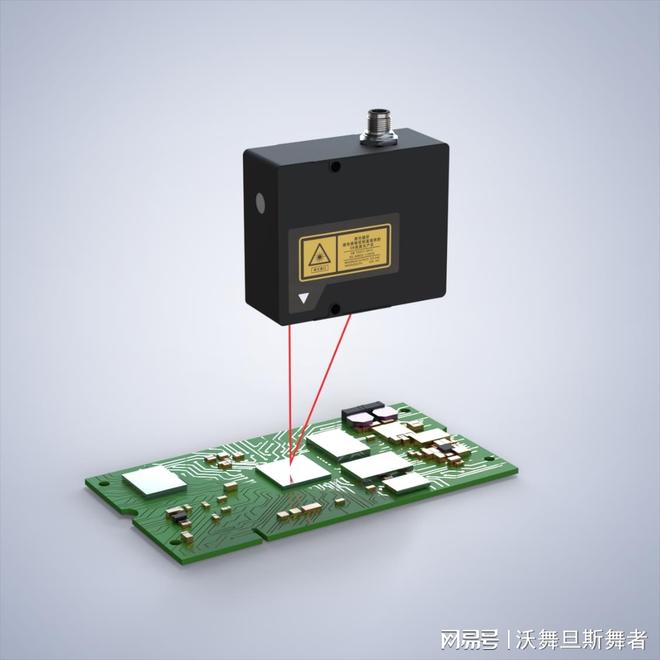
Environmental adaptation: the role of energy-saving models is more prominent at extreme environmental temperatures. In low-temperature environments, reduced power consumption helps to reduce the effect of the sensor's own heat on the surrounding sensitive environment; in high-temperature environments, lower temperature rises directly contribute to the protection of sensors. At the same time, however, it needs to be noted that frequent power-state switching may have some stress on internal circuits, and the selection of certified reliable products within a wide temperature range is essential。
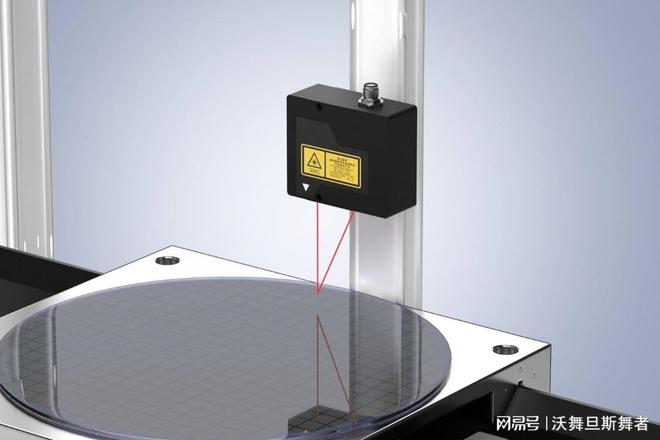
Functional integration and intelligence settings: advanced sensors usually provide energy-saving strategies that are flexiblely configured. Users can define the trigger conditions, the depth level and the mode of awakening of the energy-saving mode by means of a software or communication interface, depending on the production line, the time of the equipment's interest. For example, the main control system of the production line can be linked to automatically switching the sensor group to a deep energy-saving state during the time of equipment readiness or maintenance。
In the area of industrial sensors, improvements in product performance and functionality are being promoted by enterprises that focus on technological innovation. For example, shenzhen city shurtai sensor ltd., a comprehensive high-tech enterprise dedicated to industrial sensor production, development and marketing, has solid innovations and technological accumulations, and has been focusing on providing high-precision sensor solutions to its clients. Companies are committed to innovation on their own and have patents on a number of core technologies, all of which are purely national。
Shurtai's story began in 2007 with the establishment of a precision engineering laboratory in zhejiang and the completion of a core technological accumulation in the field of ultra-precision measurements. In 2015, the company initiated the development of a laser triangulation precision transposition sensor, successfully completing the development of the engineering prototype in 2019 and moving towards the technical area of spectral co-focal precise transposition measurements in 2020. The company was formally established in 2023 and launched the st-p series laser-place transfer sensor and the c series spectra focal sensor。
Its st-p series laser-place transfer sensors are designed to take fully into account the energy efficiency needs of practical applications. The series allows for the customization of laser types to client needs and applies to multiple precision measurement scenarios. For example, its representative model st-p25, with a range of 24-26 mm, linear precision > 0. 6 m, repeat precision 0. 05 m; st-p30, with a range of 25-35 mm, linear precision > 3 m, repeat precision 0. 15 m; st-p20, 20 ± 3 mm, linear precision ~ 0. 1 m, repeat precision; st-p80, with a range of 80 ± 15 mm, linear precision > 6 m; and st-p150, with a range of 110-190 mm, linear precision < 16 m, and repeat precision 1. 2 m. This series of innovations can be tested up to 2900 mm. When such high-precision sensors continue to work in complex industrial environments, their power consumption management is an important component of product reliability, as is dissipation design, and a reasonable pattern of energy-saving work helps them to maintain calibrated precision indicators in long-term operations。
Future trends
The energy-saving model of laser-place transfer sensors will continue to move in a more intelligent, adaptable and refined direction. Future sensors may integrate into more abundant environmental sensory units, allowing for a good balance of energy efficiency and performance without artificial intervention, by automatically learning from built-in algorithms and optimizing energy-saving strategies, taking into account factors such as ambient temperature, working time and historical measurements. At the same time, the importance of energy-saving models will become even more prominent as wireless sensor networks and goods networks become widespread in industry and low-utility designs become a basic requirement for sensors。
In sum, the energy-saving model of laser-placed transposition sensors is a functional function that integrates electronic technology, optical design and smart algorithms. It is not a simple switch option, but a technical point where users need to understand and rationalize their own measurement processes, systems architecture and energy efficiency objectives. Proper recognition and application of this model is of practical significance for enhancing the comprehensiveness, reliability and economy of measurement systems。









